







Rents in Kampong Glam, Little India and Chinatown rose 'moderately' over past two years: URA
The statement follows the announcement earlier this month that Warong Nasi Pariaman, said to be Singapore's oldest nasi padang stall, will close after nearly eight decades in Kampong Glam.
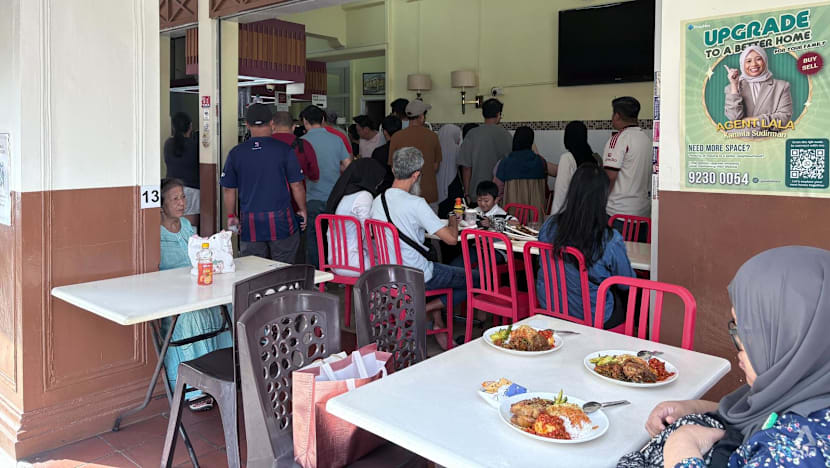
The crowd at Warong Nasi Pariaman on Jan 22, 2026, after the popular nasi padang eatery announced that it would close at the end of January. (Photo: CNA/Grace Yeoh)

This audio is generated by an AI tool.
SINGAPORE: Rents for shophouses in Singapore's historic districts have generally increased at a "moderate pace" over the past two years, the Urban Redevelopment Authority (URA) said on Saturday (Jan 31).
The statement came in response to media queries following the impending closure of heritage nasi padang eatery Warong Nasi Pariaman and the challenges faced by heritage businesses operating in historic districts.
Based on government rental lease data, median rents rose in the past two years by about 2 per cent a year in Kampong Glam, 2.5 per cent in Little India and 1 per cent in Chinatown, URA said.
These increases were comparable with rental growth for conventional retail space in the Central Area of around 2 per cent a year, and "significantly below" nominal GDP growth of around 6.7 per cent a year over the same period, added URA.
"The government recognises the importance of heritage businesses in contributing to the identity and character of our historic districts, and that the operating environment for these businesses has become more challenging over time," URA said.
CNA reported earlier this month that, according to tenants in the Kampong Glam area, rents had surged from about S$3,000 to nearly S$10,000 over the past few years.

In its statement, URA noted that heritage businesses, like others, face a combination of pressures, including rising labour and material costs, manpower constraints and shifts in consumer demand, while trying to maintain the unique attributes of their offerings.
To support such businesses, URA outlined a range of measures already in place.
An inter-agency task force on heritage businesses, traditional activities and cultural life was formed last year to study ways to support these enterprises in areas such as skills transfer, business transformation, and space and placemaking initiatives. The task force is co-chaired by Acting Minister-in-charge of Muslim Affairs Faishal Ibrahim and Senior Minister of State for Culture, Community and Youth Low Yen Ling.
URA added that agencies have also reviewed and updated land use policies to better sustain the character of historic districts while catering to evolving visitor preferences. In Kampong Glam, new souvenir shops were disallowed from June 2025 following stakeholder feedback, on top of existing restrictions on new bars, pubs, nightclubs, karaoke lounges and western fast-food restaurants in the core areas of Kampong Glam, Little India and Chinatown.
Separately, the National Heritage Board has rolled out schemes to recognise and support heritage businesses, including the SG Heritage Business Scheme, which provides marketing and business consultancy support, and the Organisation Transformation Grant, which funds projects such as digitalisation and staff upskilling.
URA also cited a pilot programme in Kampong Glam led by the Kampong Gelam Alliance, which supports the retention of selected heritage restaurants by facilitating their relocation within the district. One beneficiary, Sabar Menanti nasi padang restaurant, successfully relocated within Kampong Glam in October 2023.
"In partnership with URA, the Kampong Gelam Alliance has also developed a Place Plan to enhance Kampong Glam's heritage offerings and visitor experience," URA said.
On Warong Nasi Pariaman, URA said the relevant agencies have engaged members of the family behind the business to "explore various support options to render greater assistance".
The government said it remains committed to sustaining heritage businesses and cultural life in historic districts, and encouraged businesses to approach agencies for assistance. It also highlighted the role of continued public support in helping such businesses remain viable.


Nasi padang eatery Warong Nasi Pariaman announced on Jan 20 that it would shut down on Saturday.
In a statement on social media, the owners wrote in Malay: "With our deepest gratitude, we would like to inform you that Warong Nasi Pariaman will cease operations on Jan 31. Thank you for the support, love, and the many sweet memories shared with us over the years."
Reportedly Singapore's oldest nasi padang stall, Warong Nasi Pariaman was established in 1948 at Kandahar Street by Haji Isrin from the West Sumatran city of Pariaman.
The 78-year-old eatery was known for serving authentic Padang dishes such as beef rendang, sayur nangka (jackfruit in coconut milk) and sambal goreng.




