







Wastewater surveillance programme for Covid-19 to cover over 400 sites by next year: NEA
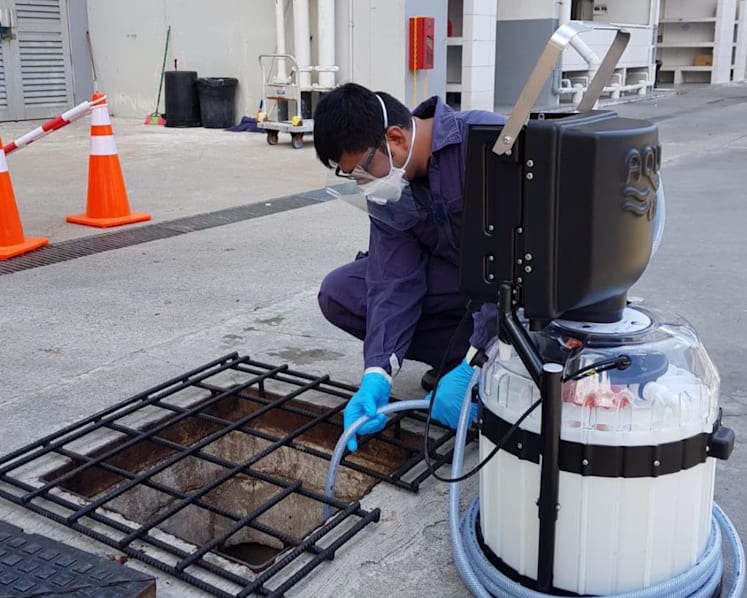
An NEA officer setting up the autosampler to collect wastewater samples through a manhole.
SINGAPORE — A Covid-19 surveillance programme using wastewater will be expanded to more than 400 sites next year, up from the more than 200 sites under the programme now.
Currently, workers’ dormitories, student hostels, welfare and nursing homes and residential sites have been under surveillance through this programme.
In a factsheet put out on Wednesday (July 7), the National Environment Agency (NEA) said that the wastewater surveillance programme, which is a non-intrusive surveillance strategy, involves screening wastewater samples for viral material of the coronavirus, which could be shed by infected individuals through their stools.
The programme started last February as a way to monitor and manage the Covid-19 outbreak among dormitory workers.





With no more transmissions in dormitories, wastewater surveillance is now used to complement rostered routine testing of individuals for early detection of Covid-19 in dormitories and to facilitate early intervention and isolation of cases, NEA said.
Last July, residential sites were included in the programme starting with the Tampines neighbourhood. A Covid-19 case was detected at Block 111 Tampines Street 11 as a result of wastewater testing.
More recently, the presence of Covid-19 viral fragments in wastewater from neighbourhoods in Hougang, Yishun and Bukit Merah View, among others, prompted swab testing of their residents and visitors.
This led to more than 15 cases being detected at sites that employed wastewater surveillance last month, NEA said.
TODAY has approached NEA and the Ministry of Health for the number of Covid-19 cases detected through the wastewater surveillance programme.
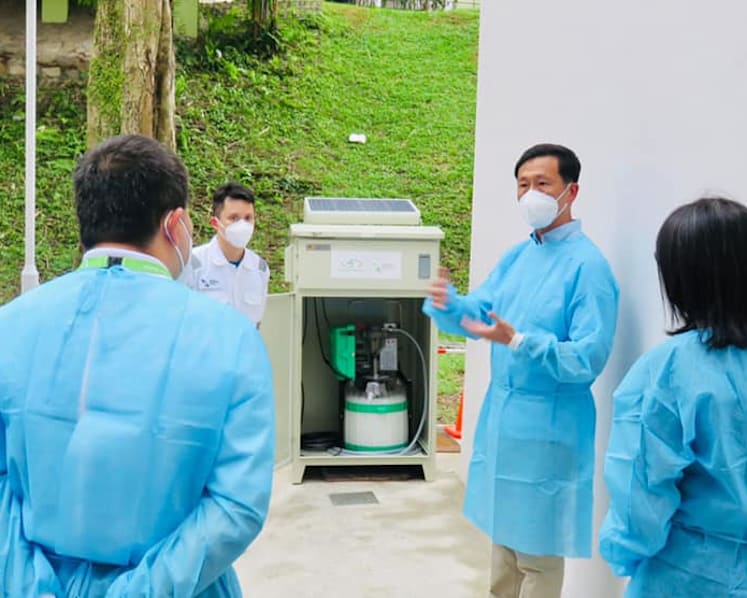
A testing capacity of 2,500 samples weekly has been achieved, the agency said.
In a Facebook post on Thursday night, Health Minister Ong Ye Kung said that this system has helped the Government to identify possible transmission clusters early and to move in quickly to test and ring-fence cases to minimise spread to the community.
"So while this method cannot detect an infected individual, it is a very good early warning system, which enabled us to proactively conduct swab operations at Hougang, Yishun and Bukit Merah View to reduce further transmission to the wider community."
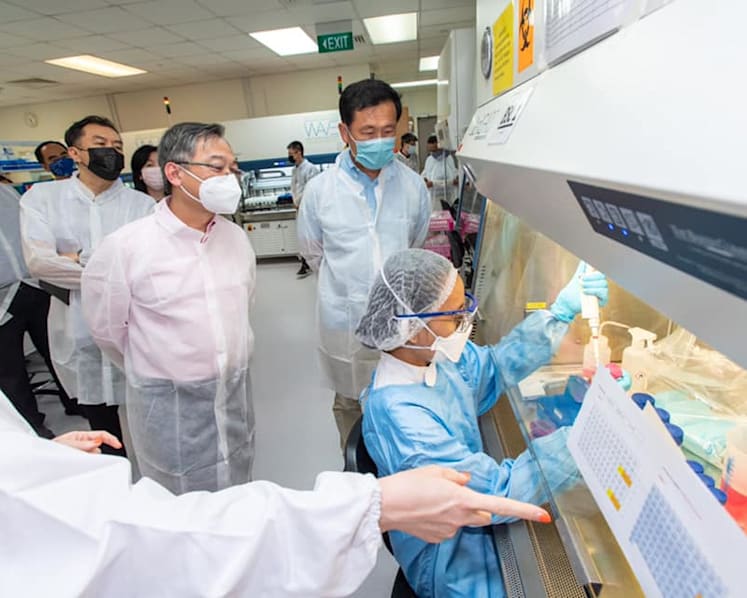
Mr Ong thanked the teams at NEA, Nanyang Technological University and the National University of Singapore, among others, for developing the surveillance capability that he said has "helped greatly" in the fight against Covid-19.




