







Workplace fatality rate hits new low in 2017: MOM
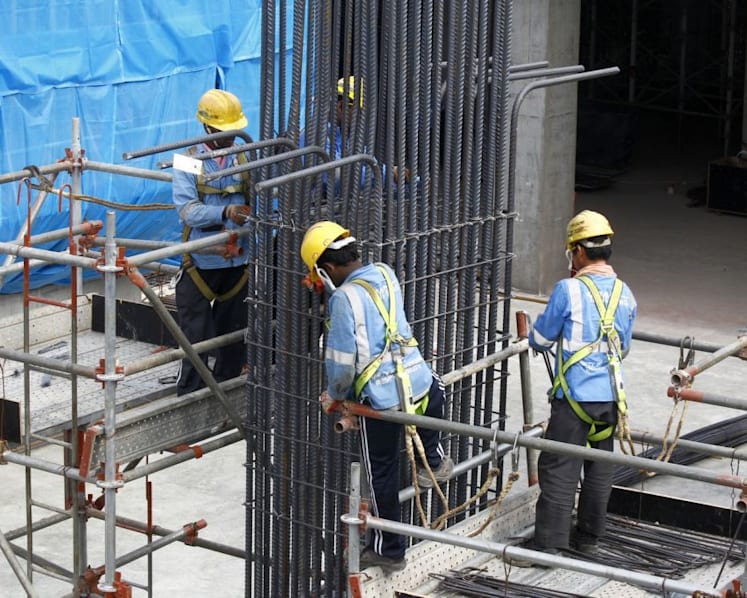
Workers at a construction site. TODAY File Photo


SINGAPORE — Latest statistics from the Ministry of Manpower (MOM) and the Workplace Safety and Health (WSH) Institute showed that workplace fatality rate has dropped for the first time in three years, reaching a new low of 1.2 per 100,000 employed persons last year.
In total, there were 42 workplace deaths in 2017, down from 66 the previous year.
This meant that the target set in 2008 to have a workplace fatality rate of less than 1.8 per 100,000 by 2018 has been met, said the MOM on Tuesday (Feb 13), in a joint press release issue with WSH Council and WSH Institute. The fatality rate of 1.2 is also the lowest since 2004, when such figures were first collated.
The number of workplace injuries and dangerous occurrences also fell in 2017, compared to 2016.





Notably, the construction sector, which traditionally racks up the most deaths, saw the number of fatalities halving from 24 cases in 2016 to 12 last year.
The decline was driven in part by the MOM’s targeted enforcement operations last year in workplaces with high probabilities of vehicular and machinery incidents and falls, the ministry said.
The number of vehicle-related incidents, falls and machinery-related injuries — which accounted for the bulk of the 42 workplace deaths last year — saw significant drops, with the falls from height category making the biggest improvement.
About 38 per cent fewer workers died due to falls from height, and there is a corresponding 14-per-cent drop in the number of people who suffered major injuries because of it.
In all, the MOM conducted 16,000 inspections, and issued 71 stop-work orders, more than 1,200 fines and 9,000 notices of non-compliance last year.
One of the high-profile accidents for which stop-work order was issued last year was the collapse of an incomplete viaduct structure at Upper Changi Road East. TODAY understands investigations into the accident, which killed one worker and injured 10 others, are still ongoing.
Although the number of workplace deaths and injuries have fallen, the prevalence of occupational diseases saw a marked increase of 9 per cent, with almost 800 people suffering from it last year, versus 732 in 2016.
This is as the top three disease types — which made up over 90 per cent of all cases — became all the more pervasive. The three are work-related musculoskeletal disorders, noise induced deafness and occupational skin disease.
Most notably, 78 workers — or 66 per cent more — contracted occupational skin diseases last year, compared to only 47 cases in 2016.
The MOM said it aims to target the occurrences of these occupational diseases through efforts on reducing excessive noise at source, improving ergonomics, and strengthening the management of hazardous chemicals at workplaces.
Added WSH Institute executive director Gan Siok Lin: “There is a need to manage workplace health the same way we manage workplace safety. Health affects safety and vice versa, so companies should take an integrated approach to enhance both their safety and health management capabilities.”
Pointing out that the number of workplace accidents have “more or less remained constant” since 2014 despite an overall improvement in the number of deaths, National Trades Union Congress’ WSH director Melvin Yong called for new strategies and action plans to make the “next quantum leap in WSH enforcement”.
He suggested making it compulsory for companies to appoint a WSH representative as part of the certification requirement for BizSAFE Level 3, which currently requires an organisation to engage an auditor to vet their risk management plans.
He also called for the Government to extend the grant issued under the WSH Council’s Return To Work programme to help employees who do not work for small and medium enterprises, but suffer from traumatic work injuries and work-related musculoskeletal injuries, so they can phase themselves into work as soon as medically reasonable.
The grant, he said, should also cover vocational rehabilitation, in the event an injured worker requires a change of employer and work scope.




