1,800m of pizza, a ton of Grana Padano cheese fuel Games athletes
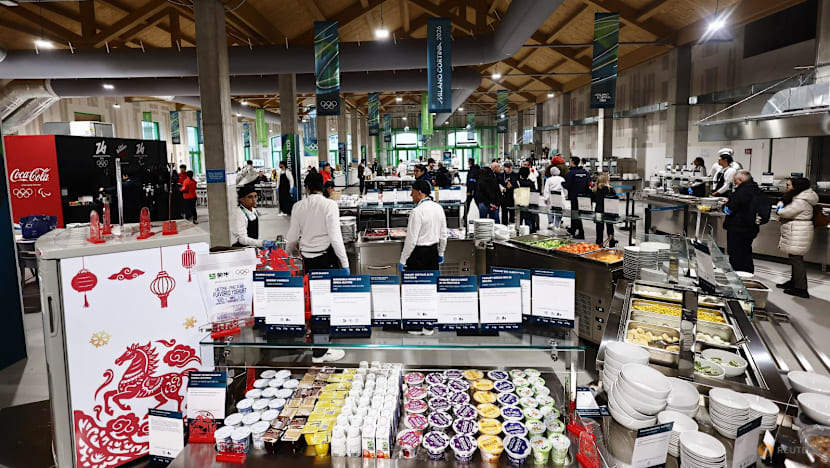
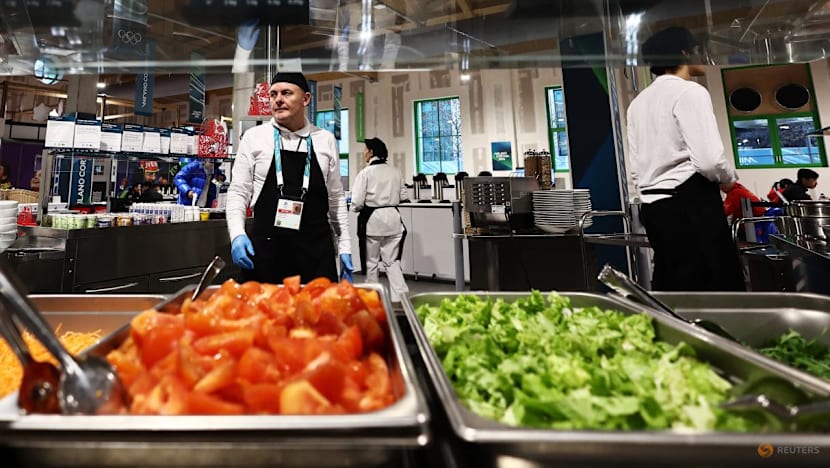
Up to 4,500 breakfasts, lunches and dinners were prepared each day at the Milan village, nearly 4,000 in Cortina and 2,300 in Predazzo.
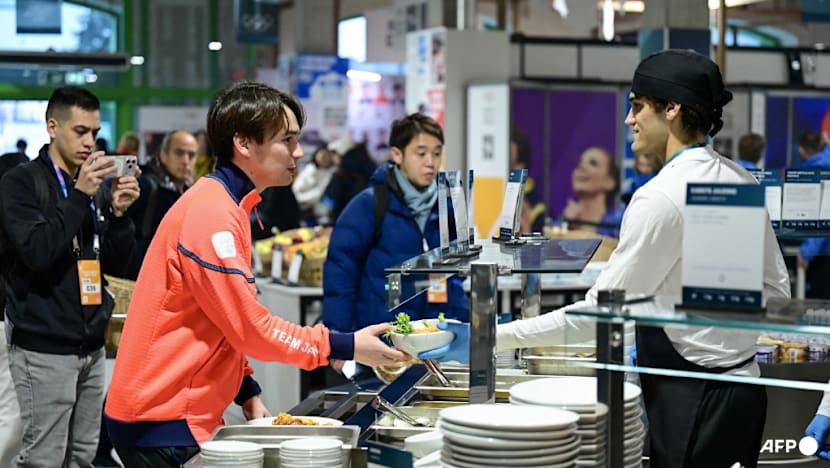
An athlete from Team Japan is served food in a dining area of the Olympic Village ahead of the Milano Cortina 2026 Winter Olympics in Milan on Feb 3, 2026. (Photo: AFP/Piero Cruciatti)
MILAN: In the two weeks of the Winter Olympics, athletes consumed about two wheels of Grana Padano a day, roughly a ton of the world‑famous Italian cheese over the 16 days of competition, Andrea Varnier, CEO of the Milano Cortina Games, said on Sunday.
Athletes ate about 60kg of Grana Padano a day, along with 365kg of pasta, 10,000 eggs, 8,000 coffees and 12,000 pizza slices, around 1,800m of pizza.
“Just to give an idea of the scale, if we stacked all the trays used for each meal every day, they would form a 60km tower – around 18 times the height of Mount Tofana in Cortina, which is 3,225m high,” Varnier said.
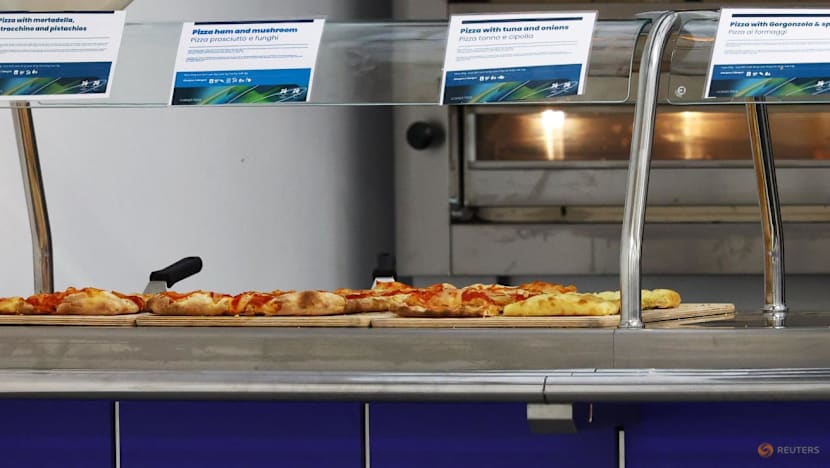
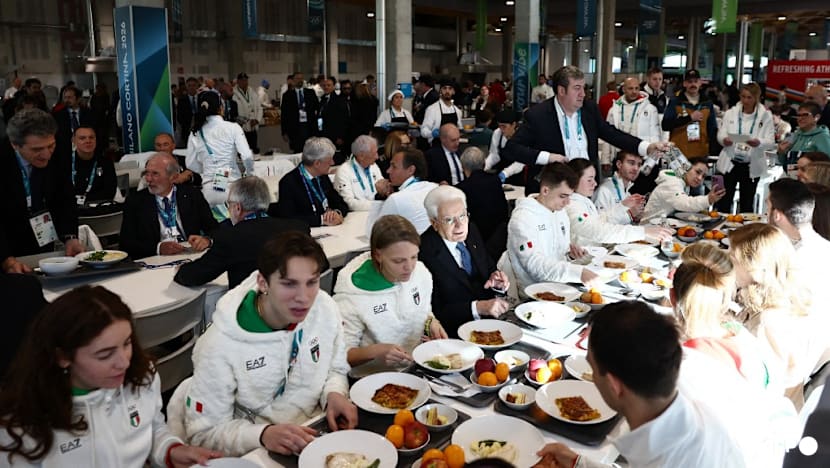
It is a massive amount of food, he added, necessary for the young athletes and the high energy consumption required in elite sports. Up to 4,500 breakfasts, lunches and dinners were prepared each day at the Milan village, nearly 4,000 in Cortina and 2,300 in Predazzo. Designing the menus took about a year, organisers said.
“Apart from the quantity, everyone praised the quality of the food provided,” Games chairman Giovanni Malago said.
Varnier said around 1.3 million tickets were sold for the Games, equal to 88 per cent of total capacity across all sessions.
About 37 per cent of spectators came from Italy and 63 per cent from abroad, including 15 per cent from Germany, 14 per cent from the United States and about 6 per cent each from Britain and Switzerland.
“Among the most popular disciplines with spectators was skimo, introduced for the first time at these Olympics in Bormio, which was sold out in both sessions. It was followed by speed skating and short track, both at 95 per cent capacity, figure skating at 93 per cent and ice hockey at 93 per cent,” Varnier said.
On the Olympic cauldrons in Milan and Cortina, which became among the most photographed symbols of the 2026 Winter Games, Varnier said about 300,000 people watched the 88 four‑minute light and music shows staged daily since Feb 6 at Arco della Pace in Milan.
“It was a great success that energised the city,” he said.
The two identical cauldrons will perform a final show on Sunday before being temporarily extinguished during the closing ceremony in Verona. They will remain dark for several days before a new version, with updated colours and music, is lit for the Paralympic celebrations from Mar 6 to Mar 15.