Visa-only Games highlights Europe's payments headache
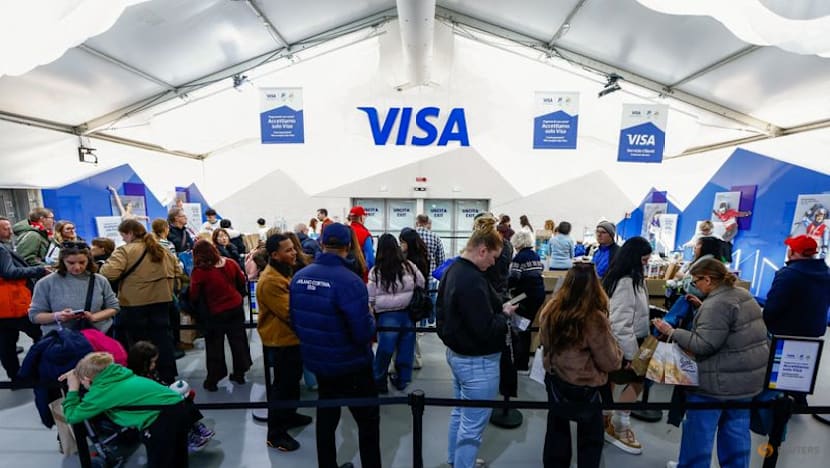
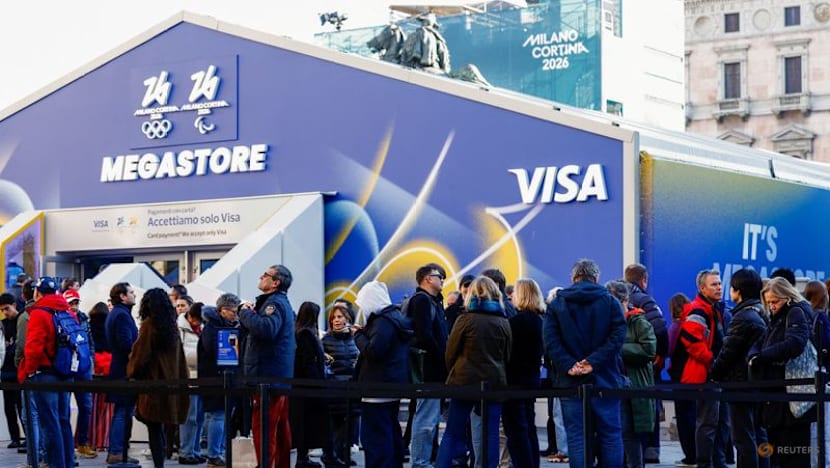
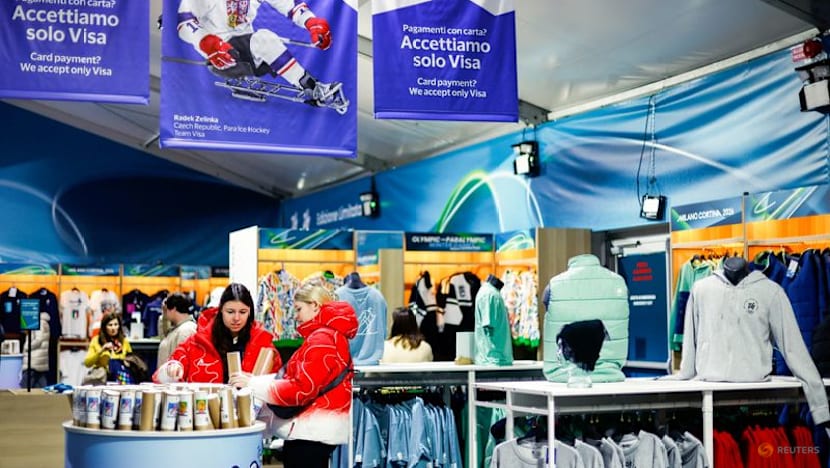
MILAN, Feb 15 : Anyone trying to buy a souvenir at the official Olympic stores at the Milano Cortina Games will have been exposed to an issue troubling Europe's policymakers: the dominance of foreign payment providers and the fading role of cash.
Under a sponsorship deal with the International Olympic Committee dating back to 1986 and extended to 2032, Visa is the sole card provider at the Games, with signs reading "Card payment? We accept only Visa" and staff offering prepaid cards on the spot.
By the next Winter Games in France in 2030, people could have another option if the European Central Bank meets its goal of launching a digital euro in 2029.
Declaring the project key for Europe's economic security, the EU Council in December endorsed the digital euro saying it would be "available to the general public and businesses to make payments anytime and anywhere in the euro area".
That remains the prerogative of cash, but EU lawmakers are still working on rules that would make it unequivocally mandatory for shops and service providers to accept cash, except for remote payments or unmanned services.
GONE TO GET SOME CASH
At the Games stores, cash is accepted and ATM machines have been installed to allow people to withdraw money, a spokesperson for the organisers said.
A spokesperson for Visa said the company was committed to making the purchase experience for Milano Cortina products the best it can be.
People no longer carry banknotes in their wallets.
"My dad's just gone to withdraw some cash. We saw the sign and we don't have Visa," said Marta Mule, a young Italian magazine contributor, waiting in a long queue that stretched up to the entrance of the main Olympics store in Milan.
A shop assistant at the counter of the Olympic shop close to Milan's imposing Duomo cathedral estimated only around one sixth of people paid with cash, while all others had Visa cards.
DEPENDENT ON FOREIGN SUPPLIERS
International card schemes such as Visa or Mastercard account for two-thirds of card transactions in the euro area, European Central Bank Executive Board member Piero Cipollone said in the text of a speech on Thursday.
"We need to address our current dependencies in retail payments and reverse the tide," he said.
While the Olympics will always be a one-off event in terms of commercial arrangements, it touches on a sore point for the ECB.
The ECB needs an EU law to be in place before it can issue the digital euro.
But its legislative proposal was stuck in the European Parliament for more than two years amid concerns that a central‑bank‑backed wallet could drain commercial bank deposits or displace private-sector payment systems.
Since December, however, first the European Council and then the European Parliament have fully endorsed the ECB's stance on the project.
To defend the role of central bank money, the ECB wants the digital euro to work both offline, in a cash‑like way, and online, and to be available for wholesale and retail payments.
"To put it simply: if we lose control of our money, we lose control of our economic destiny," said Cipollone, who leads the digital euro project at the ECB.
Parts of the private sector had wanted a more limited scheme rather than a new retail payments option.
CASH PAYMENTS TO BE INTRODUCED IN PRESS CENTRE SUPERMARKET
Strained transatlantic ties have added weight to the ECB's position, prompting the EU Council and Parliament to back the central bank, including by defending cash — the only form of central‑bank money available to the public for now.
Reuters saw media representatives having to put back food items they had tried to purchase at the Esselunga grocery store inside the Olympic press centre in Milan because it does not accept cash.
A spokesperson for Esselunga said cash payments would be accepted starting Monday and that the earlier choice only to accept card payments had been agreed with the Games organisers to speed up the service provided.