From frosted glass walls to anti-ball game void deck barriers, designing public spaces is a tough balancing act
Experts and users agree that public space is not just a physical construct, but a cultural one, shaped by consideration for others and ongoing negotiation between planners, managers and everyday users.
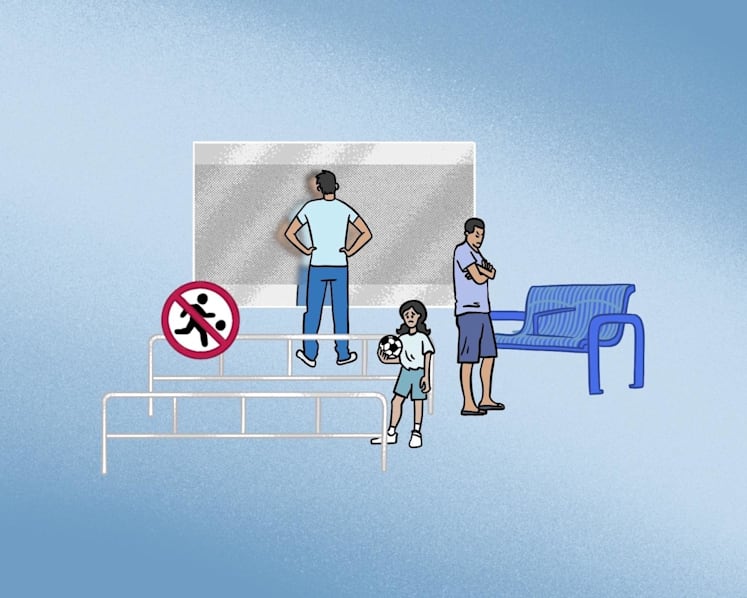
When design changes phase out or limit informal uses of shared spaces without consulting users, the immediate loss is often those activities taking place there, a sociologist said. (Illustration:CNA/Nurjannah Suhaimi)

This audio is generated by an AI tool.


After moving out of his home following a divorce, Mr Toh was rough sleeping from July 2022 to September 2024, often on benches at the void decks of public housing blocks and at playgrounds.
He tried not to stay in one place for too long, wary of questions from patrolling officers or complaints from residents.
Depending on how conducive the environment was, the 65-year-old cleaner, who declined to give his full name, said that he moved anywhere from once a week to once a month.
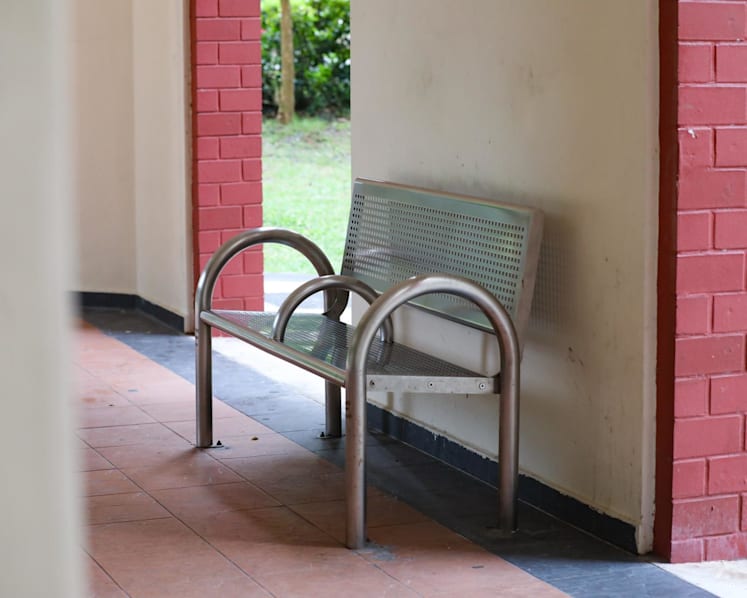
In the two years that he had spent sleeping rough across different housing estates, Mr Toh said that he often encountered public benches fitted with dividers, making it difficult to find places where he could rest.





When a divider-free bench cannot be found, he would either move elsewhere or sleep on a cardboard sheet in a quiet corner of a void deck.
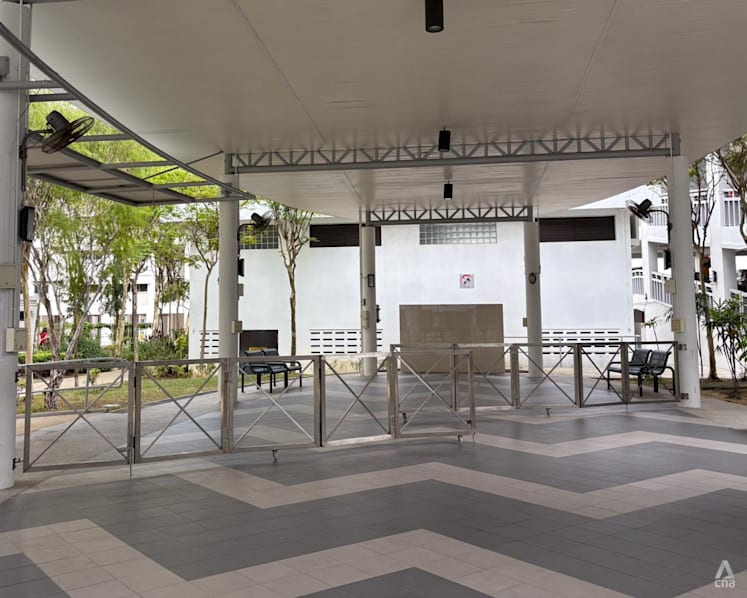
Over at the precinct pavilion at Block 868D Tampines Avenue 8, two metal dividers run across the middle of the space.
The dividers, which have rollers, were installed a few years ago, 17-year-old Muhamad Anik said. He lives nearby, so he and his friends often gather at the open-air hall to play football, floorball and other games.
They tried to keep their voices down, but Anik said that they were occasionally reprimanded by a neighbour for making too much noise.
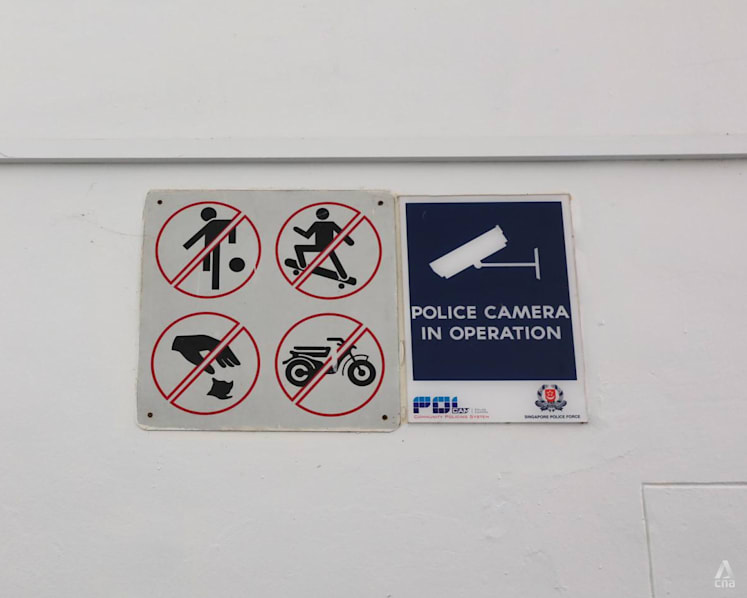
After the metal dividers were installed, a notice from the town council was put up on a pillar at the hall, stating that the playing of ball-related games was "strictly not allowed" for the "safety of all residents".
It reads: "Residents of all ages walking nearby can get hurt by the impact of a flying ball straying into their path. We have also received feedback about noise from the football game."
The dividers, Anik said, are typically unlocked in the morning to accommodate residents using the space for exercise.
He and his friends have tried playing their ball games elsewhere, but the hall is still the most convenient and free option.
These days, the teenager said that they simply play around the barriers, using the space about once every three weeks.
That a seemingly simple element such as a divider can make a big difference to the lives of Mr Toh and Anik shows how the design of public places subtly shapes activities, behaviours and norms in a space, influencing who is able to use it and how.
Shared public spaces serve as convergence points. Residents, passers-by and everyone in between use the same corners of the city in different ways and for different needs.
Designing these spaces, therefore, requires a careful balancing act, experts said.
This means maintaining order and efficiency, without quietly crowding out spontaneity or informal community, especially since small design choices can nudge behaviour.
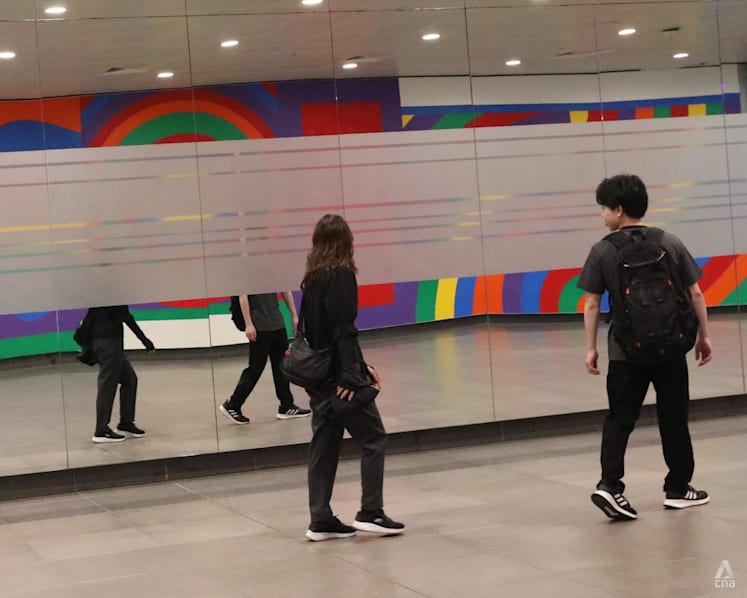
Earlier this month, mirrors along an underground linkway at Bayfront MRT station were frosted after feedback that dancers using the area as a makeshift practice space were obstructing pedestrian flow.
The move sparked a public debate about whose needs are prioritised in shared spaces, whether access to free public areas for social activities is an entitlement, and what might be lost when spontaneous uses of public space are curtailed.
These issues come into sharper focus in land-scarce, dense urban areas such as Singapore, making the design and planning of public spaces especially complex.
Dr George Wong, an assistant professor of sociology education at the Singapore Management University (SMU), said: "Shared spaces are inevitably going to be negotiated and full of tensions, and we cannot assume such negotiations will always eventually end up in the best interests of all."
He also said that it is often easier to simply clamp down on communities and activities when tensions over such spaces boil over and the authorities are expected to take action.
"Finding balance, working with users and designing with the intent for coexistence is the way to go, but not necessarily the easiest or expedient thing that commercial or public authorities may go for," Dr Wong added.
Finding balance, after all, takes time, resources and a commitment to work things out at the hyperlocal or small community level.
How, then, can planners meet the majority's needs while still leaving room for other activities to thrive, so that public life remains vibrant and communal?
By the same token, how can residents and users be invited to co-create and imbue these spaces with social meaning?
"THIRD SPACES" AS SHARED SETTINGS OF LIFE
At the heart of this tension is the role of so-called "third spaces". These are everyday public places that sit between home and work, and whose design can shape who feels welcome to use them.
Coined by American sociologist Ray Oldenburg, the term refers to places beyond one's home, which is the "first place", and the workplace, which is the "second place".
Dr Rita Padawangi, an associate professor of sociology from the Centre for University Core at the Singapore University of Social Sciences (SUSS), said that public and communal spaces can function as such third places.
"Third places are important because they are places that members of the community have equal access to," she said.
"Without these communal spaces, neighbourhoods would encourage people to stay in their own homes, which would result in isolation and segregation."
Social interactions in these spaces, she added, are often made up of daily, mundane conversations – exchanges that are easily taken for granted, but which form the cornerstones of social life and shared neighbourhood identity.
Public spaces are also the "shared settings of urban life", another academic said.
Professor Cheong Koon Hean, chair of the Lee Kuan Yew Centre for Innovative Cities at the Singapore University of Technology and Design (SUTD), said that they serve as the "everyday in-between places where movement, social interaction and civic life unfold", making their design especially important.
"In dense cities, where land is scarce and activity is intense, the design of public space plays a critical role in shaping movement, social interaction and civic culture," Prof Cheong said. She is the former chief executive of the Housing and Development Board (HDB) and the Urban Redevelopment Authority (URA).
In high-density Singapore, Prof Cheong added, public spaces are crucial for balancing density with liveability, supporting uses ranging from everyday social interaction and physical activity, to serving as landmarks that give a city its identity and help people navigate it.
When designed to accommodate or enhance informality, public spaces can draw a range of users and benefit the communities associated with them, experts said.
However, the reverse is also true.
Design choices can subtly signal which uses and users are prioritised, influencing who feels able to remain in a space and who is edged out of it.
Unspoken norms about who belongs in a space and how it should be used develop through a combination of factors, Dr Padawangi from SUSS said.
These include the physical reality of a space, how it is used in daily life and how it is regulated.
Design can encourage or discourage certain uses, she added.
Park benches, for example, may be angled or fitted with dividers to deter rough sleeping – a form of design often criticised as discriminatory towards the homeless, similar to what Mr Toh had encountered.
Such approaches are often referred to as "hostile architecture", Dr Wong from SMU said, where the design or modification of urban spaces actively excludes or evicts certain communities, their presence or their activities.
"Hostile architecture has sometimes been the first thing we see when it comes to how spaces are redesigned to address public outcry over shared spaces," he said.
Responding to CNA TODAY's queries, URA said on Friday (Jan 30) that beyond planning to meet national needs such as economic growth, housing, utilities and critical infrastructure such as ports and airports, it also places strong emphasis on safeguarding and creating public spaces and recreational areas.
These include parks, open plazas and shaded atriums, which function as communal "living rooms" beyond the home, offering respite from the city's bustle and spaces for people to gather, socialise and foster a sense of community, it added.
URA also takes a "deliberate approach" to optimising the use of everyday spaces by adapting them for community use and recreation. Some previously under-used areas beneath transport infrastructure such as flyovers and viaducts have been repurposed to host sports, arts and community activities, for example.
To guide the design of privately owned public spaces, such as those at Guoco Tower in Tanjong Pagar and the Village Square at One Holland Village, URA has introduced design guidelines to ensure that the spaces are "sufficiently sized to support diverse activities", well shaded for the tropical climate, and equipped with public seating and clear access.
At the estate level, HDB said on its website that towns are designed to be self-sufficient, with easy access to shops, schools, and social and recreational facilities, alongside abundant greenery.
Each town is planned with a comprehensive and integrated transport infrastructure, including pedestrian and cycling networks, and every housing block has access to a bus stop, MRT or LRT station.
A town centre anchors each HDB town, serving as the main commercial and activity hub, with facilities such as shopping malls, supermarkets, eateries, as well as sports complexes, libraries and community clubs.
Dr Wong said that although design itself is neutral, it plays a significant role in nudging – or limiting – certain uses and communities.
"Public spaces, as third spaces, open up a radically important opportunity for communities to adopt such spaces and become co-custodians of public spaces," he added. They allow communities to shape unique place-based identities – whether as spaces for the youth or the elders, or gathering points for interest groups.
When the design is inviting, it can naturally draw in different uses.
Some of the most vibrant social activity, observers noted, takes place in spaces not explicitly designed for it.
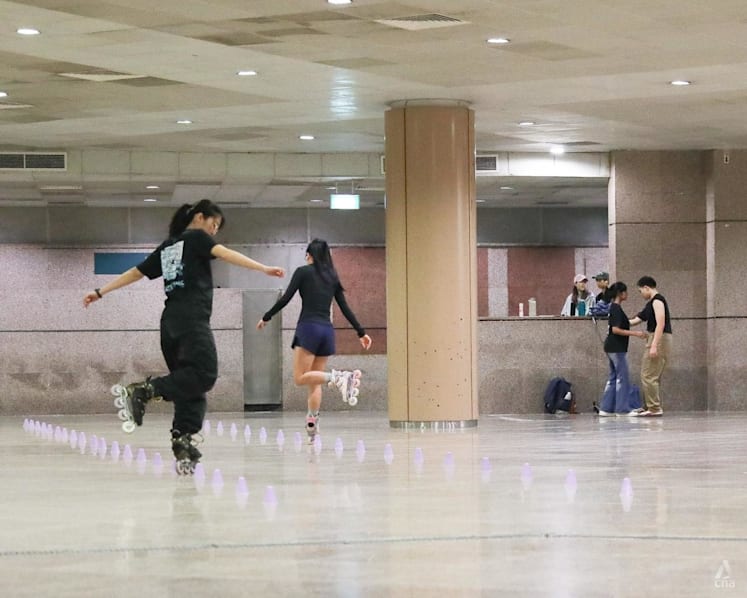
On weekday evenings and over the weekends, the underground concourse linking CityLink Mall and the Esplanade – intended primarily as a pedestrian thoroughfare – commonly draws dancers, inline skaters and skateboarders, alongside groups sitting on the floor chatting with friends.
Mr Chong Sheng Kai, an 18-year-old polytechnic student, said his inline skating group practises there because the space is accessible and air-conditioned. They also train at the National Stadium, but it can get hot and access may be affected by events, he added.
Practising in public spaces has also led to unexpected encounters, 18-year-old student Jermaine Ong said. She recalled meeting an inline skating coach at the National Stadium who offered them tips. Today, they still run into the coach occasionally at the Esplanade concourse.
Such encounters, the teenagers said, would be less likely if the co-curricular group trained only within their school compound.
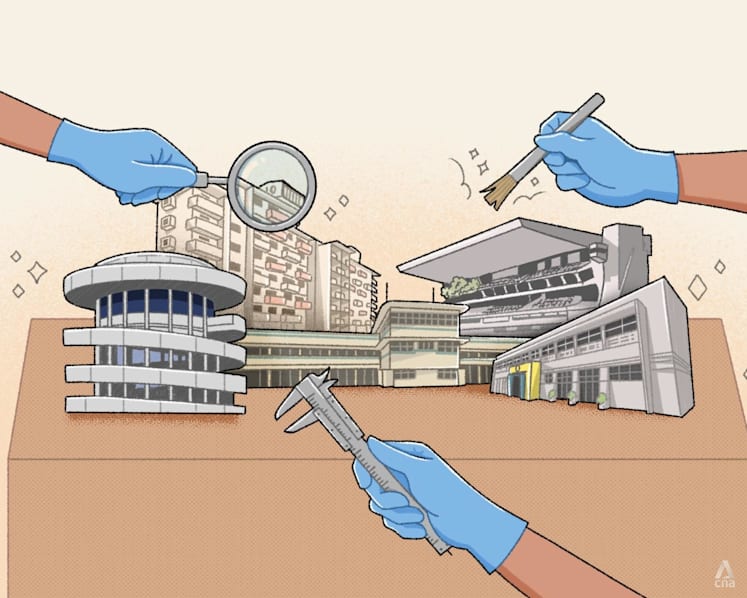
Ms Denyse Tan is the president of Young Urbanists Singapore, a youth-led, ground-up collective focused on how young people experience everyday urban life. She said that people often treat space as a fixed element when, in reality, it is highly mutable.
"People shape space according to their needs and wishes, and space is never neutral," the 25-year-old added, noting that the same physical place can take on different meanings depending on the time of day and how it is used.
"What these spaces have in common is that they lower the threshold for being with others. You do not need to plan, register or spend money. You can show up and decide how long to stay.
"This matters because connection becomes something ordinary rather than exceptional."
Ms Tan also said that void decks play this role in many neighbourhoods, because they are familiar, accessible and embedded in daily routines.
Several residents and community groups told CNA TODAY that access to such public spaces – and the ability to enjoy social activities within them – contributes to neighbourhood liveliness and a sense of belonging.
Mr Muhamad Akid, 34, recalled playing football around his estate in Tampines as a child.
Today, as a father of three, the Singapore Civil Defence Force officer continues to rely on such shared spaces – including the precinct pavilion – to organise social activities ranging from children's parties to a gender-reveal event for a new baby.
On one occasion, he obtained permission to temporarily set up a "flying fox" and organise a small-scale high-elements course for a children's gathering at one of the precinct pavilions in his estate.
"When there are activities at the multipurpose (space), I feel that the neighbourhood is livelier. If not, (the estate) will be very quiet – just a boring street."
In rental housing blocks, shared spaces such as void decks often function as a second home of sorts, particularly for families with limited space and resources, one observer said.
Ms Jezamine Chua, 31, co-founder of 6th Sense, a volunteer group that befriends children living in public rental flats, said that free public spaces play a critical role in these communities.
"Many of these (children and youth) have limited space at home and few private alternatives, so these shared spaces become extensions of their homes and play areas."
Such spaces also support organic community-building, Ms Chua added, and a regular presence in such spaces allows trust to grow among children, neighbours and across generations, ultimately forming a sense of belonging.
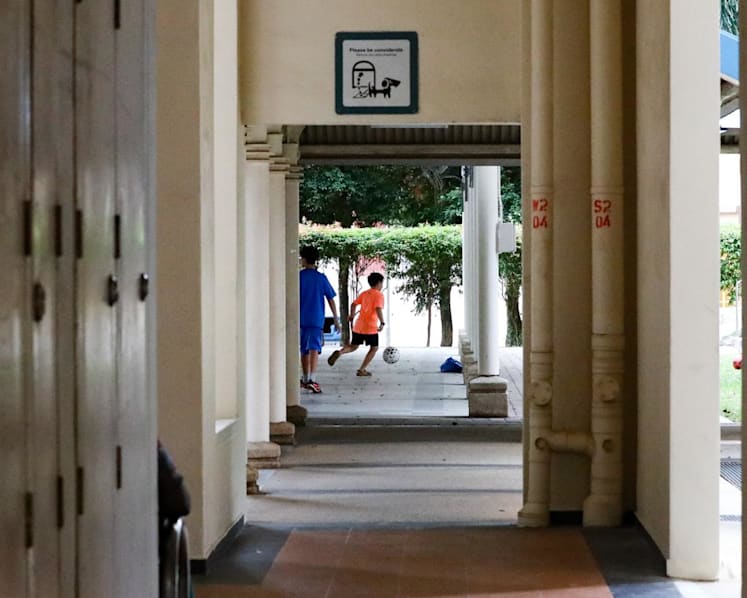
By contrast, activities at community centres often involve fixed timings, registration and behavioural expectations, which can create distance for some families.
Void decks, Ms Chua said, have low barriers to entry. Children may join casually, step away when they want, or simply observe before taking part, making it easier for them to feel safe and included.
WHEN DESIGN RESTRICTS BEHAVIOURS
When design changes phase out or limit informal uses of shared spaces without consulting users, the immediate loss is often those activities themselves, Dr Padawangi from SUSS said.
The loss may not be immediate. Where such activities are embedded in community life, residents may initially seek alternative spaces to continue them.
But if those new spaces are less comfortable, less accessible or unavailable, the informal uses may eventually fade, she added.
This was the case for Mr Muhammad Ashraf, who said that in the Pasir Ris estate where he grew up, spikes and removable barriers were added to the void deck to deter people from playing football.
"I think the spikes are not a welcoming feature … it's too aggressive in a way," the 36-year-old engineer said.
"I'd prefer if there was some moral education, so that people know when to play, when not to play, to keep their voices down."
He and his friends continued playing there occasionally, but they gradually reduced their activities. Over time, the void deck became less of a place to linger.
"I think, now, we are very isolated. People don't sit at void decks to relax … void decks (are becoming a place) to just pass through and go home," Mr Ashraf said.
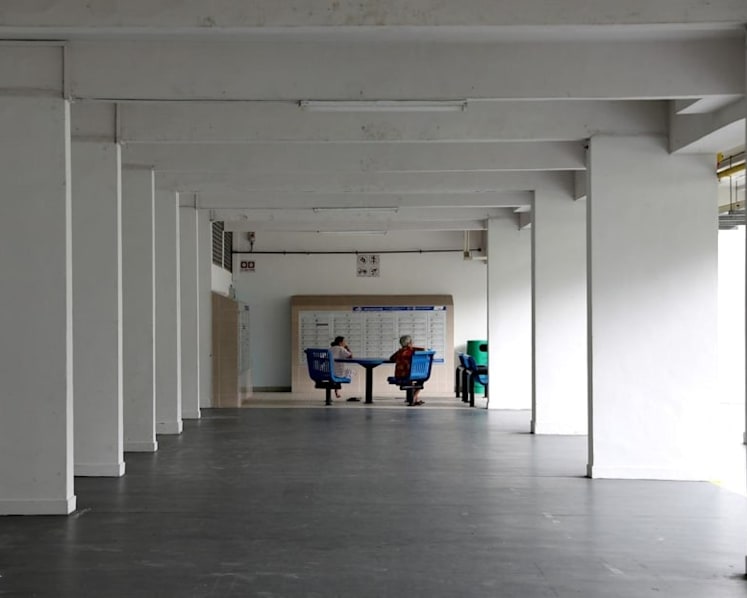

Beyond the activities themselves, Dr Padawangi said that the more significant loss is often a sense of human agency – the feeling that individuals and communities have a role in shaping their surroundings.
"If the human agency in a place is lost, then the sense of place is also lost … (as is) its soul and the spirit of the place."
Agreeing, Ms Tan of Young Urbanists Singapore said: "What is usually lost is not just a physical location, but a layer of everyday social infrastructure that supports both belonging and identity."
Informal spaces, she explained, allow people to build routines, recognise familiar faces and develop a sense of place in relation to others. Over time, these repeated, low-pressure interactions shape how people understand who they are in the city and where they fit in.
When such spaces are redesigned into more programmed or commercial uses, they often gain order, clarity and manageability. "But what is often traded away is flexibility," Ms Tan said.
"People can no longer adapt the space to their own rhythms or needs. The space stops being something they shape and becomes something they consume. Over time, this changes how social life works."
Since informal spaces support connection and identity formation, their loss can also have upstream implications for mental health and social isolation, Ms Tan added.
When gathering spaces increasingly have to be booked, paid for or justified, casual social life becomes harder to sustain, especially for those with fewer resources or less confidence in navigating formal settings, she explained.
Community groups said that these dynamics are felt on the ground.
Mr Abishek Bajaj, 33, the other co-founder of 6th Sense, said that their gatherings at the void deck of a block in Kebun Baru have reframed how the children see "home", by extending it beyond their flats to shared spaces such as void decks and playgrounds, where they form social memories.
However, those spaces have continued to change.
A chess-tiled table at the void deck – once used during activities – has been replaced with metal chairs and no table, which discourages residents from lingering or drinking there, Ms Chua noted.
The chairs are now arranged in a straight line, in what she described as an awkward layout.
"The removal of tables, sterile arrangement of furniture, prohibitive signage or the fencing of open areas may seem minor, but they significantly affect how welcomed children feel," she said.
"When these shared spaces no longer allow them to exist comfortably and freely, they lose an important environment where they can develop confidence, agency and a sense of being valued.
"For many of the children we journey with, these spaces are where community is first experienced. These are where our children learn how to belong. When they disappear, something fundamental is lost,” Ms Chua said.
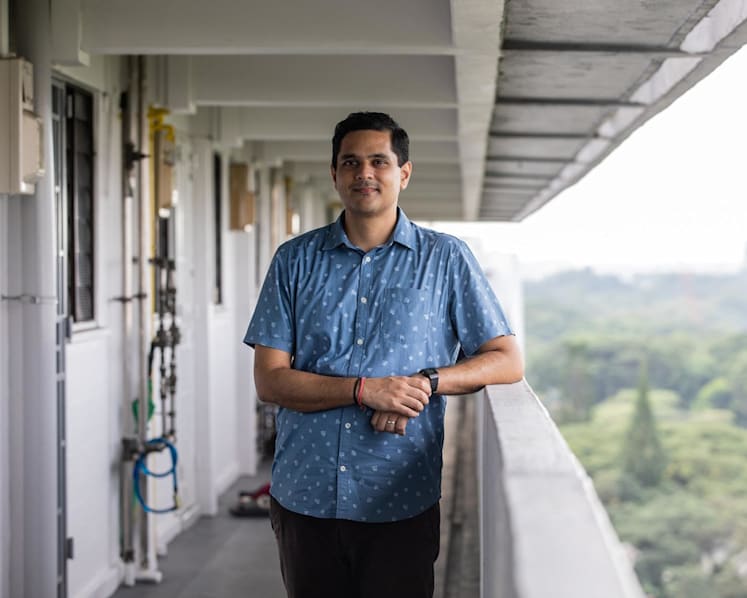
For people sleeping rough, design changes can be even more disruptive. For example, the installation of bench dividers or the conversion of two-seat benches into single seats often pushes them to find new locations to sleep.
And this then affects outreach efforts, one volunteer leader said. This makes it harder for volunteers to locate them, disrupting the rapport and trust they have built over time.
Mr Derek Lim, volunteer head and outreach coordinator at Homeless Hearts of Singapore, added that such changes also interrupt the routines of rough sleepers and can deepen their sense of alienation.
Over time, this can further erode trust in the authorities and discourage them from seeking formal help, he cautioned.
NAVIGATING TENSIONS
Experts and users alike said that ultimately, public space is not only a physical construct but a cultural one, shaped by consideration for others and ongoing negotiation between planners and users.
Acknowledging this, URA said that agencies can safeguard and facilitate the provision of public spaces, but the effective use and management of these spaces remain a shared responsibility.
"As Singapore becomes denser, public spaces will increasingly need to serve multiple functions and accommodate diverse user groups."
This means that land and property owners must consider different users' varying needs and create flexible spaces that cater to competing uses, while maintaining comfort and safety.
Users, too, play an equally important role in being mindful of how their activities affect others sharing the space, including being considerate of noise and potential obstructions, URA advised.
Dr Wong from SMU said: "Unspoken norms are essential in our everyday functioning of social life – what we can or cannot do, or what is expected of someone in particular social settings.
"It is an emergent process, meaning it takes time for the people involved to sort out teething issues, recognise different needs and pain points on the ground, and come together to eke out norms that reflect a kind of status quo about how things should be."
The question, then, is not whether public spaces should be regulated, but how much room they leave for trust, negotiation and a sense of shared ownership.
One way of navigating these tensions, planners said, lies in design.
Prof Cheong from SUTD said that because public spaces often accommodate multiple and competing uses, these can be mediated through clear spatial separation such as distinct zones for play and activity, as well as transit routes including pedestrian and cycling paths and areas meant for rest.
There can also be temporal layering over the course of a day or year, allowing the same space to take on different uses at different times.
Spatial design, together with explicit rules, signage, surveillance and enforcement, can also shape behaviour, thus producing predictability, cleanliness and safety, particularly in high-density environments, Prof Cheong added.
Steps and benches, for instance, encourage people to sit and linger, while clear signage outlining dos and don'ts reminds users to be considerate and to care for shared spaces.
And if civic behaviour and strong social norms can be cultivated over time, fewer visible rules may eventually be needed.
"It is about balancing regulation with trust and civic culture for the successful sharing of public spaces," Prof Cheong said.
"Public space is not only a physical construct, but a cultural one."
That said, design, though influential, is not always fully deterministic, Dr Padawangi said.
"Design may nudge a certain behaviour, but the space users can assert their agency, including creativity, to reinterpret how to go around design determinants to align the use of space with what the users intend to do."
Dr Padawangi also said that sharing space informally often involves direct interactions, persuasion and negotiation with other users, as well as creativity in rethinking how it can be used.
"Having shared spaces does not mean that everyone will always agree with each other.
"What is important is to build an understanding as a neighbourhood community, that even in times of disagreement, there is an agreed process to address it."
The greater challenge, she added, is ensuring that all voices are considered, particularly those of the minorities and people on the margins.
"This is the essence of democracy and what we can learn from everyday public spaces," she said.
"It is not just about living in harmony, but also about dealing with differences, and tolerating when things are different from what we personally want."
Describing how dialogue and negotiation – between planners, the town council and residents – play out on the ground, opposition Member of Parliament (MP) Gerald Giam said that the Aljunied-Hougang Town Council has seen a rise in requests for elder-friendly features such as handrails along staircases and seating at vehicle waiting points in public housing blocks.
Mr Giam, MP for Aljunied Group Representation Constituency who oversees the Bedok Reservoir–Punggol division, added that the town council tries to accommodate such requests "where the needs are genuine and our budgets allow them".
At the other end of the activity spectrum, the growing popularity of sports such as pickleball among both older and younger residents has also led to new infrastructure requests. These include fencing to prevent stray balls and reduce the risk of injuries.
To supplement built infrastructure, the town council has taken other measures to address concerns such as noise, including encouraging residents to use “quiet balls” made of foam when playing during the early morning hours, Mr Giam said.
Responding to queries from CNA TODAY, Mr Jeff Cheang, senior manager for communications and public relations at Tampines Town Council, said on Saturday (Jan 31) that the town council seeks to balance the needs of different user groups to ensure shared spaces remain safe and enjoyable for all residents.
When residents raise concerns about issues such as noise, cleanliness or safety risks linked to certain activities, the town council will do its best to address them, often working with other relevant agencies, he added.
"As we roll out new and better facilities ... on the one hand, we encourage users to enjoy these spaces but remind them to be mindful and not affect their neighbours," he said.
"On the other hand, we seek their neighbours' understanding on the reasonable use of these areas so that the needs of various parties can be harmonised.”
Mr Cheang stressed that safety is not negotiable, adding that feedback involving safety concerns is given top priority and addressed swiftly.
On the removable railings installed at the precinct pavilion at Block 868D Tampines Avenue 8, he said they were put up years ago in response to residents' safety concerns, because ball games were frequently played there.
Residents and grassroots organisations may approach the town council to book the space, and the railings can be opened to accommodate such bookings, Mr Cheang said.
Ms Tan from Young Urbanists Singapore said that spaces are usually re-interpreted through everyday use.
"People sit where they are meant to pass through. They talk where they are meant to keep moving. Over time, these small acts of use and repetition turn ordinary or transitional areas into meaningful places."
Encouraging such creativity does not mean removing rules altogether, but building greater tolerance for "everyday, harmless ways of being in public", Ms Tan added.
Indeed, Ms Siti Munirah, a pedestrian who was passing through the Esplanade concourse while the aforementioned group of inline skaters were training, said that she had no issue with different groups using the space, as long as they were considerate and ensured the safety of others.
These spontaneous activities can contribute to the liveliness of a space and put it to good use, the 40-year-old marketing executive added.
"If we are going to restrict (the young) from using these kinds of public spaces – for them to have some social bonding – it's going to be very difficult for them."
Such sharing, as well as users being considerate of each other, lets people have a stake in the space.
A space, Ms Tan explained, is shaped not just by its design, but by whether people feel a sense of belonging to it and a responsibility for it.
When space becomes contested, the question shifts to how people learn to make space, give space and share space with one another, and whose needs are ultimately prioritised.
"In the end, this is a question about care. What does it mean to care for one another in the city?" Ms Tan asked.
"Third spaces, when we look at them closely, offer a way to reflect on this. They show us whether we see space only as something to manage, or also as something to share.
"In a land-scarce city like Singapore, how we create and protect these everyday spaces tells us a lot about what we value, and about the kind of city we want to build together."