'Be prepared to be treated differently': The perils some face after declaring their mental health conditions at work
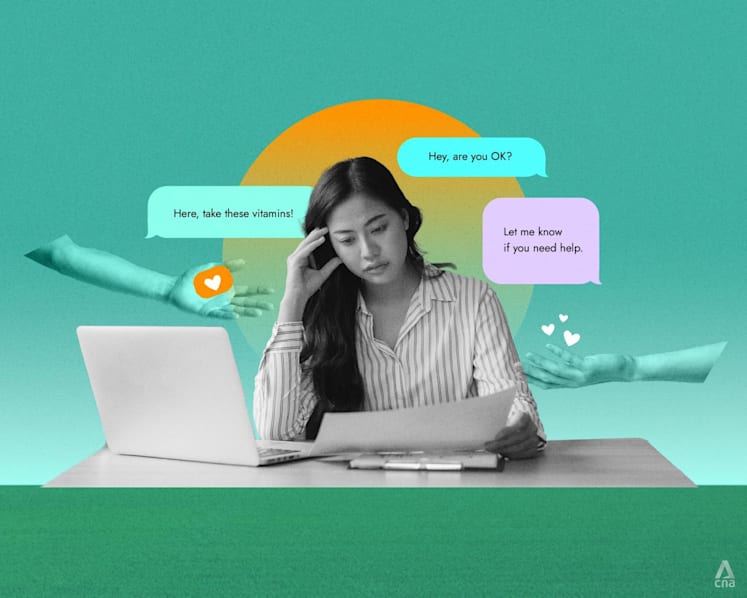
Even as Singapore moves to strengthen workplace protections against mental health discrimination, deciding whether to disclose mental health struggles remains a complex process for employees.

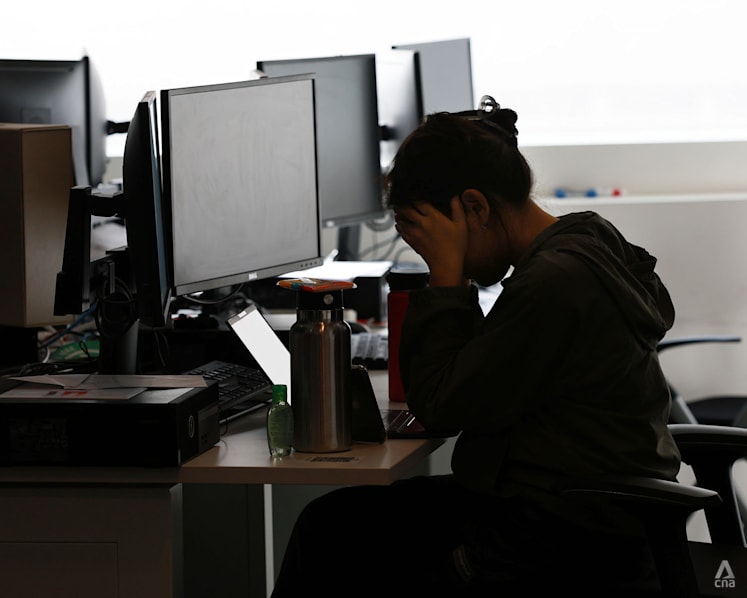
Despite strides in mental health awareness, sharing about one's struggles remains fraught at the workplace, where disclosure seems to be at odds with the professional impression one is expected to make. (Photo: CNA/Raj Nadarajan)

This audio is generated by an AI tool.


Since she was 14 years old, Ms Siti Khadijah Ishak has lived with major depressive disorder, anxiety, panic attacks and insomnia.
With medication and professional help, however, she has successfully managed her condition for over a decade and has been working as a kindergarten student care teacher since last year.
The path to finding a workplace that understood her needs without judging her however had not been smooth and she faced the constant dilemma of whether to share her condition with employers.
When she first started work at retail and food-and-beverage stores, it was less of an issue because they had minimal background checks.
But when she set her sights on the education sector, she was torn when it came to filling in the blanks of a common question asking job applicants to specify their medical conditions.
Ms Siti Khadijah said: "That question scares me until now. What goes through my mind is that if I tell them, will they treat me as a normal person or someone that they can't work with because (they think) we are crazy, we can't do normal things?"






Fearing that she would not be given a fair chance if she was upfront about her condition, she chose not to declare her mental health in a job application in 2020.
After receiving a verbal offer, she was later contacted by the employer who after doing a background check questioned why she had not disclosed her conditions.
Ms Siti Khadijah said the offer was subsequently rescinded with the employer explaining that it was due to her non-disclosure.
From then on, Ms Siti Khadijah provided potential employers with a doctor's note that stated her condition and certified that she was fit to work, and expected that such information would be kept confidential.
But on her first day as a student care teacher in 2024, she felt betrayed when a supervisor casually aired her diagnosis to her new colleagues.
"She just said, 'Hey, you know our newcomer? She has mental health issues, she takes antidepressants and all that'," Ms Siti Khadijah recalled.
"I pulled her aside and asked her why she did that, and she said, 'Because it's the only way that we can make our team bond stronger'."
The supervisor's response prompted Ms Siti Khadijah to tender her resignation on her first day as she felt that the company would not be a psychologically safe environment to work in.
Her experience begs the question: Should employees who are grappling with mental health issues disclose this to their bosses at work?
DISCLOSURE A "DOUBLE-EDGED SWORD"
The awareness of mental health struggles has gained notable traction in recent years with a number of safeguards on the horizon.
In 2018, a national movement to address mental health stigma called Beyond the Label was launched and last year it started the Return to Work workshops, designed for human resources professionals to support employees returning from mental health-related absences.
Last November, a law introducing a dispute resolution framework for workers to file discrimination claims was passed in parliament. Taken together with an earlier Bill covering the scope of protections against discrimination and employers' obligations, it forms the landmark Workplace Fairness Act which authorities aim to implement in end-2027.
The law will establish mental health conditions, alongside age, nationality, sex, race, disability and other characteristics as areas where workers are protected against discrimination.
Under an existing 2020 tripartite advisory on mental health at work, employers are encouraged to review application practices to ensure personal medical information is only requested when genuinely job-related and provide access to counselling services such as through Employee Assistance Programmes.
Despite strides in this area, sharing information about one's mental health conditions remains fraught at the workplace, where disclosure seems to be at odds with the professional impression one is expected to make.
While some employees told CNA TODAY that disclosing their mental health concerns has opened doors to support, others cautioned that such a choice can alter workplace dynamics in ways that are difficult to predict or undo.
Many employees said the worry is not open discrimination, but subtle penalties that may follow disclosure.
Mr Julius Tan, a 41-year-old biomedical technician who has bipolar disorder, said he quietly endured a lot of stress and anxiety during his younger years working as a chef as he believed it was what was needed to "earn (his) stripes".
"With any of the chefs that I worked with in the past, if I said I had depression, they'd have been like, 'Life's hard, man, chin up, the show has to go on.'
"So I don't think I would have disclosed that, I would have been afraid of serious ramifications in terms of advancing and being given responsibility."

For Mr David, who was not medically diagnosed with a mental health condition, the weight of caregiving grew heavier over time. He spent years supporting five family members with mental health conditions, including his brother who has schizophrenia and his father who has dementia.
At the height of his stress, which affected his sleep and ability to concentrate on work, his father would him call him five times during the workday asking the same questions and he would have to attend to his brother who was suffering from hallucinations.
Unlike other interviewees, he was less fearful about what his boss would think, given that he was the chief executive of a firm then and was more concerned that his employees would not view him as capable.
So, he suffered in silence as he needed to "lead with strength".
"But over time, I realised that was not a good decision, because I ended up adding an additional burden to myself, trying to keep secrets.
"Progressively, I did hint to some of my staff that mental health was important, but I never openly spoke (about my circumstances) to them," said Mr David, who is in his 50s and declined to be named for fear that it would impact his career.
In his current workplace at a local university where he is a professor, he was grateful for colleagues who helped to relieve some of his workload while his daughter was having a mental health crisis.
Despite the progressiveness of his workplace, disclosure is also not without risk.
Some of Mr David's colleagues suggested that he should not be given extra duties or certain promotions because they felt that it was "not the right time" for him to take these responsibilities.
"It was a double-edged sword ... It is natural that people are concerned. But they may not know how to handle the concern.
"They might take (away) responsibilities, as opposed to asking, 'Are you okay to handle additional things'? They normally would just back off automatically, without realising that actually I can or I'm willing to handle this," he said.
Experts said that employees are mostly fearful that declaring their mental health struggles at work will make them look weak, unreliable, less capable and will eventually affect their career progression.
"Employees may also worry about confidentiality and being tagged to that identity, which may be hard to break away from," said Mr Tim Oei, the chief executive of Mindfull Community, a charity which supports caregivers and those living with mental health challenges.
This fear may cause employees to "mask" their mental health struggles, for example, taking medical leave but attributing it to physical illnesses, or pushing through severe stress and exhaustion until they reach burnout, he added.

TO SHARE OR NOT TO SHARE
By all accounts, experts said it is understandable and warranted for employees to still be hesitant in disclosing their mental health struggles at the workplace despite greater awareness of the importance of mental health.
While some employers may encourage openness to provide appropriate support early, reduce misunderstandings around performance or behaviour, and prevent burnout or crisis, some staff may feel uncertain about whether their company is one that will offer genuine support.
"As workplaces vary in their levels of awareness and readiness, the decision to disclose remains a personal and contextual one, and not every employee will feel equally safe having these conversations," said Mr Joel Wong, a representative from Beyond the Label and TOUCH Mental Wellness assistant manager.
He added that the introduction of well-being or self-care days can help reduce the pressure on employees to disclose personal information, as initiatives like these represent an important step in building trust and fostering the supportive workplace cultures needed to gradually encourage employees to raise mental health challenges openly.
However, experts noted that small- and medium-sized enterprises or start-ups might not have the means or operational capacity to train or implement policies to deal with such issues sensitively.
"High-pressure sectors such as finance, legal and tech start-ups also face inherent delivery demands, making workload redesign more complex," said Ms Shalynn Ler, managing director of executive recruitment firm Ethos BeathChapman Singapore.

Dr Ong Mian-Li, founder and clinical psychologist at Lightfull Psychology Consulting and Practice, said that some employers may still hold on to the stereotype that someone with a mental health condition may be a "more unpredictable and inconsistent" worker.
Although an employee may receive help and feel more energised as they are standing up for their values, Dr Ong said it is also important to remember that disclosure could impact one's sense of identity if the employee does not receive appropriate help after disclosure.
Mr Edwin Chee, a 61-year-old digital ambassador who has been diagnosed with schizophrenia, said that he is honest about his condition if a superior approaches him first but discloses his condition selectively.
He has spoken about his condition with managers when necessary, whom he believes may be more prepared to handle complex conversations and have the power to make hiring decisions, but would not share details with peers.
"If you declare, you must be prepared to be treated differently," said Mr Chee.
Though certified to be "in remission", which means that he able to function well and work reliably as long as he takes his medication consistently, Mr Chee said he has noticed a wariness from colleagues after disclosing his condition at past workplaces.
Human resources experts said that the level of detail one goes into about one's mental health challenges and with whom should align with one's goals, the workplace context, and the support that would be ideal.
Ms Ler said for individuals who require medical support for their mental health conditions, the purpose of disclosure would be similar to reporting sick for physical ailments and making arrangements for time off or adjustments to ensure recovery.
In cases where formal treatment is not needed, the purpose of disclosure may be to request specific adjustments to deadlines or responsibilities.
"Even casual sharing requires thought. Consider what you are comfortable disclosing, and how it might affect workplace dynamics if the information spreads or is misunderstood. Setting boundaries upfront helps prevent unintended escalation," said Ms Ler.
Agreeing, Mr Shoichi Sunaga, branch manager of recruitment agency Reeracoen Singapore, said that in most situations, employees who disclose do so as they intend to seek support, request reasonable adjustments, or clarify expectations, rather than to disclose detailed medical information.
"Ultimately, disclosure is a personal decision. Many employees may choose to focus on how their situation is impacting their work, rather than sharing a specific diagnosis. Where a condition significantly affects performance or safety, seeking professional advice on appropriate disclosure can also be helpful," said Mr Sunaga.
Given the sensitivity of the topic, the burden often falls on employees to think carefully about how they want to be helped when raising mental health challenges at work.
Both human resource and mental health professionals agreed that conversations tend to be more constructive when employees focus on their needs rather than their diagnoses – for instance, requesting flexibility, workload adjustments or clearer boundaries.
WHEN OPENNESS HELPS
For Mr Tan the biomedical technician, the decision to disclose his bipolar disorder at his current workplace was forced on him when he was admitted to the Institute of Mental Health (IMH) just two weeks into his role in 2023.
Despite being new, he felt safe sharing his diagnosis after observing the company culture.
He saw his supervisor offer flexible working arrangements to colleagues facing diverse challenges, including one who is a single mother and another suffering from insomnia.
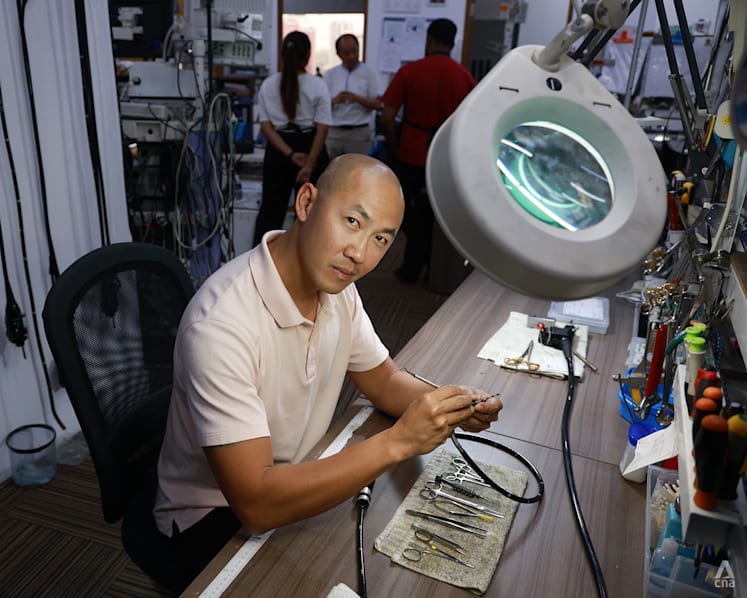
"What I received from disclosing my condition was the additional support that I needed, for example, being able to start work a bit later, because it was really hard to get up in the morning when I first started on my medication," said Mr Tan.
Dr Ong the clinical psychologist said employees can look for signs before deciding to disclose their mental health challenges – such as whether senior leaders speak candidly about their own mental health or stresses, and whether managers have demonstrated consistency in supporting staff who have mental health conditions or through difficult periods.
"Mental health doesn't have to be this big, rah-rah thing," said Dr Ong, adding that a manager adopting a neutral, matter-of-fact response to a request for mental health related time off or workload adjustments can build trust over time.
Ms Wen Jie Mok, a 38-year-old partner at global management consulting firm Oliver Wyman, said her firm's culture of being open about mental health concerns helped her juggle her at-times fast paced, stressful job with long, unpredictable hours alongside being a mother to her two young children, now two-and-a-half years old and four-and-a-half years old.
In her early years at work, Ms Mok said she had a tendency to "just say 'yes' to everything" but became more comfortable raising mental health concerns over the years.
This has been aided by policies such as being able to return to work on an 80 per cent basis for the first year after her maternity leave "without any fear of stigma", with the first two months sponsored by the firm under its company-paid reduced work days for new parents.
"I’ve openly shared my challenges when it comes to parenthood, work-life balance, and caring for my personal mental health to my peers and the business," said Ms Mok, adding that she is an advocate for self-care and encourages her team to consider and openly share what they need to wind down from work.
She was even trained as a mental health first-aider at her company and is one of the company's designated advocates for mental health.
Ultimately, experts said that opening up at the workplace should not signal reduced ambition or capability. Like physical health accommodations, mental health initiatives at work are intended to enable employees to function and contribute effectively.
For Ms Siti Khadijah the kindergarten student care teacher, though her mental health still has its ups and downs, she has been comforted by colleagues who check in on her and work remains a source of structure and purpose.
"I'm working with five- and six-year-olds. Even though I have my bad days, just seeing them run around, calling me or trying to make me laugh, it makes my whole day better," she said.
"It kind of heals me, because it not only makes me feel calmer, but it makes me feel like despite having this condition, I'm able to function as a normal person."