Is it 'unsafe' to live and work in Africa? These 4 Singaporeans have no regrets about taking the leap
From Cape Town to Kigali to Conakry, Singaporeans who have made Africa their home tell CNA TODAY how the continent is nothing like what most people might imagine it to be.
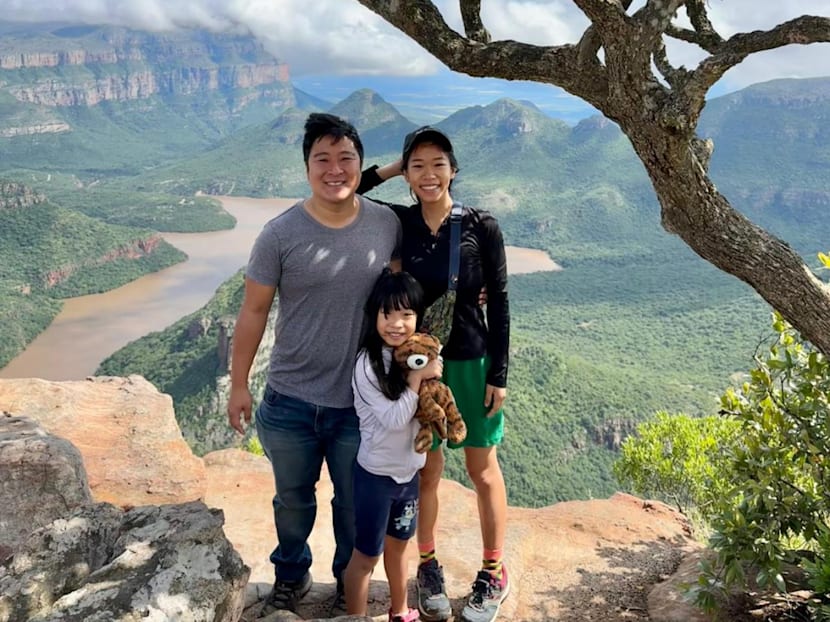
Mr Nathan Ong and his family at Blyde River Canyon in Mpumalanga, South Africa, the world's largest green canyon. (Photo: Nathan Ong)

This audio is generated by an AI tool.


Since moving to South Africa with his young family two years ago, Mr Nathan Ong, 37, has found far more to love about the country than expected.
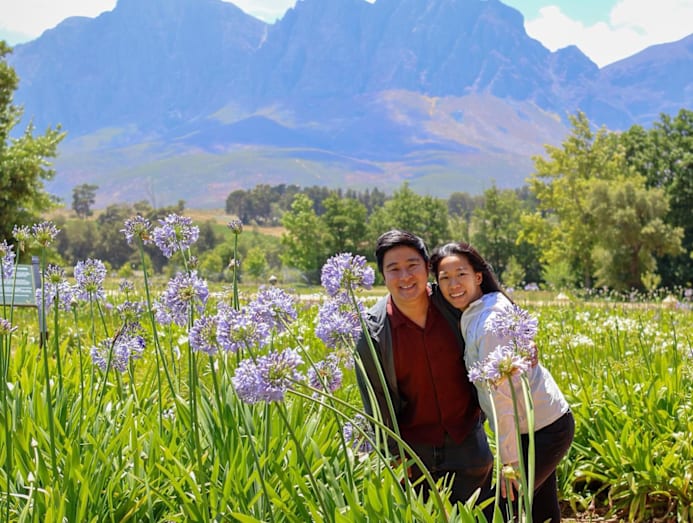
For one, he described its legislative capital of Cape Town as "probably the most beautiful city in the world" – with world-famous Table Mountain overlooking its busy ports. He is based there as a centre manager for an international non-profit.
East of the city lies Drakensberg, a majestic mountain range that borders neighbouring country Lesotho, which Mr Ong believes is comparable to the Himalayan Alps.
"There's so much diversity and natural beauty here that it really spoils you," he said.





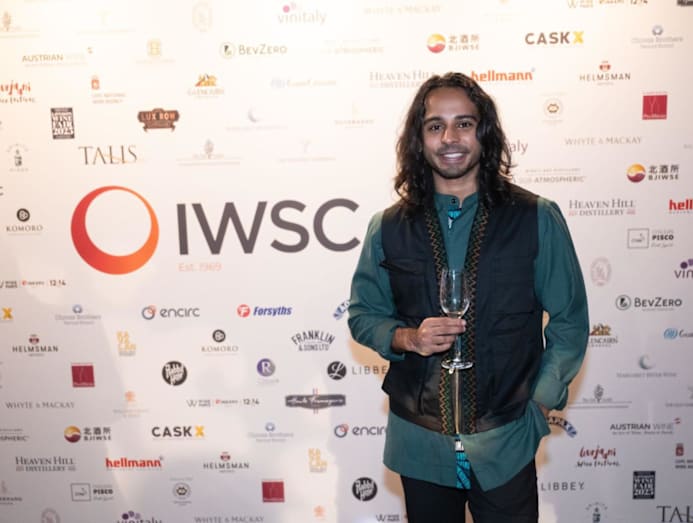
About 5,000km north of Cape Town, 31-year-old entrepreneur Rohan Shah painted a similarly enchanting picture of the republic of Rwanda.
Within a few hours' drive of its capital Kigali, one can go on a safari and see lions, leopards and elephants, then travel further to see gorillas and chimpanzees.
And back in town itself, Mr Shah said: "I look out from my windows and see these rolling green hills that are part of the city's landscape … and there're all these beautiful cafes that overlook the hills where you can have a pain au chocolat (chocolate pastry) and watch people play padel."
Singaporeans have increasingly made the journey to Africa in recent years. Ethiopian Airlines said that overall passenger traffic between Singapore and Africa jumped by 57 per cent from 2024 to 2025 – and for some people such as Mr Ong and Mr Shah, the continent has become home.
Aside from its vast wildlife and natural beauty, what does daily life look like in the world's second-largest continent in land size and population just behind Asia?
To find out, CNA TODAY spoke to four Singaporeans who made the leap across the Indian Ocean to pursue their personal and professional goals.
COMMUNITIES MATTER
When Mr Shah first arrived in Kigali in 2022, the process of figuring out how things worked was, by his own admission, "really, really hard".
He remembered walking to a nearby supermarket expecting to stock up on groceries the way he would at a FairPrice or Cold Storage back home in Singapore.
"I was devastated at how few things there were," he recalled. "I thought, 'Is this all I have to cook with?'"
It took him a few days to realise that the system simply works differently.
If you want fresh fruits, for example, don't go to the supermarket – head to the wet markets instead. "That's where the good stuff is," he said, describing an abundance of mangoes and bananas on display.
Less common grocery and household items such as protein powder can be found as well – you just need to know the right person.
"The instinct that we have in Singapore to do everything yourself doesn't work here. You have to ask for help. You need to find a guy who knows a guy, who knows a guy."
As an entrepreneur starting his own rum business from scratch since arriving in Rwanda, Mr Shah has had to put in a concerted effort to cultivate relationships consistently and intentionally.
In South Africa, Mr Ong has similarly built a close bond with residents in his neighbourhood, which is home to a mix of natives and expatriates.
One of the first things he learned since he moved to Cape Town in May 2024 was that warmth and cordiality is expected in every social situation.
This lesson was exemplified in one instance, when he pulled up to a petrol station to refuel his car and the attendant at the kiosk looked at him disapprovingly, much to the Singaporean's confusion.
Then he realised why.
"I forgot to greet him," he recounted with amusement. "I'm so used to rolling up to a station (in Singapore) and just saying 'R95, full tank'."
He added: "People here are very friendly and the relational aspect is important – not just for work but in everyday life.
"You have to greet people and ask them how they're doing."
For that reason, Mr Ong now shares great relationships with the neighbours in his estate in Cape Town, more so than back home in Singapore.
This is not just a social nicety – it's an especially crucial resource when problems arise in the community.
Neighbours collect each other's parcels because couriers cannot leave them outside, for example, and come together to organise logistics for their children's school outings.
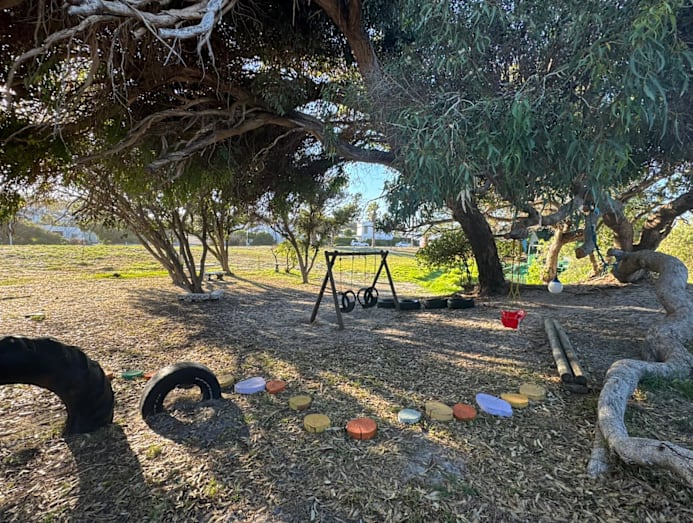
Mr Ong recalled one instance where his neighbours felt there was a lack of play spaces for children in their area.
Instead of petitioning the local government or waiting for a contractor, they literally took matters into their own hands: They built a playground from scratch.
"It's a commitment to the people in your vicinity, to the neighbours that you care about," Mr Ong added.
"You don't have as much of a 'not in my backyard' syndrome here. People come together and sort things out themselves."
A SLOWER PACE OF LIFE
Mr Lee Jun Da, 31, remembered the first time he stepped into a restaurant in Ghana's capital of Accra with his African colleagues.
The waiter took their orders – and then they waited, waited and continued to wait.
About an hour elapsed and the food had not yet arrived, but Mr Lee was the only one at the table feeling flustered.
"They told me it's just the way things are here, and that there's nothing to be shocked about," he said with a laugh. "It can take an hour, an hour-and-a-half, even if there's nobody else in the restaurant.
"So fast food here is called fast food for a reason."
Mr Lee, an assistant manager for Singapore-based shipping firm Pacific International Lines, was initially posted to Ghana in 2023 as part of an eight-month rotation programme for the company's management associates.
Once the eight months were up, he requested an extension with the company to stay put and has remained in Accra ever since.
The slow pace of life also extends to work culture, Mr Lee said, compared to Singapore's obsession with efficiency to the point where interactions feel "transactional".
"People here want to find out more about you before doing business with you."
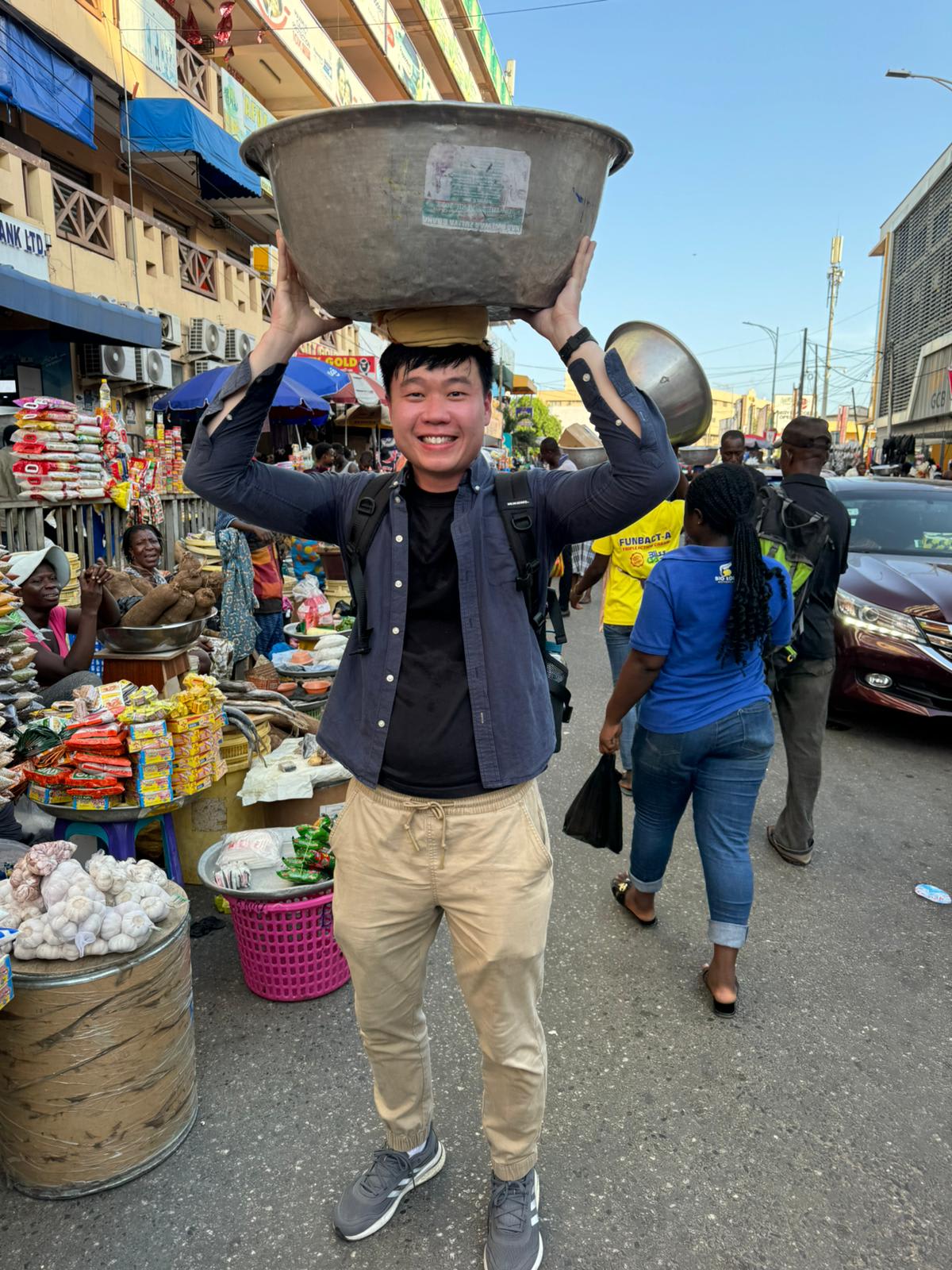
The slower pace of business in African countries usually means that Singaporeans used to a fast-paced lifestyle of hustle and bustle typically find themselves with a lot more time on their hands outside of the office.
Ms Teo Hee Lian has been living and working in Conakry, Guinea since 2019.
As the deputy general manager at Top International Holding's office there, the 52-year-old oversees the company's operations in the West African nation.
Despite Guinea being one of the poorest countries in the world, Ms Teo said she had felt comfortable since the day she arrived.
Her biggest "problem", she revealed, is having "too much" free time.
Ms Teo, who is single, has built close relationships with the expatriate community in Guinea, most of whom have moved there by themselves while their families stayed home.
As a result, she said, plans are often spontaneous.
"In Singapore, I find it difficult to find people to hang out with me," she added. "But here, everybody has a lot of time. You can call them anytime and they're free to make plans with you."

Perhaps the most counterintuitive discovery of their relocations: the cost of food.
All four Singaporeans said they were taken aback by how expensive life in Africa can be, a sharp contrast to the common assumption that prices in developing countries are cheaper.
In Accra, Mr Lee said that a restaurant meal typically costs around US$20 (about S$25), with even a simple bowl of noodles setting him back US$15.
Market food is cheaper – around US$3 for a plate of rice with meat. Anything beyond that, he said, is comparable to Singapore prices.
IS AFRICA TRULY SAFE?
The latest World Tourism Barometer published by the United Nations Tourism showed that in 2025, Africa the continent saw an 8 per cent increase in international arrivals – the strongest regional growth that the report has posted.
While Europe remained the world's most-visited region, welcoming nearly 800 million arrivals and posting a solid 6 per cent growth over 2024, surprisingly, some of the destinations recording the fastest growth were African countries such as Ethiopia, which saw a growth of 15 per cent, and Seychelles, a tiny archipelago off East Africa, which saw a 13 per cent rise.
Interest in African destinations is rising in Singapore, too. In 2025 alone, South African tourism data showed 9,827 visitors from Singapore, a 4.7 per cent increase from 2024.
In spite of Singaporeans' increasing willingness to visit the continent, interviewees told CNA TODAY that negative perceptions still persist when it comes to everything associated with Africa.
Search engines and the media do little to help this impression, they said.
When Ms Teo was first offered the Guinea posting, she looked it up on the internet with her phone. "The first result: Ebola. The second: Malaria. Apart from that, nothing much," she said.
Similarly for Mr Lee, he went online the moment he was told he would be posted to Ghana and found less-than-reassuring results.
"If you search for 'Ghana' and 'safety' together, you will find a lot of negative comments saying it's unsafe with a very high risk of robbery and whatnot."
As a result, when those interviewed first broke the news to their family and friends that they would be packing up and headed for Africa, the immediate reaction they received from their loved ones was that of concern.
The interviewees said, though, that it is unfair to lump all of Africa together into one monolithic entity.
Mr Shah, for instance, pointed out that Singaporeans readily accept nuance when it comes to destinations in Asia. Some areas in Thailand, for instance, have visible signs and symptoms of poverty but remain a beloved holiday spot.
"That doesn't stop (us from seeing) Bangkok as a fun, dynamic city worth exploring," he said, adding that the same should apply to Africa, an incredibly diverse place.
While socioeconomic inequality and crime can indeed be plainly observable in various cities around the continent, those interviewed said that some simple savviness is enough to keep you out of trouble.
For Ms Teo, her rules of thumb are simple: Never show off your flashy phone, never show your money and keep your valuables in your pocket.
"If I do all that, walking on the road is very safe. And the people are quite friendly. If you say 'hello' to them, they will respond very nicely," she said.
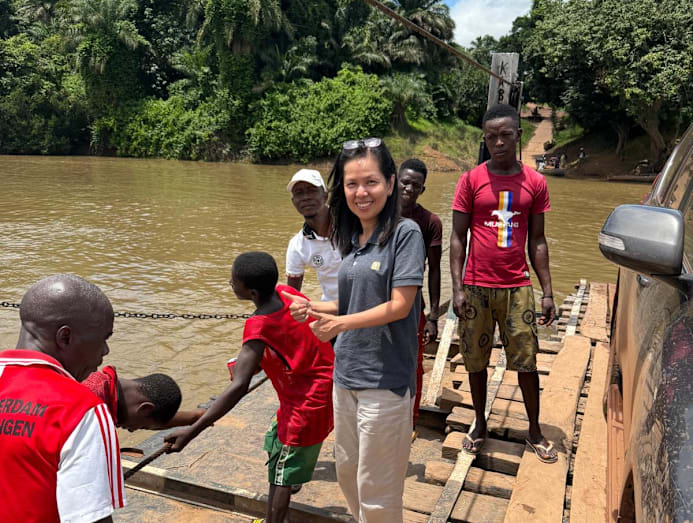
Mr Ong was more candid, acknowledging it as fact that South Africa has one of the highest crime rates in the world.
Yet, it has not stopped his family from building a life there.
The key is adjusting their day-to-day habits: going out less at night, staying aware of one's surroundings, not leaving valuable items in your car and avoiding certain areas where crime is more concentrated.
"My wife and I have travelled to many countries and cities and experienced different levels of safety. It's about putting that general awareness into practice," he said.
WHAT THEY MISS ABOUT HOME
For all the richness of their lives in Africa, the Singaporeans said there are things about home that geographical and cultural distance has made them appreciate more.
The food, predictably, topped the list.
"That's the classic answer – the cliche," Mr Shah said with a laugh.
Mr Lee agreed: Singaporean dishes are virtually impossible to find in Accra, and his time abroad has turned him into a much better cook out of necessity.
Mr Ong missed more practical things such as a fast and stable internet, the ability to walk outside at night without a second thought and the ease of getting things done.
In South Africa, it took him months just to get his car registration plates sorted. "In Singapore, you may take that efficiency for granted," he said.
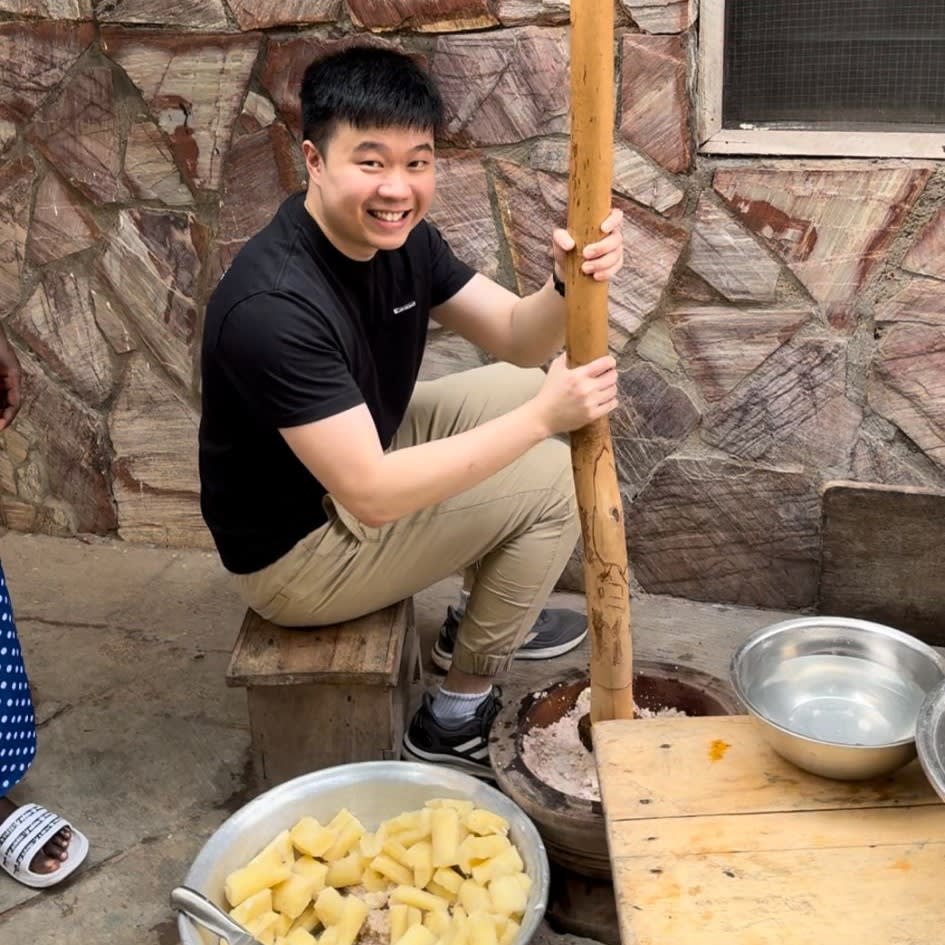
For all the interviewees, the yearning does go beyond hawker food and convenience.
What Mr Shah misses most is not a place but a feeling: the closeness of community that distance inevitably erodes.
"When you're far away, life continues for your community (in Singapore). Your friends will still love you, your family will still love you, but now, our relationship continues in these little intervals – I see them for one week, once every year," he said.
"Your community becomes split over places."
Mr Lee put it more simply: "You miss a lot of important events. That's an offset for living abroad, which is inevitable."
And yet, when asked whether they see themselves returning to Singapore soon, none of the four gave an unequivocal yes.
Mr Shah wants to grow his rum brand globally from Kigali. Ms Teo and Mr Lee both have recently been re-energised by fresh updates to their roles in Guinea and Ghana respectively. Mr Ong said he would be open to living overseas indefinitely.
Ms Teo, who has spent six years in Guinea – longer than she ever imagined – said she still feels like she is learning something new every day.
"The culture, the language, the people, the food, the environment – it's a non-stop kind of thing," she added.
"The world is so big; there is so much opportunity," Mr Shah said. "This place (Rwanda) is so interesting and so beautiful. You just wouldn't be able to imagine a life like this unless you gave it a chance."