This Singapore showrunner was told she'd never be a good director. Now she's behind award-winning dramas
From being asked to "stick to writing" to turning down golden opportunities to raise her son, The Leap Years' director Jean Yeo reflects on the personal and professional sacrifices behind her decades in Singapore television and film production.
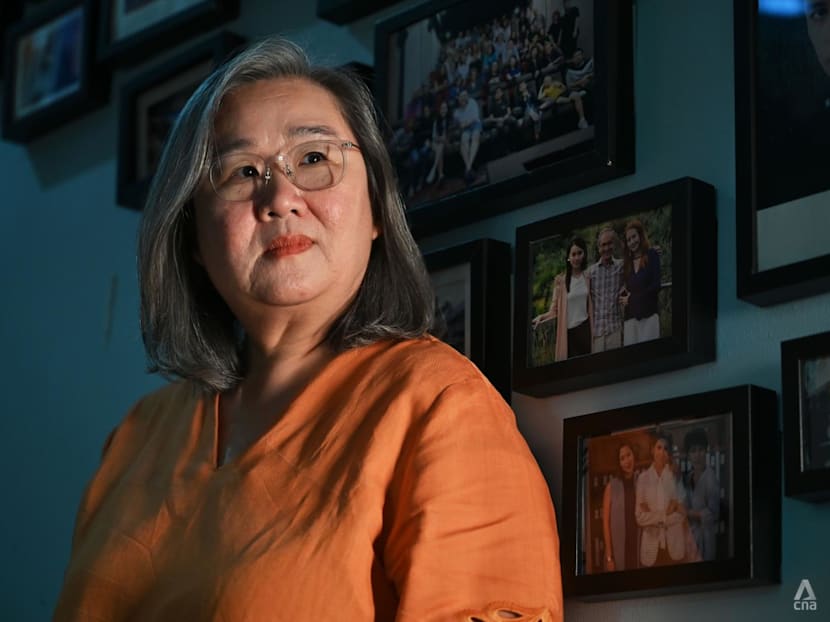
Ms Jean Yeo pictured against a backdrop of photos at the office of her company Ochre Pictures on May 21, 2026. (Photo: CNA/Alyssa Tan)

This audio is generated by an AI tool.


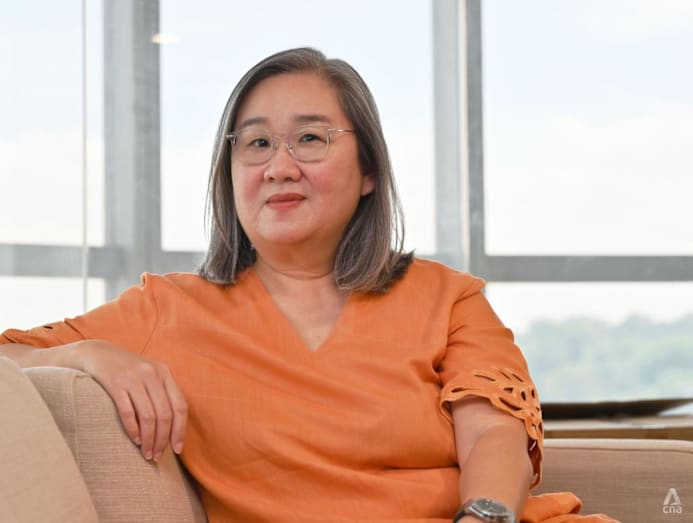
On a Thursday morning, Ms Jean Yeo welcomed me into her office dressed in a bright orange top – vibrant and impossible to ignore.
Orange, like the colour of ochre (pronounced oh-ker) that is the name of her production company, Ochre Pictures.
Pointing me to a seat, the 56-year-old showbiz veteran carried herself with something more than confidence: the complete clarity of someone who knows exactly who she is and what she wants.
A male industry peer once dismissed Ms Yeo as someone who could only make romantic comedies or "women's stories".
"So now, I do hostage thrillers, I do everything," she said with an unrepentant laugh. "I just want to shut them up."
Her unique brand of driven defiance has defined her nearly four decades in the industry: a refusal to remain confined by expectations, even when doing so came at considerable cost.





Today, Ms Yeo is one of Singapore's most established showrunners and the founder of Ochre Pictures, which she started in 2000, the year she turned 30.
Her body of work includes The Last Madame – which won Best Asian Drama at the Busan International Film Festival's Asia Contents Awards in 2020 – as well as Third Rail, Lion Mums and Sisters of the Night, a prequel to Last Madame.
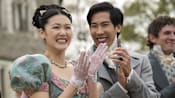
Long before streaming platforms and prestige Asian dramas became commonplace, Ms Yeo had already made her mark with The Leap Years. The 2008 romantic drama, which she wrote and directed, still holds the record as Singapore's highest-grossing domestically produced English-language film.
However, she is less interested in celebrating these successes than in the stories she has yet to tell.
"I'm a bit crazy," she admitted good-naturedly. "I used to get pissed off when people said I was a workaholic, but I've since realised they're right."
GROWING UP WITH CREATIVE PLAY
Even as a child, Ms Yeo gravitated towards writing and performance, from storytelling competitions in kindergarten to drama clubs and essay competitions in primary and secondary school.
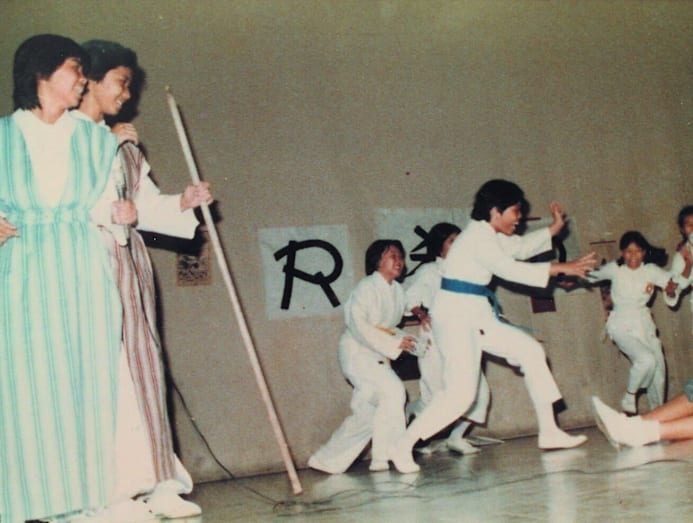
One of her most vivid memories was staging a gongfu version of Romeo and Juliet for a performance during a secondary school assembly, where she enthusiastically directed her classmates through dramatic sword-fighting scenes.
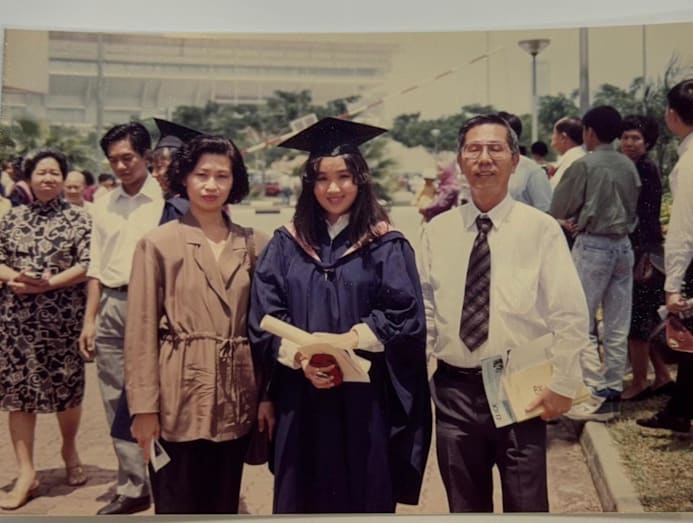
Later, at university, she took it upon herself to secure a journalism internship.
Such opportunities were still relatively uncommon in early 1990s Singapore, but she managed to get a six-month unpaid stint at The Business Times.
In the early days with the newspaper, Ms Yeo did everything except journalism itself. She took notes during meetings and ran errands, once even rushing to her editor's house to retrieve his shoes before an evening event.
Still, the pride she took in her tasks earned her the trust of her supervisors. After several months, she was finally allowed to write her first article – even though it was ultimately published under her editor's name because, at the time, it was unheard of for an intern to have their own byline.
She found herself drawn into the work of writing and research, as well as endless opportunities to meet different people. So when Mediacorp, then known as the Singapore Broadcasting Corporation, offered her a writing role before she had even graduated from university, she accepted.
On her very first day there, Ms Yeo was told to write a script for a studio shoot scheduled the next morning, after one of the writers abruptly quit.
"I came in with nothing and had to learn the craft in a day," she said. "I was a literature and language student. It's not like we had media schools back then."
Her boss at the time was Mr Kenneth Liang, who would later go on to run Channel 5 and then helm international productions for Mediacorp. He stayed at the office with her until 1.30am, guiding her through script revisions line by line.
When she finally returned home in the wee hours, her mother was horrified and urged her to quit.
Instead, Ms Yeo chose to stay in the chaotic world of television production – a decision she acknowledged as potentially baffling, given that Singapore's budding television industry was still figuring itself out in real time.
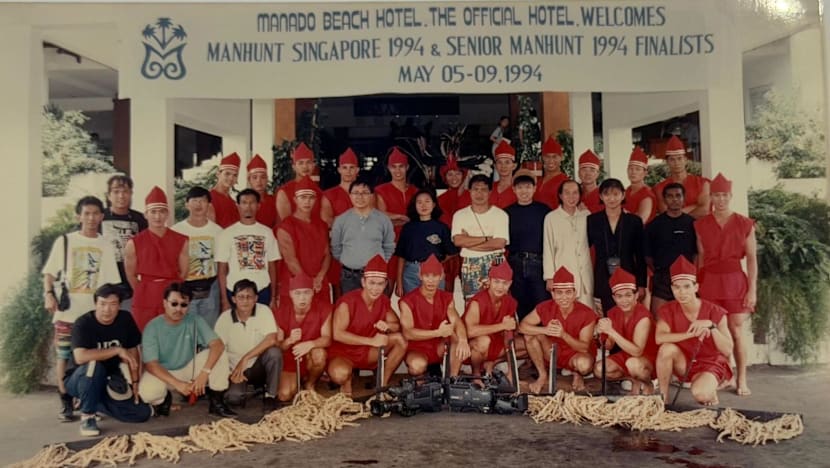
She worked on entertainment and variety programmes such as Rollin' Good Times, and was eventually posted to produce specials such as Manhunt.
After establishing herself as a writer, Ms Yeo moved into documentaries and drama, working on productions that would eventually lay the foundations for the scripted drama scene, including Growing Up and Triple Nine, which were televised on Channel 5.
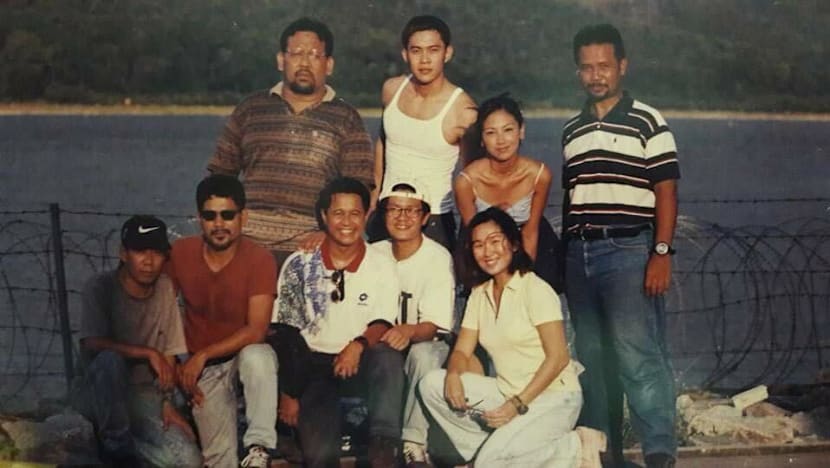
Yet, as she progressed out of growing pains, challenges remained. At one point, a boss told her bluntly to "stick to writing", because she would never make a good director – a remark that demoralised her at first.
"Thank goodness I had a strong character," she said. "If I had believed him, I wouldn't have done any of this."
Over time, she became increasingly frustrated by the limits of broadcast television. She wanted to experiment with film, television commercials and different forms of storytelling that did not always fit neatly within the industry.
"I wasn't burnt out, but I wasn't happy either."
In 2000, she left Mediacorp to start Ochre Pictures and set about creating work on her own terms.
MONEY PROBLEMS, MISOGYNY AND MORAL DILEMMAS
The reality of running a production company proved far more difficult than she had imagined.
Money was constantly tight, so Ms Yeo paid herself just S$200 a month for the first few months, until projects started coming in slowly.
Manpower was another issue. She'd started Ochre Pictures with two other women, but both left within a year.
It was also hard to find good workers at a time when few in the industry here had formal film training.
She recalled one freelancer who repeatedly disparaged the young founders for operating out of a home office.
The pressure became so overwhelming at times that Ms Yeo would sometimes retreat to stairwells to cry.
"This business, honestly, is not for you if you are in it just for the money," she said matter-of-factly. "If that's your goal, go and do something else."


In search of television commercial work, she started cold-calling companies herself, eventually landing one of her firm's earliest breakthroughs – a deal worth around S$100,000.
But even that quickly turned into another harsh lesson when the final portion of the fee was not paid, forcing Ms Yeo to march down to the client's office alone and refuse to leave until the matter was settled.
Beyond the financial struggles and difficult clients, there was also an unbelievable encounter.
Very shortly after Ochre Pictures was founded, an older industry figure approached the cash-strapped founders with a lucrative proposal, confident that they would be desperate enough to accept it: Why not produce pornography?
It's been more than two decades since, but the incredulity of that proposal was still palpable in Ms Yeo's voice as she recounted how insulted she and her partners had felt as artists and businesspeople trying to build a legitimate production company.
Unfortunately, that was not the last time she would confront negative assumptions and attitudes as a young woman trying to make her own way in a male-dominated industry.
"They typecast you or put you down. But I don't only do 'women's stuff'," she said. "We can do everything. We're storytellers. We're professionals."
If money is your goal, go and do something else.
Looking back, Ms Yeo admitted that she may have missed certain opportunities by being "too idealistic" in her younger years, holding firm to personal convictions at the cost of her fledgling business.
She once turned down a major German project after finding its portrayal of women deeply demeaning, only to discover later that another production company had picked it up and gained valuable international experience.
"I'm not a very good businessperson. I'm more creative," she said.
Running Ochre Pictures forced her to learn to become a boss – particularly in the early years when she struggled with how even decisions made out of concern for her team could sometimes be misread as self-serving or driven by ulterior motives.
"People say being a boss is very lonely and I think that's true. It just comes with the territory. If you believe strongly in something, you will inevitably have enemies."
"SACRIFICES, BUT NO REGRETS"
The pressures of work often spilt over into her personal life as well.
At one point, Ms Yeo was simultaneously working on her first feature film, directing a project for National Geographic and overseeing several other productions. While on a work trip to China, she received an urgent call: her mother had suffered a serious fall.
Ms Yeo immediately flew back home, but could only visit her mother once before returning to her work in Beijing.
"I felt very guilty for not being able to be there for my mum," she said, even though she was grateful for her mother's subsequent recovery.
The year 2008 was significant for Ms Yeo, both professionally and personally.
She released her first full-length feature film, The Leap Years, and she gave birth to her son.
The film's success brought on a wave of opportunities. "I probably received about seven scripts after that," she said.
"People kept telling me these (next two years) were the golden years, and then people forget about you after that."
However, by then, Ms Yeo had decided that her priority was spending time with her young son, who had been born with a hearing impairment.
She ended up turning down most offers – including a project involving Hollywood A-lister Keanu Reeves.
"I couldn't bring myself to leave my child behind," she said. "So if you want to talk about career sacrifices, yes, they were there. But there are no regrets."
INTERNATIONAL RECOGNITION AND COLLABORATIONS
In 2020, The Last Madame's big win at the Busan International Film Festival's Asia Contents Awards placed Ochre Pictures alongside some of the biggest names in regional television.
It's the kind of recognition Ms Yeo once struggled to even imagine as a young producer, seeing as the show had beat out much bigger South Korean favourites for the award, including Kingdom 2 and Crash Landing on You – Ms Yeo herself is also a fan of these two shows.
The awards ceremony was cancelled due to the COVID outbreak, but when Ms Yeo attended the following year's awards, she found herself unexpectedly approached by one of the chief jurors, who told her how much he had loved The Last Madame.
"In this room full of famous people, he was looking for the unknown me," she said with a smile. "I was so touched."
Since then, Ochre Pictures has worked with South Korean powerhouse Studio Dragon on the Singapore leg of the Netflix drama Little Women, and has signed distribution deals with Netflix for productions such as Durrani – Perjuangan Lion Mum and Chilli Crab Flower Club.
For all the sacrifices and uncertainty that accompanied those years, Ms Yeo ultimately does not feel that she had to choose between family and career.
She met her husband, Mr Pedro Tan, during a concert production at the residential hall while they were both in university. Even then, he remembered being struck by her natural ability to lead.
"That part of her has never changed," he told me later over the phone. "She's always been very passionate about what she does and very hard on herself."
In 2002, after leaving his regional business management job in the chemical industry, he joined Ochre Pictures full-time to build the company with her.
People say opposites attract, and in Ms Yeo and Mr Tan's case, this contrast seems to work well for both their domestic and professional partnerships.
"He gets angry maybe once a year. I get angry maybe once a week," she joked.
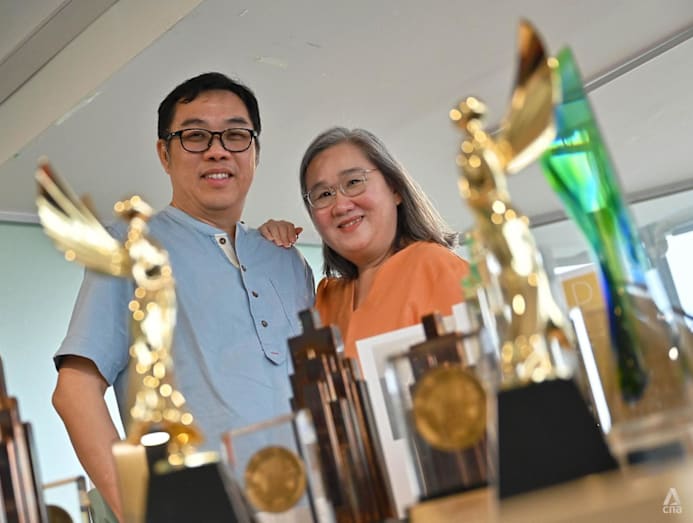
Over the years, the couple have reached an optimal balance, where Ms Yeo's creative instincts and ambitions are anchored by Mr Tan's corporate mastery of budgets and operations.
Their son, now 18, has shown little interest in joining the entertainment industry, and Ms Yeo appears perfectly at peace with that.
CARRYING THE FLAME INTO THE FUTURE
At this stage in her career, the Ochre Pictures chief is keeping tabs on mentorship and succession.
"I keep telling (my team), 'You all have to step up. I cannot keep this as a Jean Yeo company'."
Recently, she handed an entire project over to younger staff members, which ended up running over by several months and losing a significant amount of money. Nevertheless, she views it as a necessary trial by fire.
"They have to go through it and find out whether they can really do it," she said.
That is not to say that her mentorship efforts over the years have not borne fruit.
Mr Raihan Halim, 44, now the creative director of Papahan Films, first crossed paths with Ochre Pictures in 2004, after becoming a fan of the company's teen drama Moulmein High, which aired on Channel 5 from 2000 to 2002.
Although a planned polytechnic internship did not materialise, Ms Yeo and Mr Tan ended up hiring him as a full-time writer for six months, after which he continued working with Ochre Pictures on a freelance basis over the years.
He recalled that Ms Yeo was more "hot-blooded" in the company's earlier years, pushing employees hard on scripts and deadlines.
"Now Jean is way more chill," he said with a laugh. "But she has never been selfish about knowledge. She has so much to give."
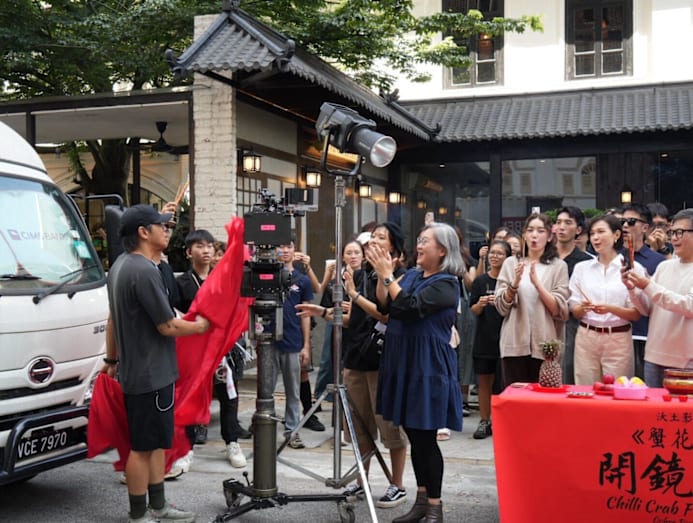
Over the years, their working relationship evolved into a close friendship. Mr Halim still remembers Ms Yeo sitting down with him more than a decade ago to talk him through a particularly difficult period in his personal life.
"Jean really taught me how to be a writer (and) to be a boss."
These days, while Ms Yeo spends much of her time thinking about the people who will come after her, she is not quite done looking ahead herself.
Thinking of the opportunities she turned down after The Leap Years, she admitted that there were moments when she wondered what might have been.
Yet for someone who has spent much of her career refusing to accept other people's limits, the possibility still feels very much alive.
"It is a little bit sad, because I always thought that I would do my second film," she said.
"But never say never. Maybe I still can (do it)."