Law-graduate-turned-actor Zheng Xi Yong says 'crazy self-belief' won him roles in Bridgerton and Barbie
The Malaysian-born actor and former golden boy of law school tells CNA TODAY why he's determined to stick it out in the volatile world of showbiz.
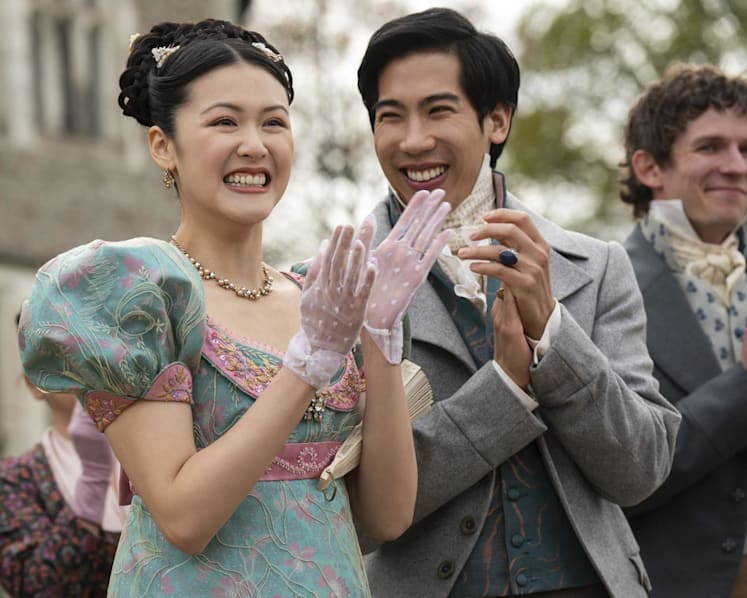
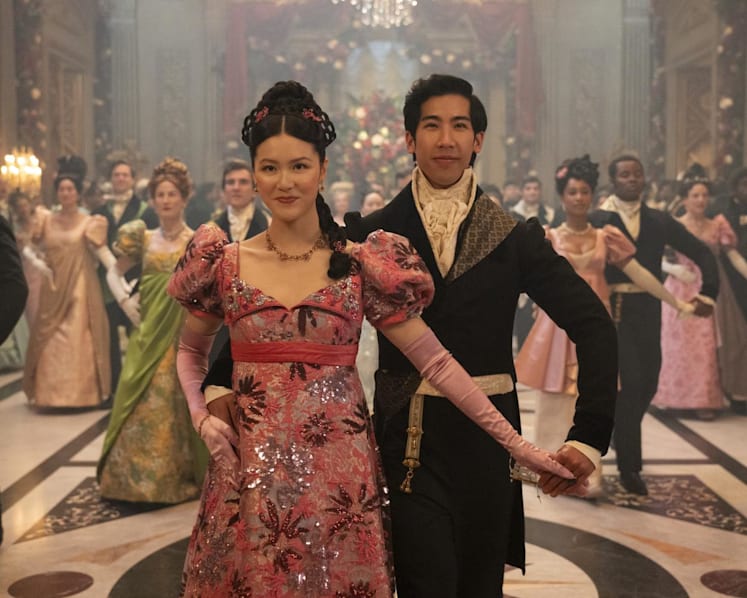
Malaysian-born actor Zheng Xi Yong (right) appears in the Netflix hit show Bridgerton as Lord Barnaby, the love interest of Posy Li (Isabella Wei). (Photo: Liam Daniel)

This audio is generated by an AI tool.


Ten years ago, Zheng Xi Yong was on track to become a lawyer.
In 2016, the 22-year-old was capping off a three-year undergraduate programme at King's College London with a shiny new law degree. Up until then, he had spent most of his life excelling academically, thriving in debate club and public speaking, and presiding over student councils.
To the average observer, he was on a clear trajectory for a certain kind of success – one that promised a steady income and a clear path up the corporate ladder.
Today, the Malaysian-born 32-year-old's reality looks very different.
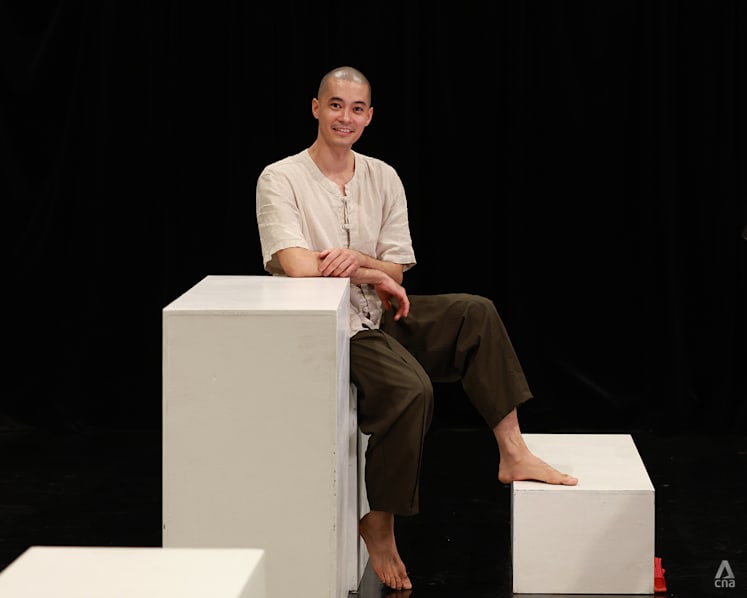
Instead of spending his waking hours on depositions and drafting contracts, he's in front of a camera taping for his next audition or on stage at rehearsal, running lines for an evening show he'll be performing in.
"Some people apply for jobs once in their life and stay in the same company for 30 years," he told me in a video call, his profile bathed in the early afternoon sunlight streaming in his London flat window.
"I've auditioned for a few hundred (acting) jobs, and with many, you don't even get past the first round."
He confessed this with a lightness that seemed, to me, at odds with the sheer drudgery his words were describing.
It was a life he had chosen knowingly, but even armed with that awareness, the grind and uncertainty of carving out a career as a professional actor proved far more relentless than he had imagined.
"I was aware of how difficult people said it was, but I had this kind of optimism that I would be able to manage it," he said.
"Actually living through it was very different. That kind of took me by surprise."
When Yong spoke to me in mid-March, he was wrapping up an eight-week run of American Psycho at the Almeida Theatre in London, where he played the character of Luis Caruthers.






Fresh from his involvement in the well-reviewed production, the residual sting of those early struggles was still evident on Yong's face as he recounted them.
After completing school, his fellow law grads hit the ground running, securing stable jobs with good companies that paid them good salaries. Meanwhile, Yong grappled with constant uncertainty: When would he get his next audition? Would he get a callback for that audition? Would the pay for whatever project he got cast in be enough to sustain him?
"My friends were wearing nice outfits, going to law firms to work in day after day and getting a salary," he said. "I hadn't even booked my first job."
Yong has come a long way since then. In recent years, he has appeared in global productions such as regency romance series Bridgerton, major Hollywood films such as Barbie, and a supporting role in the BBC series Boarders.
Nevertheless, he is acutely aware that periods of visibility do not guarantee success in the acting world.
"You don't know what you're doing next," he said. "You can't really plan your life."
Top of his mind right now, even as his resume continues to grow: "What's going to pay me for the next three months?"
"I'm definitely not earning anywhere near what lawyers earn," he said matter-of-factly. "Actors are just not paid super well, but I love what I do and I love my life."
PRELUDES AND PROLOGUES IN MALAYSIA
Long before Yong set foot in a London theatre or on a television production set, he was already familiar with the stage – not as an actor but as a singer.
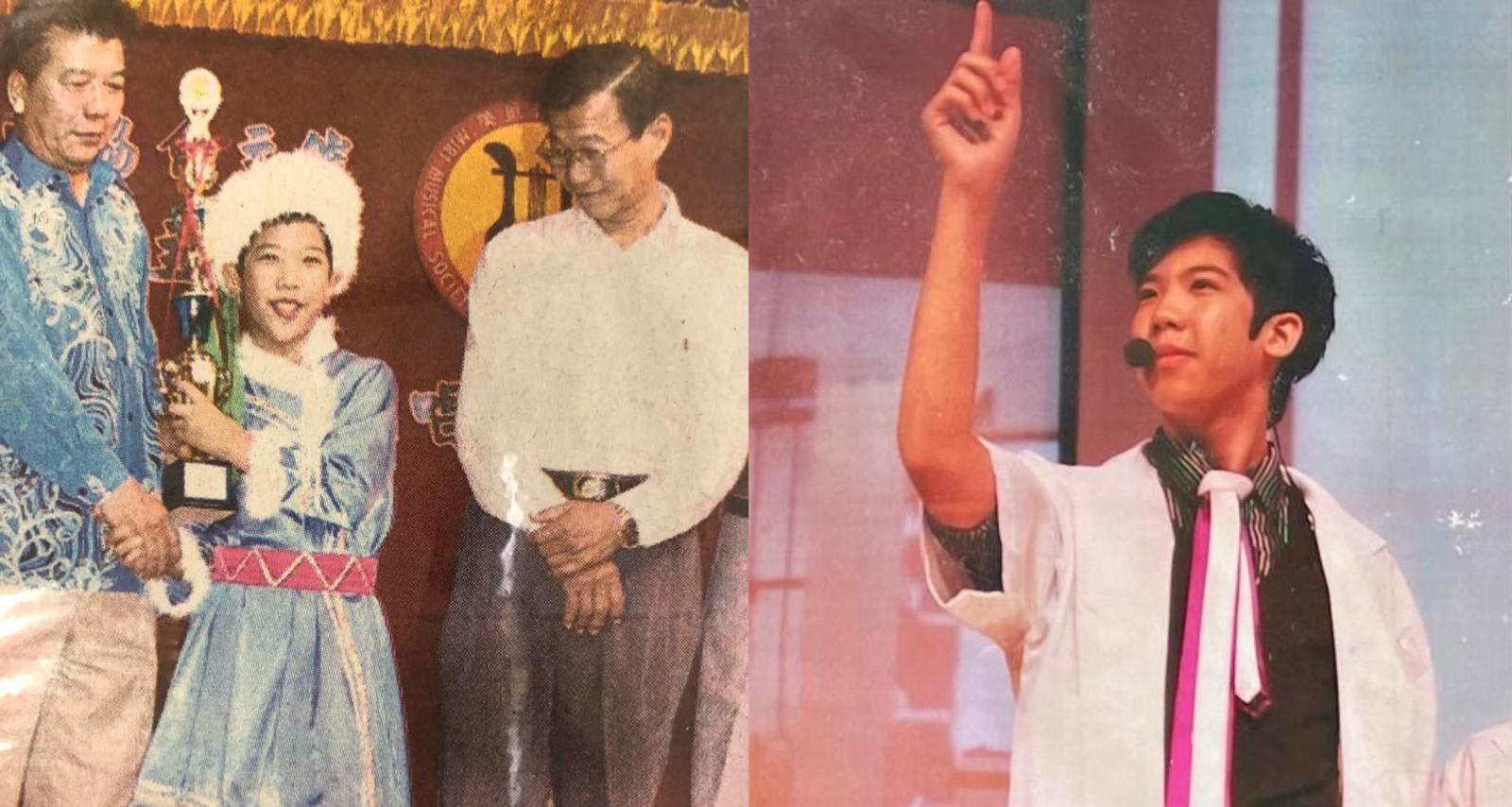
The youngest of three children, Yong was attending primary school in Miri, Sarawak, when he sang Chinese folk songs in a school talent competition. He went on to win, and that victory led to him representing his school at the district level, where he placed second.
Performing felt instinctive to Yong, something playful and intrinsic. "I just loved having an audience and communicating with people," he said.
Bitten by the bug, Yong moved on to singing pop songs while attending secondary school at Sri KDU Schools in Kuala Lumpur. He also began dabbling in school drama productions and musicals, where he discovered a love and aptitude for acting.
All the while, he maintained academic excellence, turning out good results for his A-Level examinations. Having been active in debate and public speaking as co-curriculars, law felt like a natural next step for him.
In 2013, he moved to London to read law at King's College. Amid the heavy workload of dense reading and endless essays, Yong remained actively involved in performing.
He joined a campus a capella group, and continued singing on the side. He started up lessons with a singing teacher, who later encouraged Yong to explore musical theatre more seriously.
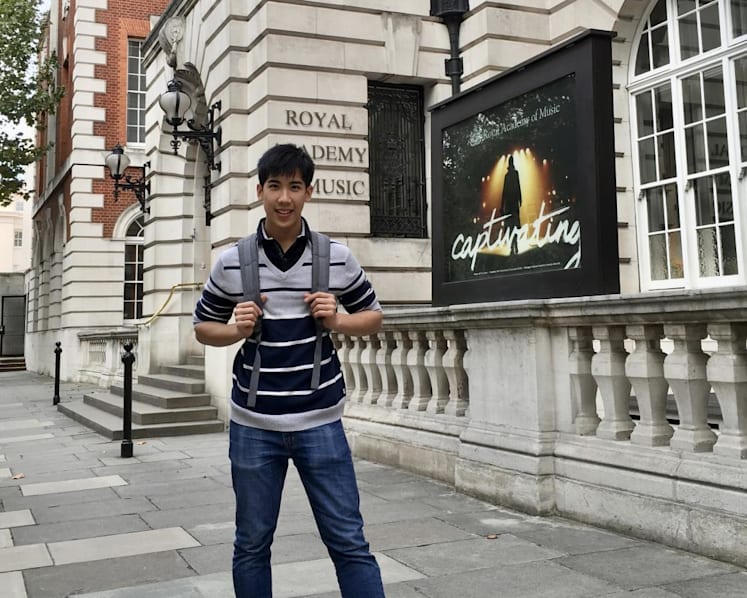
It was this teacher who suggested that Yong audition for the master's programme for musical theatre at the Royal Academy of Music (RAM) in London.
Up until then, Yong had never thought of pursuing performing professionally. But with the singing teacher's encouragement, he began attending West End productions and found himself irresistibly drawn into the magic of the theatre.
"You get to act, sing and dance all at the same time," he said. "I was really inspired."
In his final year of law school, he began preparing to audition for drama schools in London, including RAM – an endeavour he kept secret from his parents back in Malaysia.
But his silence was not out of a lack of commitment. With a laugh, he recalled skipping a week of law lectures to attend an audition techniques class.
However, in his view, it was one thing to win singing competitions as a teen. It was entirely another to demonstrate a certain level of serious potential and dedication for the craft of performing.
Yong had also been the first in his family to pursue an education in law. Having spent the last few years studying hard, completing internships and engaging in extracurriculars aimed at building a successful law career, he did not want his planned pivot to performing to seem impulsive.
"I didn't want to end up having this discussion – or even an argument – if I don't have anything to show for it," said Yong.
Yong broke the news to his parents when he was accepted into the RAM master's programme. They were worried, less about the performing itself than the life of struggle and uncertainty that it entailed.
But once Yong explained to them the prestige of the RAM programme and the seriousness of his commitment to his new chosen path, their concern gave way to support.
"If I hated law, it would've been very easy to write it off completely," said Yong. "(But) I really enjoyed my law degree, which made the decision to change paths much harder."
"I asked myself: In 10 years, will I regret not having tried performing? Even if I fail, at least I won't have any regrets in life."
THE "DELUSION" OF BEING AN ACTOR
Despite Yong's resolve to make acting a viable career for himself, the reality of sustaining it demanded much more than simple determination.
At RAM, where Yong enrolled in 2016, the transition from recreational to professional training was immediate and intense.
The master's programme compressed years of preparation into 12 months. Days began at 9am and were jam-packed with one-on-one singing lessons, group voice classes, and instruction on ballet, tap and acting.
While the training was physically demanding, the emotional toll proved more acute.
Unlike academic work, Yong quickly found that performance was exposing in a way that left little distance between the work and his personal sense of self.
"In law school, when I didn't do well in an essay, it didn't hurt me that much," he said. "But when you perform and you don't get a good grade, it's a bit like, wow, this is (a judgment on) me. You learn to develop a thicker skin."
The course culminated in a showcase for industry professionals, including agents and casting directors on the lookout for undiscovered talent. It was here that Yong secured his first representation – a necessity in a highly competitive industry.
In the UK's "massive" acting scene, Yong reckons that a single production can attract thousands of submissions.
An ensemble casting of just 20 roles may attract as many as 4,000 applicants, many already armed with professional representation and extensive resumes.
For those without such representation, he added, it can be nearly impossible to even get a foot in the door. "Sometimes you don't even get the opportunity to get rejected."
Once you somehow got into an audition room, you had to nail the audition itself. Yong described auditioning as a discipline in its own right, an endeavour that almost always required not just time, but money.
Preparing for a role could mean hiring a vocal coach, working with a dialect specialist, or spending days refining a self-tape, all for an outcome that was more often "no" than "yes".
In the early months after graduating, he struggled with an internal pressure to find success quickly, but wasn't able to break past even the first round for all the projects he was applying for.
"When you're starting out, all you want is that first job," he said.
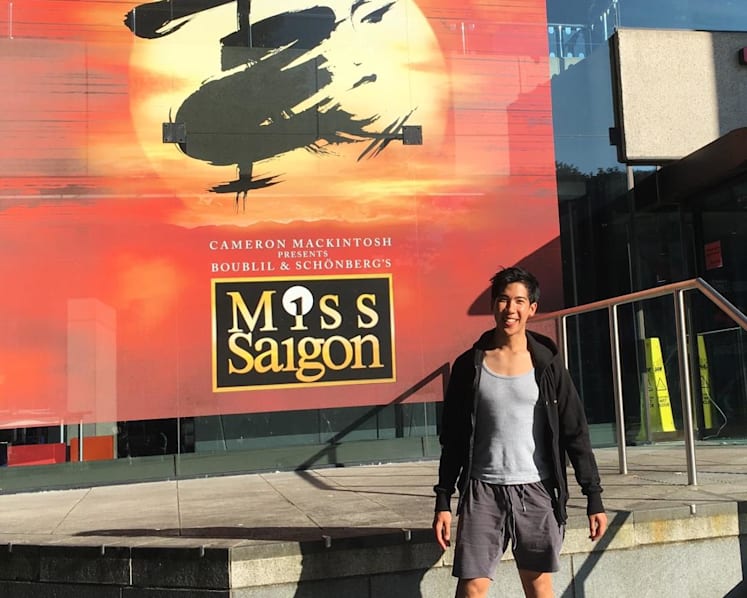
It took 11 auditions before his first callback, and several more before he secured his first major role: an ensemble position in a touring production of the musical Miss Saigon from 2018 to 2019.
The production, which had stops in countries outside the UK such as Germany and Switzerland, was a milestone for Yong. For the first time, the abstract idea of becoming an actor felt tangible.
After the Miss Saigon tour, he explored screen work, attending workshops with casting directors to adapt his theatrical skills for a different medium.
"On stage, everything reaches the audience," he said. "But on screen, subtle expressions are amplified on camera."
In 2021, Yong was offered a guest role on the long-running BBC series Doctors – his first step into television. That same year, he was cast in rock musical Spring Awakening, an off-West End revival that earned glowing reviews and industry attention.
Knowing major agencies would have representatives in the audience, Yong reached out to several, eventually signing with a prestigious firm that offered access to the projects he sought.
But with that came new pressures, as most of the other actors represented by his new agency were A-listers with major credits and awards to their names.
"I was this newbie trying to prove myself," he said. Each audition became not just an opportunity for employment, but a test of talent, reliability and whether he even deserved to remain in this space.
Yong also had to grapple with the non-linear nature of progression in the performing business. One day, he might be playing a lead, the next, an ensemble role.
Not every job was a step up in the traditional sense, but Yong had to ensure that each one was a sure signal to producers and directors that he could be trusted to carry a role.
Through his current agent, Yong managed to secure an audition for – and, subsequently, a small role in – the 2023 blockbuster Hollywood movie Barbie, marking his first feature film appearance.
THE MENTAL MARATHON OF PERFORMING
It's evident from our conversation that for Yong, the glitz and glamour of being an actor make up very little of the job.
For Yong, acting is not a stepping stone to fame and celebrity, but a skill set that he is constantly perfecting and honing. Even after years in the industry and relatively consistent work, the endless uncertainty remains a test of his mental fortitude – not one bit less difficult, just now familiar.
For instance, as he prepared to say goodbye to American Psycho, he confessed that he had no confirmed projects lined up, despite having gone out for several auditions.
To bridge the gaps between infrequent pay cheques, he teaches singing at drama schools, including at the undergraduate level to working professionals.
This isn't unusual: A 2019 study by Queen Mary University of London found that only 2 per cent of actors make a living from the profession, making side hustles a necessity for the vast majority. Thankfully, Yong is "genuinely passionate" about teaching, appreciating that it keeps him mentally stimulated.
More broadly, he remains clear-eyed about the many harsh realities of show business, which often sees talented and reasonably accomplished actors leave the industry altogether after years of struggling to break through.
With a law degree in reserve, I asked Yong if it's a comfort to have a safety net neatly in place should performing not work out. But he immediately made it clear that there was no turning back for him.
"I just have this stubborn kind of optimism," he said.
"No matter what I say, deep down, there's this thought in me that I'm just not going to give up."
He seems to be half-joking when he first describes it as a form of delusion – but in truth, it's less naivety and more necessity.
"You kind of need to have this crazy self-belief to pursue the arts," he said. "I have this vision of my future where I'm super successful, and I just hold on to it."
All the same, Yong is not immune to self-doubt, and moments of succumbing to fear and anxiety.
The longest dry spell he's weathered was in 2022. After wrapping principal photography on Barbie that summer, he went eight months without booking a single acting job – not even as a background actor or an unbilled ensemble cast member.
"Sometimes you start to wonder: 'Am I ever gonna work again?' You start to doubt a lot of things," said Yong.
However, he acknowledges that in his line of work, a lack of employment is not necessarily a reflection of failure. "It's nothing personal. If someone's right for the role, they're right."
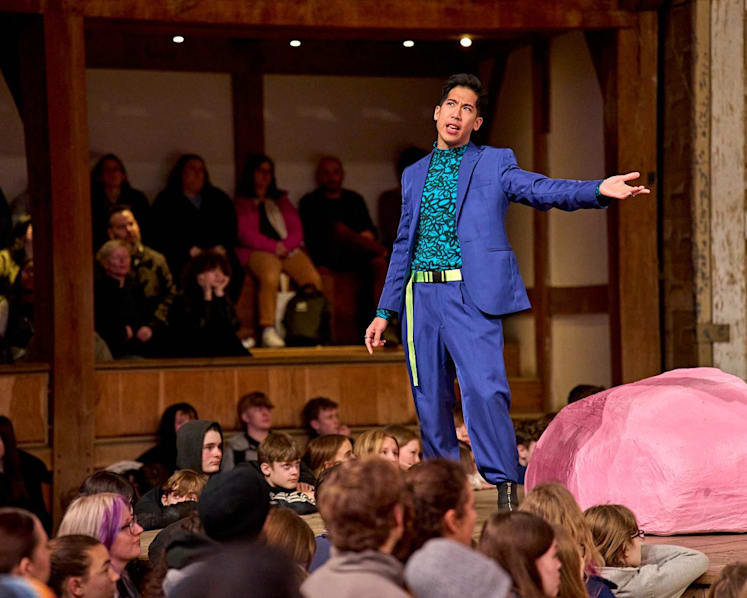
The dry spell ended in early 2023, with Yong booking the role of Antonio in Shakespeare's The Tempest, at Shakespeare's Globe in London.
All the same, "delusion" is hardly enough to keep one going through years and years of uncertainty and rejection.
Yong credits his support network with motivating him. Among the friendships he's forged in London is a fellow actor with whom Yong shares both rejection and encouragement. He met her through the university a cappella scene, and she later went on to train at RAM a few years after him.
While she is at an earlier stage of her career compared to Yong, as he puts it, "all actors go through the same struggles".
All the same, building friendships in showbiz often means having to balance a sense of community with one of competition. Just a couple of weeks ago, he and his friend were going for a role in the same production. When neither succeeded, they helped dust each other off and carried on.
"We both got rejected … and we were like, 'it's fine'," he said with a laugh. To him, it's a kind of "shared language" among actors.
Even beyond close friendships, these conversations are common.
You kind of need to have this crazy self-belief to pursue the arts.
Yong's mother and sister follow everything he does, he said, no matter how small the role, often sending praise and encouragement via text.
Whenever they can, the family also makes the journey from Malaysia to the UK to watch him perform on stage.
"I always feel very excited when they're here because I get to show them what I do," said Yong, a boyish grin lighting up his face.
Yong is also the first in his extended family to carve out a career in acting. He jokes about being a "trailblazer", but is surprised and grateful that what success he's built so far has bolstered some of his younger cousins to follow in his footsteps.
He now finds himself coaching the cousins for their own singing competitions, providing them with the guidance he wished he'd had at their age.
THE RESPONSIBILITY OF REPRESENTATION
For Yong, success carries far more weight than money and fame.
Southeast Asians comprise about 0.7 per cent of the UK population. However, in 2025, only 0.2 per cent of on-screen roles on UK television went to Southeast Asians, found the 2025 Diamond Report.
The Diamond Report, published by the Creative Diversity Network, is the industry's primary tool for tracking diversity and inclusion across UK broadcasters.
Yong is aware that he is part of a minority that isn't seen or heard very often in British entertainment and media. That awareness has, at times, led to a tangible impact on his roles.
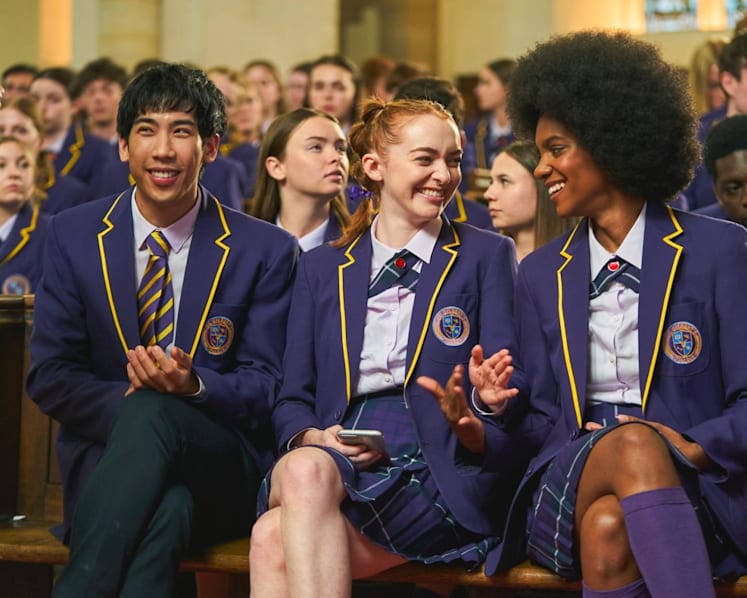
In the BBC series Boarders, which follows students at a prestigious boarding school, he was cast to play a character initially written as broadly Asian or of Chinese heritage. During filming, the producers and writers learnt that Yong was Malaysian and chose to adapt the role accordingly.
The show began to include references to Malaysia, mentions of Kuala Lumpur, and even spurts of Mandarin Chinese. For Yong, it was a rare instance of specificity in an industry that often treats Asian identities as monolithic or interchangeable.
"I find it cool there's mention of Malaysia and Malaysian representation in a British television show," said Yong.
His latest success is Bridgerton, the Netflix runaway hit series that's drawn record-breaking numbers of viewers all over the world since its premiere in 2020.
Yong clinched a small part as Lord Barnaby in season four, the first half of which dropped on Jan 29. It immediately claimed the No 1 spot on Netflix's English TV catalogue with 39.7 million views in the first week of streaming, reported the streamer.
Naturally, the scale of Yong's visibility greatly expanded overnight.
He was caught off-guard by all the attention he was suddenly receiving from audiences all over the world. The show had featured at least two other Southeast Asian actors in speaking roles before, but never as the love interest of a main or supporting character.
On social media, posts and comments started flowing in from viewers, particularly those from Southeast Asia or with Southeast Asian heritage, expressing surprise and happiness at seeing someone like him in the 19th-century London ton.
"Suddenly there was all this media attention, people saying: 'Wow, there's Southeast Asian representation in Bridgerton'," he said animatedly.
"It was a pleasant surprise, and I'm very grateful. Representation has always mattered to me as an audience member, so to be able to be part of that ... means a lot.
"Any job I do, I am representing my people."