This actress has Down syndrome. On stage, she delivered the diagnosis – and suggested abortion
A recent production at The Esplanade Theatre Studio was the first time in Jaspreet Kaur Sekhon's acting career that she did not play a character with Down syndrome.
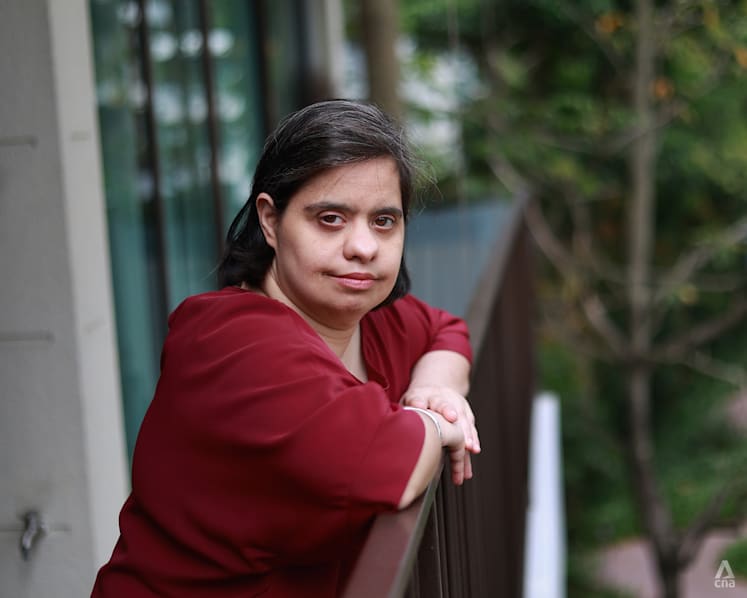
Ms Jaspreet Kaur Sekhon, 45, who has Down syndrome, recently acted in the play Invisible. (Photo: CNA/Raj Nadarajan)

This audio is generated by an AI tool.


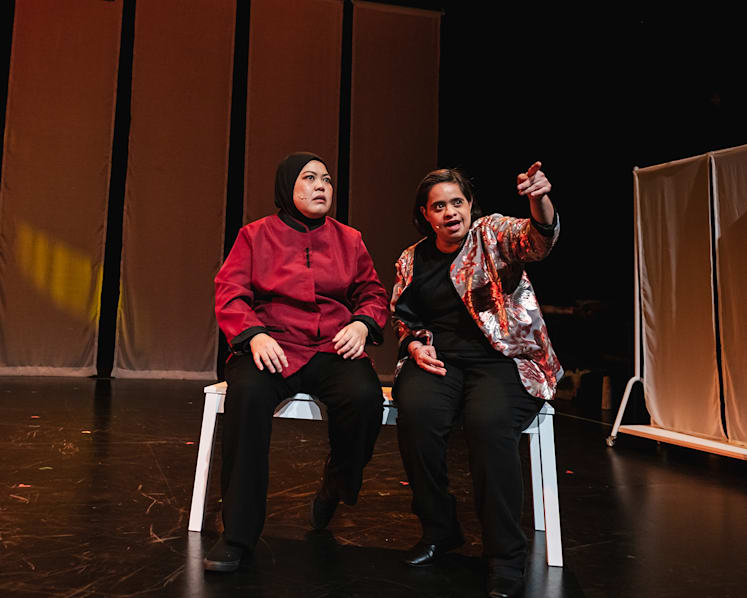
Seated in the audience at the Esplanade Theatre Studio on a Wednesday evening, I watched as a young woman named Safiah, played by actor Dalifah Shahril, sat nervously in a gynaecologist's clinic.
Then the doctor broke the news to her: Her unborn baby has Down syndrome. After a fraught moment, the gynaecologist matter-of-factly suggests that she could, at this point, consider abortion.
The quiet devastation of the scene was underscored by a unique irony: The doctor was played by Jaspreet Kaur Sekhon, who has Down syndrome.
This is a genetic condition caused by an error in cell division that results in an extra copy of chromosome 21, which can affect a person's physical features, intellect and overall development.
Ms Sekhon, 46, was one of the four actors in Invisible, written by noted playwright Haresh Sharma and commissioned for the Singapore Fringe Festival 2026. The play explores the lives of four women grappling with invisible disabilities, including dyslexia, diabetes and depression.
She played Anita, a wealthy, sometimes snobbish woman whose panic sets the story in motion when her beloved statue of the Hindu god Ganesha goes missing.
"She's a very uppity person, and a very rich one as well," Ms Sekhon told me, a grin brightening up her face.
"That's not me in real life, but that's the character, and I felt I could really work with that."
Sitting on the couch in her family's breezy West Coast home, Ms Sekhon, in a navy blue tunic and sensible bob, went on to joke that maybe she had been given the doctor role because her father had been a doctor, too.
Drawn in by her relaxed demeanour, I asked if she'd had any personal reservations about taking on a role that required her to suggest aborting a child with the same syndrome that has been a key constant in her own life.
She said the gravity of that scene was not lost on her, and that she did feel "awkward" at first.
But after grappling with her doubt, the significance of her being cast in such a role won out as the greater priority: It was the first time in her acting career that she was not playing a character with Down syndrome.
For her, it was a novel experience sharing the stage with non-disabled actors, including Deonn Yang and Periyachi Roshini, not as an actor with Down syndrome, but an actor, period.
"Nobody treats me any differently. It makes me feel really good – like I'm included," said Ms Sekhon.





A "NEGATIVE" OUTLOOK FROM AN EARLY AGE
Besides acting alongside mainstream actors, Ms Sekhon said performing at the Esplanade was another "extremely rewarding" moment for her.
Invisible, a collaboration between theatre company The Necessary Stage and non-profit ART:DIS, ran from Jan 21 to Jan 25 at the Esplanade Theatre Studio. ART:DIS is a Singapore-based non-profit that supports and develops artists with disabilities through training, mentorship and opportunities to create and present professional work.
Ms Sekhon's journey to an Esplanade stage was neither a short nor easy one.
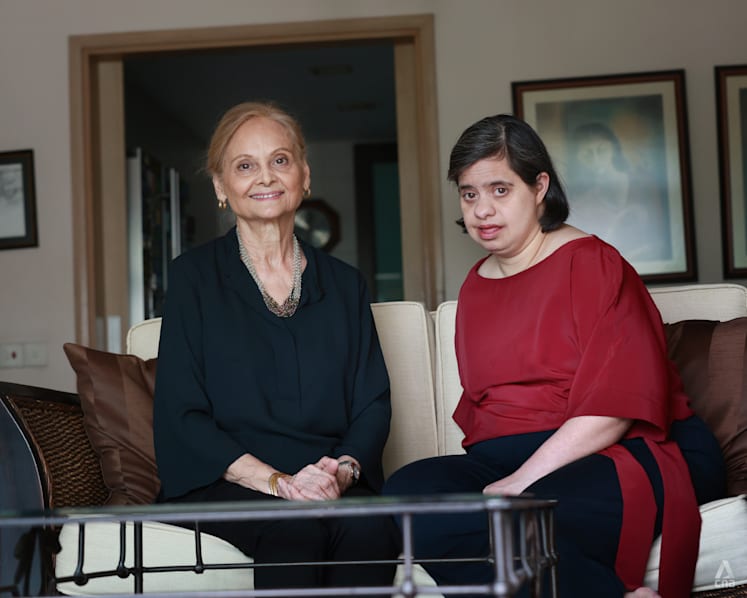
Next to her on the couch, bearing witness to her testimony was Ms Rabinder Kaur – Ms Sekhon's mother, caregiver and, for all intents and purposes, manager.
The 74-year-old is at her daughter's side every step of the way in her acting endeavours. She attends every rehearsal, keeps track of her schedule and cues, and even runs lines with Ms Sekhon.
Ms Kaur still remembers the moment she first heard the diagnosis for her daughter.
It was the early 1980s, a time when societal awareness of Down syndrome in Singapore was nascent, if not non-existent – over a decade before the Down Syndrome Association (DSA) in Singapore was founded in 1995.
The doctor painted what Ms Kaur remembers as a "negative" picture of the kind of life her daughter could expect to have – nothing a new mother would ever want to hear.
Despite hoping for the best, she never imagined that nearly four decades later, her little girl would become a working stage actor with three productions under her belt and a calendar crowded with rehearsals, activities and friends.
ROAD TO THE ESPLANADE
In 1999, Ms Sekhon graduated from APSN Delta Senior School at age 19 and spent the next 16 years working in a kindergarten as a teacher's aide.
In 2016, she left her job and joined DSA's Adult Enhancement Programme, where she learnt functional life skills to support her daily independence and prepare her for employment.
Two years later, she became one of the founding members of the Diverse Abilities Dance Collective, a contemporary and traditional dance group formed by Maya Dance Theatre artistic director Kavitha Krishnan.
Through the collective's outreach programmes, Ms Sekhon conducted workshops teaching dance and movement to a wide variety of learners from pre-schoolers to seniors.
In 2020, the acting bug bit Ms Sekhon. She began insisting that she wanted to try her hand at acting.
Always in support of her aspirations, her parents – Ms Kaur and Dr Balbir Singh, 77, a general practitioner – endeavoured to help her realise this dream.
It was 2021 when, in the throes of the COVID-19 pandemic, Dr Singh went to pick Ms Sekhon up after she'd attended a live performance at Gateway Theatre. There, he bumped into an old friend from his National Service days.
The friend was Mr Andrew Liew, chairman of ART:DIS.
Upon hearing of Ms Sekhon's acting dream, Mr Liew offered to sound out his organisation. Soon after, Ms Sekhon and her father got a call from Mr Peter Sau, ART:DIS' head of artistic development and performing arts, which lasted over an hour.
It was only later that the family realised it was an interview. Shortly after, ART:DIS got back in touch with the news: "We will take you on as an emerging artist."

ART: DIS' Emerging Artist programme scouts out artists with disabilities and supports them with training and professional performance opportunities for a period of time.
In 2022, Sharma, the playwright, worked with her to develop My Life, My Story, an autobiographical monologue shaped around Ms Sekhon's life as a woman with Down syndrome: Her artistic ambitions, the unique challenges and struggles she faced moving through society and the world, and her determination to be seen as more than a diagnosis.
One scene in the play draws direct inspiration from a real-life experience of Ms Sekhon's.
Once, while riding on the train with a friend who also has Down syndrome, she caught a teenage boy staring at her friend as if she were a spectacle.
"He was very rude," Ms Sekhon remembered, but her friend was too afraid to confront him, despite growing visibly more uncomfortable the longer the staring went on.
Eventually, Ms Sekhon spoke up: "Stop staring at her. She doesn't have the confidence to tell you this. So I'm telling you this."
Under the Emerging Artist programme, Ms Sekhon also starred in Chachambo: Taking Flight in 2023, a production commissioned for ART:DIS' 30th anniversary. The show follows a visually impaired girl as she tries to revive an entertainment club in Singapore's swinging '60s.
The year after that, when Sharma came back to the mother-daughter duo with another project pitch, they were ready for something different.
"This time, (her father and I) wanted her to be in the play, but not as a person with Down syndrome," said Ms Kaur.
THE EMOTIONS BEHIND THE STAGE DRAMA
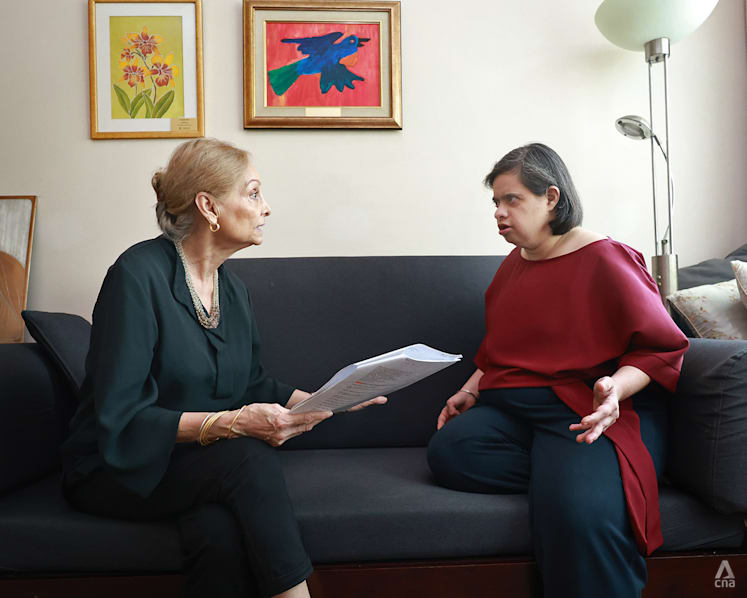
Throughout my conversation with Ms Sekhon, Ms Kaur sat next to her with an ever-ready smile on her face, her wispy, light-brown hair pulled neatly back into a low bun.
Perhaps some would find it easy to dismiss her as a mere supporting character in Ms Sekhon's life – but as a mother of an individual with Down syndrome, the play arguably landed harder on Ms Kaur than her daughter.
Having watched the production take shape from its inception, she found herself struggling with intense emotional reactions to its most cutting moments, especially in scenes that touched on raising a child with Down syndrome.
Sitting through rehearsals and running lines with Ms Sekhon over and over again, she had resolved to adopt a more "stage mum" mentality and detach herself emotionally from the material.
Still, as she spoke to me on that Thursday about the scene and actor Dalifah's powerful performance, her eyes glistened. Soon, she was blinking back tears, her voice thickening and dropping in pitch.
"It is close to home, of course, but that's what it is," Ms Kaur said, reaching for tissues on the coffee table.
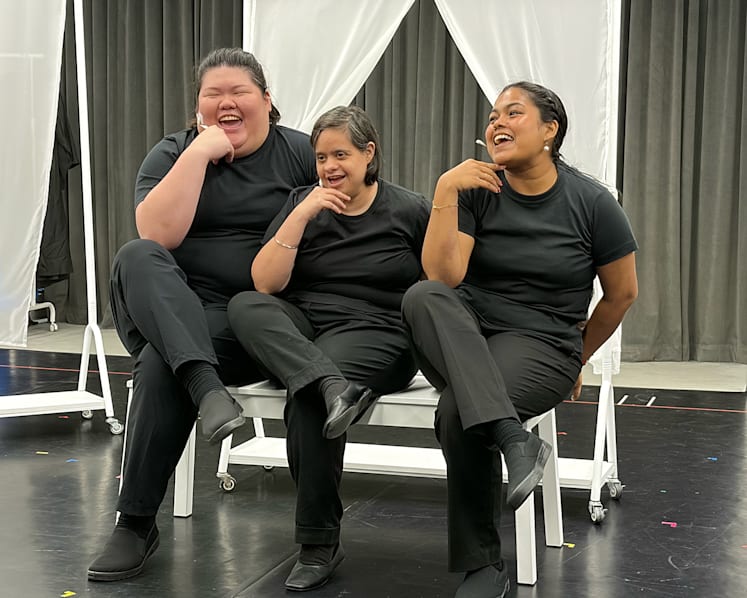
Accessibility is built into every aspect of Invisible.
Captions are projected above the stage and woven into the set, while the actors describe or narrate what is happening, what they are wearing and which props are in use – a device known as "embedded narration", explained Ms Natasha Fathin, project manager at The Necessary Stage.
This is the kind of extra care and consideration that allowed actors like Ms Sekhon to blend seamlessly into the ensemble, without the production turning her very presence into a lesson or a label.
However, this also made Invisible a labour that took many months to get right.
Ms Sekhon was given extra time to learn the show, receiving the first script in January 2025, well before rehearsals with the other actors began in March 2025.
"It took quite some time to learn my lines and the movement, but I'm very comfortable with that," she said.
Following audience feedback from the play's first black-box run in May 2025, the script went through multiple revisions to include embedded narration that could be seamlessly folded into the drama, rather than being shoehorned in gracelessly. The actors were brought back into the mix in November 2025 to resume rehearsals for the next several weeks, through to the festival run in January.
"It was quite gruelling, but it was fun as well," said Ms Kaur of her daughter's experience.
AN INNATE TENACITY
While in the thick of rehearsals, Ms Sekhon's routine is disciplined and focused. She's up each morning by 6.35am, has breakfast and spends half an hour running lines with her mother before they catch the bus to Paya Lebar for rehearsals at The Necessary Stage.
Rehearsals wrap up by 1pm, which would mean great working hours for anyone else. However, Ms Sekhon eschews social invitations and leisure activities in favour of heading straight home.
There, she watches rehearsal recordings, reviews notes from Sharma or movement director Ruby Jayaseelan, and practises sequences that need tightening, repeating them until they feel unshakeable.
Give us more opportunities – we're no different from everyone else.
Most people with admirable work ethics may often credit parents or educators for teaching or modelling such behaviour for them, but Ms Kaur attributes Ms Sekhon's dedication entirely to Ms Sekhon herself.
She recalled that, as a child, she would return from school and refuse to rest until she had completed her homework.
"I've always been like this," Ms Sekhon agreed, almost sheepishly.
But she is clear and upfront about why she pushes so hard: She wants to make it easier for other artists like her to find their own place in Singapore's arts scene.
“(Persons with Down syndrome) are capable of doing anything. We might move a little slower, but we learn fast," she said.
"(I want others to) think about my ability and not my disability. Give us more opportunities – we're no different from everyone else."
Having worked with Ms Sekhon through the Emerging Artist programme, ART:DIS executive director Angela Tan said the significance of Ms Sekhon acting alongside mainstream actors should not be overlooked.
"This project really represents a vision for us of what we hope the future looks like for disability arts in Singapore," said Ms Tan.
She hopes Invisible inspires other theatre-makers to start "thinking differently about casting, whether that's with (Ms Sekhon) or with other disabled performers".
AN ACTOR AND ADVOCATE
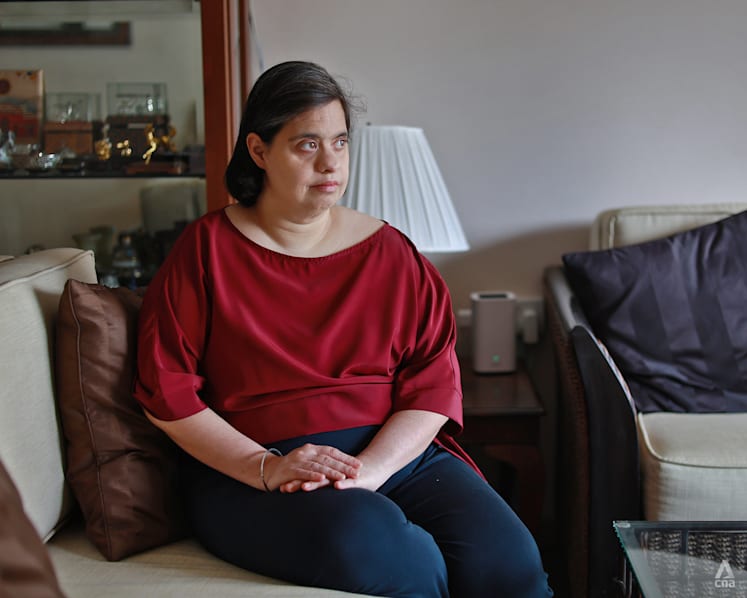
While Invisible was Ms Sekhon's first time performing on an Esplanade stage, she is no stranger to the spotlight, especially when it comes to advocating for people with disabilities.
Her public speaking credits include the United Nations in New York on World Down Syndrome Day in 2014, Having a Say Conference 2018 in Australia, and the We Are Able 2018 seminar where she shared about empowerment and the importance of mutual respect.
"Being an activist means a lot to me. I speak up for people for those who are unable to speak up for themselves," she said.
In the wake of Invisible's final run, Ms Sekhon is now easing back into her usual rhythm. Fresh off a family trip to Penang, she told me she feels "rejuvenated" and ready to get back into the swing of things.
This is no surprise to Ms Kaur, who said her daughter is not one to "do nothing" and "wait for something" to happen.
"The moment she finishes one thing, she goes on to the next," said Ms Kaur.
These days, Ms Sekhon can be found at the Independent Living and Training Centre at Telok Blangah, attending classes and courses on a variety of skills from 7.45am till about 5pm up to five days a week.
"It's a great experience and helps me build more confidence in my daily life," she said.
This includes overnight "mock-up" room stays where trainees shop for groceries, cook, clean up, sleep over and do morning routines to build independent living skills.
One day a week, she works at Maya Dance Theatre in costume management. But her stage days are far from over.
For her next theatre outing, she's on the lookout for more dramatic projects that take on issues close to her heart.
"I am a confident person and I speak up for my rights," she said. "Being an actor and advocate are both parts of me."