What is aphantasia? This artist who has no mind's eye is living with it
Mr Jevon Chandra, 34, was born with aphantasia, which prevents him from forming mental images. As a working artist, he has learnt to make art and imagine the world in other ways.
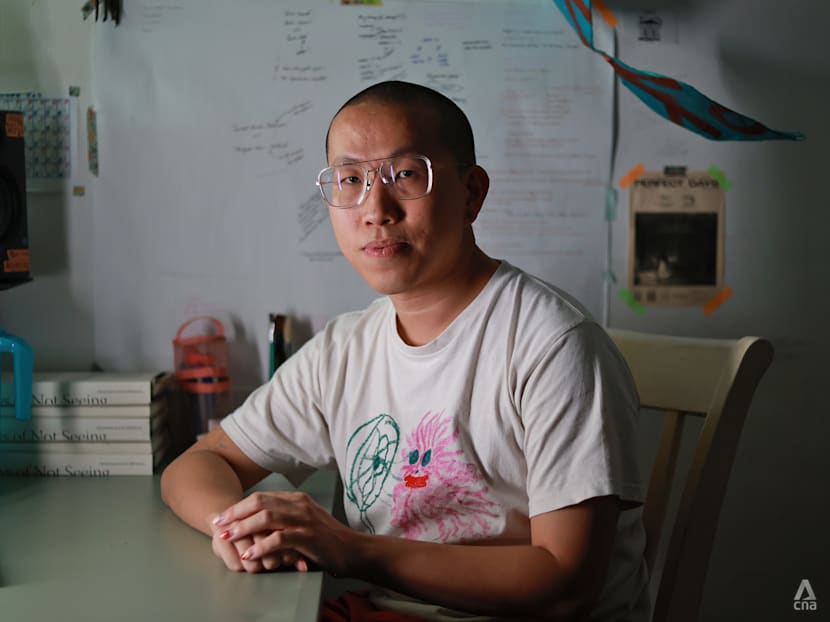
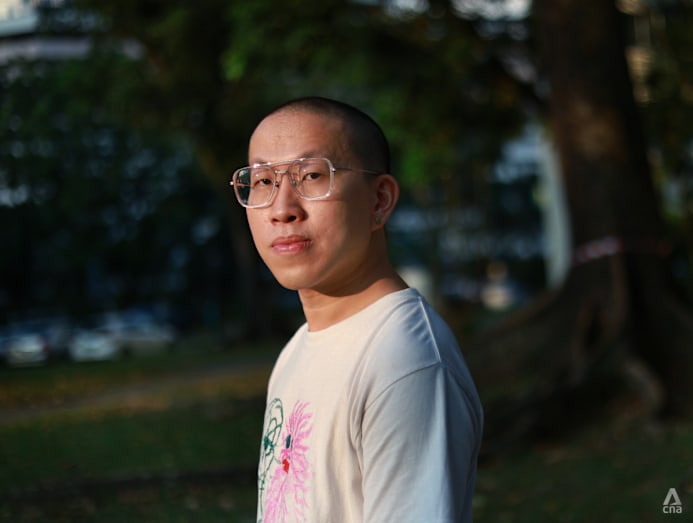
Right until he was almost 30 years old, it never occurred to Mr Jevon Chandra (pictured) that other people could "literally see things in their minds". (Photo: CNA/Raj Nadarajan)

This audio is generated by an AI tool.


Growing up as a Harry Potter fan, I still have vivid memories of reading the first book in the series as a child.
It was years before the movie adaptation was made, but even before then, my 10-year-old brain could easily picture what the boy wizard looked like just from the book's verbal descriptions of his appearance – messy dark hair, round glasses and lightning bolt scar.
Therefore, as I was preparing to meet Singaporean artist Jevon Chandra, I found myself struggling to understand, even just in theory, the possibility of a person not possessing this same capability.
For much of his life, Mr Chandra had assumed that when other people said they could see images in their minds, they were merely using a figure of speech – much like how we say "I see what you mean" or "I see where you're coming from" to convey that we understand what was being said and know that it does not refer to actual sight.





"It never occurred to me that they could literally see things in their minds," he told me as we settled into conversation at his family's flat in Jurong East.
This is because the 34-year-old lives with aphantasia, where he has a neurological characteristic sometimes described as being blind in the mind's eye.
People with aphantasia are unable to form mental images. They cannot picture faces, places or objects, even ones that are deeply familiar to them.
The irony of Mr Chandra having such a particular experience is undeniable, given that he works as an artist.
Like me, he had spent most of his life unaware of aphantasia. He only realised he had this condition by accident five years ago, while scrolling through online forum Reddit.
A post there caught his attention, bearing simple instructions: Close your eyes. Imagine a red star. Then out of six images, choose the one that looks closest to what you saw in your mind.
Among the images given, the sixth image was a "very vivid red star" and the first image was "basically nothing", he recalled.
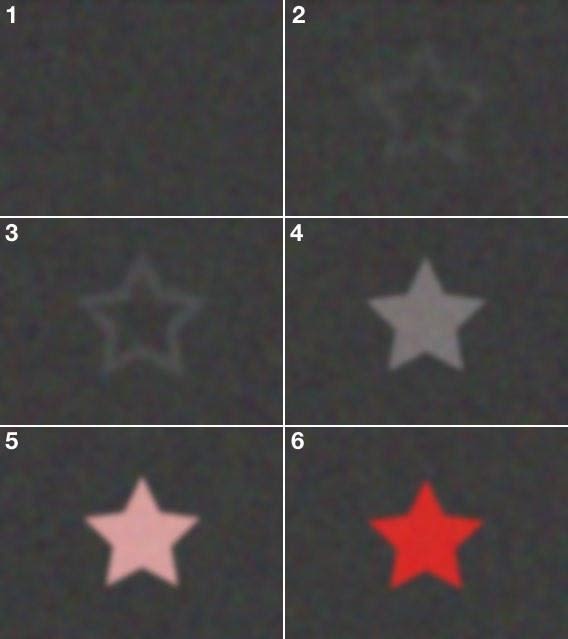
When I tried it myself, I saw an unmistakable, vibrant colour and a many-pointed shape. This was the sixth image, as Mr Chandra observed most online users reported seeing for themselves.
Instead, he found that when trying to visualise a red star, it produced nothing in his mind – no colours, no shapes. No mental image at all.
It then dawned on him that this literal way of "seeing" in one's mind was something he had never experienced.
Dr Joel Pearson, a cognitive neuroscientist and professor at Australia's University of New South Wales, described aphantasia as "the inability to visualise, typically visual mental imagery".
"Some people can think in pictures; other people can't," he said in an interview with the American Psychological Association
While the term "aphantasia" was coined in 2015, the notion of it was documented as early as the late 1800s, when British explorer Francis Galton – who studied human intelligence – published a paper detailing how some people could not recall what they had for breakfast or what was on the breakfast table.
In the case of Mr Chandra, he told me that he cannot conjure up mental images of meals he has eaten, the faces of his parents or friends he has known or places he has visited.
When he revisits memories, no pictures surface in his head the way they might do in yours or mine – only the knowledge that those experiences took place.
It was difficult for him to put into words exactly what this discovery meant to him.
He had never known life with mental imagery, yet learning that most people could see pictures in their minds left him wondering if he should feel a sense of loss.
"But underneath all that, it's really just bewilderment. I didn't know about this for almost 30 years. How did that happen?"
Mr Chandra sought understanding on his own terms by reading research, exploring resources from the Aphantasia Network, an online support and research platform, and connecting with other people with similar experiences.
Even after reading widely about aphantasia, he said he did not know how much of his personal comfort with abstract thoughts is shaped by this cognitive experience and how much was already in his nature.
Since aphantasia is not a medical disorder with a prescribed treatment pathway, Mr Chandra said he did not seek professional therapy.
REMEMBERING THROUGH SENSATIONS AND INFORMATION
On paper, aphantasia may sound like little more than a minor inconvenience to the average person. Can't picture something? Why not just Google it?
However, this neurological variation affects Mr Chandra on a deeper level, particularly in the intangible aspects of day-to-day life such as dreaming and remembering the past.
For instance, he described being able to "see" places, events and people in his dreams, despite not being able to do so when awake. "As far as I can tell, it doesn't sound so different from others' (dreams)," he said.
As for memories and past experiences, although he is unable to replay events visually in his mind, he still remembers them through sensations and facts.
Mr Chandra was born and raised in Jakarta, Indonesia, the oldest of three brothers, before his family moved to Singapore in 1998.
Like many ethnic Chinese Indonesians, his family was required to adopt an Indonesian-sounding surname during the Suharto era, changing their surname from Chan to Chandra.
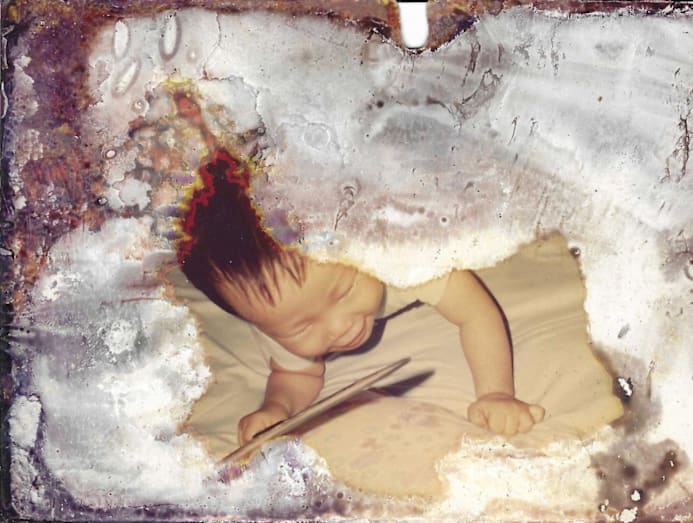
In 1996, two years before relocating to Singapore, a flood swept through Jakarta – a disaster Mr Chandra recalls not in visual terms but through bodily sensations and information that he had noted or been told at the time.
"I remember the water being higher than my height," he said. "I remember needing to tilt my head up so my nose and mouth were above the water."
He also recalled his mother carrying his younger brother through the water, while his father carried him.
The flood remains an especially salient event from Mr Chandra's childhood, largely because his mother was pregnant at the time, giving birth to a third child a few months after the flood.
Unfortunately, the child – another boy – died after only about a month due to heart complications. A younger brother was born in the years that followed.
Mr Chandra cannot picture the floodwaters, his mother's pregnant form or his short-lived brother's small body. However, they have stayed with him in other ways.
"The memory stays in the body," he said. He wasn't referring to a single physical sensation, but to a broader, overwhelming feeling that can surface physically, mentally and emotionally.


He admitted that he is still somewhat afraid of water, though he is unsure how much of that fear stems from the flood.
The impact of this loss weighs more acutely on Mr Chandra, given that floodwaters had damaged or destroyed many of his family's belongings – including photographs and home videos.
It was a tragic loss for anybody, but a devastating one for someone with aphantasia.
AN ARTIST WITHOUT A MIND'S EYE
As we spoke, my mind kept circling back to a dilemma: How does someone who cannot see images in his head make art? Mustn't creation begin with a vision?
Mr Chandra works full-time as a foresight analyst who analyses trends and potential future developments to help organisations plan their strategies. This is alongside his practice as an independent artist.
Both are roles that seem to demand vivid imaginative capabilities, but the creative process does not begin with images at all for him.
Instead, it begins with a feeling. He had developed this approach to his artwork during the five-year period he spent as a full-time freelance artist, immediately after graduating with a bachelor's degree in arts from Singapore's Yale-NUS College in 2017.
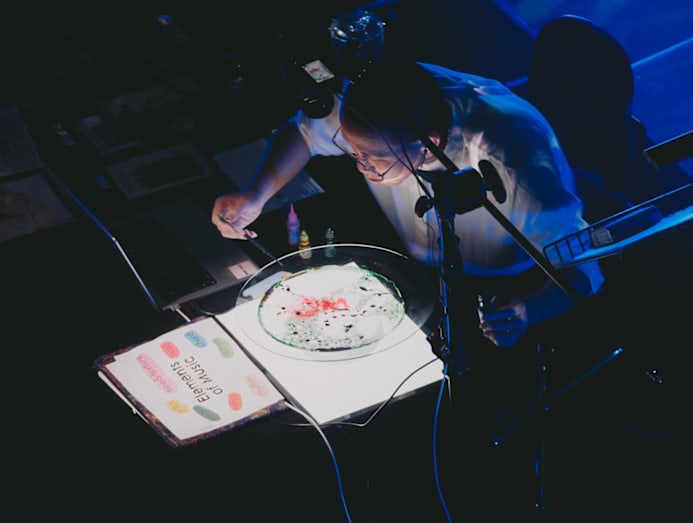
Rather than specialising in a single medium, he chose to move among visual art, music and multimedia installation. He continues to practise this versatility today.
He has composed music for theatre and dance and, more recently, created artworks in various forms for public spaces such as the Calm Room at the National Gallery Singapore, and contributed music for the Singapore Pavilion at the Osaka World Expo in Japan in 2025.


Still, I struggled to fully comprehend it – with no mental picture to take as a reference, what guides him?
"Imagination, to me, is the ability to think about the world beyond the way it currently is. And you don't always need visuals to lead that process," Mr Chandra said.
Instead of drawing from images such as symbols and motifs, he relies on feelings and ideas. He determines the atmosphere he wants to create and the emotional texture he hopes viewers and audiences will absorb.
During the creation process, he does not see the finished product in advance. He senses it.
"I have a strong sense of what I want people to feel when they experience my work," he said.
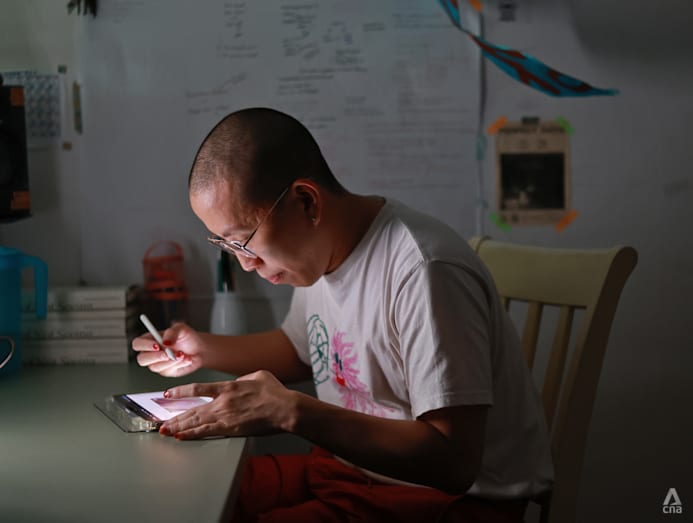
Listening to him, I began to understand that I had been mistaking vision for visibility.
Perhaps what I call a picture in my mind is just one way of holding thoughts and ideas, which Mr Chandra can firmly and fully grasp by concept or description.
His ability to do so often comes in handy in his analyst role, which may sound counterintuitive at first. Foresight, after all, is often described in visual terms: imagining futures, mapping scenarios, picturing what lies ahead.
However, Mr Chandra said that foresight has more in common with art than many people may think.
Art might take the form of an installation or a performance, while foresight can be gathered from research reports to design prototypes, among other resources.
Both art and foresight train people to look at something differently – even subjects they may think they already understand, he added.
THE FEELING OF BOREDOM IN SCHOOL
Anyone watching the fervent way Mr Chandra speaks about his work might find it hard to believe that art was not always central to his life.
Having attended Hwa Chong Institution from secondary school through to junior college under the Integrated Programme, he recalled his journey through Singapore's highly structured elite school system as a rigid one.
He remembered career pathways such as medicine, law and finance being presented as sensible choices during his school days. The focus was often about stability and success, he said, though he was quick to point out that many others were genuinely passionate about these fields.
He just did not feel that pull himself.
"There were so many voices telling you what you should be," he said. "All I could feel was boredom – a deep disinterest."
In hindsight, that boredom was not a lack of ambition. It was more a sense of not quite fitting in and he could not relate to the options given.
It felt like he was offered a menu of choices that did not appeal to him and he wondered if it meant that there was something wrong with his appetite.
His parents, both trained as accountants, had followed what he called the "iron rice bowl path" for their careers, which was steady, sensible and safe. But he wondered whether that was all there was.
During his National Service years, he found inspiration for a different path when he stumbled upon a performance by Singaporean rock band B-Quartet at the Singapore River Festival.
"I couldn't tell what genre it was. Was it jazz? Rock? Folk? I didn't know. I only knew that I was deeply affected by it."
Upon completing National Service in February 2012 – the same year he received his Singapore citizenship – he took a year's break to figure out his next steps before eventually deciding to pursue a Bachelor of Arts course at the now-closed Yale-NUS College.
Nearly a decade on, Mr Chandra remains deeply curious about the possibilities of art. These days, he finds himself drawn to forms of socially engaged art, for example, where artists work closely with local communities such as in Japan's rural areas facing depopulation.
These projects are rarely justified in economic terms, but profit was not the point, he said.
"They create dignity. Even in places that are ageing or disappearing, people can still take pride in their lives and their communities."
In societies such as Singapore, where pragmatism often seems to outweigh everything else, he believes that the idea of socially engaged art truly matters.
"Sometimes it's almost as if people are saying that because we are a vulnerable society, there is no time. No time for creative work, no time for imagination," he said.
But, he pointed out, there are always people who, even in difficult times make space for art, imagination and emotion.
He has begun thinking about how to research this concept more deeply and develop projects related to it, whether through graduate study or other means.
MAKING PEACE WITH WHO HE IS
Even as our conversation drew to a close, I found myself still fruitlessly searching for turning points in Mr Chandra's journey with aphantasia. Moments of doubt, perhaps? Powerful epiphanies?
He admitted that he could offer none, not even in the revelation that he had this neurological characteristic.
"Even though there was something others could do that I couldn't, it never felt like a lack because it has always been this way," he said calmly and matter-of-factly.
"Nothing changed for me, but everything (now) made sense."
Even though there was something others could do that I couldn't, it never felt like a lack because it has always been this way.
I realised it's not that Mr Chandra was unwilling to share specific memories or incidents. There was simply a fundamental difference in what we each understood as "concrete", one he believes is linked to aphantasia.
"I can't picture an apple or a red star in my mind. I can only think about the idea of them. Because of that, abstract and philosophical thoughts feel very concrete to me."
Slowly, it dawned on me that he was not failing to answer my questions – he was simply not answering them in ways I was used to hearing and processing.
I was asking for vivid anecdotes, images I could form in my own mind. He was describing thoughts, ideas and concepts – things that were every bit as concrete to him as the images were to me.
Regardless, Mr Chandra has since come to see his way of thinking and understanding as neither a deficit nor an advantage – just different.
Still, before we parted, my curiosity begged me to ask: Given the choice, would he choose to gain the ability to visualise?
He readily shook his head. "I've made peace with how I am."