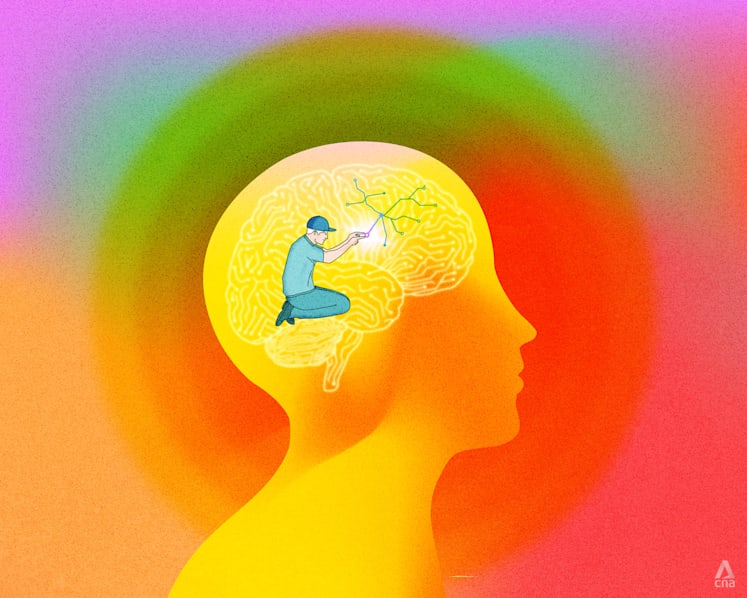
Your body holds stress and trauma. Should you give somatic therapy a try?
Trauma and stress can stay in the body long after one's mind has moved on from an incident, mental health experts said.
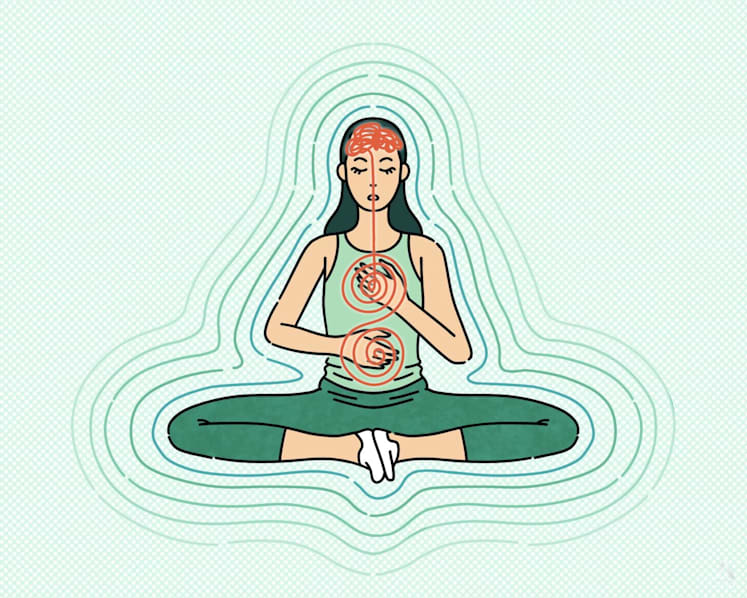
The aim of somatic therapy is to help people experiencing trauma or chronic stress regulate their nervous system and learn again what it feels like to be safe in their own body, mental health experts said. (Illustration: CNA/Nurjannah Suhaimi)

This audio is generated by an AI tool.


A tightening in the chest before a meeting, a persistent knot in the stomach after an argument with a loved one and a heart that palpitates when nothing is objectively threatening.
Most of us would have experienced some, if not all, of these reactions and while they may just be a simple case of nerves, these are also common signs that our bodies are still carrying stress and trauma that needs to be addressed.
Psychologists said that such reactions are a result of trauma being held not only in the mind but also in the body, with the body reacting instinctively to triggers.
To work through this pain, the person may require somatic therapy, a body-based form of psychotherapy that examines and addresses how stress and trauma manifest physically.
Most people are familiar with traditional talk therapy, but somatic therapy, while not new, has been gaining traction in recent years.





Books such as The Body Keeps the Score by Dutch-American psychiatrist Bessel van der Kolk have also helped bring renewed attention to this approach.
Ms Estee Ling, a clinical mental health therapist, said: "Relational somatic therapy is rooted in the understanding that the body and mind are inseparable, and that our nervous system carries the imprint of everything we have lived through – especially experiences that overwhelmed our capacity to cope,."
The co-founder and director of clinical operations at Sol Therapy added that at the core of somatic therapy is the recognition that the body does not simply "remember" but also continues to respond long after an event has passed.
These responses can show up as chronic tension, chronic stress, burnout, shallow breathing, bracing, hypervigilance, numbness, collapse or a sense of being disconnected from oneself.
The aim of somatic therapy, practitioners said, is to help people regulate their nervous system and re-learn what it feels like to be safe in their own body.
From there, psychologists and therapists may move into talk therapy to work through the cognitive and emotional layers of the individuals' experience.
"When people feel safer in their own body, the nervous system becomes more flexible, creating natural space for reflection, emotional processing and insight," Ms Ling said.
THE BODY KEEPS THE SCORE
Think of trauma and one typically calls to mind a deeply distressing experience that happened in the past, but neurobiology shows that trauma can leave a lasting imprint – one that is lived and felt even in the present.
Ms Diandra Andersen, a counsellor at New Leaf Counselling and Integrative Health, said that this imprint can result in ongoing stress and dysregulation of the nervous system.
When the amygdala, which is the part of the brain responsible for emotional processing – particularly fear and anxiety – senses a threat, the body’s "fight, flight or freeze" response can take over.
In those moments, the rational, thinking parts of the brain become less accessible, Ms Andersen said, adding that this is often a learned survival response.

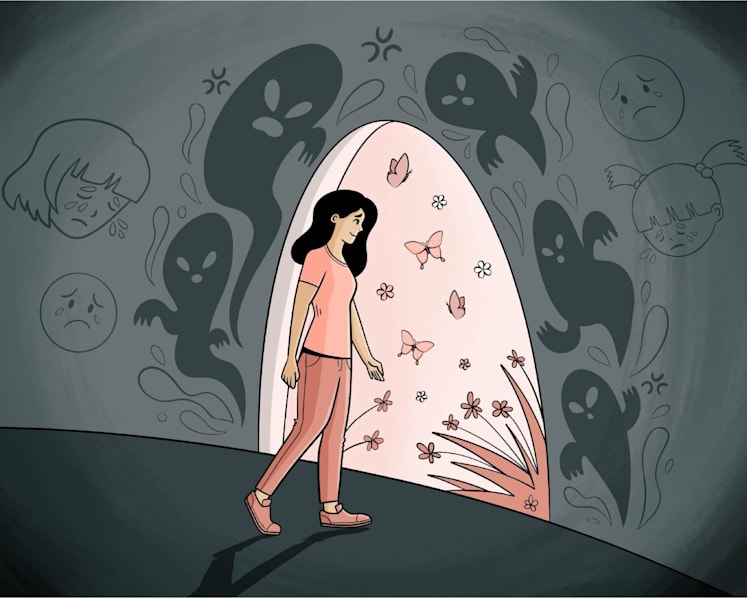
Ms Ling said that these survival responses – where the body or nervous system reacts in a bid to protect you before the mind has time to interpret or understand what is happening – can remain unfinished or stuck.
This can leave behind patterns of tension, collapse, hypervigilance or numbness that continue long after the event has passed.
And while talking about a past event may give you some insights, insights alone may not change automatic physiological responses, especially if the body is still primed for danger. Practitioners and mental health experts said that this is where somatic therapy can help.
For clients who struggle to verbalise their experiences, somatic therapy allows trauma to be processed in small, manageable steps, Ms Andersen said. This could reduce the "stuck" and heightened sense of flight, fight or freeze response, and rebuild a sense of control and connection with the body.
WHAT IS SOMATIC THERAPY
Somatic therapy, which is derived from the Greek word "soma" meaning "body", is a form of body-based psychotherapy.
Dr Kimberly Chew, principal clinical psychologist at AO Psychology, said: "In simple terms, it helps people understand and regulate their nervous system by paying attention not just to thoughts, but to the sensations, tension, breath and impulses that show how the body is coping.
"When the body doesn't complete its fight, flight or freeze responses, that activation gets stored as tension, hypervigilance or numbness."
The focus is on bodily awareness rather than verbal storytelling, allowing the body to release stuck energy and restore balance.
Dr Chew added that talk therapy alone often cannot reach this and somatic therapy helps bridge that gap.
"A body-based approach works because trauma lives in the nervous system, not only in the (client's) story. Many clients tell me, 'My mind is calm but my body isn't'."
Agreeing, Ms Andersen pointed out that even when someone rationally knows they are safe, the nervous system can still react as if the threat is present – and this can show up as a racing heart, tense muscles, or freezing.
"Somatic therapy works directly with these survival responses, helping the nervous system release trapped energy and restoring a sense of safety that talking alone may be unable to achieve," she said.
The experts said somatic therapy can benefit those who have experienced developmental or relational trauma, emotional neglect, chronic stress, burnout, emotional dysregulation, and symptoms of anxiety and panic.
It may also help people who feel "disconnected" from their bodies or feel "stuck" despite cognitive insight or other forms of therapy.
A WORD OF CAUTION
On the other hand, somatic therapy may not be as immediately suitable for those for whom the body is not yet a safe place to explore, the experts cautioned. This can include people in acute medical distress, those in active addiction, or those in a state of psychological overwhelm or crisis.
This does not mean that such clients cannot undertake somatic therapy, but rather that it should be introduced gradually and only when it is safe to do so, they added.
As with any therapy, approaching trauma too quickly can be overwhelming, Ms Andersen cautioned.
People with severe trauma or dissociation may become dysregulated if the work is not paced appropriately. This is why deep trauma processing should only be done with a trained therapist who can titrate the work and ensure safety, she said.
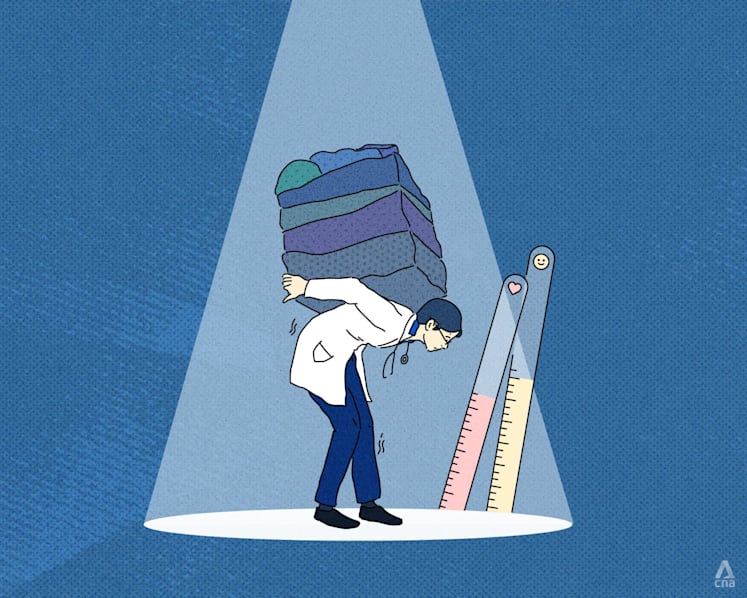

Somatic therapy must also be administered safely by trained professionals.
"Relational somatic therapy is safe when facilitated by trained, certified and trauma-informed therapists who can recognise when the work becomes too much for the person and when other interventions may be more supportive at that juncture," Ms Ling advised.
"The greatest risk arises when the process moves faster than the body's capacity, overwhelming a system that cannot yet stay connected.
"With the right timing, pacing, and support, many people eventually develop the capacity to benefit from somatic work."
When they do, a typical session may involve somatic tracking where clients are guided to notice and interpret signals from their body, including subtle inner shifts and sensations that reflect the state of their nervous system.
Clients are also taught small body-based movements, which can include extended exhales or feet-to-floor grounding – where one gently presses their feet into the ground, to ground them in the present moment – and these are gradually titrated or introduced over time.
Ms Andersen said: "The therapist moves slowly, checks in frequently, and keeps the client within a safe window of tolerance.
"The focus is on bodily awareness rather than verbal storytelling, allowing the body to release stuck energy and restore balance."
Dr Chew said that if the sessions are carried out properly, people feel calmer, less reactive, more present and more in control of their emotions.
They also recover from stress more quickly, sleep better and feel more connected to themselves and others.
"You know somatic therapy is working when your body starts responding to life from a place of safety rather than survival," she added.
HOW IT COMPLEMENTS OTHER THERAPIES
Somatic therapy, while beneficial, is not superior to talk therapy or other forms of treatment. Rather, it is a complementary form of therapy that integrates well with other methods, the experts said.
The different approaches simply offer different "entry points" for individuals, Ms Ling explained.
For example, talk therapy works for those who make sense of their experiences through conversation, exploration and meaning-making.
"Different approaches serve different people at different junctures in life," Ms Ling said. "Sometimes, we need language, reflection, insight, understanding and meaning-making. Sometimes, we need grounding, presence and the steadiness of the body.
"Both pathways hold equal importance and each complements the other. Relational somatic therapy simply bridges the gap between insight and lived experience, helping the nervous system catch up with what the mind already knows."
Agreeing, Dr Chew said that to establish when to focus on the body or on emotions or thoughts when working with clients, she follows their nervous system.
"If someone is overwhelmed, we start with the body. (Likewise) if someone is shut down, we begin with sensory grounding.
"Once they're more regulated, we bring in emotions and meaning-making."
Somatic therapy is not about releasing emotions dramatically. It's about teaching the body what safety feels like again.
Ms Andersen of New Leaf Counselling said that for clients who feel stuck in their heads or are unable to access their emotions through talking, they often find this approach particularly helpful.
Being overly rational or detached can itself be a trauma response, she added, and somatic work helps a person reconnect with their body in a safe, gradual and controlled way.
When a person regulates his or her nervous system and feels safe in one's own body, it often allows cognitive understanding to emerge naturally.
"Somatic therapy works on the principle that the body must feel safe before cognitive shifts can occur," Ms Andersen said.
She added that somatic therapists do this through "bottom-up processing" where, by settling the nervous system first, the mind can instinctively integrate new perspectives.
Overall, including somatic elements can make other therapeutic approaches more cohesive and impactful, she said.
Ultimately, somatic therapy is about helping people feel safe in their body again, especially after experiencing trauma or extended periods of stress, the experts said.
"Somatic therapy is not about releasing emotions dramatically. It's about teaching the body what safety feels like again," Dr Chew said.
"For many clients, insight alone isn't the missing piece. It's the ability to own their body without fear."
And as that inner sense of safety deepens, the nervous system begins to unwind incomplete survival responses that were once necessary for protection, Ms Ling of Sol Therapy said.
"The body discovers new possibilities: breath that moves more freely, muscles that soften, emotions that can be felt without collapse or flooding," she explained, adding that over time, a person's system learns to complete the cycle that was interrupted during past overwhelming experiences.
"Somatic therapy becomes a slow homecoming, allowing people to inhabit their body with more steadiness, connection and choice."