He went on MasterChef with little kitchen experience. Now his take on Malay cuisine wows food critics
Once a food delivery rider with little cooking experience, former MasterChef Singapore contestant Ilya Nur Fadhly now runs a private dining venture from his home, reworking familiar Malay dishes while spotlighting the culture and heritage behind them.
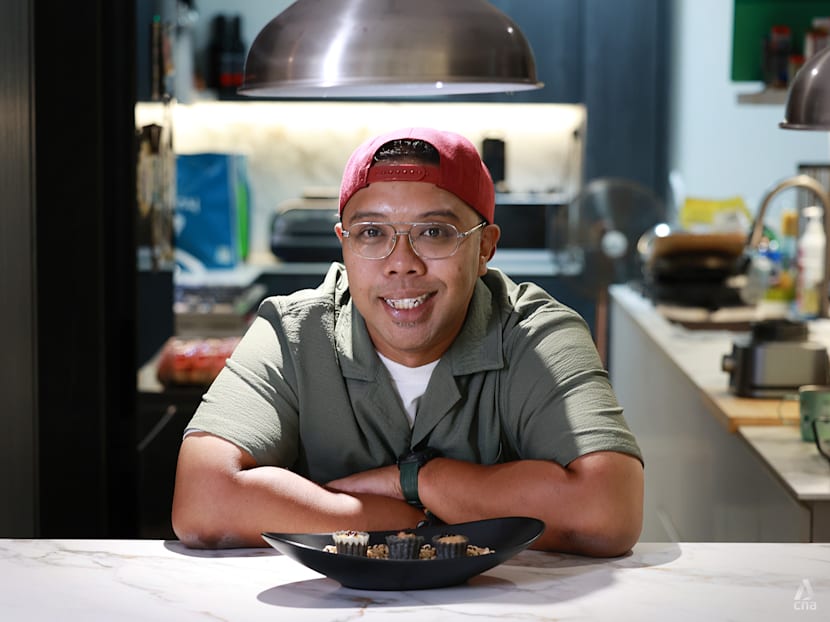
Mr Ilya Nur Fadhly with his take on telur masak kicap, a staple Malay dish served as an appetiser at his private dining venture, Sudu. (Photo: CNA/Raj Nadarajan)

This audio is generated by an AI tool.


In many Malay households, telur masak kicap is the go-to dish for a quick and satisfying meal. Plonk an egg into a frying pan with soy sauce, onions and a touch of chilli if you like, and you have yourself the perfect accompaniment to a bowl of rice or noodles.
But here in the kitchen of MasterChef Singapore alumnus and private dining chef Ilya Nur Fadhly, the humble staple has taken on an elevated form.
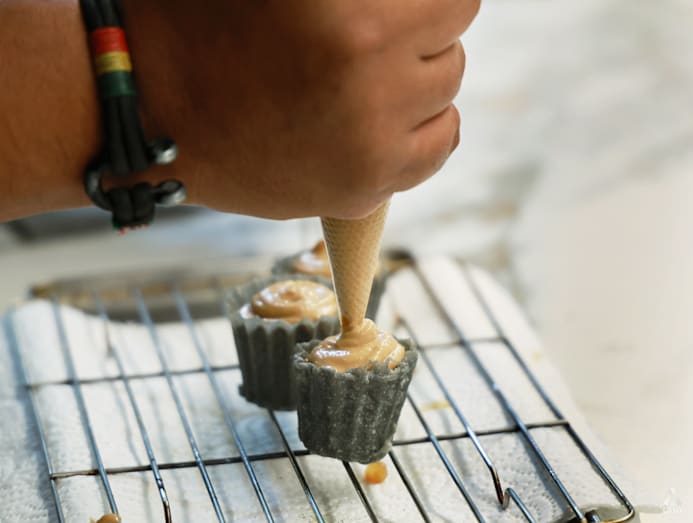
On a recent afternoon, my colleague and I watched as the 41-year-old blended onions with cream and soy sauce to make a savoury glaze, paired it with a confit egg yolk, and finished the dish with homemade soy sauce "caviar" and a sprinkling of lime leaf powder. All of this was served in a charcoal kueh pie tee shell made by himself.
A confit egg yolk is slow-cooked in oil, leaving it rich and creamy while soy sauce "caviar" is agar agar pearls in soy that look like the fish roe.





Upon biting into the filled kueh pie tee cup, my senses were treated to familiar, comforting flavours delivered in textures that felt entirely new – from the crunch of the shell to the richness of the egg yolk as it burst in the mouth.
It was striking how a dish that has been so commonly made at home by many for generations could be transformed into something that felt closer to a highbrow, fine-dining experience.
This is typical fare if you are a guest at Sudu, Mr Ilya's home dining business, where well-known, everyday Malay dishes are remixed into creative, gastronomic interpretations that push them beyond the edge of familiarity.
That is why, he said, some guests simply "do not get it", because they arrive at his table expecting the dishes they know from nasi padang stalls or their mothers' kitchens. A meal for two at Sudu might run to roughly S$280 (US$219), according to prices listed on its booking site.
"One thing I want to make clear is modern Malay (fare) is not fusion Malay," Mr Ilya said.
Modern Malay cuisine, he explained, uses the same ingredients as the traditional version, but puts a spin on various aspects of each dish – techniques used, textures layered, or presentation style – while ensuring that flavours remain rooted in tradition. Sometimes this goes the other way, with traditional techniques deployed on new or slightly different ingredients.
He is adamant that no other cuisines enter the mix as would be found in Malay fusion fare. "What I'm trying to do is not to mix two cuisines together, because then that would be fusion. But what I'm trying to do is to create something new using traditional ingredients or methods."
Listening to Mr Ilya talk about the culinary credence behind his reformulation of well-loved dishes such as kuih bakar, sayur lodeh and ikan tiga rasa was inspiring.
It's hard to believe, then, that just a few years ago, this was a full-time food delivery rider whose cooking repertoire largely revolved around instant noodles with cheese and scrambled eggs dyed bright, garish hues with food colouring – a childhood tactic he continued into adulthood to stop his sisters from eating his food, he confessed with a laugh.
Still, Mr Ilya said he had long enjoyed watching cooking shows, often alongside his mother. Later, while delivering food, brief glimpses into how commercial kitchens operated further piqued his interest in the food and beverage industry.
He began experimenting where he could, spending weekdays on the road and weekends making and selling batches of halal bak chang using his mother's recipe.
In 2022, he saw an open casting call for MasterChef Singapore and applied on a lark. After completing a questionnaire, he was invited to an audition cook-off for a spot on the show.
He went on to beat hundreds of applicants to secure one of just 12 aprons. Upon being accepted, he took his training up a notch, practising on his own at home.
Some may find Mr Ilya's MasterChef bid strange given his lack of culinary experience prior to appearing on the show.
I just thought it would be cool to be on TV. It's just been a bucket list (item) since I was young.
"I just thought it would be cool to be on TV," he said, grinning boyishly. "It's just been a bucket list (item) since I was young."
It may sound like a frivolous daydream, but he gave it some serious effort. Before MasterChef, he also auditioned for game shows, dabbled in acting and even tried out for Singapore Idol – an endeavour that was quickly ended, he said, because he can't hold a tune.
MasterChef turned out to be a much more fruitful investment of his energies. He ended up making it to the top five in the show, kickstarting a journey that would reshape his life, both in and out of the kitchen.
SPOTLIGHTING MALAY CUISINE AND HERITAGE
Mr Ilya can recall the exact moment that crystalised his sense of purpose.
In the second episode of his MasterChef Singapore season, the guest judge was renowned Indian chef Gaggan Anand – whose Michelin-starred Bangkok restaurant, Gaggan, has consistently ranked among Asia's top 50.
During the episode, Mr Anand described Singapore's food culture as a melting pot of Chinese, Indian and Southeast Asian influences. To Mr Ilya, the omission of Malay cuisine, at least explicitly, "hit hard".
That moment, said Mr Ilya, sparked an "epiphany" setting him on a mission to spotlight Malay cuisine and heritage.
"I had found my calling," he said. "This is what I want to do."
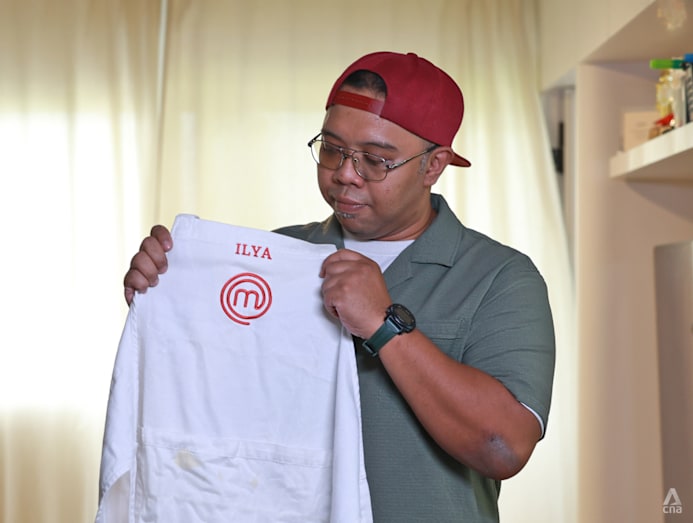
After his elimination from the show, he wasted no time in launching a private dining venture from his home for this purpose.
In December 2022, five months after the MasterChef season came to a close, Mr Ilya hosted his first service to strangers in his four-room Build-To-Order flat in Marsiling.
He has since moved to a bigger five-room resale flat in the same neighbourhood, which includes a dedicated space for his private dining services.
He named the venture Sudu – Malay for spoon – to showcase the evolution of Malay cuisine.
"Traditionally, Malays use our fingers (to eat)," he explained. "Because I do modern Malay (food that) requires you to use utensils like the spoon, I thought 'Sudu' is really fitting."
That aim now extends beyond the food itself. When guests leave his home, Mr Ilya said, he hopes they take away not just an appreciation of the dishes, but a deeper understanding of Malay culture as well.
The menus are refreshed quarterly and built around carefully chosen themes such as Peribahasa (Malay proverbs) and Lagenda (Malay folklore).
Much research, testing and refinement goes into each seasonal menu. For the Lagenda menu, Mr Ilya shortlisted six to nine Malay folk stories he grew up with, cross-checked them against his mother's and grandmother's versions, and consulted online archives for regional variations to ensure his culinary interpretations were rooted in locally recognised narratives.
Having previously worked as an education consultant, Mr Ilya said he has always been keen on sharing knowledge and thus sees Sudu as a platform to educate a wider audience about his heritage.
"I hope diners don't just leave my home with the knowledge of (Malay) food, but also learn more about the culture in a wholesome and holistic way."
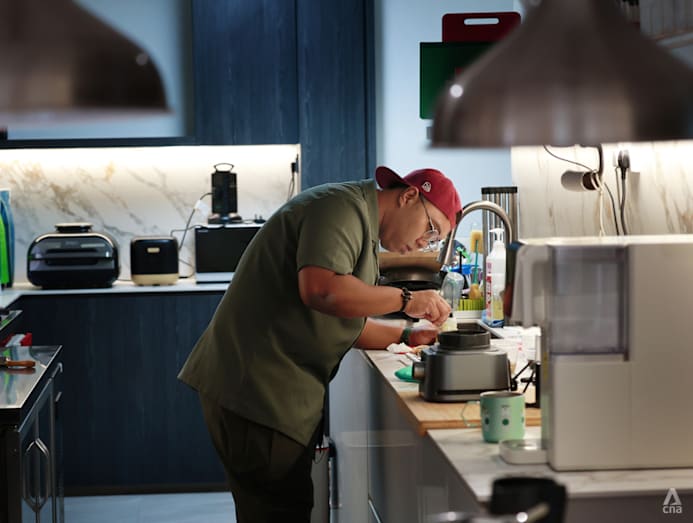
While his clientele in the first few months was almost exclusively Malay diners, a visit by his friend and food influencer Eshton Chua led to a social media review that helped broaden his reach.
Today, Mr Ilya reckons nearly 90 per cent of his diners are non-Malay, including tourists from countries such as France and Russia.
"I remember there was one French diner. He was sitting across from the kitchen (so) he could see what I was doing. And he was just sitting there, nonchalant, and showing no reactions. He (seemed like he) was just judging me.
"Every time I brought out a dish, he would ask me the method of cooking, the temperature, whatever. (I was thinking,) 'Wah, this guy is hard to please'," Mr Ilya laughed.
"But at the end of the day, he turned out to be very nice. He loved the whole experience. So I thought, if I can convert a French guy, that must be a success. I must be on the right path."
BEYOND THE KITCHEN
Anyone familiar with Mr Ilya's past habit of hopping from interest to interest may be wary, but the home dining chef is wholeheartedly committed to Sudu – so much so that he redesigned his current home with the business top of mind.
For instance, his wife, Ms Siti Shuhadah, told CNA TODAY that running Sudu's dinner services from their previous, smaller home did create some challenges, particularly around privacy and keeping their children from disrupting the service. Their new home now has more private spaces for his family to move freely in and out of the flat even when diners arrive.
Where Mr Ilya once limited dinner services to Fridays and Saturdays – with weekday lunches – to avoid disturbing his family when they were home on weekday nights, he can now host dinner services daily as needed.
Working from home has also inevitably reshaped Mr Ilya's role within the family. He's become a self-professed "house husband", cooking dinners and doing laundry, sending his children to school each day and picking them up from his mother's place in the evenings.
But after years spent in physically demanding or time-consuming jobs, he's grateful for the gift of more time with his family.
His previous role as an education consultant meant that he often returned home to find his children already asleep, while his food delivery role often translated to long hours spent on the road, he said.

Ms Shuhadah told CNA TODAY she was not surprised that her husband chose to pursue the venture full-time after his stint on MasterChef, even though his culinary skills were "not that great" then, she added with a laugh.
The 36-year-old, who works as a dental surgery assistant, said she appreciated that her "ambitious" husband had discussed his plans for the business with her before taking the leap. She also good-naturedly acknowledged that Mr Ilya's cooking abilities have improved significantly since his MasterChef days.
Mr Ilya said that demand for the dining experience varies from month to month, with some menus and seasons proving more popular than others. During peak periods, he averages up to about four group bookings a week.
He also bottles and sells homemade products on a fortnightly basis, including belacan and smoked sambal butters, kombucha and ice cream originally developed for his dining menus.
WHAT'S NEXT ON HIS PLATE?
Mr Ilya started Sudu with two clear objectives: to introduce Malay cuisine to non-Malay diners, and to show the Malay community what the cuisine could become.
Three years on, he feels he has only scratched the surface, and there is still much more to be done.
"There's only so much I can do as a one-man show," he said, noting that his menus are constrained by what he can realistically prepare by himself within the limited time before and during each service.
Even so, he hopes his work has helped build greater awareness of Malay cuisine, culture and heritage.
One such highlight in this area: A dinner invitation Mr Ilya extended to Singaporean food historian Khir Johari.
Mr Khir is a respected authority on Malay cuisine in Singapore, and the author of the award-winning book The Food Of Singapore Malays: Gastronomic Travels Through The Archipelago – a book that sits on a shelf in Mr Ilya's kitchen.
Although Mr Ilya's invitation had been extended without charge, Mr Khir left a generous payment at the end of the night – one that, Mr Ilya said, more than covered the cost of the meal for himself and the three other diners at the table.
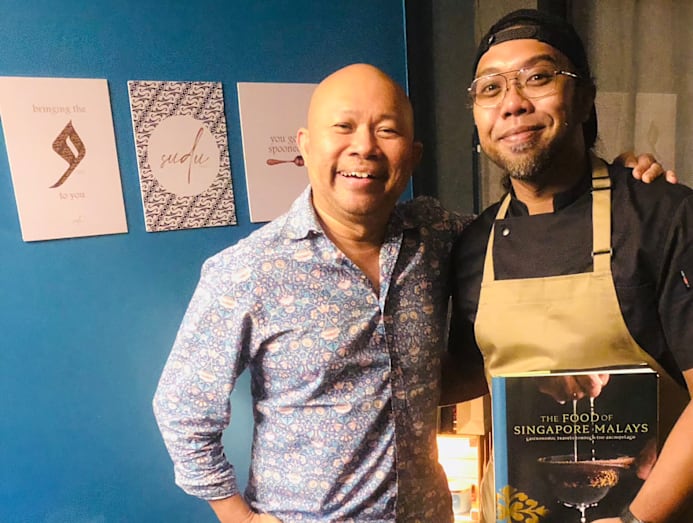

Speaking to CNA TODAY, Mr Khir praised Mr Ilya's efforts to preserve and respect Malay culinary heritage as "highly commendable", noting Mr Ilya's "very impressive" vision in exploring contemporary expressions of the cuisine, and creating and designing his thematic menus.
As for the payment he'd opted to leave on what was meant to be a complimentary meal, Mr Khir explained that costs are high and that Mr Ilya serves food of evident quality. As such, Mr Khir sees the payment as a way of showing how much he values Mr Ilya's work.
Mr Khir also said he generally prefers to be a paying guest at tastings, as it allows him to be frank in sharing his views and offering honest feedback on a meal.
"That's why I want to appreciate him and tell him that, 'Hey, this is a great job'."
An added bonus: Before Mr Khir left his home, Mr Ilya managed to get his copy of the food historian's book signed.
Looking ahead, Mr Ilya hopes to collaborate with other chefs and eventually open a commercial space of his own. Capital and manpower costs remain key considerations for now, but he believes his longer-term ambition to bring Malay cuisine to a wider, international audience would be more fully realised beyond a home setting.
He is also staying open to the possibility of taking the venture abroad if conditions are more viable elsewhere.
Never in a million years did I think I would be a chef.
As someone who's flitted through a variety of jobs from customs officer to cleaner to education consultant to food delivery rider, Mr Ilya mused that if someone had told him a decade ago that he would be cooking for a living, he would have thought it more likely he'd become an astronaut.
"Never in a million years did I think I would be a chef," he said.
But it looks like he's found his calling – and he's sticking with it.
"I really want to put Malay food on the map. Even once it's on the map, I still want to keep doing it."