'Why are you trying so hard?' A Primary 1 dropout's gritty journey to becoming a trainee teacher
After dropping out of primary school aged seven, Mr Presslee Chng endured years of social isolation and bullying. He tells CNA TODAY about his long and bumpy road back to school, the teachers who propped him up along the way, and his dream to pay it forward as a teacher himself.
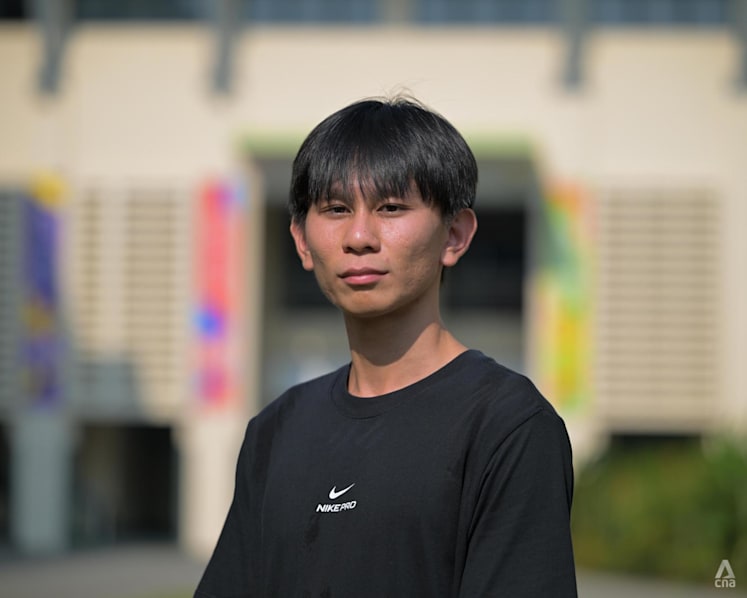
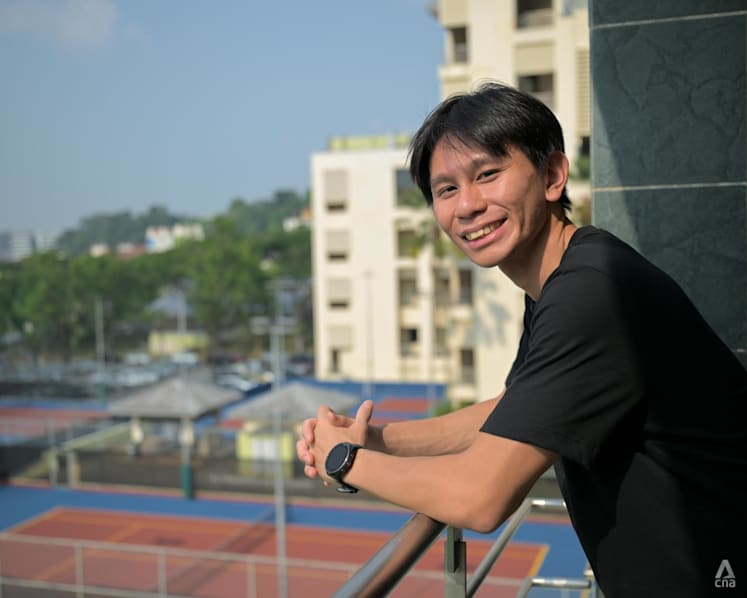
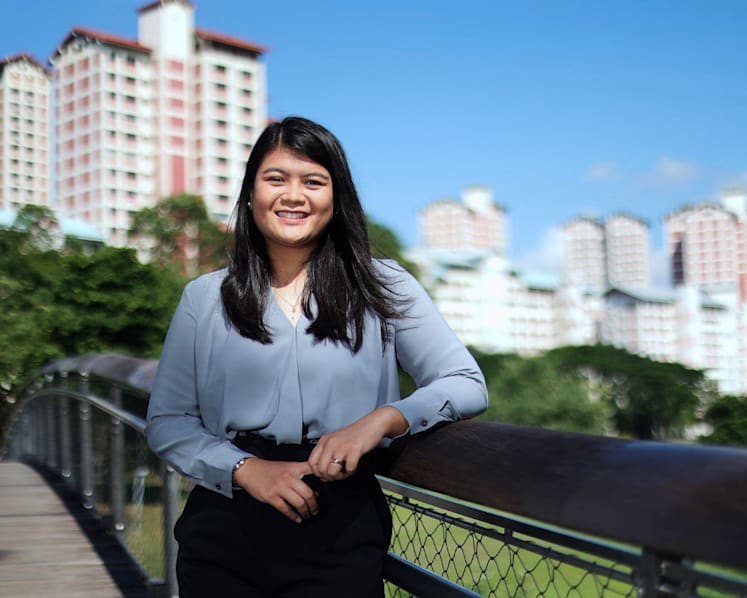
Mr Presslee Chng at the National Institute of Education on Aug 24, 2026. (Photo: CNA/Lim Li Ting)

This audio is generated by an AI tool.


It was only a couple of years after dropping out of Primary 1 that Presslee Chng fully understood that his life was different. Every weekday morning, all the kids in his neighbourhood were lugging their backpacks to school, dressed in their uniforms – but he had absolutely nowhere to be.
Back then, his family got by on his dad's odd jobs, said Mr Chng, now aged 25. They would pack up what little they owned into boxes "every half a year to a year" because they didn't own a home and couldn't afford to keep up the rent in their various rental flats.
The unravelling of his nascent school life came in 2008 when the family was evicted from their flat. Mr Chng had just started Primary 1 at Anderson Primary School, but in the scramble of leaving, all his school uniforms and books were locked in their old flat.
At a cafe in The Star Vista mall, the wiry young man recounted his childhood to me with the practised ease of someone who has told the story many times before.
His parents, he said, sat him and his older two siblings down and explained that they would be pulling all three children out of school "temporarily".





Most of Mr Chng's memories of that time are hazy – but he does remember his mother looking sad and his typically rambunctious brother and sister being subdued for a while.
Initially, seven-year-old Presslee didn't fully appreciate how serious things were. He was just happy to stay home from school.
"It doesn't sound good now (but) as a kid back then I didn't like school," he confessed sheepishly.
Mr Chng didn't know it then, but he would never get the chance to wear his primary school uniform again.
He went on to spend nine long years out of the school system, missing many of the milestones a Singaporean child would mark in their academic journey, including the Primary School Leaving Examination (PSLE).
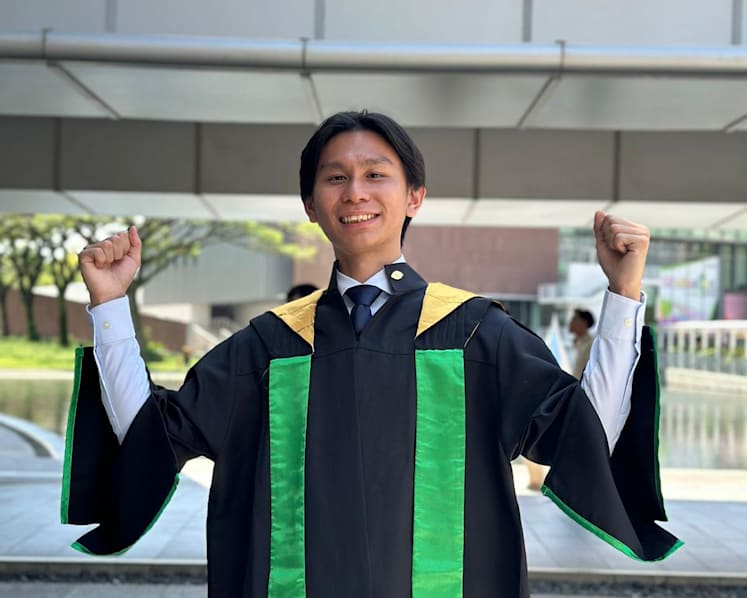
It was only later on that he would realise how dropping out of primary school would set him back in life.
But now, Mr Chng is living a life he never dared to dream of as the proud recipient of a Ministry of Education (MOE) Teaching Award, and on his way to becoming a teacher.
A CHILDHOOD MARKED BY SOCIAL ISOLATION
For as long as Mr Chng can remember, the family was constantly moving from rental flat to rental flat, never staying in one place long enough for it to feel like home.
It was all he knew but slowly he began to sense that something was "not very normal" about the situation.
For one thing, he and his two siblings – his brother is six years older, while his sister is five years older – did not return to school. Their mother tried to get them to study on their own at home and complete assessment books, but these home-schooling attempts quickly fizzled out.
Instead, the three siblings spent most of their days playing on their Game Boy and watching television.
Young Presslee quickly developed a voracious appetite for entertainment media. He lists Western comedies like White Chicks, along with local shows like Police and Thief, as well as The Noose, among those he remembers watching.
For a child stuck in a rental flat with no classes to attend and no schoolmates to play with, the television was his window to the outside world.
"I love to watch TV a lot so I was able to develop some literacy skills. My 'education' came in the form of films and television."

At this point, you may have the same question I did: How were three children able to miss school for years without anyone raising the alarm?
His family was estranged from their other relatives, Mr Chng recalled. The family also didn't have an address registered with MOE.
And although a few neighbours tried to intervene, it never panned out.
"Sometimes the neighbours did try to probe, but it's an uncomfortable topic … We were quite isolated."
The family was close-knit as they only had each other, Mr Chng said. He still has fond memories of them crowded around their TV, laughing at comedy flicks and watching romcoms together.
But the years rolled past quickly. Before Mr Chng knew it, he'd spent nearly a decade out of the school system with nothing to show for it – besides a reservoir of pop culture knowledge.
BULLIED FOR BEING "DIFFERENT"
Like his siblings, Mr Chng took his first steps into the working world as soon as it was legal for him to do so.
Back then, he didn't have any friends. With his brother serving National Service and his sister also working a part-time job, he found himself alone most days.
"I wasn't doing anything else anyway," he said. A job would better occupy his time, he decided.
His first job was as a part-timer at a sandwich chain at the age of 14. Soon, however, his lack of formal education began to catch up with him.
He offered a self-deprecating smile as he recalled how he struggled to write out menu items such as "marinara". He would also beg off cashier work because he couldn't do mental calculations.
"I was very scared, so I would tell them that I'm not so good at cashiering. They would ask: 'What's so scary about it? It's just simple calculation'."
Things got worse, he said, when his peers found out about his lack of education. His fellow part-timers would pepper him with basic maths and science questions, knowing full well he couldn't answer them.
"I would tell them: 'You know I can't answer. Why are you asking me this?'" Mr Chng recounted, a hint of frustration colouring his tone.
"I've met people whose opening sentence is: 'I heard you're the kid who doesn't study. How are you even alive?'
"What does that mean? I don't deserve to live because I don't study?"
After enduring two years of part-time work and hazing, he made up his mind: He wanted to go back to school.
He told his parents of his plans, but even with their support, it felt overwhelming, he admitted. "I didn't even understand the education system. I didn't even know what was next."
His parents wrote in to MOE, but it soon became clear that without a PSLE certificate, his options were limited. He had to choose between NorthLight School and Assumption Pathway School, both of which typically accept students who have attempted PSLE multiple times or do not qualify for secondary school.
The eventual clincher was the discovery that Mr Martin Tan, former principal of Anderson Primary, had since become the principal of NorthLight. For Mr Chng, it offered some reassurance.
"Knowing that my old principal (would be) my next principal, I think it gave me a bit of confidence. I decided to give it a try."
Even after the bullying in his teenage years and the uphill battle to return to school, Mr Chng maintains that he doesn't hold anything against his parents.
"I didn't directly resent my parents. I tried my best to understand them," he said. While he's been disarmingly candid with me about his struggles so far, he pauses momentarily as he attempts to qualify his feelings about his parents. I sense that he's careful not to cast his parents in too harsh a light.
"I always redirected it somewhere else, to a higher power. I'd ask: 'Why was I put through this?'"
LEARNING HOW TO LEARN
As Mr Chng took his first steps back into formal education, even mundane things like donning a uniform became meaningful milestones. But underneath his excitement, doubts and fears remained.
"The night before I started school, I was so happy to wear the uniform. The next morning, when I had to wear it out of the house, it was very daunting," he recalled.
"For many years I was that kid without the uniform ... suddenly I was putting on a school uniform. I felt quite embarrassed."
He spent his first weeks at NorthLight adjusting to a level of structure he'd never had to face before: strict timetables, school bells and sprinting between classes. His peers were used to it by then, but for Mr Chng it was a tough acclimation after a decade of doing whatever he wanted, whenever he wanted.
Adjusting to the academic rigour was an even tougher ordeal. Things like quizzes and tests were almost completely foreign to him, he said.
"Even though I could read and write, when presented with the worksheet, I didn't understand what they wanted me to write."
After the first week, he seriously considered quitting. He remembers thinking: "I finally got what I wanted, but I don't know how to live this life."
The night before I started school, I was so happy to wear the uniform. The next morning, when I had to wear it out of the house ... I felt quite embarrassed.
Mr Chng's years away from school had also left him out of step with peers his age, making it harder for him to form friendships.
"They had life experiences up to that point that were very different from mine, so I was very foreign to them. And that hurt a bit."
While there were other dropouts in NorthLight, the sheer number of years he’d spent outside the education system made him an outlier, he said.
Mr Chng posited that his differences with his schoolmates likely also stemmed from the fact that they had opposite attitudes towards school.
"Some of them felt that coming to this school was like going downhill. But I was the reverse – I was very hopeful.
"I would always volunteer to answer questions in class. I saw every action that I took as a step towards building something, but to them it was like: 'Aiyah, why are you trying so hard?'"
Things started looking up when he joined the student council and found friends in like-minded schoolmates who wanted to take their studies seriously – friendships he still relies upon today.
Mr Chng is also quick to emphasise that his teachers at NorthLight were pivotal in his journey.
One of his form teachers, whom he describes as being "like a mother" to him, quietly picked up on his self-doubt, even though he never voiced it out, he said. She would encourage him when she could see that he was overwhelmed.
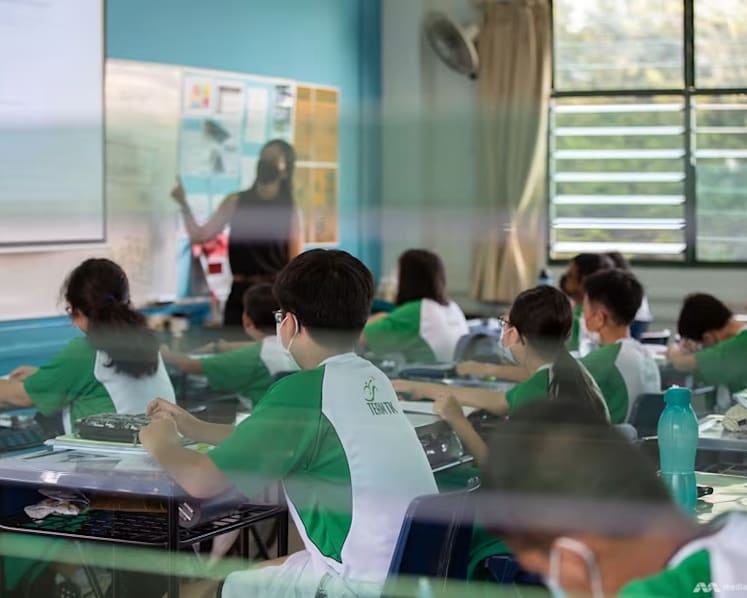
He remembers being particularly stressed over taking his N-Level English exams, despite the subject being his strongest. His English teacher told him: "You have the ability to take O‑Levels one day. Forget about all the doubts. Trust yourself."
These words stuck with him. "From that day, I tried to learn to trust myself, and I realised that I stopped making a lot of careless mistakes."
ADULTHOOD ON HIS OWN TIMELINE
After NorthLight, he spent two years studying hospitality at the Institute of Technical Education. He went on to do a diploma in health management and promotion at Republic Polytechnic.
It's clear that he's been relishing all the educational opportunities that have come his way – his eyes light up as he describes his excitement at choosing a polytechnic course.
His first choice was actually a diploma in outdoor education, he said with a laugh. "I wanted something fun!"
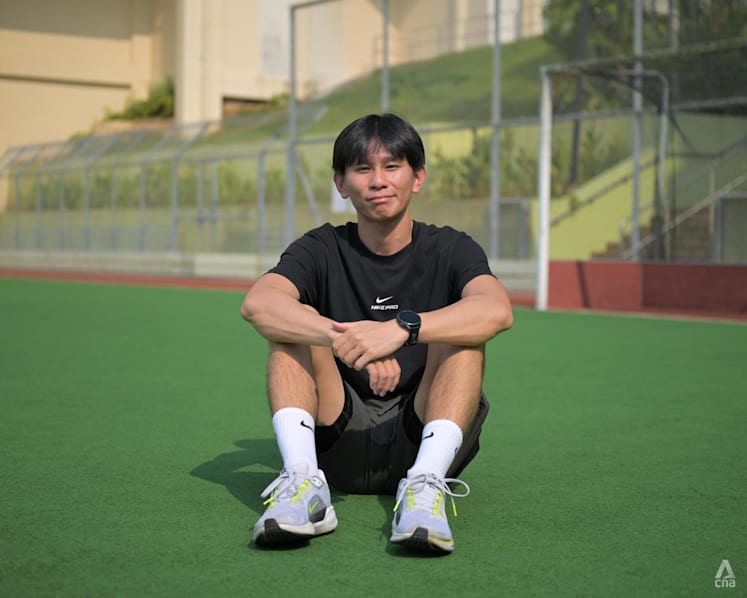
Just when things were looking up for Mr Chng's education prospects, tragedy struck in his personal life.
In his second semester of polytechnic, just a week before his examinations, his 69-year-old father died suddenly from illness.
"At 20, I had to be strong. It wasn't okay for me to just break down and give up on things. I still had to show up to school the next week to take my exam. I couldn’t just disappear."
He held it together, and even went on to excel academically. During his three years in polytechnic, he was inducted into the director's list – comprising the top 10 per cent of his cohort – for all five semesters. He also clinched a Lee Foundation Scholarship in year one and a Tan Eng Yoon Endowment Scholarship in year two for his outstanding results.
Getting good grades was something he had worked for, but it was also something new and unfamiliar to wrap his head around.
"For the longest time, even though I excelled in school, I didn't suddenly feel like: 'Oh, I'm smart.' Experience has taught me that sometimes you fail, sometimes you succeed. We're all on a journey."
His academic achievements were also a surprise to his family, said Mr Chng, although they're proud as can be.
"My sister always says I went from someone that didn't know how to cook my own rice to being a top student," he said, chuckling.
For the longest time, even though I excelled in school, I didn't suddenly feel like: 'Oh, I'm smart.'
Mr Chng is not the only success story in his family. His siblings are doing well too, he added, beaming with pride.
His brother, the only sibling to hold a PSLE certificate, is now a personal trainer. His sister completed a private diploma programme before taking out a bank loan to complete a private university degree, and is now working in human resources.
As for his own aspirations, he originally wanted to become a medical social worker, or a counsellor.
Eventually, a six‑month internship as an assistant teacher at NorthLight helped him see that he could also make an impact in the education field.
"I realised that I may be good at counselling, but as a teacher, there's a lot of counselling that you're doing as well."
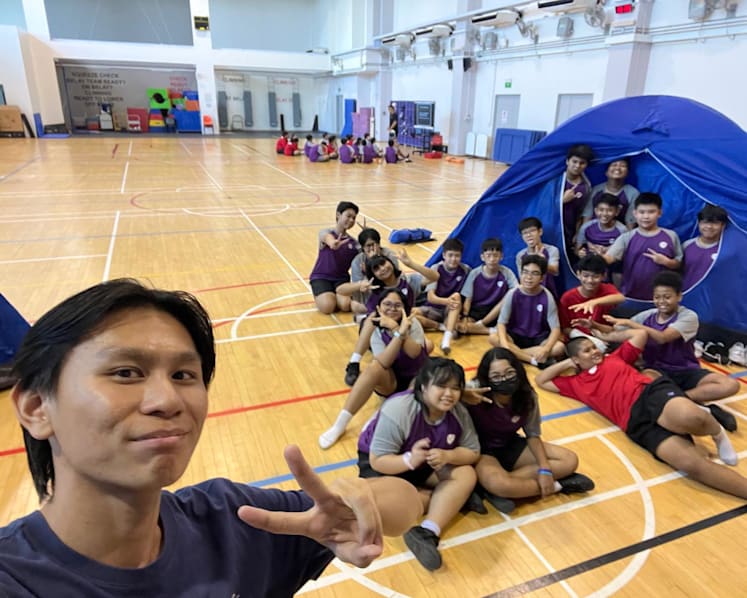
Upon graduating from polytechnic, he was still torn between social work and education. As fate would have it, the choice was made for him when he successfully applied for an MOE Teaching Award, a programme that sponsors undergraduate tuition fees and offers future educators a maintenance allowance.
While his family’s finances are "mostly stable" and they now live in a Build-to-Order flat, the award was still a welcome reprieve from the burden of tuition fees, said Mr Chng.
Knowing that his family wouldn't have to support him through university nor worry about him finding a job after graduating was a huge relief, he added.
Now, he's enjoying something he never would have dreamed of just 10 years ago: the full university experience, complete with staying in an on-campus dorm and going for lectures at the National Institute of Education (NIE).
Breaking through the isolation of his earlier years, he's also formed a solid group of friends from his schooling and National Service years, as well as the running community at Nanyang Technological University, where NIE is housed.
The keen runner said his hobby ties in with his future vocation as a physical education teacher. But more than that, training together with his running buddies pushes him to be a stronger person.
"I also hope to travel the world someday. And maybe I'll be able to run in other countries."
In the more immediate future, he's looking forward to becoming a fully fledged physical education teacher after a four-year degree programme at NIE.
"We all aspire to be that cool teacher, that teacher that can change lives. I've met very inspiring teachers, and I know that the road there is very long. But I hope to be one of these inspiring teachers."
For Mr Chng, it has been a long road to achieving his dreams, and while the path ahead is clearer than it was before, he's not quite done yet.
As for the other milestones the typical Singaporean navigates in their 20s like pursuing financial freedom, dating and climbing the professional ladder, Mr Chng isn't too fussed.
"Coming from a very different starting point, I interact with all these ideas (of success) very differently," he mused.
"I stress myself a lot less. I'm able to just be happy where I am. If I eventually get there, I'll be thankful. And if I don't, I think it's okay also."
For him, happiness now means finding contentment and meaning in the cards he's dealt: "If I had gone to school – to JC (junior college), for example – I would be a very different person," he said.
"I am exactly where I want to be, and I wouldn't have it any other way."