A knee injury once took away the body I relied on, even though I looked fit
After tearing multiple ligaments in her knee, Dr Beverly Low Yuen Wei had to relearn how to live with an invisible injury. Now largely recovered and back to running long distances, she reflects on how living with an invisible injury changed the way she sees recovery and resilience.
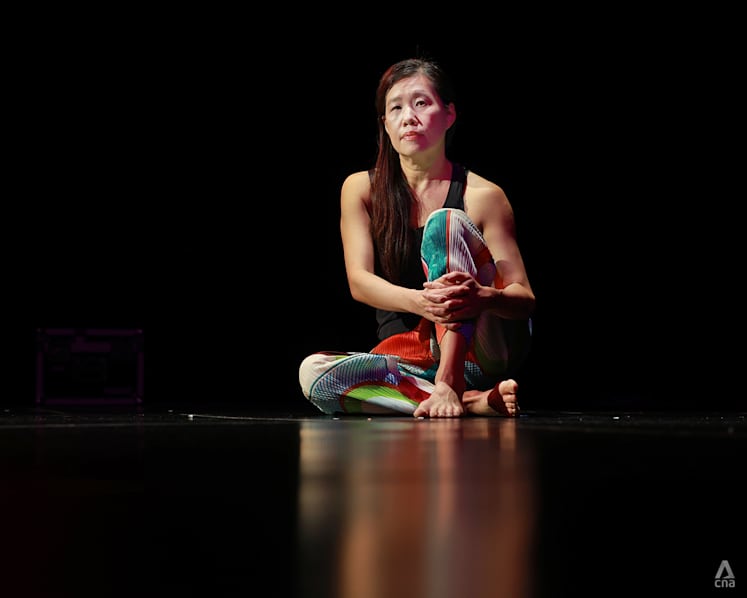
Dr Beverly Low, physical theatre director and part-time lecturer, tore multiple ligaments in her knee. The injury affected her everyday life and sense of identity. (Photo: CNA/Raj Nadarajan)

This audio is generated by an AI tool.
For three decades, my body was my language.
As a physical theatre director and performer, my work centres on embodied storytelling, where meaning is communicated primarily through balance, control, presence and movement rather than spoken text alone.
As a part-time lecturer in physical education, I guided students through exercises that built strength, stamina and bodily awareness.
That relationship with my body was disrupted two years ago during a Chinese martial arts training session. I was practising jumping kicks when I heard a sharp, unmistakable "pop".





There was no collision, no fall. Yet later, I would learn that I had torn multiple ligaments in my knee.
In an instant, everything changed for me. The body I had trusted for decades felt unfamiliar. Everyday movements seemed alien.
Toilet seats suddenly felt impossibly low, as if I were attempting the hardest squat of my life.
The speed of escalators was intimidating. Even the inclined travellators in shopping malls felt unusually steep – just standing on them hurt my knees.
Walking 200m, which used to be a breeze, became difficult as I had to rely on a crutch in the first few months after my injury.
Within a month, I was due to return to teaching physical education at a polytechnic where I worked part-time, but I realised I could no longer manage the physical demands of the role.
The polytechnic reassigned me to a classroom-based module. Even then, walking 300m between buildings was a challenge.
When I returned to campus, I avoided using a crutch out of pride. Instead, I brought a cabin-sized piece of luggage and used it as support as I moved from place to place.
It was emotionally difficult. I had been coaching students in high-intensity interval training and fitness dance, and suddenly, I needed support just to walk. I used to run marathons. Suddenly, even that 300m walk felt like one.
On the outside, I still looked fit and healthy. But on the inside, I was struggling silently with a body I no longer recognised.
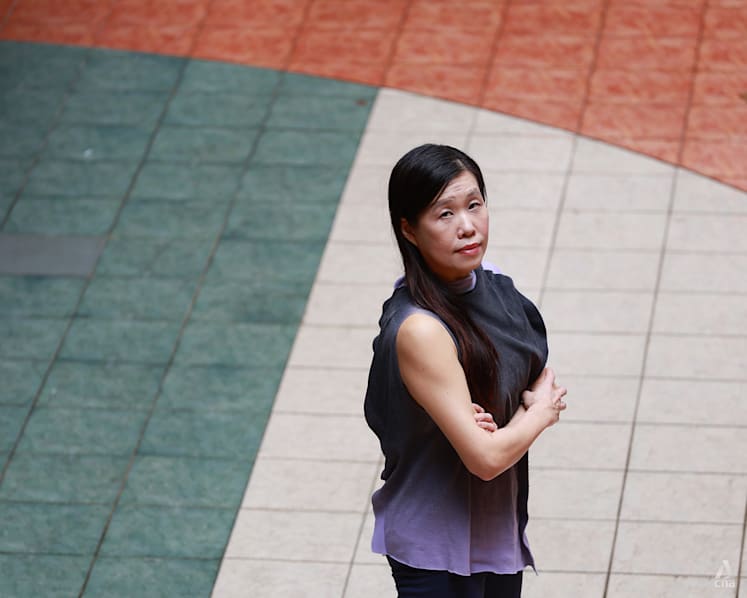
Today, I have returned to about 90 per cent of what I could do before the injury. I can run, train and perform again. But the knee is not the same. Stiffness still comes and goes, especially with fatigue or prolonged load.
The doctors could not promise a full recovery. One advised me to avoid running and jumping altogether, since a key stabilising ligament in my knee had torn and was not surgically repaired.
Recovery was slow. With my physiotherapist, I rebuilt strength and control, paying close attention to what my knee could handle, and when to stop.
LEARNING TO SLOW DOWN
A year after my injury, I could walk and smile again.
To most people, I looked "fine", but the reality was far from it. I still couldn't stand steadily on a moving MRT train.
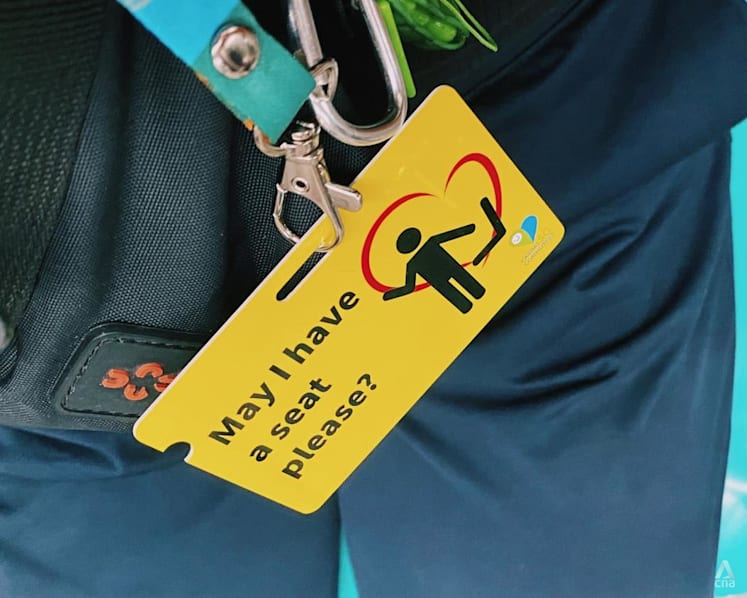
A friend told me about the "May I have a seat, please?" initiative for commuters with invisible health conditions, launched in 2019 by the Land Transport Authority. I applied for and was granted the bright yellow card.
As someone who used to take pride in what my body could do – in both physical theatre and fitness – I found myself lowering my head, cap pulled low, as I took the seat I desperately needed on the train.
What a far cry that moment was from the life I used to live.
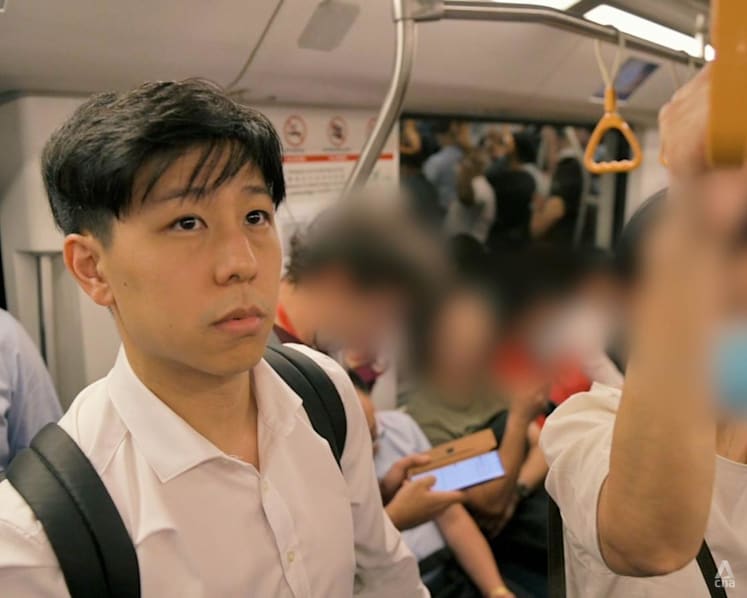
Before the injury, I was a classic Type A personality. Deadlines were always met early. I stood on the MRT train with my laptop open, attending Zoom meetings on the way to another meeting.
In both fitness and theatre, my mantra was simple: "You can do it! Push harder!"
After the injury, my days took on a different rhythm. I spent my time resting, doing rehab exercises, and reading articles and advice about recovery. Getting back to my old pace was harder than I expected.
I found myself missing deadlines for the first time in my life. The thought of explaining that my pace had slowed down because of my injury felt too awkward. So I said: "I need more time to pay attention to the details."
To my surprise, I was often granted deadline extensions of not one or two days, but up to a week. That generosity stayed with me.
TURNING PAIN INTO ART
At some point, I realised I had two choices: give up or reframe.
I began working from a chair, letting my upper body lead. I tested how much my legs could move without pain.
What began as a constraint slowly opened up new possibilities.
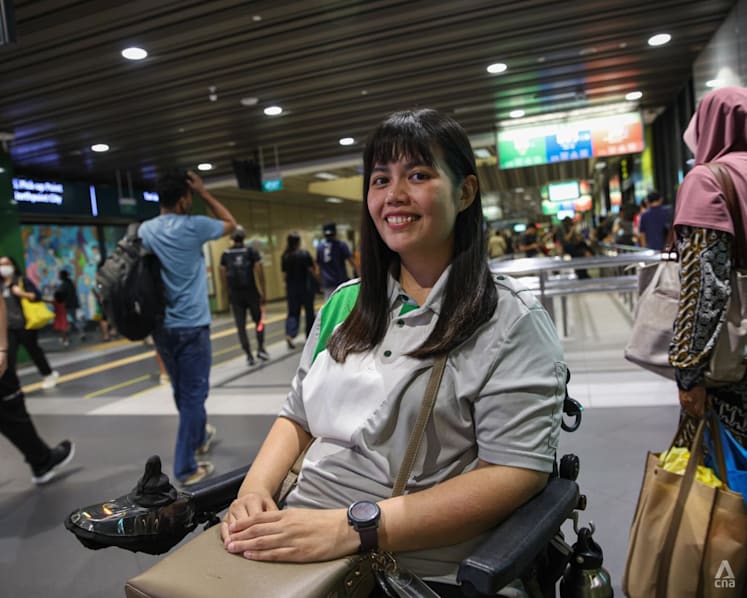
Months later, I found myself leading a seated movement workshop at The Listening Academy: Loss Attunement, where participants could work primarily from chairs, using breath, upper-body movement, stillness and attention.
The programme explored different forms of loss – known and unknown, anticipated, and long-standing or inherited – not as something to overcome, but as sensations and experiences to be acknowledged and felt in the body.
Pain changed how I make art.
Because I could no longer move as I once did, I began to notice how easily certain bodies are excluded from physical theatre, prompting me to find ways to make space for them.
Inclusivity, for me, did not grow from ideology, but from lived experience. Working with performers of varied physical abilities has been central to my practice for the past few years.
In October 2023 – seven months after the injury – I put out an open call specifically for individuals who were not confident in physical expression, were recovering from injuries, or had limited mobility but still wished to perform in physical theatre.
Five of the six performers who responded had acute or chronic knee or back pain, and the choreography was developed around these realities rather than against them.
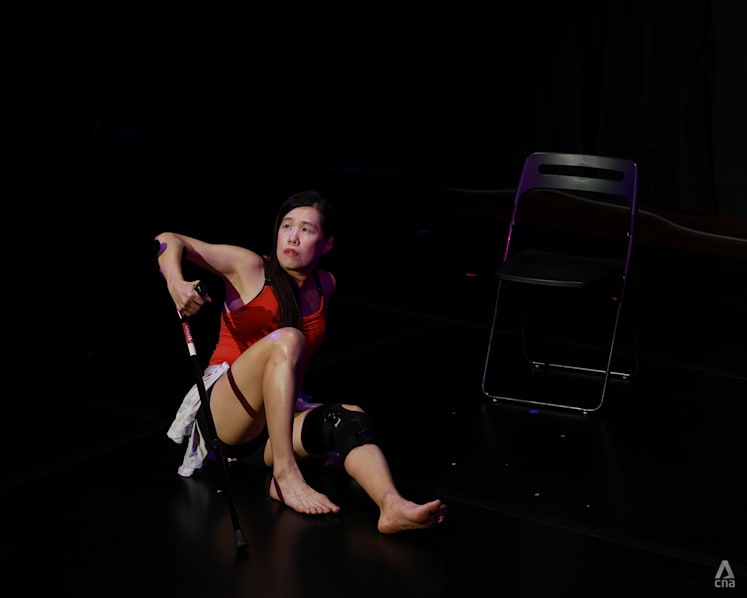
In one recent project last January, I enjoyed bringing together performers of all ages, from energetic 18-year-olds to inspiring 84-year-olds.
Working across five generations was a unique experience, as it forced me to confront my own assumptions about age, strength and how bodies communicate.
In my upcoming project, my physiotherapist and I are exploring movement inspired by non-linear recovery – the slow days, setbacks and small breakthroughs that often go unnoticed but are such important parts of the journey.
The work is no longer about perfect technique, but about honouring the messy, very human reality of healing.
A DIFFERENT KIND OF STRENGTH
Through exercise and education guided by my physiotherapist, I learned to reframe how I understand pain and progress.
From walking 200m with pain in 2023, I am now able to jog 15km in one hour and 50 minutes, matching my pre-injury pace.
Gardens by the Bay is my favourite spot for long runs. Along the way, I pause to smell the flowers, admire the decorations, watch drifting clouds and listen to flowing water.
I'm also back to jumping, doing burpees, tuck jumps, inversions and rolling – almost everything I used to do before my injury.
Now, when I coach, I give trainees the space to progress at their own pace. I no longer attend online meetings on the go. I take time to rest – mentally and physically.
I'm returning stronger, with greater mental resilience and a deeper understanding of how my nervous system, mindset and movement connect.
Today, I no longer wear the "May I have a seat, please?" card, but its meaning stays with me.
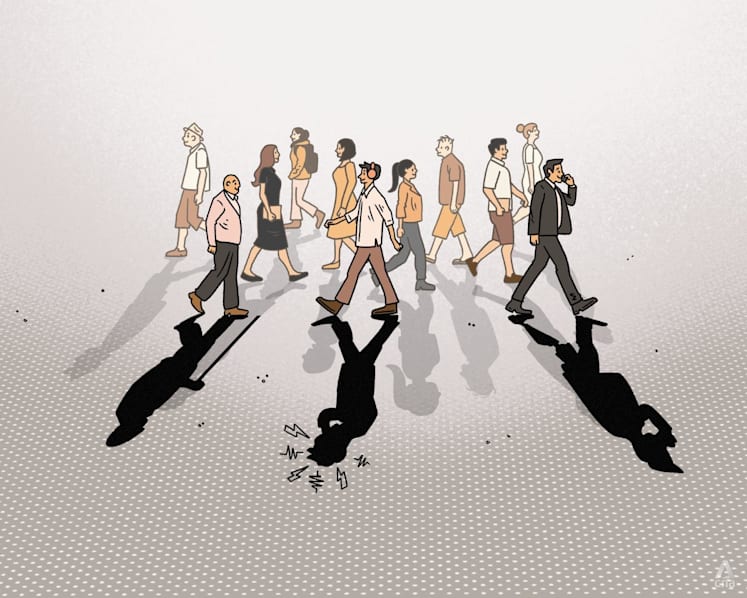
It reminds me that invisible struggles are everywhere, and that sometimes, slowing down is the only way to move forward.
My knee injury is something I still dislike. But paradoxically, it has given me a new purpose – to create performances that honour recovery, embrace inclusivity and reflect the resilience hidden in our most vulnerable moments.
Dr Beverly Low Yuen Wei is an associate lecturer at Republic Polytechnic and the Singapore University of Social Sciences. She is also the artistic director of Grain Performance & Research Lab, a physical theatre collective.
If you have an experience to share or know someone who wishes to contribute to this series, write to voices [at] mediacorp.com.sg (voices[at]mediacorp[dot]com[dot]sg) with your full name, address and phone number.