I chose to study abroad as I wanted to be alone. It taught me to be careful what I wish for
Ms Angelitha Jayaraj enrolled in a master's degree programme abroad partly to enjoy her own time and space for the first time in her life. What she found, however, was that being alone can be a double-edged sword.
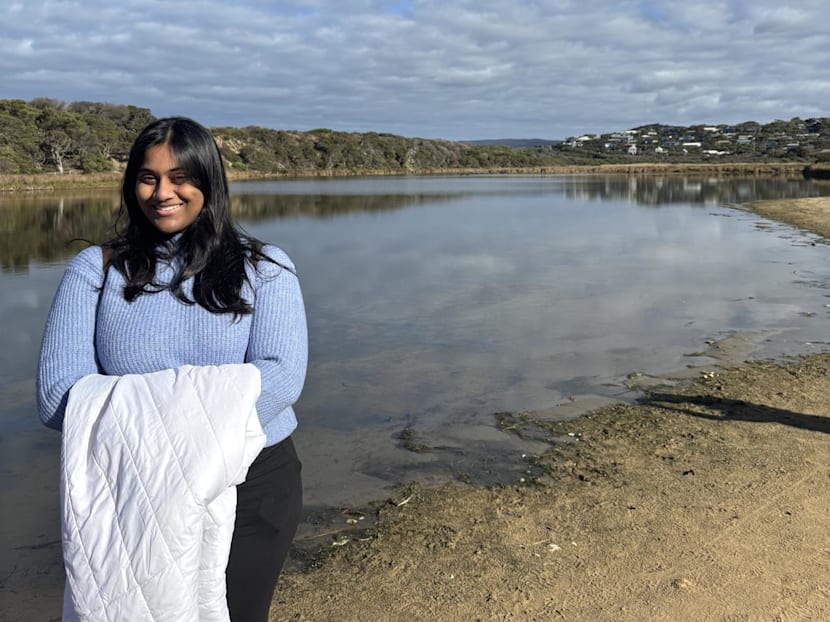
Ms Angelitha Jayaraj on a visit to Painkalac Creek, in Victoria, Australia. (Photo: Angelitha Jayaraj)

This audio is generated by an AI tool.
For the first two and a half decades or so of my life, I lived in the same city, in the same neighbourhood, in the same house, in the same room.
Many single Singaporeans don't move out of their family homes to strike out on their own, unless it's to move in with their partner. Rising housing and rental costs aside, it's always been part of the Asian cultural script of upholding filial piety.
This isn't necessarily a complaint.
Unlike many Western societies that prize individualism above all else, young Singaporeans are rarely cut off from family or community. We're never far from support when we need it, even as we learn to put up with a lot of well-meaning nagging from loved ones.
But it also means many of us don't have the time and space to be alone.
Young adults in Singapore unable to afford buying or renting their own living space, but who want to pursue their independence – even a temporary facsimile of it – have three choices: marriage, an overseas job posting, or studying abroad.
In 2024, as a single 27-year-old still at the outset of my career, studying abroad seemed the way to go for me – a chance to better myself, broaden my horizons and, as an introvert, maybe get some peace and quiet for the first time in my life.
BE CAREFUL WHAT YOU WISH FOR
I had been to Melbourne a few times before, but the ephemeral nature of these trips lent the city a sheen of magic. Everything was clear skies, trendy cafes and artsy laneways.
Moving is different.
Once I had to move through the city as home rather than a vacation spot, its once-familiar sights and sounds seemed to alter. The rose-tinted glasses tend to come off when you slip on your first puddle of vomit.
Being used to Singapore’s steady supply of humidity and sunlight, I struggled to acclimatise to Melbourne's mercurial winters. I had to layer up excessively just to pick up my mail, looking like the Michelin Man while locals casually left their houses in basketball shorts.
In my first month, I witnessed a man get blown clean off his bicycle by a strong gust of wind and get back on it like it was nothing.
I tried to tell myself all these were just amusing anecdotes to tell my friends and family when I went home to Singapore.
This only led me, with a sinking feeling, to the realisation that I was already thinking about going home.
FOREIGN AND FRIENDLESS
If I wanted more space and fewer people, now I had it. You could drive four hours in some parts of Victoria state before seeing another non-bovine soul.
But as the solitude I'd sought for so long became more available to me, I felt myself growing lonelier.
It's notoriously difficult to make friends as an adult, but being in a foreign country made it exponentially trickier.


It's not really about social skills – people in Melbourne are friendlier, and I've always been a decent conversationalist and affable enough to smoothly navigate interactions with new acquaintances.
However, no one shared my cultural touchstones or shorthand. Everybody spoke English, but it often felt like we were speaking different languages.
I became acquainted with my classmates, but struggled to form deeper friendships with any of them.
It was too hard to connect genuinely when I had to focus the bulk of my energy on slowing down my speech constantly. No one else was used to the rapid-fire way Singaporeans speak, like we're always running out of time, consonants and syllables bumping against each other.
No one ever verbalised it. Nevertheless, everything that made me different seemed to weigh on me all the time, a neon sign flashing incessantly over my head.
Back in Singapore, I'd claimed to be happiest when I was on my own, but I hadn't realised how much of my comfort was enabled by others in my life.
The security of having people you can call on whenever you need them – people just a short walk, bus or train ride or drive away – is a privilege so many of us rarely think about.
As the solitude I'd sought for so long became more available to me, I felt myself growing lonelier.
There in Melbourne, the fear and anxiety kept me home all the time.
More and more, I was alone not by choice, but because I had no other choice. Just like that, my world had shrunk back down to four walls.
I started craving connection intensely, in a way I hadn't since I was a bumbling, angsty teenager.
It was certainly an exercise in humility.
GETTING OVER MYSELF
The problem was that my seclusion felt like a personal failing.
Everyone wants their solitude to seem purposeful and interesting. Right now, people are falling over themselves to prove that they're more offline than everyone else.
It's more mortifying than ever to be seen caring "too much" about things, even your own feelings of loneliness. But the line between aloof and alone is gossamer thin.
Eventually, I grew tired of the pity party I had been throwing myself for months.
As spring arrived in Melbourne, I became cognisant of a new side to the city: diverse, colourful, ever-changing. I was suddenly desperate to learn the shapes and contours of this place I was fortunate to call a temporary home.
I started venturing out to explore on my own.
I visited museum exhibits that interested me, tasted cuisines from countries I couldn't point out on a map.
I travelled two hours to and fro by train on my own, just to watch a terrible movie in a 4DX theatre (an experience that gave me indigestion).
I levelled up in my independence – ran my own errands, made my own (somewhat) edible food and jimmied open a stuck door with a credit card. I even mustered up all my fragile courage and chased away a few spiders the size of my palm .
Soon, I developed an appreciation for a decadent luxury I never had in Singapore: Waking up each morning and deciding what I wanted to do for the rest of the day, without having to align it with someone else’s plans or run it by anyone else.
Once I let go of the self-imposed pressure to eradicate my isolation, I began to see my classmates not as blank canvases to project my anxieties on, but real people.
Engaging in genuine, open-minded conversations with them, I felt no judgment towards my origins – only curiosity. I found like-minded peers in people I once felt too different from.
Even a few months before graduation, I already started feeling the pinch of grief over leaving a newfound group of comrades behind.
LETTING GO OF FEAR TO ENJOY REAL SOLITUDE
Despite my previous desperation to dispel my loneliness, I found that once I formed real connections, I still enjoyed my time alone.
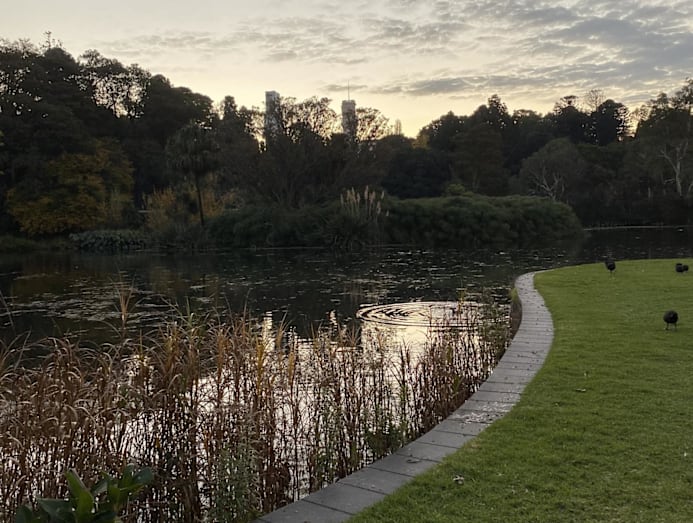
I made a weekly ritual out of taking an hour or two to sit by myself in an open park – reading a book, watching the leaves rustle in the wind and listening to the calm quiet punctuated by birds and the occasional child's laugh.
Solitude, both chosen and involuntary, has taught me that there's a difference between being alone and feeling alone.
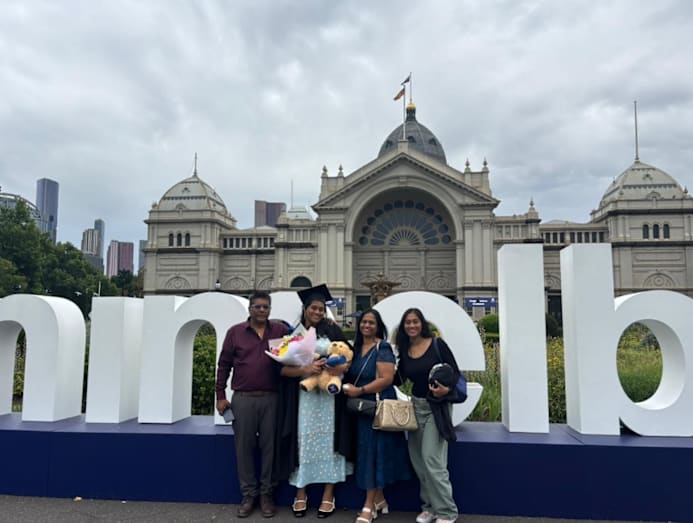
Upon graduating with my master's in publishing and communication, I returned home to Singapore in January 2026.
I'm glad to be back. I adore my friends, and I've been lucky enough to be born into a family I don't just love but genuinely like.
However, there's an undeniable pleasure in learning the true independence of not having to rely on anyone else for your sense of contentment and happiness.
Even now, I can't picture myself going back to worrying about being seen eating alone in public. I simply don't care about being perceived as "strange" or "alone" anymore, not when there are worse things to be.
It's possible to feel lonely even when surrounded by people. What matters most is knowing that you have people you love – and that they love you, too.
Angelitha Jayaraj is a content writer. She holds a master's degree in publishing and communication.
If you have an experience to share or know someone who wishes to contribute to this series, write to voices [at] mediacorp.com.sg (voices[at]mediacorp[dot]com[dot]sg) with your full name, address and phone number.