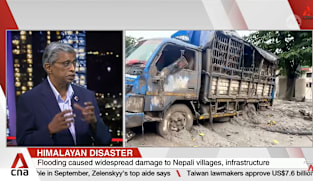
Himalayan disaster: Gyirong Port one of the first places to be hit by torrent of mud and debris
Let's take a closer look at the flash floods that swept through the Nepal-China border. What’s unusual is that heavy rain does not appear to have been the trigger. Scientists believe the disaster began with a glacier collapse, near the border between Nepal and Tibet. Satellite analysis indicates, the lower part of a glacier broke away at about 5,200 metres, plunging roughly 1,200 metres onto the valley floor. As the ice came down, it picked up rock, sediment and other debris, transforming into a fast-moving mass. One of the first places hit was Gyirong Port on the Tibetan side of the border. So what made the glacier collapse? That remains under investigation. Scientists say it is too early to determine what role climate change played in this disaster. Rebecca Bundhun reports from Kathmandu - with an update on the possibility of finding more survivors and why the affected region attracts tourists.
Let's take a closer look at the flash floods that swept through the Nepal-China border. What’s unusual is that heavy rain does not appear to have been the trigger. Scientists believe the disaster began with a glacier collapse, near the border between Nepal and Tibet. Satellite analysis indicates, the lower part of a glacier broke away at about 5,200 metres, plunging roughly 1,200 metres onto the valley floor. As the ice came down, it picked up rock, sediment and other debris, transforming into a fast-moving mass. One of the first places hit was Gyirong Port on the Tibetan side of the border. So what made the glacier collapse? That remains under investigation. Scientists say it is too early to determine what role climate change played in this disaster. Rebecca Bundhun reports from Kathmandu - with an update on the possibility of finding more survivors and why the affected region attracts tourists.
Popular Shows