Journalists at Australia's public broadcaster ABC hold 24-hour strike over pay
It is the first major strike to hit the broadcaster in around 20 years after a majority of union members rejected a pay offer that was below inflation.
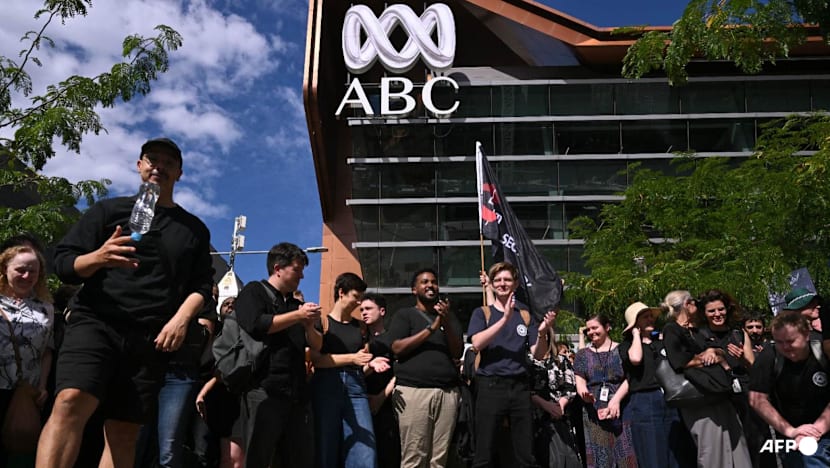
Journalists and staff walk out of the Australian Broadcasting Corporation (ABC) headquarters on strike demanding better pay and protections to stop artificial intelligence taking their jobs, in Melbourne on Mar 25, 2026. (Photo: AFP/William West)
Hundreds of journalists went on strike on Wednesday (Mar 25) at Australia's main public broadcaster, demanding better pay and protections to stop artificial intelligence taking their jobs.
The Australian Broadcasting Corporation was forced to replace live programming with BBC content after more than 2,000 journalists and employees called a 24-hour strike.
It is the first major strike to hit the broadcaster in around 20 years after a majority of union members rejected a pay offer that was below inflation.
It comes after months of pay negotiations between staff and management. The majority of ABC staff this week rejected the latest offer of a 10 per cent pay rise over three years and a A$1,000 (US$700) bonus for ongoing and fixed-term staff.





Australia's annual inflation rate was 3.8 per cent in January.
One-third of the ABC's 4,500 employees are unionised. Around 1,000 people voted in favour of taking industrial action after talks failed.
"ABC staff don't want to strike, they want to do their jobs," the Media, Entertainment and Arts Alliance said in a statement.
"They want fair pay, secure work, and guardrails around the use of technologies like AI to protect editorial integrity and public trust," the union added.
Falling advertising revenues and the rise of social media have fuelled repeated rounds of job cuts across Australia's media.
ABC management said the pay offer "reflects the maximum level" it can "sustainably provide", but unions want greater job security and limits on the use of AI.
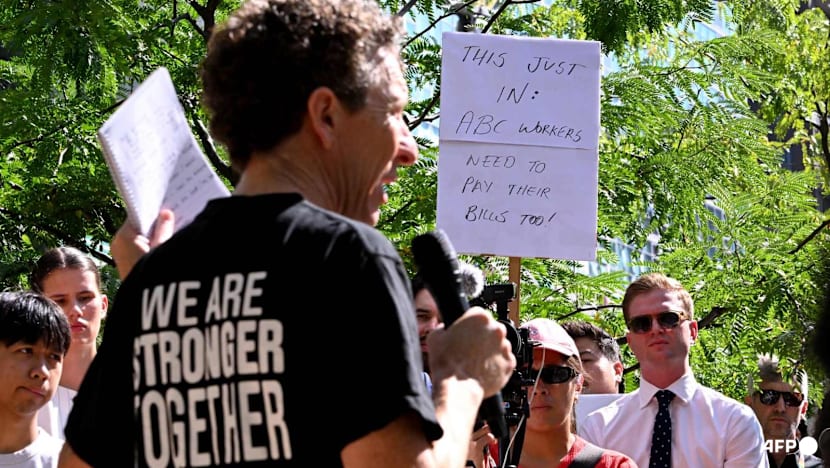
THREE KEY ISSUES
The Media, Entertainment and Arts Alliance (MEAA), which represents many of the staff striking, has argued that the offer is below inflation, and their requests for a solution to short-term, rolling contracts have been ignored.
Michael Slezak, ABC journalist and co-chair of the MEAA ABC National House Committee, said the decision to strike came down to three "key" issues, including pay, fixed-term contracts and progression.
The MEAA initially asked for a pay rise of 5.5 per cent.
"That's a below-inflation pay offer; that is just a pay cut with better branding," Mr Slezak said.
Another issue Mr Slezak said was "endemic" to the ABC was an over-reliance on fixed-term and casual employees, who "don't know whether they're going to be able to pay their rent or their mortgage when their contract is up".
The final key issue the MEAA had been focused on was pay progression, specifically calling for automatic progression through the ABC's pay points to a certain level based on satisfactory performance.
"At the moment you have people stuck for years and years at the same level in our pay systems, despite accumulating massive amounts of experience and applying that to our work," Mr Slezak said.
Asked whether he thought a deal could be reached with the MEAA and CPSU, ABC managing director Hugh Marks said he thought there was still a gap between what management and unions were seeking.
"I'm finding it very difficult to deal with an organisation that I can't wrestle into an agreement," he said.
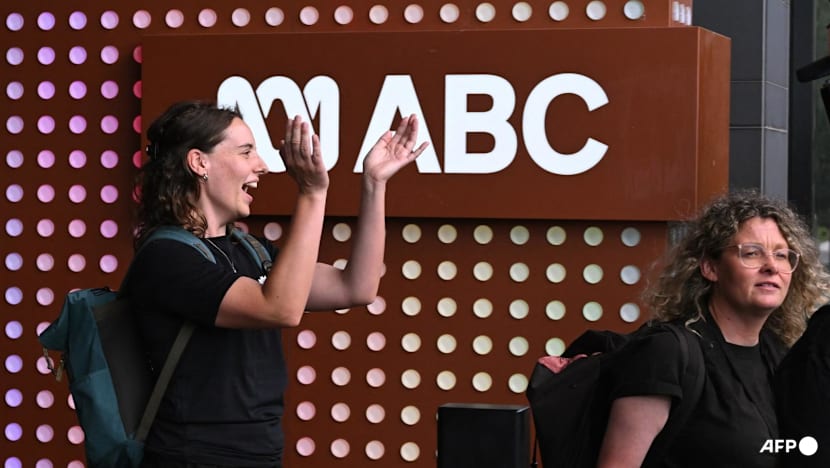
In an interview on 702 ABC Sydney on Wednesday morning, Marks said it was "very unfortunate" that the pay negotiations had come to this.
"On behalf of the ABC, I feel terrible," he said.
Asked if he was sorry, Marks said he was. "Very much so," he said.
Marks added that the offer, inclusive of the A$1,000 one-off bonus, would amount to a pay rise above inflation for some workers.
He said he sympathised with some staff on uncertain short-term contracts or whose pay was capped at rates tied to their job description, an issue he said he felt "needs to be addressed".
The ABC will take the matter to Australia's workplace tribunal, the Fair Work Commission, in a bid to resolve the dispute.
"It is not a great time for our teams to be out. There is a lot of things happening in the world," Marks told ABC Radio.
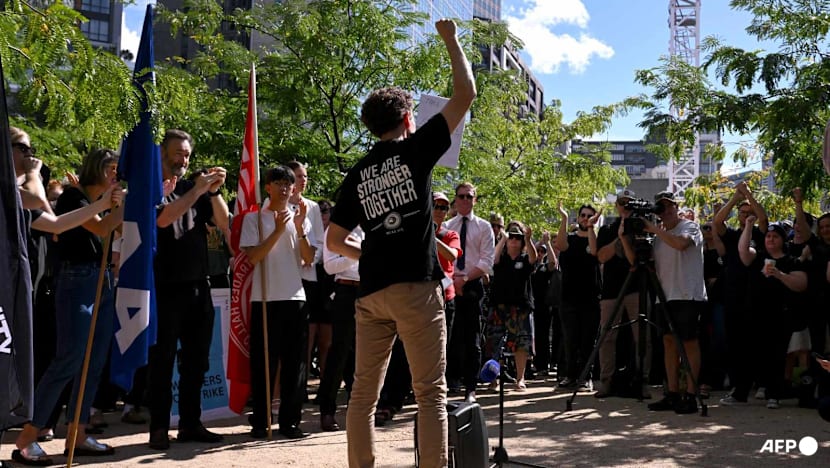
DEFINITION OF "EMERGENCY BROADCASTING" WIDENED
Mr Marks on Wednesday said on ABC Radio Sydney that he had widened the definition of "emergency broadcasting".
This means that staff members could be demanded to return to work if there is an escalation in the Middle East conflict or the fuel crisis, local agency The Sydney Morning Herald reported.
“Yesterday, I made the decision to change the definition of what is emergency broadcasting. I changed it from this notion that it only applies to fires, floods or cyclones or natural events,” Mr Marks said.
Pressed by ABC Sydney Mornings on whether he was referring to the ongoing fuel crisis and wars in the Middle East, Marks said it “depends upon how those matters progress”.
“It is not a great time for our team to be out. There are a lot of things happening in the world,” Marks said.
Under the ABC’s pay agreement with staff, emergency broadcasting is excluded from industrial action, but that has traditionally referred to natural disasters in Australia rather than major news events abroad.
Mr Marks added that he expected striking staff would agree to being recalled to the newsroom if there was a major development in international or domestic news, ABC reported.
"If we are truly in the business of serving our audiences, I believe our staff would say, 'Yes, that warrants me attending the office,'" he said.