







China warns France, Germany against 'protectionist' trade tools
"We hope that France and Germany, as major economies in the world, will uphold openness, cooperation and free trade," China's commerce ministry said in a statement.
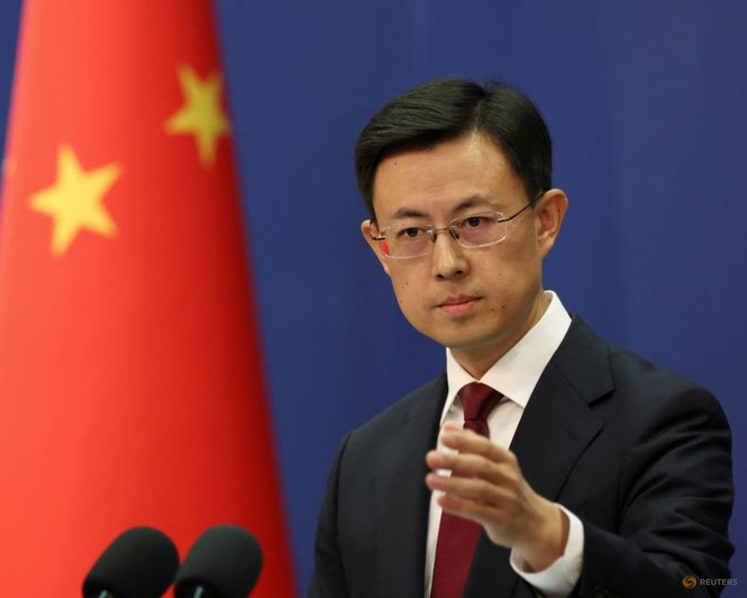
Chinese Foreign Ministry spokesperson Guo Jiakun takes a question from a journalist at a press conference in Beijing, China Jan 7, 2025. (Photo: REUTERS/Florence Lo)
BEIJING: China called on France and Germany to steer clear of "protectionist" trade measures on Tuesday (Oct 6), after their leaders urged the European Union to develop a legal arsenal for a potential trade war.
French President Emmanuel Macron and German Chancellor Friedrich Merz said in a letter to European Commission President Ursula von der Leyen that "we need a credible instrument" for swift and decisive action.
This includes the ability to cut off access to the European single market "if needed", according to the letter seen by AFP on Monday.
Macron and Merz stopped short of explicitly naming China but their letter comes just two days before EU trade commissioner Maros Sefcovic heads to Beijing to tackle trade frictions.
Sefcovic raised the stakes for this week's meetings in summer when he warned the EU expected "tangible results by October" from the process.
China's commerce ministry, in a statement on Tuesday, urged France and Germany to "refrain from encouraging the EU to resort to protectionist tools at every turn".
"We hope that France and Germany, as major economies in the world, will uphold openness, cooperation and free trade," the ministry said in a statement.
"They should avoid going down the wrong path in the wrong way, only to ultimately suffer the consequences themselves."
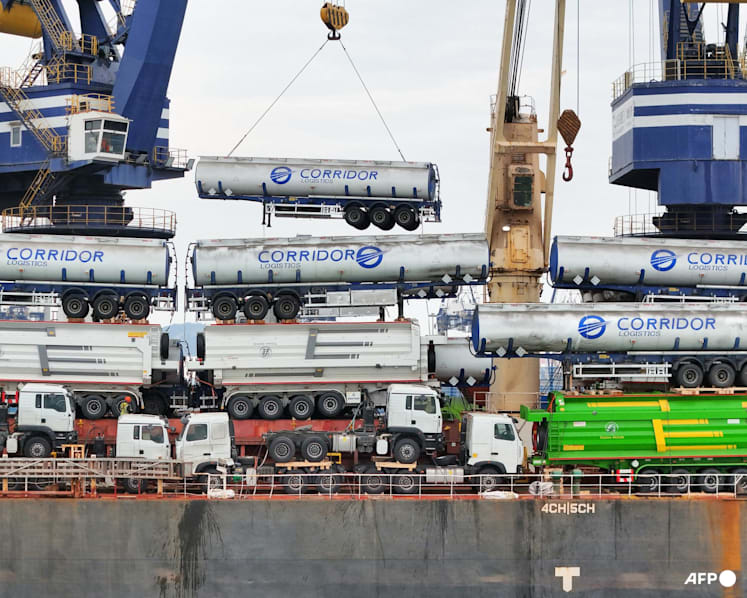
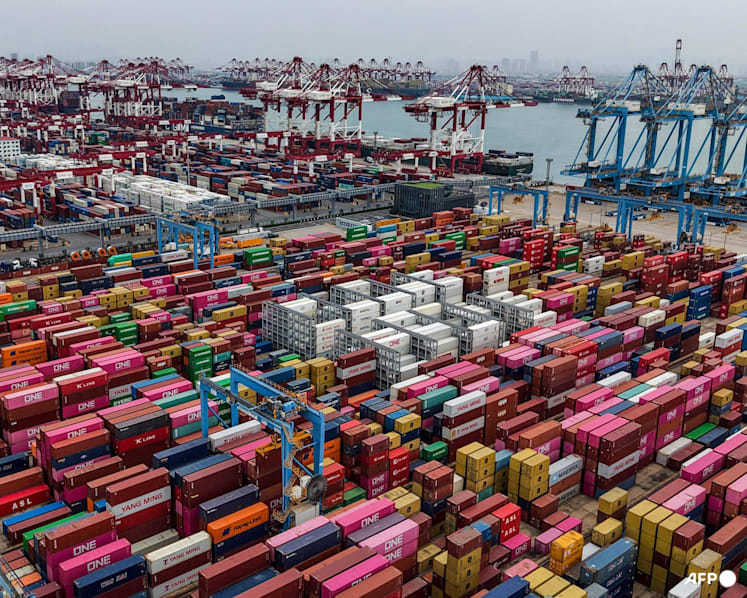
Berlin and Paris want to give the European Commission the power to respond to a trade aggression within days. Under their proposal, such action would not need approval from the EU's 27 countries, though a weighted majority of states could block it.
The EU's biggest trade concern is its deficit with China, which Brussels says is inflicting damage on key European sectors.





The deficit hit about €360 billion (US$404 billion) in 2025, meaning the EU imported far more from the Asian nation than it exported there. China has a lower figure of around US$292 billion but expects the deficit to rise further this year.
Observers say the sharp rhetoric ahead of the talks risks further straining a relationship in which Europe remains heavily reliant on China for key goods and raw materials.
"All these talks put the pressure even more on, and make the vibe even more intense. You can view it as probably part of the technique but principally I don’t think it’s benefitting these current consultations," Liang Linlin, a commentator on China-EU economic and trade relations, told CNA.
Beijing's foreign ministry, also responding to the leaders' letter on Tuesday, called the economic and trade relationship between China and the EU "mutually beneficial".
"We hope the EU will work with China in the same direction, address each other's concerns through dialogue and consultation, and jointly maintain the stability and smooth operation of global industrial and supply chains," ministry spokesman Guo Jiakun said in a statement.
However, some European industries say concerns over Chinese overcapacity remain a sticking point in trade talks between Brussels and Beijing.
"We’re very concerned about overcapacities that are built in China in relation to aluminium and copper, where we see this is really an aggressive tendency with one simple goal, in our opinion, which is effectively to make sure that the Chinese market can dominate the European market," James Watson, director general of trade association European Metals, told CNA.
Nicolo Campagnol, chief programme officer of Spanish battery tech firm Basquevolt, added: "Here in Europe, it’s challenging. We have to compete against Asian players, American players, on a completely (level) playing field so there’s no preference for our products so those players that are able to survive they have to be very good."





