Costa Rica leans on renewables, diversification to weather global uncertainty
Costa Rica’s Minister of Foreign Trade Manuel Tovar Rivera, in an interview with CNA’s Olivia Marzuki, discusses how energy security, Asia ties and supply chain shifts are shaping the nation's strategy.
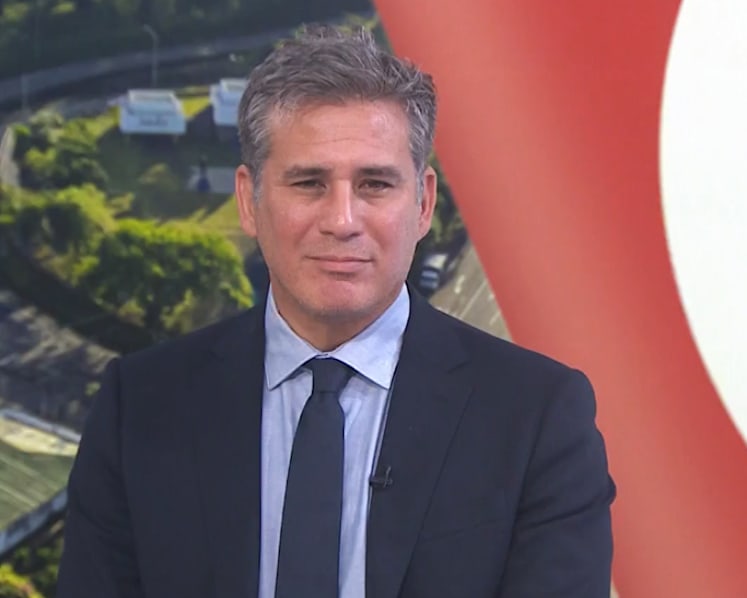
Costa Rica’s Minister of Foreign Trade Manuel Tovar Rivera attends an interview with CNA.

This audio is generated by an AI tool.


SINGAPORE: Costa Rica is leaning on its renewable energy base and a strategy of diversification to navigate growing global uncertainty, as geopolitical tensions and slowing growth weigh on trade.
Speaking to CNA during a visit to Singapore, Costa Rica’s Minister of Foreign Trade Manuel Tovar Rivera said that while the country has been relatively insulated from immediate energy shocks stemming from the ongoing Middle East conflict, it will not be immune to broader economic fallout.
“Global trade is a very vulnerable economic activity, subject to the impact of many disruptions,” he said, pointing to tensions around the Strait of Hormuz as a key risk to global markets.
Since the United States-Israel war on Iran began seven weeks ago, the narrow waterway – a critical artery through which about a fifth of the world’s oil and liquefied natural gas (LNG) flow through – has been at a standstill.





Costa Rica sources its fuel mainly from the US and Mexico. Tovar Rivera said the country has already secured its annual supply, limiting the risk of shortages.
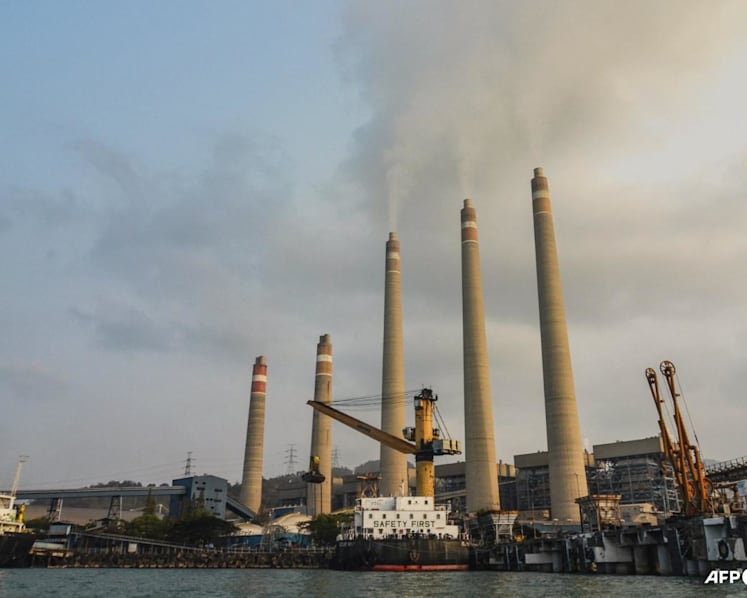
In addition, about 98 per cent of its electricity is generated domestically from renewable sources, including wind, solar, hydropower and geothermal energy.
“So, we don't have a direct impact in terms of shortage of fuel,” said Tovar Rivera.
“However, we all live on the same planet, and what happens on one side of the world will eventually have an impact on (the other).”
He warned that rising global prices could dampen demand for Costa Rican exports, while higher import costs and weaker foreign direct investment flows may weigh on the domestic economy.
“No one will be spared,” he said, noting that global growth forecasts have already been revised downwards by the Organization for Economic Co-operation and Development (OECD) and the International Monetary Fund (IMF).
RENEWABLES AS A COMPETITIVE EDGE
Costa Rica’s reliance on domestically produced green energy not only enables the country to be self-sufficient and less exposed to global disruptions, but has also become a key draw for foreign investors, particularly in advanced manufacturing sectors, Tovar Rivera said.
Companies operating in Costa Rica benefit from access to renewable energy, helping them lower their carbon footprint and meet sustainability targets.
“That's part of our selling pitch. It’s a win-win situation. Global companies that choose us as partners plug their machines into clean energy, contributing to mitigating (environmental) impact,” said Tovar Rivera.
“With climate change and tensions over Hormuz, this reaffirms that the path we chose towards sustainability is … a recipe for success, and we will continue along those lines.”
ASIA TIES GAINING MOMENTUM
Costa Rica is also deepening its economic engagement with the Asia-Pacific, now its fastest-growing export market.
The country is expanding into higher-value sectors such as semiconductors and knowledge-based services, building on its strong foothold in medical technology – which accounts for nearly half of its goods exports.
Tovar Rivera was in Singapore this week for a semiconductor industry event, as part of efforts to strengthen ties with the region.
He said Costa Rica is “within days” of officially joining the Comprehensive and Progressive Agreement for Trans-Pacific Partnership (CPTPP). The trade pact lowers tariffs for its 12 members that include Australia, Britain, Canada, Japan, Mexico and Singapore.
Such cooperation is critical for smaller, trade-dependent economies, he added, particularly as they seek to uphold open and rules-based trade.
“Small, open economies like Costa Rica and Singapore will be (among those hardest) hit by the erosion of the multilateral trading system. Business will not be carrying on as usual,” he said.
“We have to find solutions and alternatives to address and tackle those challenges … even as we continue to devote efforts to strengthen the multilateral trading system.”
DIVERSIFICATION KEY TO RESILIENCE
With global headwinds unlikely to ease anytime soon, Costa Rica is focusing on diversifying across markets, partners and industries, said Tovar Rivera.
While the country remains closely integrated with the North American economy, it is increasingly broadening its trade links to mitigate risks.
“Trade disruptions can come in many forms,” said the foreign trade minister, citing both the COVID-19 pandemic and current geopolitical tensions.
“The strategy is diversification. If you diversify markets and partners, that’s the best way to address these disruptions.”