Tackling barriers: How England is trying to keep women and girls in sport
The country wants 100,000 women and girls playing rugby by 2030 - but from physical education classes to public parks, many still feel unwelcome.
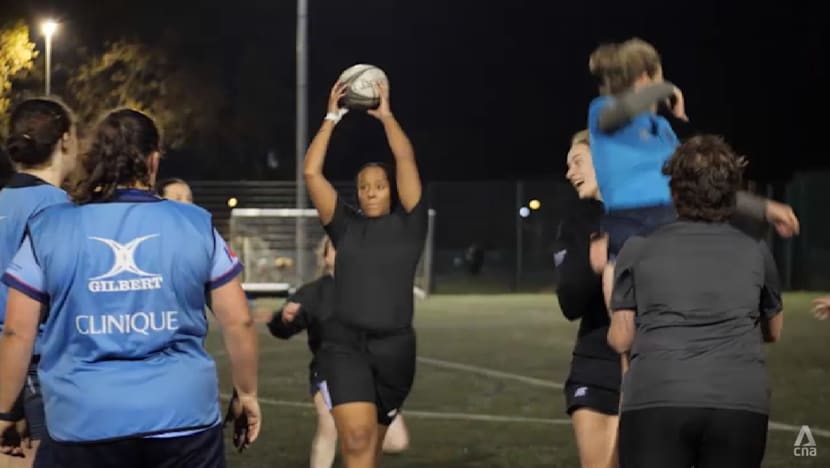
Inner-city London club The Hackney Gladies has experienced a fresh wave of new players signing up, inspired by England’s triumph at this year’s Women’s Rugby World Cup.

This audio is generated by an AI tool.


LONDON: On a rugby pitch in inner-city London, a fresh wave of new players is signing up, inspired by England’s triumph at this year’s Women’s Rugby World Cup.
The Hackney Gladies – the women’s side of the Hackney Rugby Football Club – said the victory in September has sparked a surge in enthusiasm for the sport.
“This year, (interest has) just taken over. We've already had about 25 new signups … which has meant that people like me, who used to play, are stepping up and coaching,” said Lamees Idris, who chairs the senior teams.
She added that the World Cup win has helped shift attitudes on women’s rugby, challenging old stereotypes and bringing new visibility to the game.





The Rugby Football Union, the sport’s governing body in England, wants to build on the momentum. It aims to grow the number of female rugby players from 60,000 currently to 100,000 by 2030.
Yet, turning elite success into broader sports participation among British women and girls will require tackling the barriers that keep them away in the first place.
Rugby is a sport where power, strength, aggression and competitiveness are valued as essential to success – qualities that are often celebrated in male athletes but not traditionally associated with women.
“It's inherently been a traditionally male sport so I think there're people who look at you and think, ‘Do you know what you're doing?’” coach and player Charlie Noble told CNA.
“Whenever I play it, I get asked questions: ‘Is it proper rugby, is it contact rugby?’’ … And they’re always a little bit hard to stomach,” she said, adding that such questions would never be posed to men.
Additionally, training in public areas such as parks, where research shows women feel twice as unsafe as men, can further discourage them from taking part.
Concerns about being watched, judged and harassed, as well as a lack of toilets and changing facilities, mean public spaces rarely offer what women need to feel comfortable exercising.
Research shows this stark contrast between women’s and men’s experiences of sport goes back to childhood and classrooms.

CHANGING-ROOM ANXIETY
Studies show that adults’ engagement with physical activity is linked to how active they were in school.
The transition from primary to secondary school is a time when even sporty children start to opt out, with the sharpest drop among girls.
James Mooney, who leads school sport and physical activity for the Cabot Learning Federation – a trust which oversees 35 schools in southwest England – said avoidance is common.
“We will have students who will (play) truant or skip PE (physical education), often bringing a note claiming that they can't take part or strategically not come to school until after PE lessons,” he said.
“It could be through disengagement whilst taking part in the activity, where they may cause trouble to be sent out, or it could just quite simply be that they are passive and they take part but don't really enjoy it.”
At City Academy Bristol, a group of Year 9 “sport leaders” – 13- and 14-year-olds who help teach sports to younger pupils – have been exploring what would make physical education more engaging.
Some of their suggestions involve offering a wider mix of activities, not only the “standard football, basketball and rugby”, as one student put it.
Yet one of the biggest barriers for these students has nothing to do with sport – it is the changing room.

They described anxiety over getting changed for PE. One student said she wore her PE shirt under her school uniform to avoid undressing in front of others, while another admitted she sometimes skipped class altogether because she felt too uncomfortable to change.
They also called for improved facilities and stronger support to help them manage their menstrual needs comfortably.
There is a distinct lack of privacy in the school’s changing room. About 60 students share the space at a time, with only five to 10 minutes to change.
Research by the Sweaty Betty Foundation, a charity founded by the activewear brand of the same name, found that a quarter of secondary school girls skipped PE on multiple occasions due to anxiety around their changing facilities.
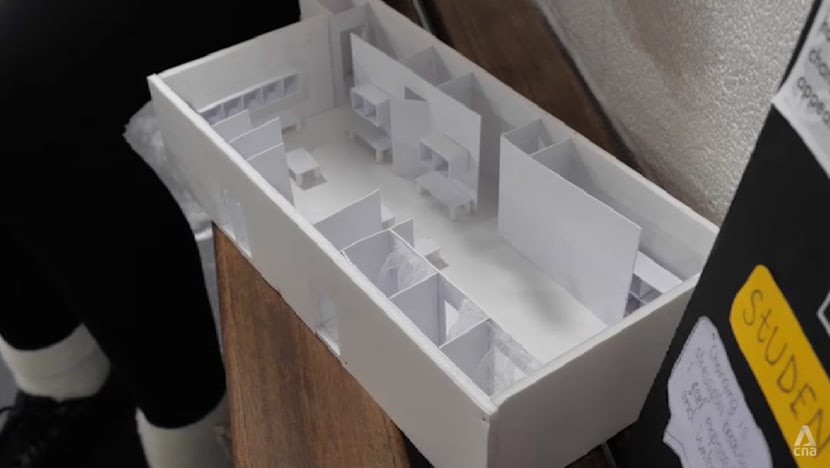
City Academy Bristol students entered a competition to redesign the space and won US$3,000 to implement their ideas.
Their designs include individual changing cubicles and a mural celebrating female role models.
One student said that the new layout would create “a safe space without loads of people watching”.


GIRL-LED FITNESS GAINING MOMENTUM
Outside school, UK charity Women in Sport is offering girls an alternative to the more rigid structure of formal PE lessons.
The initiative, called the Big Sister project, features physical activity led by girls, for girls, to bust the myth that teenage girls are innately averse to exercise.
It was rolled out nationally last year across 100 leisure centres. Today, 7,000 girls are Big Sister members, with half the cost covered by the charity.
Here, girls decide what sport to do, choose the music to play and set the exercises to follow. Fitness instructors are on hand for safety – but the girls run the show.
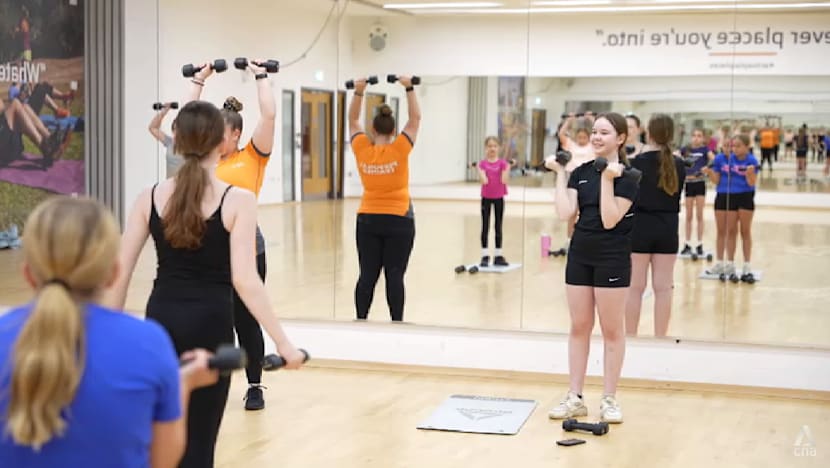
“They get to teach, they get to lead, make new friendships and just interact with each other,” said instructor Taliyah-Jae Brooks.
“They (used to) be really shy but now they're confident (and) loud,” she added.
“This is actually fun. Because in PE there's other people, some people you don't like. And that feels like they're judging you. But here, no one is,” said one 12-year-old participant.
Another said that playing football with boys at school feels “pressured and dirty”, whereas at the project, she knows no one will “slide tackle, or just be mean or judgeful”.
Whether on school fields, rugby pitches or in community leisure centres, advocates say that tackling the barriers that keep women and girls away from sport is essential for a physically and mentally healthier society.