Despite crackdowns, thousands of migrants still risk deadly Channel crossings to Britain
Some are fleeing war and persecution in search of asylum, while others are seeking better opportunities and a new life.

This audio is generated by an AI tool.


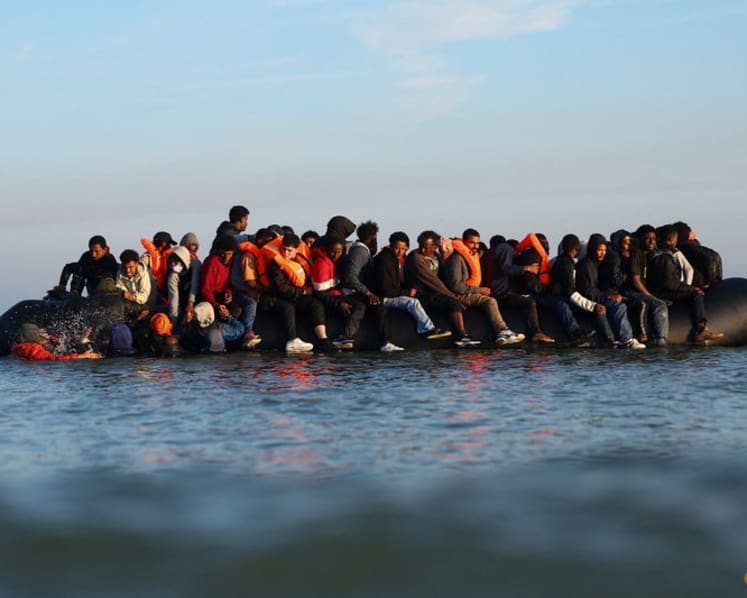
DOVER, England/CALAIS, France: Every year, tens of thousands of migrants gather along the windswept northern coast of France with one goal – crossing the English Channel to Britain.
For them, the 34km stretch of water separating France and the United Kingdom is the final obstacle between hardship and hope.
Some are fleeing war and persecution in search of asylum, while others are seeking better opportunities and a new life.
Despite increasingly tough measures by both governments to stop them, the crossings continue.





CROSSING INTO UNCERTAINTY
Last year alone, about 41,000 migrants made the perilous journey across one of the world’s busiest shipping lanes. Most came from Eritrea, Afghanistan, Iran, Syria and Iraq.
Many depart from beaches near Dunkirk, Calais and Boulogne-sur-Mer, crammed into overcrowded inflatable boats organised by smuggling networks.
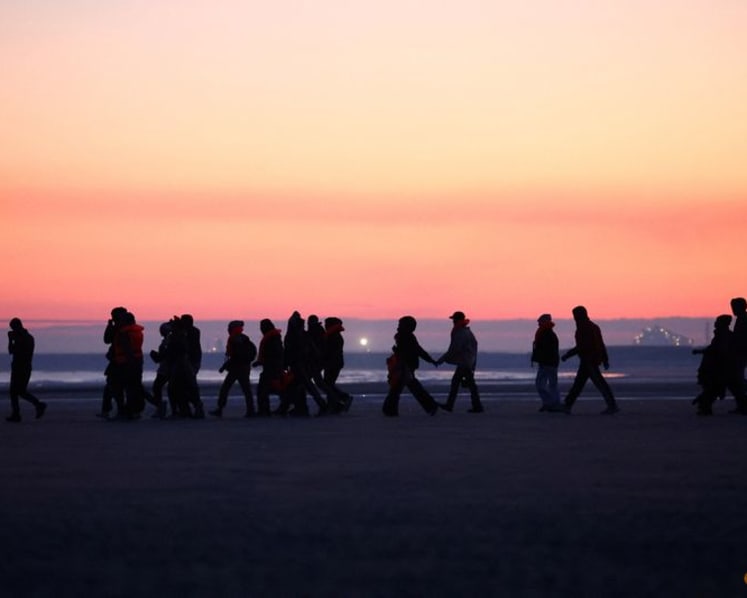
Those who cross successfully often arrive at remote coastal areas in southeast England, along Kent and Sussex. Many are intercepted at sea by authorities or rescued by lifeboat crews.
In Calais, a northern French port city that forms part of the European Union’s external border, makeshift migrant camps continue to grow around industrial zones and forested areas.
There, migrants wait for an opportunity to secure a place on a boat bound for Britain.
French authorities say they are stepping up efforts to dismantle trafficking gangs that prey on vulnerable migrants desperate to make the crossing.
On May 4, 19 people were jailed following a trial in Lille for operating a migrant smuggling network along France’s northern coastline.
TOUGH POLICIES QUESTIONED
To strengthen border enforcement, the British government is paying France around US$900 million over three years to help patrol beaches, monitor smuggling operations and prevent boats from leaving French shores.
The UK and France have also been trialling a controversial “one-in, one-out” arrangement since last August.
Under the scheme, Britain can return migrants who entered illegally by boat to France, while accepting an equivalent number through legal migration routes.
But critics argue the policy has had little practical impact.
As of Apr 28, 605 people had been returned to France, while 581 others had entered the UK under the scheme.
“These are very low numbers if we compare them to the overall number of arrivals,” said Matilde Rosina, a lecturer in global challenges at Brunel University London.
“There have been some interviews with people who have been taken back to France who actually say that they would like to come back to the UK. So the goal of deterrence of the government looks to me to be failing at the moment.”
Rights groups have also raised concerns over how migrants are selected for deportation under the scheme.
Libby Kane, spokesperson for the Joint Council for the Welfare of Immigrants, said many detainees describe the process as confusing.
“People say that they consider the way they've been detained to be very arbitrary,” she added.
“They don't really know why they were detained and not somebody else that they crossed the channel with.”
Experts say that despite tighter policing, harsher rhetoric and closer border cooperation, thousands are expected to continue attempting the crossing every month – driven by forces far stronger than the fear of being turned back.