Landmark EU–Mercosur trade deal close to signing, promising economic gains despite fierce farmer opposition
The agreement, involving the European Union and five South American countries, has been more than two decades in the making.
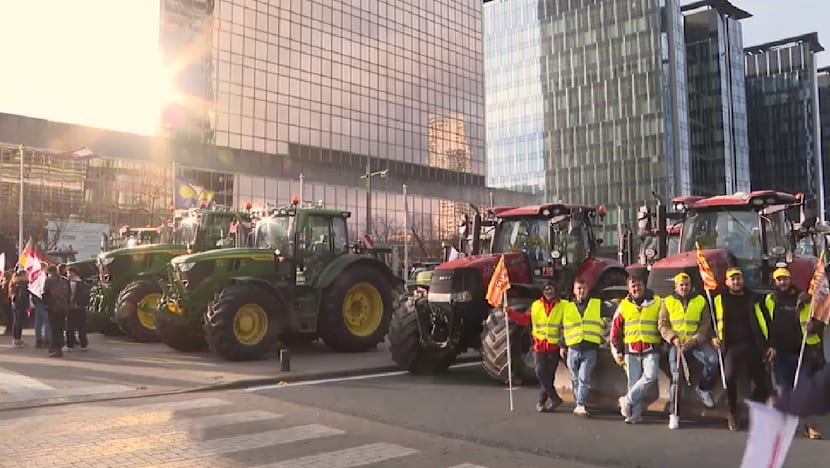
Farming groups argue that agricultural imports from South America – particularly beef and poultry – could undercut European producers, who face stricter environmental and animal welfare regulations.

This audio is generated by an AI tool.


BRUSSELS: A landmark deal that would create the world’s largest free trade area could be signed within days, marking a major geopolitical and economic win for the European Union (EU) – but only if leaders can overcome fierce resistance from powerful farming lobbies.
The long-awaited EU–Mercosur agreement, involving the EU and five South American countries – Argentina, Brazil, Bolivia, Paraguay and Uruguay – has been more than two decades in the making.
Now, after a year of trade breakthroughs for Brussels, it stands on the brink of completion.
If finalised, the pact is projected to add US$90 billion to the EU's gross domestic product by 2040 with the removal of most trade barriers.
STRATEGIC GAINS AHEAD
Supporters believe the deal will strengthen Europe’s global standing, diversify trade away from heavy reliance on the United States and China, and send a message in favour of rules-based global commerce.
But across Europe, many farmers fear an influx of South American imports with lower standards, unfair competition and environmental risks.
“They want us to respect some deals and some standards, but they import things without following the same rules,” said Italian farmer James Benedetto.
“So it’s very dangerous. It will cause a dampening effect on our produce, our goods and our quality.”
European farming groups argue that agricultural imports from South America – particularly beef and poultry – could undercut their own producers, who face stricter environmental and animal welfare regulations.
Elisabeth Hiden, vice president of the Council of European Young Farmers, warned that the agreement would tilt the playing field against EU growers.
“In the Mercosur, countries produce in a different way than we’re allowed to do in Europe, so it increases what the farmers need to do and then we’re going to import meat that’s less environmentally friendly,” she added.
“They don’t follow the same rules as we’re doing and of course that’s not really fair.”
Germany, Spain and several Nordic countries are leading the push to finalise the deal, arguing it will boost exports hit by US tariffs and reduce reliance on China.
But countries remain opposed, with farmers staging nationwide protests in recent months.
Italy’s objections delayed a planned signing last month, as it demanded stronger guarantees to protect its agricultural sector.
Many farmers have also taken their grievances to Brussels as the deal's signing drew near.
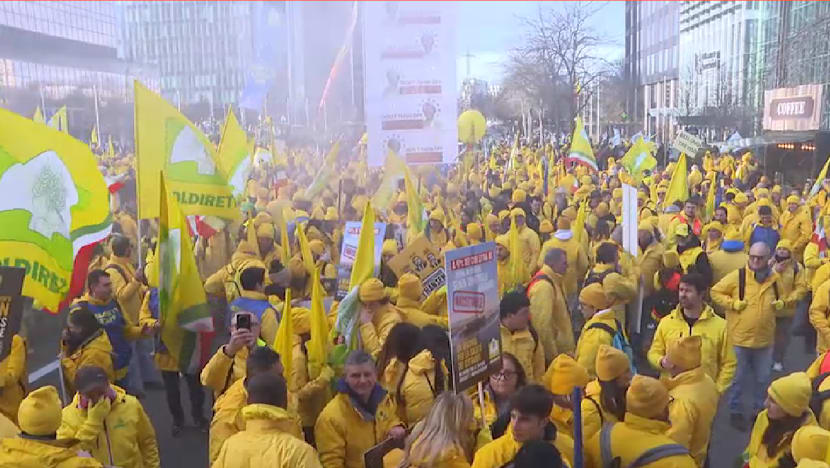
FRESH OPPORTUNITIES
Despite the backlash, EU officials insist safeguards are in place.
The European Commission said farmers would be shielded from unfair competition and that additional financial support could be included in the bloc’s next budget to ease the transition.
European Commission deputy chief spokesperson Olof Gill described the agreement as a “win-win”.
“It would send a signal to the rest of the world that in a time of economic fragmentation, in a time of tariffs and increasing uncertainty, by playing by the rules, trusted partners can still achieve great things together,” he added.
For Europe’s exporting industries – including automobiles, wine and spirits – the deal offers fresh opportunities.
“They will not replace our traditional trade partners that are the US and China,” said Pauline Bastidon, trade and economic affairs director at spiritsEUROPE.
“The scale is simply not there to replace them, certainly not overnight, but it’s a good start towards diversification and with diversification comes resilience.”
For the deal to pass, it must be approved by at least 15 of the 27 EU member states, representing 65 per cent of the bloc’s population – a threshold that remains within reach, but is not yet guaranteed.