







Greenland dispute deepens as US tariff threats trigger European backlash
The world’s largest island finds itself at the centre of a geopolitical tug-of-war – caught between superpower ambition, European resolve, and a small population determined to decide its own future.
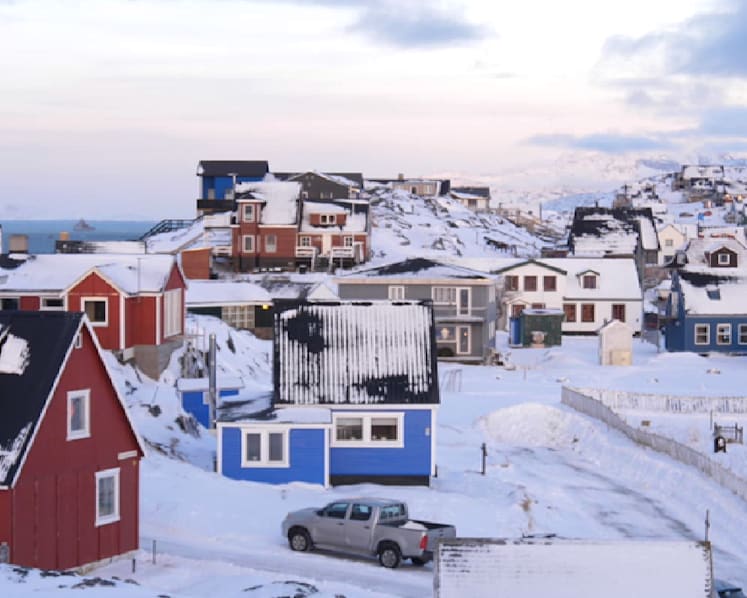
Greenland is a semi-autonomous Danish territory with a population of just 57,000.

This audio is generated by an AI tool.


NUUK, Greenland: A transatlantic trade crisis is brewing as Europe and the United States square off over Greenland.
Washington has threatened punitive tariffs against European countries opposing its plans to take control of the world's largest island – triggering diplomatic outrage in Brussels, defiance in Copenhagen and anger on the streets of Greenland itself.
Greenland is a semi-autonomous Danish territory with a population of just 57,000.
The European Union is now weighing sweeping counter-tariffs, raising fears of a damaging trade war between long-time allies, even as Greenlanders send a clear message to Washington: hands off.





NUUK AT CENTRE
At the centre of the storm is Nuuk, Greenland’s icy capital, home to just 20,000 people – roughly a third of the island’s population.
The town has suddenly been thrust into global geopolitics, as the US ramps up pressure to assert control over the territory.
Despite the mounting rhetoric, there is little local support for the idea.
A survey by pollster Verian found that 85 per cent of Greenlanders do not want the Arctic island to become part of the US.
Greenlanders told CNA they are worried about the future of their island, with some feeling betrayed by a country they long viewed as a friend.
“We had hoped that maybe the Trump administration had forgotten us a little,” said one woman. “But we can see that’s not happening and right now everything is really at stake.”
Greenland – which is larger than France, Germany and Spain combined – sits astride key Arctic shipping routes and is of immense strategic value.
US President Donald Trump has argued that controlling the island – and preventing what he claims could be a future takeover by China or Russia – is a matter of national security.
Critics, however, say there is also a powerful economic motive.
Beneath Greenland’s vast ice sheet and snow-capped mountains lie critical rare earth minerals and largely untapped oil reserves, which are increasingly vital to global supply chains.
Greenlanders insist that only they should control the resources.
ANGER SPILLS OVER
That frustration spilled onto the streets last Saturday (Jan 17), when large “Hands off Greenland” protests were held in Nuuk and across Denmark – which retains control over the island’s foreign policy and defence.
The demonstrations were timed to coincide with a visit by US senators to Copenhagen for talks with Danish and Greenlandic officials.
Greenland's Prime Minister Jens-Frederik Nielsen later said the protests showed democratic resolve.
“The demonstrations here at home and in Denmark have shown a strong and dignified unity. Many people have peacefully expressed love for our country and respect for our democracy,” he added.
“We will not let ourselves be pressured. We stand firm on dialogue, on respect and on international law.”
But Trump has not backed down, threatening to impose 10 per cent tariffs on eight European nations if they continue to oppose American control of Greenland.
The move has drawn sharp rebukes from European leaders.
Denmark’s Prime Minister Mette Frederiksen warned that “Europe won’t be blackmailed”.
Behind the scenes, intense diplomacy is underway at the North Atlantic Treaty Organization (NATO) and among EU leaders to prevent an economic escalation.
“It is clear from the consultations among EU leaders, including President (Ursula) von der Leyen that the priority here is to engage – not escalate – and avoid the imposition of tariffs,” said European Commission deputy chief spokesperson Olof Gill.
“Because this will ultimately harm consumers and businesses on both sides of the Atlantic.”
Even as they push for a diplomatic solution, Denmark and several European allies are expanding their military presence in Greenland, underscoring their commitment to the island’s security.




