Louvre chief blames CCTV gaps for US$102 million jewellery heist
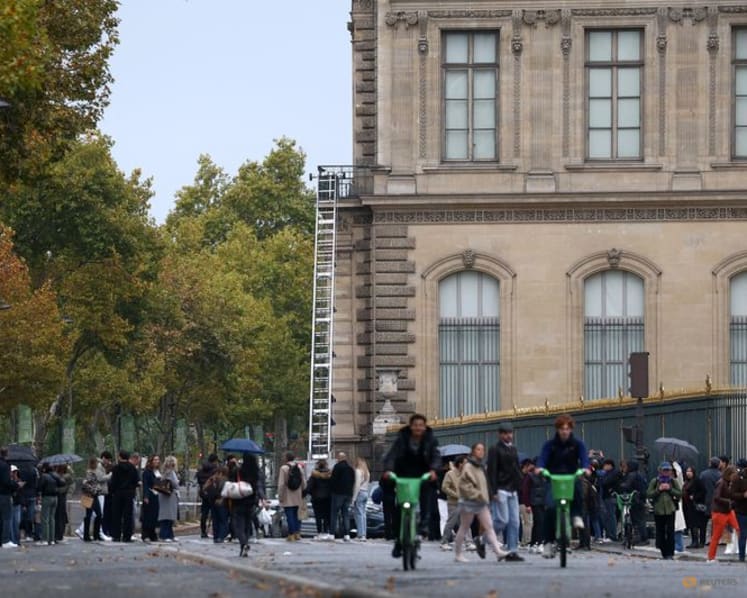
PARIS: The Louvre’s cameras failed to detect burglars in time to prevent the audacious daylight heist of some of France’s crown jewels, the museum’s director said on Wednesday (Oct 22), amid growing anger directed at officials over major security lapses.
The thieves broke into the world-famous Paris museum on Sunday using a crane to smash an upstairs window, then stole jewels worth an estimated €88 million (US$102 million) before escaping on motorbikes. News of the robbery reverberated around the world and prompted soul-searching in France over what some viewed as a national humiliation.
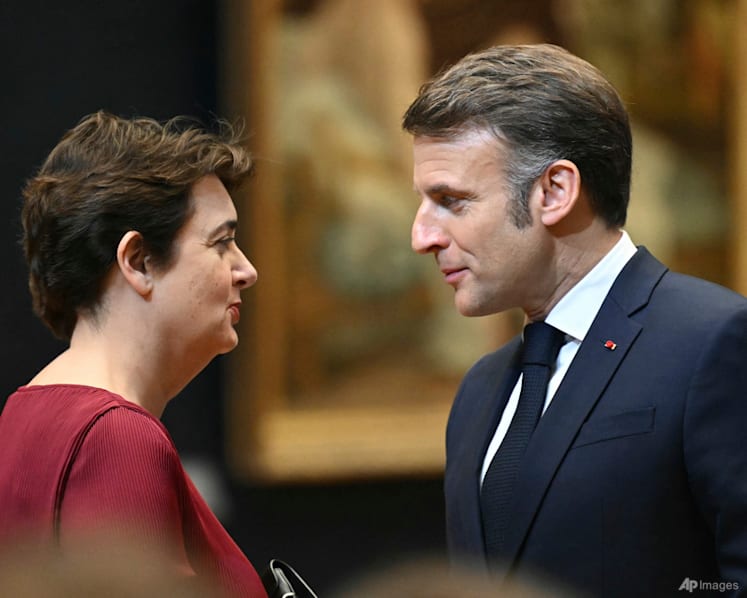
Laurence des Cars, the Louvre's director, told senators that she had offered her resignation, but it had been refused by Culture Minister Rachida Dati, who has also come under fire as recriminations flew after the robbery.
SERIOUS SECURITY LAPSES
“Despite our efforts, despite our hard work every day, we were defeated,” Des Cars told a Senate committee.





Many in France and abroad have been baffled at how four hooded assailants were able to drive up to the world’s most visited museum, smash a second-floor window and make off with a valuable haul without getting caught. Ministers have admitted serious security failures occurred.
“We did not detect the thieves’ arrival early enough,” Des Cars said, blaming the lapse on a lack of surveillance cameras monitoring the Louvre’s perimeter.
The exterior cameras do not offer full coverage of the museum’s facade, she said, adding that the window through which the thieves broke in was not monitored by CCTV.
Des Cars pledged to establish no-parking zones around the Louvre, upgrade the CCTV network and request that the interior ministry set up a police station inside the museum.
She had repeatedly warned that the centuries-old building’s security was in a dire state. “The warnings I had been sounding came horribly true last Sunday.”
Robert King Wittman, a former special agent with the United States’ Federal Bureau of Investigation (FBI), echoed Des Cars’ concerns, noting that the museum’s age and structure make modern security upgrades extremely difficult.
Pointing out that the Louvre was never designed as a museum – it was originally built as a defensive castle, he said: “The stones (that make up the walls) are multiple feet thick sometimes, and it's very hard to get wireless surveillance inside this type of structure.”
Wittman, an art crime specialist who has recovered hundreds of millions of dollars’ worth of stolen artworks over his career, added that while it was a well-planned theft, the execution and getaway were “terrible”. He expects French police to ultimately catch up with the robbers.
“They dropped so much forensic evidence behind – they left the vehicle they used to put up the ladders, they dropped one of their vests (which) will have DNA evidence all over,” he told CNA’s Asia First programme.
“I think (the authorities) will be able to piece together who was involved. They're looking at multiple years in prison, maybe up to a decade.”
FOUR OTHER FRENCH MUSEUMS ROBBED RECENTLY
The heist, on a Sunday morning after the Louvre had already opened to visitors, has prompted a nationwide review of museum security. Paris is home to some of the world’s best-known cultural institutions, including the Orsay, Pompidou and Quai Branly museums, which help sustain booming tourism.
At least four French museums have been robbed over the past two months, according to media reports.
On Tuesday, prosecutors said they had charged a Chinese-born woman over the theft of six gold nuggets worth about €1.5 million (US$1.75 million) from the Museum of Natural History in Paris last month. She was arrested in Barcelona while trying to dispose of some melted gold, they said.
Wittman said the surge in gold prices, which have hit record highs in recent months, has fuelled criminal interest in targeting museums.
The ex-FBI agent stressed that security is a deterrent but not a guarantee, adding even top-level museum security – often as extensive as bank security – can be breached.
“If someone is hell bent to go in there, it can be done. There's no security that's 100 per cent foolproof,” he said.
He added that funding priorities in museums often favour exhibitions and donor recognition, and security budgets are frequently cut first because they are seen as expenses rather than income-generating investments.
“Nobody wants to pay for the camera. They want to pay for the exhibition. That's just the way the mentality is all over the world when it comes to security,” he said.