







‘Stronger together’: NATO steps up Arctic defence drills amid US pressure on allies
Washington previously criticised the military alliance for not doing enough to counter the growing presence of Russia and China in the Arctic.
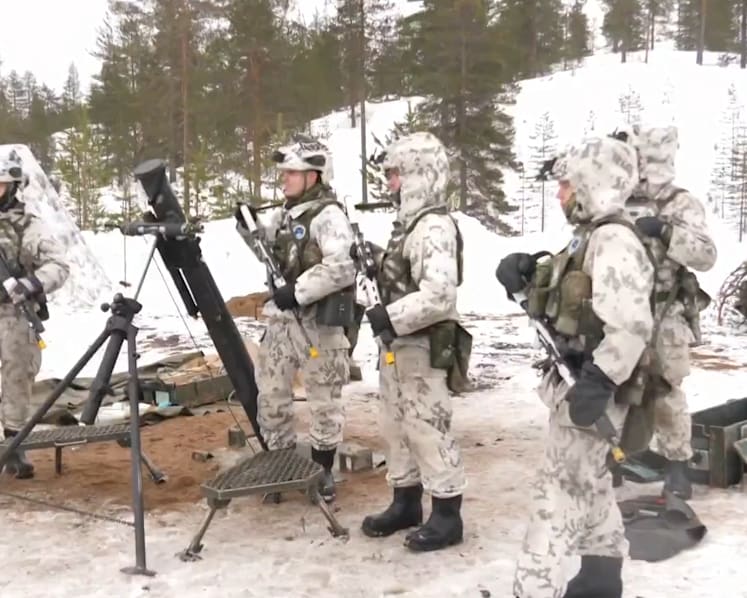
Troops participating in Cold Response 26 in Finland - the first NATO exercise conducted under Arctic Sentry.

This audio is generated by an AI tool.


ROVANIEMI, Finland: NATO is increasing its military capabilities in the Arctic as the United States questions its allies’ willingness to defend shared interests, from the Middle East to the High North.
The alliance maintains that its support remains ironclad, with more than a dozen members recently taking part in Arctic drills in a show of force and solidarity.
Around 32,000 personnel from 14 NATO nations participated in a 10-day joint exercise across northern Norway and Finland – an operation known as Cold Response 26.
The drills, which ended on Mar 19, form part of a broader effort to ensure forces can respond to threats across multiple domains – air, sea, cyberspace and snow-covered terrain – in one of the world’s harshest environments.
“It creates a unique opportunity for, mostly, the battalion staff to train and to be a part of something bigger,” Alicia Alkert, a lieutenant-colonel in the Swedish Army, told CNA.
ADAPTING TO EXTREME CONDITIONS
Cold Response 26 was the first NATO exercise conducted under Arctic Sentry - an initiative launched in February to strengthen the alliance’s capabilities in the High North.
In Finland, more than 7,000 troops from countries including the US, United Kingdom and France were deployed for both live training and large-scale simulations.
The drills were conducted under an Article 5 scenario, meaning an attack on one NATO ally is treated as an attack on all.
“These types of exercises, just this venue that we have around us here – you can see all the equipment that we have here, soldiers interacting, building trust. That’s what the alliance is about – stronger together,” said Brigadier General Michael Carlen of the Swedish Army during the drills.





For troops on the ground, adapting to extreme Arctic conditions was a key focus.
Temperatures can drop to as low as around -30°C, while wetter conditions can pose even greater challenges.
Soldiers say coordination and knowledge-sharing with allies is essential, especially under foreign conditions.
Captain Barry Wilson of the US Marine Corps noted that NATO has planned processes and integration procedures in place.
“But actually doing the exercises and doing it with live partners, instead of worrying about how we wrote it down on a piece of paper, helps bridge the gap between what’s on paper and building the relationship in-person for the future fight,” he added.

UNDERLYING THREAT IS REAL
While some aspects of the drills were simulated, officials stress that the underlying threat is real.
Washington has previously criticised NATO for not doing enough to counter the growing presence of Russia and China in the Arctic.
The region has gained strategic importance as melting sea ice opens new shipping routes and access to natural resources.
Despite recent global focus on the Middle East, analysts say the Arctic remains a long-term priority for the US.
“It’s a bit more of a slow-moving game in the north than, for example, what we have with Iran and other flash points elsewhere in the world,” noted political history professor Juhana Aunesluoma from the University of Helsinki.
“So, I think the Americans, how they see the north, they are playing the long game and that’s also the way the Russians and the Chinese see it.”
NATO says its objective is clear: To ensure it can defend every part of its territory, including the Arctic.
Military exercises like Cold Response 26 are intended to sharpen readiness and strengthen coordination, as geopolitical tensions in the region continue to evolve.




