Pakistan’s solar boom cushions energy crisis amid supply disruptions and price hikes
For many Pakistanis, energy security is no longer just the responsibility of the state and is increasingly tied to generating power independently.
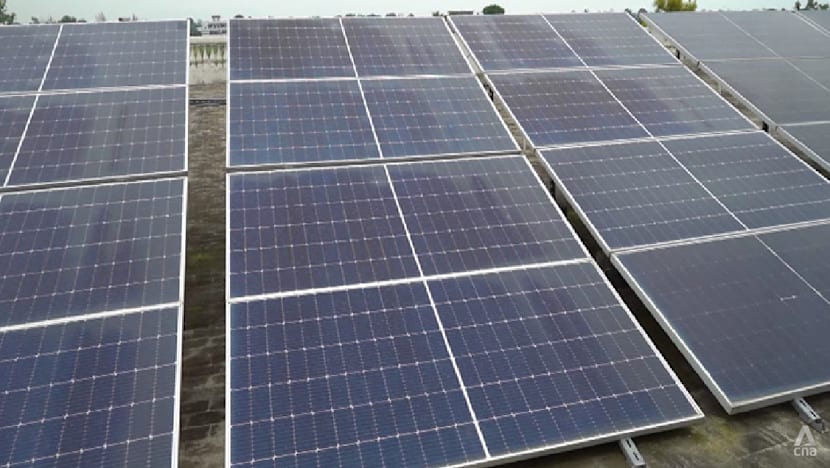
Across Pakistan, more households, businesses and farmers are turning to solar power to reduce their reliance on an overstretched national grid and expensive imported fuels.

This audio is generated by an AI tool.


ISLAMABAD: As turmoil in the Middle East sends shockwaves through global energy markets, Pakistan is grappling with prolonged power outages and a worsening liquefied natural gas (LNG) crunch.
But a quiet solar boom is helping to cushion the blow.
Across the country, more households, businesses and farmers are turning to solar power to reduce their reliance on an overstretched national grid and expensive imported fuels.
For many Pakistanis, energy security is no longer just the responsibility of the state and is increasingly tied to generating power independently.






SOLAR SHIFT GAINS GROUND
In Pakistan's Punjab province, farm owner Haider Abbas has spent the past eight years working his family land in the village of Jhaiyya.
Like many farmers, he struggled with soaring electricity costs and diesel prices.
In 2022, he made a decisive shift to solar energy – a move that has helped shield him from recent energy price shocks.
“We couldn’t keep up with international prices. So I decided that if I wanted to make a profit in agriculture, I needed to transition to solar energy,” he said.
He added that solar power has replaced the diesel engines he previously used to run some of his farming machines, allowing him to rely less on grid electricity.
Abbas is among thousands of farmers adopting solar to protect their livelihoods.
The shift gained momentum after Russia’s full-scale invasion of Ukraine in 2022 triggered a surge in global energy prices, exposing Pakistan’s vulnerability to external shocks.
Solarisation is no longer confined to farms. In cities like Islamabad and Rawalpindi, rooftops are increasingly covered with solar panels.
Analysts say the rapid growth in solar installations has helped Pakistan avoid billions of dollars in fuel imports and soften the impact of global price volatility.
“The Pakistan solar boom has provided a cushion for Pakistan’s electricity sector,” said Khalid Waleed, a research fellow at the Sustainable Development Policy Institute, a research think-tank in Pakistan.
“That’s why we are not facing that sort of crisis in our power sector.”
GAPS IN SOLAR SUPPLY
However, challenges remain.
Solar power generation drops off after sunset, forcing Pakistan to depend on LNG and coal-fired plants during peak evening demand – much of it reliant on imports from the Gulf.
Waleed said May to July are peak demand months due to heavy summer loads, leaving the country particularly vulnerable during hours without sunlight.
“When there is no solar, people will start to use grid electricity and Pakistan will have to use peaker power plants,” he said, referring to power generation facilities used to meet spikes in demand.
“These peaker power plants are either regasified liquefied natural gas (RLNG) plants or imported coal plants.”
Experts say the next step in strengthening energy security could lie in battery storage, allowing excess solar power generated during the day to be used at night.
“The new factor in this, which is going to push us towards more solarisation, is the massive decline in battery prices,” said former Pakistani Energy Minister Khurram Dastgir.
“It's become feasible to not only put solar panels on one's house or one's commercial property. It's now becoming very rapidly feasible to attach large batteries to it, which would be able to run the households and businesses for a longer period of time.”