







Saudi Arabia wants 'strong, positive' relationship with UAE after Yemen row
Saudi Arabia's foreign minister says its future relations with the United Arab Emirates (UAE) depend on its ties with Yemen.
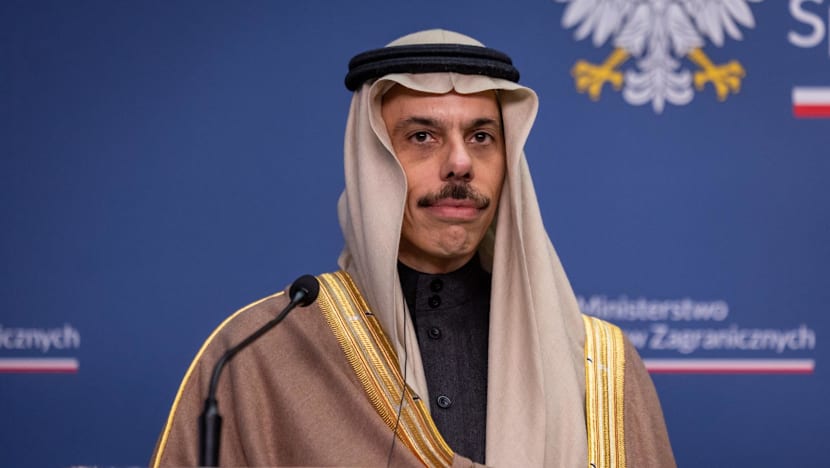
Saudi Arabia's Foreign Affairs Minister Prince Faisal bin Farhan Al Saud at the Foreign Office in Warsaw, Jan 26, 2026. (Photo: AFP/Wojtek RADWANSKI)
WARSAW: Saudi Arabia said it hoped to have "strong, positive" ties with the UAE, the kingdom's foreign minister said on Monday (Jan 26), but stressed that future relations were contingent on Abu Dhabi's complete withdrawal from Yemen.
The two neighbours and economic powerhouses of the Gulf are traditional allies, but in the past few years they have increasingly become rivals when it comes to business and have backed rival actors in several countries.
The rivalry turned into a public row over Yemen after UAE-backed separatists seized swathes of land late last year, including areas along the Saudi border, infuriating Riyadh which retaliated with air strikes and through allies on the ground.
Riyadh also demanded that all Emirati forces be withdrawn from the country, a request which the UAE said it had complied with.
During a press conference in Warsaw on Monday, Saudi Arabia's Foreign Minister Faisal bin Farhan said Riyadh was "always keen" to have a "strong, positive relationship with the UAE".
"The UAE has now decided to leave Yemen and I think if that indeed is the case and the UAE has completely left the issue of Yemen, the Kingdom of Saudi Arabia will take responsibility," he added.
"I think that will be the building block for making sure that the relationship with the UAE continues strong and continues to serve the interests not just of both countries but the region."
The two neighbours and economic powerhouses of the Gulf are traditional allies, but in the past few years they have increasingly become rivals when it comes to business and have backed rival actors in several countries.
The rivalry turned into a public row over Yemen after UAE-backed separatists seized swathes of land late last year, including areas along the Saudi border, infuriating Riyadh which retaliated with air strikes and through allies on the ground.
Riyadh also demanded that all Emirati forces be withdrawn from the country, a request which the UAE said it had complied with.
During a press conference in Warsaw on Monday, Saudi Arabia's Foreign Minister Faisal bin Farhan said Riyadh was "always keen" to have a "strong, positive relationship with the UAE".
"The UAE has now decided to leave Yemen and I think if that indeed is the case and the UAE has completely left the issue of Yemen, the Kingdom of Saudi Arabia will take responsibility," he added.
"I think that will be the building block for making sure that the relationship with the UAE continues strong and continues to serve the interests not just of both countries but the region."

Yemen's internationally recognised government is a patchwork of groups held together by their opposition to the Iran-backed Houthis, who ousted them from the capital Sanaa in 2014 and now rule much of the country's north.
It used to be split between UAE and Saudi-backed figures, but after Saudi Arabia and its allies reversed the Southern Transitional Council's takeover and pushed the UAE out of the country, the government has been purged of most Emirati-backed members.
It used to be split between UAE and Saudi-backed figures, but after Saudi Arabia and its allies reversed the Southern Transitional Council's takeover and pushed the UAE out of the country, the government has been purged of most Emirati-backed members.
Saudi officials have accused STC leader Aidarous al-Zubaidi of fleeing to Abu Dhabi, where other separatist officials are also located.
Source: AFP/fs




