South Africa deepens trade ties with China amid US tariff uncertainty
Africa’s leading economy recently signed a framework agreement with China for a new trade deal, which is expected to be finalised by the end of March.
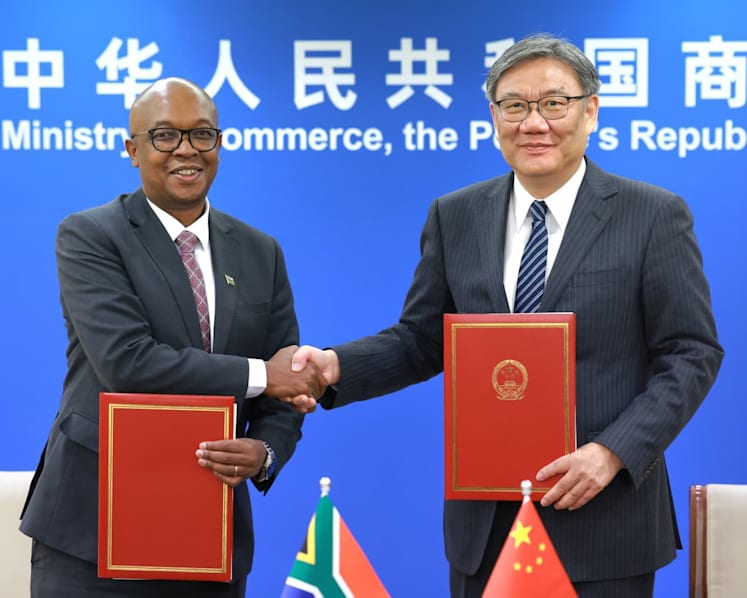
South Africa's Trade, Industry and Competition Minister Parks Tau and Chinese Commerce Minister Wang Wentao after signing a framework agreement on a trade deal in Beijing on Feb 6, 2026. (Photo: South Africa Government Communication and Information Systems)

This audio is generated by an AI tool.




CAPE TOWN: Uncertainty stemming from high import tariffs imposed by the United States is accelerating South Africa’s push to deepen economic ties with partners such as China – even if it means raising uncomfortable issues, said South Africa’s Trade, Industry and Competition Minister Parks Tau.
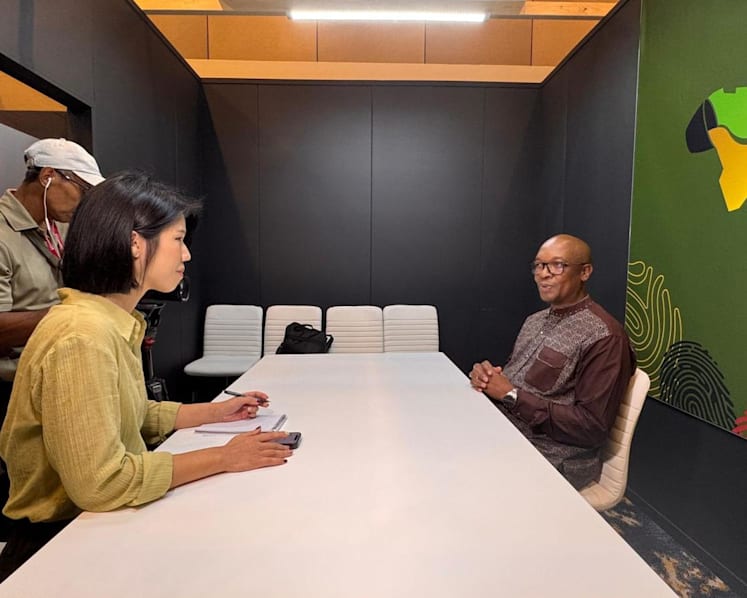
“China's importance has increased,” Tau told CNA on Wednesday (Feb 11), a few days after both nations signed a framework agreement for a new trade deal.
“This is our number one trading partner, so the fact that China has made the point and said, ‘Look, we're creating access to (our) market for you’ is a significant statement,” he added.
South Africa's Ministry of Trade and Industry said the agreement would start negotiations over a deal that would give some South African goods duty-free access to the Chinese market.
The deal is expected to be finalised by the end of March.
The ministry said that in return, China will get enhanced investment opportunities in South Africa.
Washington has imposed 30 per cent tariffs on some South African goods under President Donald Trump’s reciprocal tariffs policy - one of the higher rates applied across the world. South Africa has said it is still negotiating with the US for a better deal.
The move also comes shortly after the Trump administration renewed a longstanding free-trade agreement between the US and African nations only until the end of this year.





“CONSCIOUS AND STRATEGIC DECISION”
Tau described the latest trade deal with Beijing as a “conscious and strategic decision” to build on an existing partnership.
“Part of the agreement is about how we create opportunities for South African companies to invest in China; how Chinese companies can invest in South Africa. We are significant importers of Chinese products, including automotives,” he pointed out.
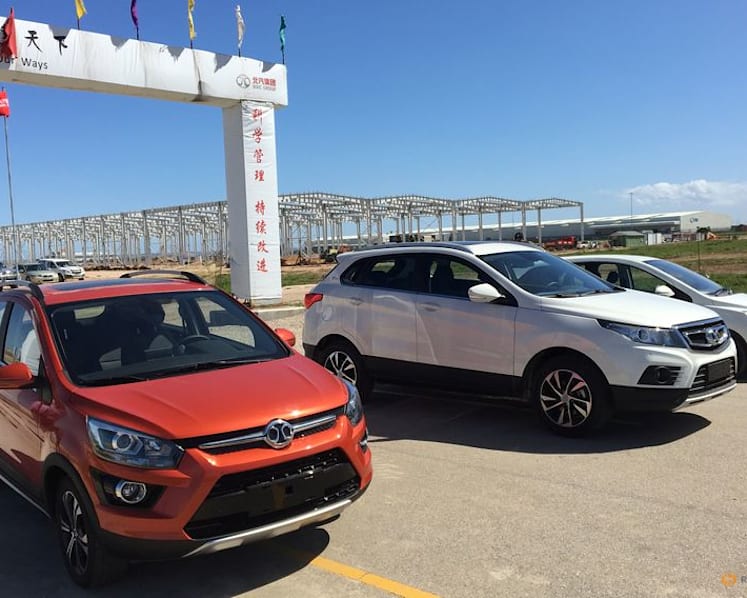
He added that discussions include expanding Chinese automotive manufacturing in South Africa, where Chinese car sales have seen rapid growth.
For example, Chinese state-owned automobile manufacturer Beijing Automotive Group committed last year to upgrading their semi-knocked-down vehicle assembly operations to full-scale manufacturing.
Last month, Chinese carmaker Chery also reached an agreement to buy Japanese car giant Nissan’s South Africa manufacturing plant and start producing vehicles in Pretoria.
“We had discussions around steel and opportunities along the steel value chain for Chinese investors to come into South Africa and diverse other areas in which China has built significant capacity, technologies,” Tau added.
While US tariff moves have reshaped global trade flows, Tau stressed that Pretoria does not see its engagement with Beijing as a zero-sum game.
“We try not to counterbalance the two. If you think about it, China and the US are (our) two biggest trading partners. We need to enhance trade with the two countries, and we need to ensure that we're able to deal with whatever issues are coming up,” he noted.
“Of course, the whole world has had to engage with the reality of US tariff decisions and the impact that has on trade, and that accelerates the need to diversify and to create security for your own industry in the country.
“But we continue to take a view that we should engage with the US. It certainly does speed up our engagement with other countries,” Tau added.
AREAS OF “DISCOMFORT”
Beyond market access, South Africa is seeking to tie foreign investment more closely to domestic industrialisation.
Tau said officials have raised sensitive issues with their Chinese counterparts to see how to deal with them.
“Of course, in any trade relationship there's areas of discomfort. There's the reality that we've had,” he added.
He pointed to the closure of chrome and manganese smelters in South Africa, while raw materials are exported to China.
“We’ve said: ‘But can we try and ensure that we get Chinese investors to do these sorts of investments in the country?’ And China has been open to that discussion.”
Pretoria has also imposed anti-dumping measures on certain imports, which Tau said it needs to discuss with Beijing.
“We took a view in our discussions last week (to) look in areas where there's discomfort. Any of us should be able to raise that and we should be able to resolve these issues before we take extraordinary measures,” Tau said.
LOOKING AHEAD
For Pretoria, Tau said the immediate priority is finalising the early harvest agreement by Mar 26.
Beyond that, negotiations are underway on cooperation in green minerals and industrialisation.
Tau said South Africa has expressed interest to participate in China’s newly launched International Economic and Trade Cooperation Initiative on Green Mining and Minerals, which is billed as a framework to promote cleaner extraction, fairer distribution of mineral benefits, and more predictable supply chains
Standards alignment is also a key focus to ease market access, said Tau.
“We signed MOUs (memoranda of understanding) with the standard bodies in China … and that creates easier access to the market, because if you've resolved your standard issues, it is easier to get your products into the market,” he added.