







US eases access to marijuana for medical use
Cannabis has been downgraded to a less strict drug classification in the United States to expand “patients’ access to treatments” and support more research.
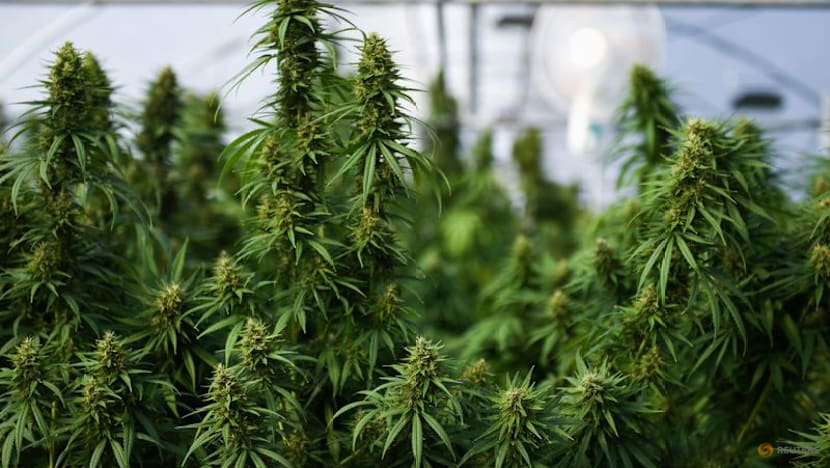
Marijuana plants are seen at the Rak Jang farm in Nakhon Ratchasima, Thailand Mar 28, 2021. (Photo: REUTERS/Chalinee Thirasupa)
WASHINGTON: The US government on Thursday (Apr 23) made it easier for Americans to use cannabis for medical reasons by reclassifying the drug and enabling more research into its safety and efficacy.
Marijuana is now described as having moderate to low addiction potential, "expanding patients' access to treatments and empowering doctors to make better-informed healthcare decisions," acting attorney general Todd Blanche said.
The government appears to be catching up with broad societal shifts in the United States - adult marijuana use for any reason is legal in 24 states and the US capital, and approved for medicinal use in 40 states.
Until Thursday, it was still ranked federally as "Schedule I," a category for drugs, including heroin and methamphetamine, with no accepted medical use and a high potential for abuse.
Marijuana products approved or regulated by federal or state agencies have now been moved to the third rung of a five-level Drug Schedule.
Schedule III substances, which include ketamine and anabolic steroids, are considered to have medical value and less potential for abuse.
The Department of Justice said Thursday's move followed up on US President Donald Trump's executive order in December on increasing medical marijuana research.
It also called for expedited hearings beginning in June that would "provide a timely and legally compliant pathway to evaluate broader changes to marijuana's status under federal law," a DOJ statement said.
Marijuana is now described as having moderate to low addiction potential, "expanding patients' access to treatments and empowering doctors to make better-informed healthcare decisions," acting attorney general Todd Blanche said.
The government appears to be catching up with broad societal shifts in the United States - adult marijuana use for any reason is legal in 24 states and the US capital, and approved for medicinal use in 40 states.
Until Thursday, it was still ranked federally as "Schedule I," a category for drugs, including heroin and methamphetamine, with no accepted medical use and a high potential for abuse.
Marijuana products approved or regulated by federal or state agencies have now been moved to the third rung of a five-level Drug Schedule.
Schedule III substances, which include ketamine and anabolic steroids, are considered to have medical value and less potential for abuse.
The Department of Justice said Thursday's move followed up on US President Donald Trump's executive order in December on increasing medical marijuana research.
It also called for expedited hearings beginning in June that would "provide a timely and legally compliant pathway to evaluate broader changes to marijuana's status under federal law," a DOJ statement said.
"BEGGING" FOR CHANGE
The long-awaited move does not legalise marijuana use in states where it is still banned or sanction its use as a recreational drug.
But Trump in December said it would make it better available for "legitimate medical uses" such as for people with cancer and chronic pain.
"We have people begging for me to do this. People that are in great pain," Trump said in the Oval Office.
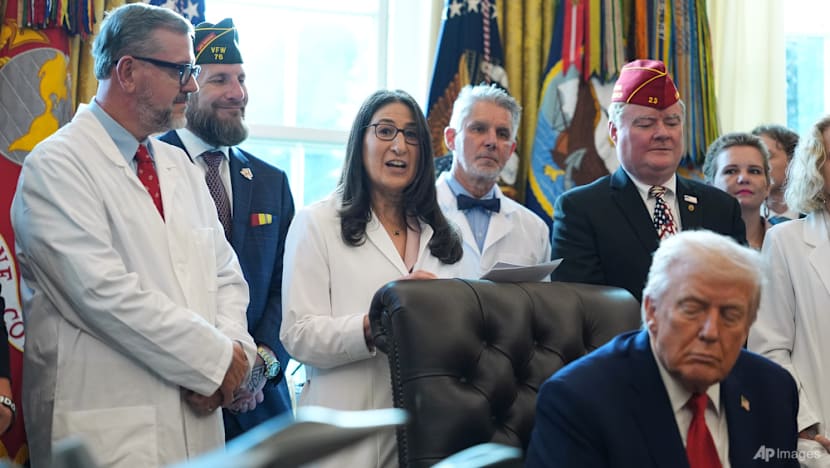
Trump, who was surrounded by white-coated medical experts for the announcement, added that the order "is not the legalisation" of marijuana.
The 79-year-old teetotaler added: "I've always told my children, don't take drugs, no drinking, no smoking, and just stay away from drugs."
US presidents cannot unilaterally reclassify a drug. Trump's order directed the Department of Justice to expedite the process.
But Trump in December said it would make it better available for "legitimate medical uses" such as for people with cancer and chronic pain.
"We have people begging for me to do this. People that are in great pain," Trump said in the Oval Office.
Trump, who was surrounded by white-coated medical experts for the announcement, added that the order "is not the legalisation" of marijuana.
The 79-year-old teetotaler added: "I've always told my children, don't take drugs, no drinking, no smoking, and just stay away from drugs."
US presidents cannot unilaterally reclassify a drug. Trump's order directed the Department of Justice to expedite the process.

Democrat Joe Biden's administration pursued reclassification, but efforts were not completed before Trump took office in early 2025.
The US has a patchwork of state-level regulations regarding the commercial distribution, recreational possession and personal cultivation of cannabis.
The government's move is aimed at lowering barriers to research, as authorising clinical studies on Schedule I substances can require many layers of approval.
"These actions will enable more targeted, rigorous research into marijuana's safety and efficacy," Blanche said.
It could also be a major tax boost for companies that legally grow and sell cannabis.
The US has a patchwork of state-level regulations regarding the commercial distribution, recreational possession and personal cultivation of cannabis.
The government's move is aimed at lowering barriers to research, as authorising clinical studies on Schedule I substances can require many layers of approval.
"These actions will enable more targeted, rigorous research into marijuana's safety and efficacy," Blanche said.
It could also be a major tax boost for companies that legally grow and sell cannabis.
Source: AFP/fs




