







CNA Explains: What's behind the separatist push in Canada’s Alberta - and why Trump is paying attention
US State Department officials have reportedly met the leaders of an Alberta separatist group several times over the past year.

A Canadian flag flies over the boathouse on Lake Minnewanka at Banff National Park in Banff, Alberta, Canada, on May 23, 2023. (File photo: AFP/Geoff Robins)

This audio is generated by an AI tool.




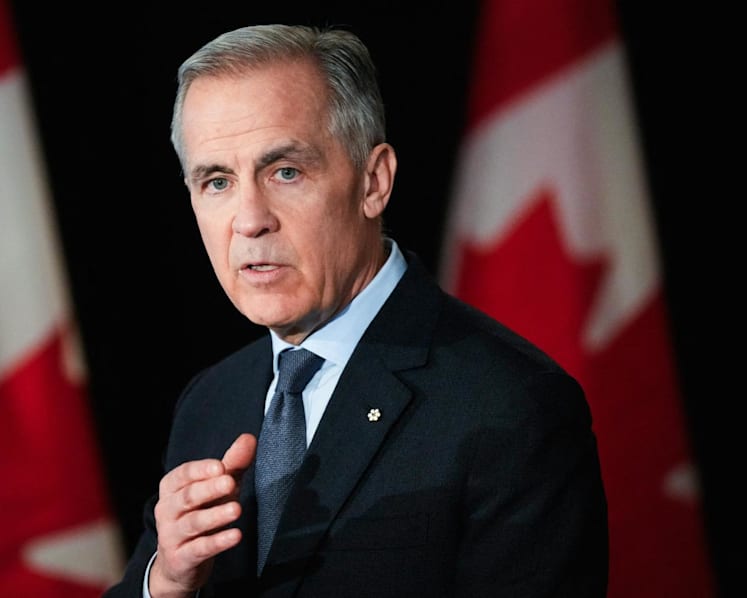
SINGAPORE: Canadian Prime Minister Mark Carney said on Thursday (Jan 29) that he expects the United States to respect Canadian sovereignty, after reports that US State Department officials had met an Alberta separatist group several times over the past year.
The purported meetings have renewed attention on a long-simmering independence movement in the oil-rich Canadian province, and raised questions about whether US President Donald Trump could be seeking to exploit it.
While the idea of an independent Alberta has existed for decades, the movement only gained traction in recent years, with calls for a possible referendum on the matter.
CNA explains what's driving Alberta’s separatist push, how realistic it is, and what role the Trump administration may be playing.
What's happening in Canada?
According to a Financial Times report, US State Department officials have met leaders of the Alberta Prosperity Project (APP) three times since April 2025.
The group, which opposes federal policies it says are hostile to Alberta’s energy sector, is pushing for a referendum on whether the western province should break away from Canada.
The separatists are also seeking meetings with US state and Treasury officials in February to discuss a potential US$500 billion credit facility to help bankroll Alberta if an independence vote were to succeed, the report said, citing people familiar with the talks.
“The US is extremely enthusiastic about a free and independent Alberta,” APP’s legal counsel told the Financial Times.
No referendum has been called so far. Organisers must first collect about 177,000 signatures by May 2 - of which 10 per cent must be eligible voters from the last provincial election - to trigger a vote.
Carney said on Thursday that he expects the US administration to respect his country’s sovereignty.
“I'm always clear in my conversations with President Trump to that effect," Carney said, adding that the US president had never raised the question of Alberta separatism with him.
Why do the separatists want independence?
While separatist movements in Canada have historically been associated with the province of Quebec, Alberta has long had grievances with the rest of the federation, said Associate Professor Aaron Ettinger from Carleton University's Department of Political Science.
Alberta is Canada’s largest producer of oil and gas and a major driver of economic growth. In 2024, it ranked second only to Ontario in its contribution to national GDP growth, according to Time Magazine.
But tensions between Alberta and Ottawa have grown in recent years, particularly over climate and energy policies.
Former prime minister Justin Trudeau’s push for emissions reductions and carbon pricing clashed with Alberta’s fossil-fuel-driven economy, fuelling long-standing grievances that the province is unfairly constrained by federal decision-making.
An Ipsos survey conducted in January found that about 29 per cent of Albertan residents would "vote for their province to begin the process of separating from Canada and seeking a new agreement to define its future relationship with the country".
About 55 per cent of those supporting independence said this was because the province has "historically been mistreated" within Canada.
“Alberta has for a long time had very low taxes and has subsidised the rest of Canada with oil wealth,” said Stephen Saideman, Paterson Chair in International Affairs from Carleton University’s Norman Paterson School of International Affairs.
“But with climate change presenting a greater … threat to the world and particularly to Canada, there have been some discussions on how to regulate oil, how to minimise carbon emissions,” he told CNA on Friday.
Besides these frustrations, another factor may be Canada's recent political history, said Dr Saideman.
Alberta tends to vote more conservatively than the rest of Canada, and the country has been governed by Liberal prime ministers such as Trudeau and Carney for around 10 years.





Why might Trump be interested?
Trump has repeatedly made provocative remarks about Canada, including threats to turn it into America’s 51st state.
In January last year, NBC News reported Trump saying that he would use "economic force" to acquire Canada. The US president has also referred to Trudeau and Carney as "governors".
Trump officials have offered veiled backing for Alberta's independence.
US Treasury Secretary Scott Bessent has described Alberta as "a natural partner" for the US. "They have great resources. The Albertans are very independent people," he said.
Axios also reported Bessent saying that "(Alberta's) people want sovereignty", adding that "they want what the US has got".
Former Trump adviser Steve Bannon has gone further. On his podcast, he hosted Republican-aligned writer Brandon Weichert, who described Alberta as the “linchpin” of a broader realignment.
"They're getting out of the Canadian union; they are going to become an independent state. We're gonna recognise them," he said.
Dr Saideman believes Trump is likely using the separation issue as leverage against Canada, which has pushed back against him on several fronts, including his interest in acquiring Greenland.
A speech by Carney at the World Economic Forum gathering in Davos earlier this month also appeared to irritate the Trump administration, he noted.
Carney had openly decried powerful nations using economic integration as weapons and tariffs as leverage during his address, earning him a standing ovation.
"Carney was basically calling Trump out as being a bully, which these other efforts (by the Trump administration) are proving," Dr Saideman said.
Michael Jonathan Green, professor and CEO at the United States Studies Centre, believes there has been spillover from Carney’s address at Davos, calling the meetings with Alberta separatists "gratuitous".
"The meeting with Alberta separatists is gratuitous. The whole point is to annoy Mark Carney after his speech at Davos dumping on Donald Trump," Dr Green said.
While the US has historically coveted parts of Canada, most Americans today oppose Trump's talk of seizing Canada, he added.
"So this is more about Trump’s shock and awe performative politics than real geopolitics."
Dr Ettinger said Trump could pit Alberta's economic interests against Ottawa's bargaining, as part of a "divide-and-conquer" strategy to undermine Carney's "Team Canada" approach to dealing with the US.
"Trump and his people could also use it to mock Canada and its politicians," he said. "That insult strategy is used to bait officials into saying something inflammatory in retaliation.
"The US Treasury Secretary Scott Bessent has been doing just that in recent days. Any verbal mistake could be used by Trump and his people to ratchet up the pressure in negotiations."
Related:
Could US involvement strengthen support for separation?
Observers say US involvement is more likely to weaken than strengthen Alberta’s separatist cause.
Even if a referendum were held, Alberta would need a clear majority vote in favour of separation before the federal government would enter negotiations with it - a threshold which Dr Saideman believes is unlikely.
He added that overt association with the Trump administration could backfire.
“I do think that this particular separatist movement - by tying themselves to the Americans - has doomed their own future,” he said, adding that most Canadians are nationalists and strongly oppose US influence.
“And Donald Trump is wildly unpopular, although he has some popularity in Alberta, but not enough to push them over to getting close to 50 per cent.”
A survey by Pew Research Centre in 2025 found that only 22 per cent of its 1,024 Canadian participants believed Trump would do the right thing in global affairs.
Nearly two-thirds of the participants held an unfavourable opinion of the US.
"Trump is poison in Canadian politics," said Dr Ettinger.
"He is loathed by an overwhelming majority of Canadians and his involvement in anything would automatically make that thing wildly unpopular. In that sense, Alberta separatists would be making their unpopular position even more unpopular by aligning themselves with Trump."
If Alberta were to separate, it would face major practical challenges. Given that it is a landlocked state, Alberta would be dependent on Canada and the US, Dr Saideman pointed out.
“And right now, the US is not really that reliable of a trading partner,” he said.
“It would be a huge gamble to hope that the US would make very kind agreements with this new separatist region.”
What are the implications for Canada and the world?
Carney’s warnings against US interference are unlikely to deter the Trump administration, said Dr Saideman.
“The Trump administration is basically the trolls of international relations and doesn’t mind annoying friends, loyal friends and allies,” he added. “So this is just gonna be something that will continue.”
Domestically, however, he believed that Carney’s political approach is on the right track to prevent most Albertans from swinging towards separation.
The prime minister has already been leading a fairly pro-Albertan government, said Dr Saideman, noting how Carney stopped a carbon tax that the province was unhappy with.
“Carney’s already made a variety of moves that are very … Alberta-friendly, so he just has to keep on doing that,” he added.
“The surveys show that Albertans, just like most of the Canadians, are pretty distrustful of Trump and are not enthusiastic about this. So I don’t think he has to go too far out of his way.”
While Dr Green does not expect the reported meetings to lead to Alberta seceding, he warned that they have some geopolitical ramifications.
"Weakening trust with Canada, and Denmark over Greenland, stresses the NATO alliance and trans-Atlantic relationship at a time when America, Canada, and Europe need each other more to contend with Russia and China," he explained.
Carney's decision to publicly challenge Trump is "smart politics" on his part domestically as it weakens the credibility of Canada's conservative opposition, who are more associated with the US and its Republican party, he said.
"But Carney’s approach is not a serious foreign policy strategy either," Dr Green warned.
"There is no world in which middle powers can somehow substitute for American power by working together without the US, as Carney suggests."
Dr Ettinger said while there is not enough support for Albertan independence to seriously threaten Canadian unity, it does pose a thorny enough political problem for the country's politicians.
"Other provincial premiers have to contend with the issue, as does the prime minister. In Quebec, there will be an election later this year and the separatist Parti Quebecois have promised to hold another sovereignty referendum if they form government," he said.
Regardless of the outcome, US involvement in Canadian politics will worsen the distrust that Canadians have for the US, which will only carry over into future presidencies, said Dr Ettinger.
"If Trump is involved and the separatist movement does not succeed, then his name becomes associated with another failed venture," Dr Ettinger added.
"Countries around the world with minority nationalist or separatist movements of their own could look to Canada as an example of how Trump could treat them in the future."
Want an issue or topic explained? Email us at digitalnews [at] mediacorp.com.sg. Your question might become a story on our site.




