







UK students panicked by meningitis outbreak after two deaths
The outbreak in Kent has been linked to local nightclub Club Chemistry.
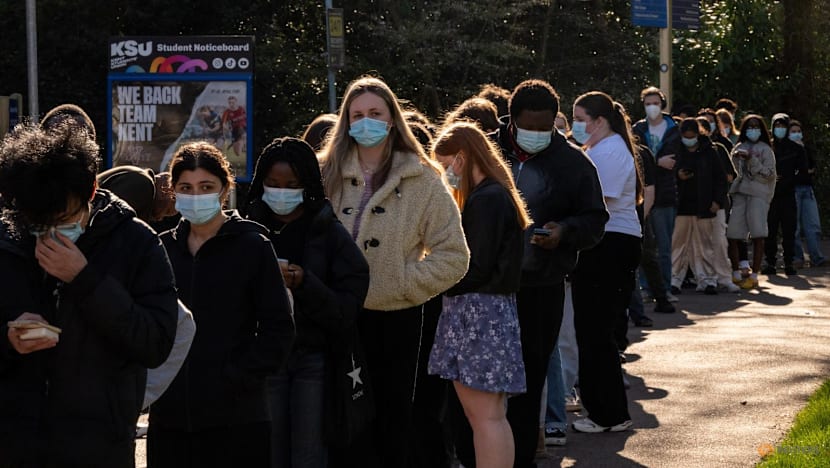
People queue to receive vaccinations at the Sports Centre on the University of Kent campus, following an outbreak of meningitis cases in Kent, in Canterbury, Britain, on Mar 18, 2026. (Photo: Reuters/Chris J. Ratcliffe)
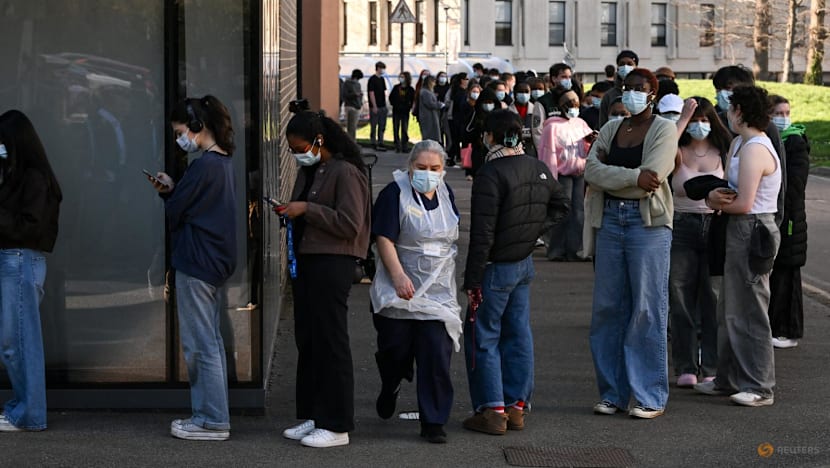
CANTERBURY: Hundreds of masked-up students queued on Wednesday (Mar 18) to get vaccinated at the UK university campus at the heart of a deadly meningitis outbreak, as the number of cases rose to 20.
"It's quite a concerning thing. It all happened so fast," said Jack Jordan, a 19-year-old student at the University of Kent in southeast England, where the first case was reported on Friday.
By the weekend, a 21-year-old student at the University of Kent and a teenage student at a school in the town of Faversham have died, with several others seriously ill in hospital in the outbreak, linked to a local nightclub.
At least 200 students formed a long queue at the grassy campus near the medieval Cathedral city of Canterbury, as the university rolled out a targeted vaccination programme for meningitis B - a deadly bacterial strain.





Holly Francis, 18, returned to get the jab after moving back home earlier in the week. "Just to be extra safe," she told AFP.
"It kind of came out of nowhere," Francis said. "Everyone was very panicked and worried."
"We got here right away," after being notified about the vaccines, said Irene, 21, adding she had been "isolating" out of caution.
The rest of the campus remained largely empty after exams were cancelled or moved online.
Scattered conversations focused on the disease, which affects the protective membranes surrounding the brain and spinal cord.
Prime Minister Keir Starmer led urgent calls for young people who visited the Canterbury nightclub to come forward, adding health experts were working to identify close contacts of those who were ill.
He asked "anyone who attended Club Chemistry on Mar 5, 6 or 7 to come forward, please, to receive antibiotics".
"DEJA VU"
The National Health Service (NHS) confirmed that at least 10 of the young people with the illness were at the club on those dates.
The number of cases being probed by UK authorities has risen since Tuesday from 15 to 20, with Health Minister Wes Streeting calling the outbreak "unprecedented".
One involved a patient who had been living in Kent, but who was taken ill in London, amid fears the disease could spread as students head home for the Easter vacation.
French authorities also reported one case involving a person in France, who had attended the University of Kent.
The European Centre for Disease Prevention and Control said the risk of invasive meningococcal disease to the general population in the European Union and European Economic Area is "very low".
Streeting noted that in a normal year, Britain would see about 350 cases. "The general risk is low, even though the disease itself is extremely serious," he said.
Meningitis is a potentially deadly infection, most common in young children, teenagers and young adults.
Initial symptoms of meningitis include headache, fever, drowsiness and a stiff neck - but those signs can be vague, hampering prompt diagnosis.
It can progress rapidly and is spread through prolonged close contact, including kissing or the sharing of vapes or drinks.
Young people attending university or college are particularly at risk because they mix with other students, some of whom may be unknowingly carrying the bacteria in their noses and throats.

"Clinicians should have a high index of suspicion where a young person aged 16 to 30 attends with consistent signs or symptoms," the NHS said in its guidance on the outbreak.
It added that illness in the cases linked to the outbreak "has been severe with rapid deterioration".
Glenn Reeve, 27, who went to Club Chemistry on the weekend of the outbreak, said he had been "feeling a bit rough" as he collected antibiotics.
"I felt a little panicky," Reeve told AFP, adding he would be cautious about "sharing drinks and being too close to people".
"It's almost like deja vu from Covid," said the train worker, adding being able to access antibiotics was "reassuring".
"As of 5pm on Mar 17, nine laboratory cases are confirmed and 11 notifications remain under investigation," bringing the total to 20, the UK Health Security Agency (UKHSA) said in a statement.
"HALT THE SPREAD"
Six of the confirmed cases are of group B meningococcal disease, according to the UKHSA.
The bacterial strain is rarer and deadlier than the viral type.
Doctors nationwide have been told to prescribe antibiotics to anyone attending their surgeries who visited Club Chemistry between Mar 5 and Mar 7 and to University of Kent students "if they have been asked to seek preventative treatment".
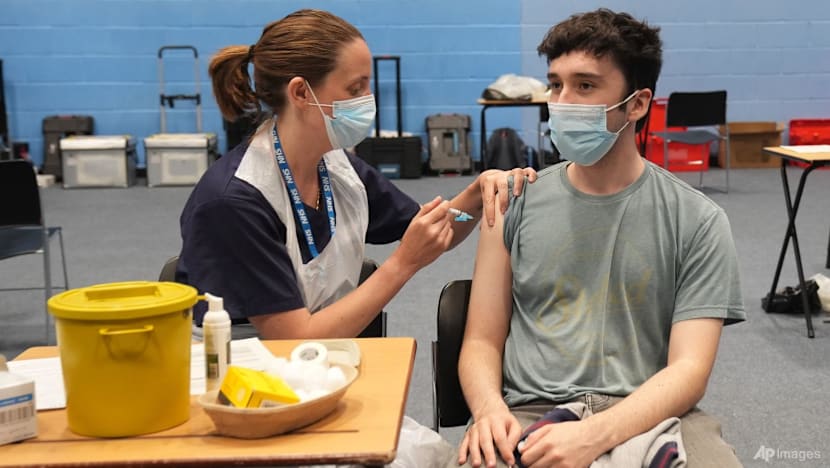
Lilith Whittles, an assistant professor at the MRC Centre for Global Infectious Disease Analysis at Imperial College London, said there was an effective vaccine against MenB, reducing risk by around 70 per cent to 85 per cent against vaccine-preventable strains.
"Targeted vaccination with 4CMenB is being offered as part of the outbreak response to help reduce further cases. However, vaccine protection is not immediate: it typically takes around one to two weeks for immune responses to develop," she said.
"In the meantime, offering preventative antibiotics to those who may have been exposed remains essential."
The UKHSA said it was also investigating the case of a baby with confirmed meningococcal group B infection, but who was apparently not linked to the outbreak.
The baby girl is reportedly in hospital in nearby Folkestone.
Britain has offered a MenB vaccine to infants since 2015, meaning most current university students are unlikely to have received it.
Another vaccination targeting meningococcal groups A, C, W and Y is offered to children aged 14.




