UK’s new recycling reforms aim to cut waste but may raise consumer costs
For years, recycling has varied depending on where people live – leaving households to navigate different rules and forcing them to relearn the process whenever they move.
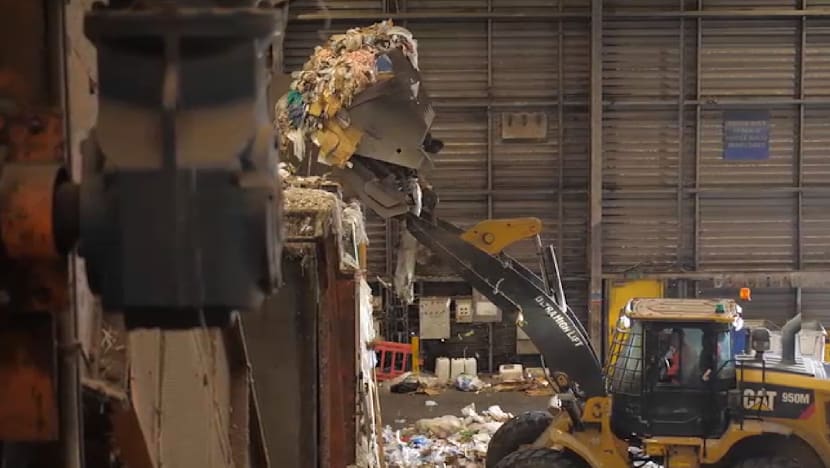
Britain is introducing sweeping changes to packaging and recycling, in an effort to break years of stagnation in recycling rates.

This audio is generated by an AI tool.


LONDON: Britain is introducing sweeping changes to packaging and recycling, in an effort to break years of stagnation in recycling rates.
Recycling rules will be standardised across England, making it clearer what can and cannot be recycled.
For years, recycling has varied widely depending on where people live.
Each of England’s hundreds of local authorities has set its own system, leaving households to navigate different rules — and forcing them to relearn the process whenever they move.





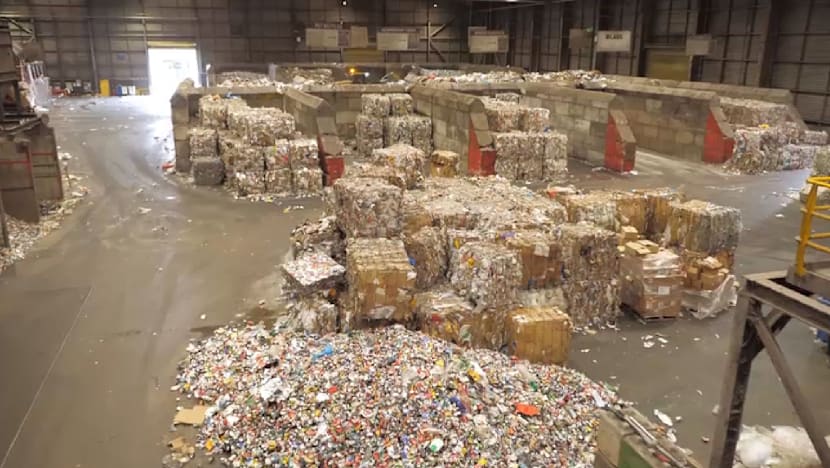
BOOSTING RECYCLING RATES
The new rules, which kick in on Tuesday (Mar 31), will give households consistent guidance and reduce confusion over how to sort waste.
The government hopes this clarity will push recycling rates beyond the 45 per cent plateau where they have stalled since 2015, moving closer to a national target of 65 per cent.
Industry experts say achieving that goal depends largely on public behaviour.
Stuart Hayward-Higham, chief technical development and innovation officer at recycling and waste management firm SUEZ UK, described a chain of targets — where the vast majority of people consistently sort waste correctly, contamination is kept very low, and most materials are successfully turned back into new products.
“If you do all of that, you're at about 65 per cent of the material being recycled,” he said.
MANAGING PACKAGING WASTE
The reforms also shift responsibility upstream.
Under the UK’s Extended Producer Responsibility (EPR) scheme, packaging producers are now responsible for the entire lifecycle of their products.
“The EPR base fee is essentially the true and the real cost to collect and recycle packaging,” said Jordan Girling, head of EPR at the Waste and Resources Action Programme, a global environmental non-governmental organisation.
“Then building on that, companies are given an incentive or a bonus which means essentially a reduced fee for packaging which is really easy to recycle. And they're given a penalty fee for packaging which is hard to recycle.”
Those incentives are already driving change, with manufacturers rethinking materials and reducing packaging weight to cut waste and costs.
Retailers appear to be responding.
The British Retail Consortium found four in five retailers have reduced the volume of their packaging, with a vast majority now using more sustainable materials.
However, businesses warn that the added costs are hard to absorb.
Naomi Brandon-Bravo, sustainability policy adviser at the British Retail Consortium, said: “We're finding that with the political and fiscal environment that we are operating in, the 2024 budget that we experience with higher employment costs, there really is a low amount of ability for these businesses to actually take on any extra cost.
“So, we are seeing that shift to consumers.”
The trade association estimates that around 80 per cent of the additional costs will be passed on to consumers – with the overall impact expected to add up.