







Southeast Asia remains 'a clear priority' despite concerns over Trump tariffs: US envoy to ASEAN
In an exclusive interview with CNA’s senior correspondent Melissa Goh, US Ambassador to ASEAN Kevin Kim reaffirmed Washington’s commitment to continued economic and security engagement in the region.
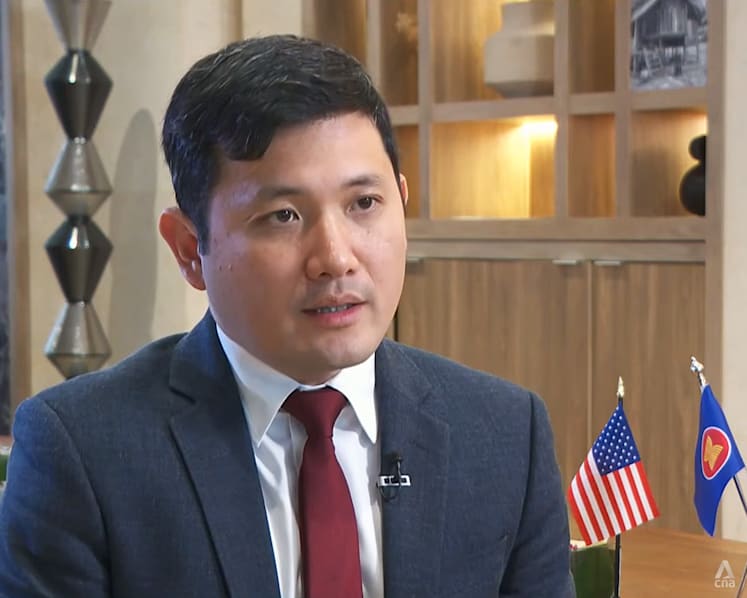
United States Ambassador to ASEAN Kevin Kim said the Trump administration had given clear direction that it intends to deepen ties with Southeast Asia.

This audio is generated by an AI tool.
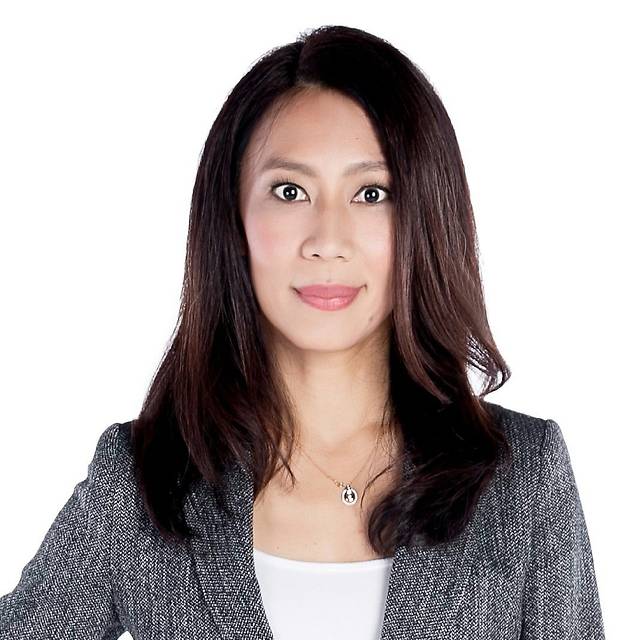



KUALA LUMPUR: Southeast Asia remains a “clear priority” for the United States despite concerns over President Donald Trump’s tariff policies in the region, said Washington’s envoy to the Association of Southeast Asian Nations (ASEAN).
US Ambassador to ASEAN Kevin Kim told CNA that the Trump administration had given firm direction that it intends to deepen ties with Southeast Asia.
“We have very clear direction from the top of our government, from the top of our leadership that Southeast Asia remains a clear priority for the United States government,” said Kim, who was in Kuala Lumpur last week for the annual International Military Law and Operations Conference.
“At the core of what we want to be doing is providing American solutions to regional challenges and issues.”





TRUMP WANTS “FAIR AND RECIPROCAL TERMS”
His comments come as Southeast Asian economies navigate uncertainty surrounding Washington’s trade policies, raising questions about their impact on US ties with the region.
Asked whether recent tariff negotiations risked undermining trust between the US and ASEAN, Kim stressed that “the president wants fair and reciprocal terms”.
“That is the driving ethos of what is underpinning our trade agenda,” he said, adding that Washington wanted to rebalance its trading relationships, including by ensuring that goods entering the US were not produced using forced labour.
He highlighted the scale of American investment in Southeast Asia, which he said exceeded US$500 billion – more than US investments in China, Hong Kong, India, South Korea and Japan combined.
More than 6,000 American companies also operate across the region.
Kim said US investment benefits Southeast Asia by helping countries diversify their supply chains and create jobs.
“I think the governments and the people of Southeast Asia recognise that the United States has to be involved, and that we are an indispensable partner in the region,” he added.
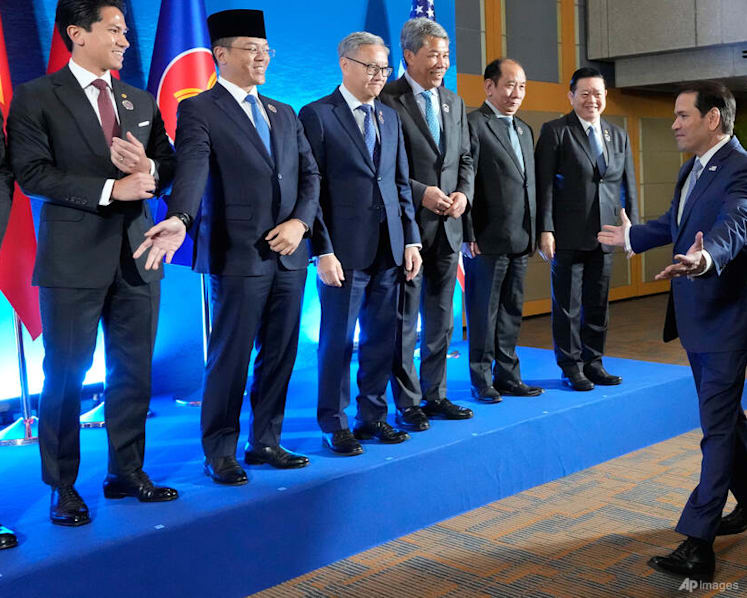
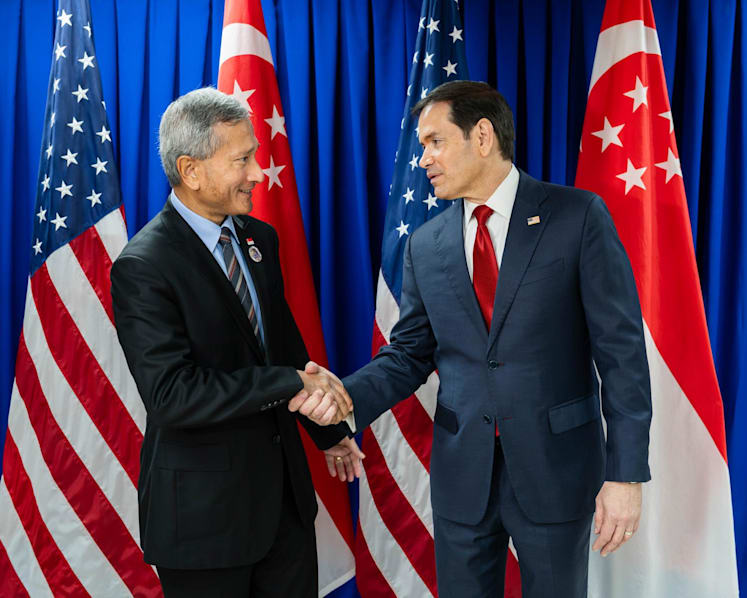
During a visit to Manila for the ASEAN foreign ministers’ meeting last month, US Secretary of State Marco Rubio announced a US$2.5 billion package of strategic investments in Southeast Asia, targeting areas including energy security and future technologies.
US “NOT PARTY” TO SOUTH CHINA SEA CODE NEGOTIATIONS
In the interview, Kim also outlined Washington’s approach to the South China Sea and Myanmar.
On the South China Sea, he said negotiations over a Code of Conduct should fundamentally remain between ASEAN and China.
“We're not party to those negotiations,” he said, adding that the US respects ASEAN’s consensus-based approach, under which member states would have to formulate a common position in negotiations with Beijing.
“We respect the fact that ASEAN member states will continue to discuss with China on that front.”
However, he stressed that the South China Sea remained important to US interests, describing it as a “critical maritime domain” on which the global economy depends.
“We will continue to uphold important international norms, such as freedom of navigation, and we will continue to uphold our treaty obligations to the Philippines as well,” said Kim.
Washington would also continue providing security assistance and other forms of support to help allies and partners in the region build their capacity to defend their interests, he added.
WASHINGTON CALLS FOR DIALOGUE ON MYANMAR
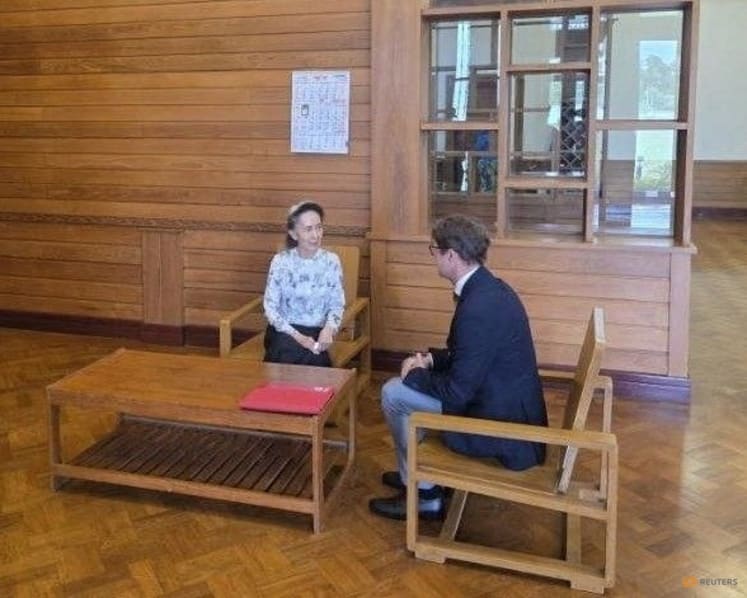
On Myanmar, Kim said the US wants to see an end to violence and a return to dialogue among parties to the conflict.
He also emphasised the need for those involved to respect ASEAN’s Five-Point Consensus, the bloc’s framework for addressing the crisis.
“At the core, the United States wants to see less human suffering. We want to see dialogue, so that different parties can exchange their positions,” he said.
Kim, who began his tenure as ambassador in June, said one of his priorities was to deepen Washington’s cooperation with Southeast Asia on various fronts, including diplomacy and foreign assistance.
“The president stated that we are with ASEAN 100 per cent,” he added. “That has been our posture, is our posture and will be our posture moving forward.”





