







US consumer inflation cools unexpectedly in November
Data delayed by the US government shutdown shows easing price pressures.
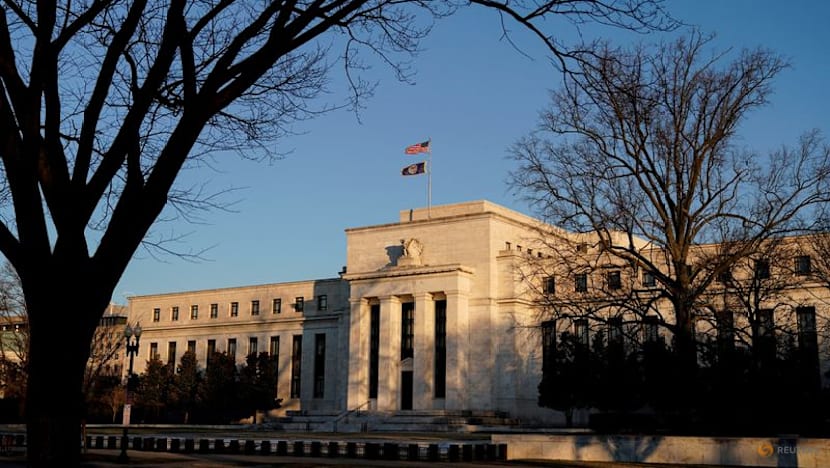
The Federal Reserve building is seen before the Federal Reserve board is expected to signal plans to raise interest rates in March as it focuses on fighting inflation in Washington, US, Jan 26, 2022. (Photo: REUTERS/Joshua Roberts)
Analysts also warn that disruptions to data collection, due to a record-long government shutdown, likely distorted the numbers.
The consumer price index (CPI) climbed 2.7 per cent from a year ago in November, the Department of Labour said, notably below analysts' predictions of a 3.1 per cent uptick.
The latest figure was also down from a 3.0 per cent rise in September, the most recent month for which fuller data was available due to a lengthy government shutdown.
White House National Economic Council director Kevin Hassett was quick to laud the figures, calling this "an astonishingly good CPI report."
But inflation has ticked up this year as Trump slapped new tariffs on goods from US trading partners, causing many firms to flag a hike in business costs.
The impact on consumers has been more muted, as companies rushed to stock up on inventory before steeper import prices kicked in. Many opted not to fully pass on the cost increases.
US households, however, still feel the pinch from elevated costs overall.
Democrats notched victories in off-year elections last month, fuelled by voters being disgruntled about rising prices - underscoring affordability concerns.
Food prices were 2.6 per cent higher from a year ago in November, with the index for meats, poultry, fish and eggs up 4.7 per cent over this period.
Energy costs also jumped 4.2 per cent over the past 12 months.
Excluding the volatile food and energy sectors, "core" CPI was up 2.6 per cent in November from a year ago - still above the Federal Reserve's longer-run target of two per cent.
BUDGET "SQUEEZE"
"What stands out from the data that is in the report is utilities, home furnishings and used cars and trucks are driving some of the ongoing inflation pressures. This is the result of tariff pressures and the AI boom," she said.
"Americans continue to feel the squeeze in their monthly budgets," Long added.
Economist Samuel Tombs of Pantheon Macroeconomics added that a skew in data collection towards the end of November likely explained why airline fares were seen to slump.
"A higher proportion of price quotes than usual for November likely were sourced during the Black Friday discount period," he cautioned.
Similarly, while housing inflation was "unusually weak in the two months leading into November," this could also be "more noise than signal due to the disruptions from the shutdown," said Bernard Yaros of Oxford Economics.
There were few month-on-month comparisons in Thursday's report as the shutdown from October to mid-November hampered the collection of October data.


FED VIGILANCE
While the latest figures will be scrutinised for their potential bearing on the central bank's future interest rate decisions, missing October data also points to an incomplete picture of how the economy is faring.
Even as the latest CPI numbers are "encouraging" for the Fed, central bank chief Jerome Powell "has already warned against reading too much into the latest data due to distortions from the shutdown," Yaros said in a note.
"The central bank will remain most vigilant about the labour market, as a continuation of real wage growth will allow households to fully recover from the hit to their purchasing power since the pandemic," he added.
Fed policymakers have voted for three consecutive policy meetings to lower rates and boost the economy as the jobs market weakens, but some cite risks of persistent inflation in urging for caution before further reductions.
One issue of concern is whether the impact of tariffs prove to be one-off eventually.




