







US and Iran exchange fire, but Trump says ceasefire still in effect
US President Donald Trump reportedly called it a "love tap", while Iranian state media said after the strikes that the situation was back to normal.
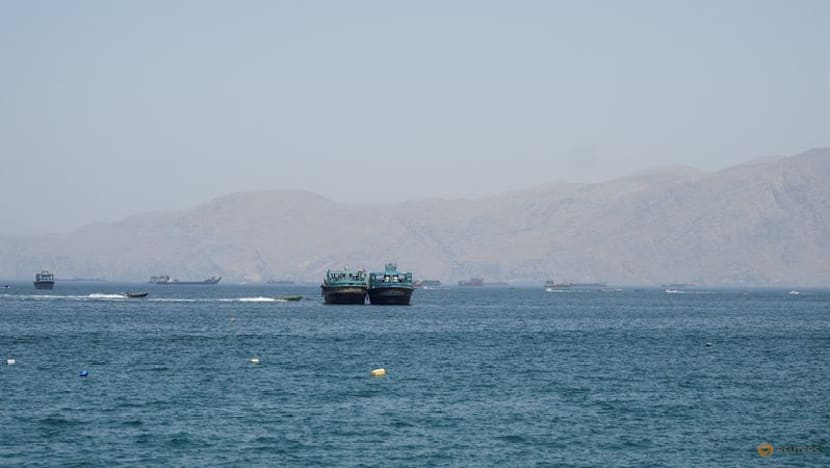
Vessels in the Strait of Hormuz, Musandam, Oman, May 6, 2026. (Photo: REUTERS/Stringer)
WASHINGTON: The United States and Iran exchanged fire on Thursday (May 7) in the most serious test yet of their month-long ceasefire, but Iran said the situation returned to normal while the Americans said they did not want to escalate.
Iran's military said the US targeted two ships entering the Strait of Hormuz and carried out strikes on Iranian territory. The US military said it fired in response to Iranian attacks.
US President Donald Trump told an ABC reporter that the ceasefire was still in effect and sought to downplay the exchange. "It's just a love tap," Trump told the reporter, according to her social media post. Iranian state media said after the strikes that the situation was back to normal.
The renewed hostilities broke out as Washington was awaiting Iran's response to a US proposal that would stop the fighting but leave the most contentious issues, such as Iran's nuclear program, unresolved for now.
The two sides have occasionally exchanged gunfire since the ceasefire took effect on Apr 7.
Iran's top joint military command accused the US of violating the ceasefire by targeting an Iranian oil tanker and another ship, and of carrying out air attacks on civilian areas on Qeshm Island in the strait and nearby coastal areas of Bandar Khamir Sirik on the mainland. The military said it responded by attacking US military vessels east of the Strait of Hormuz and south of the port of Chabahar.
A spokesperson for the Khatam al-Anbiya Central Headquarters said the strikes inflicted "significant damage", but US Central Command said none of its assets was hit.
Trump said on Thursday the three US Navy destroyers transited out of the Strait of Hormuz under fire, adding that the American destroyers were not damaged but "great damage was done to Iranian attackers".
"They were completely destroyed along with numerous small boats," he wrote on Truth Social.

Centcom said Iran had used missiles, drones and small boats in the attack, which targeted three Navy destroyers. The US said it targeted missile and drone sites and other locations in response.
"CENTCOM does not seek escalation but remains positioned and ready to protect American forces," the statement added.
Iran's Press TV later reported that following several hours of fire "the situation on Iranian islands and coastal cities by the Strait of Hormuz is back to normal now".
This is not the first time the two sides have exchanged fire since the ceasefire started.
On Monday, the US military said it destroyed six Iranian small boats and intercepted Iranian cruise missiles and drones as Tehran sought to thwart a US naval effort to open shipping through the Strait of Hormuz.
CEASEFIRE UNDER PRESSURE
Before the latest exchanges, the US had floated a proposal to formally end the conflict. But it does not address key US demands that Iran suspend its nuclear work and reopen the strait, which before the war handled one-fifth of the world's oil and gas supply.
Tehran said it had not yet reached a conclusion on the emerging plan.
Alan Eyre, a distinguished diplomatic fellow at the Middle East Institute, said Iran appears willing to reopen the waterway, “but it's not going to return it to the way it was before this war started”.
“It's quite clear that Iran is trying to both weaponise its control of the strait and also monetise it,” he told CNA’s Asia First.
Eyre also noted that Iranian negotiators are highly experienced and disciplined.
“They know all the various tricks of the trade on how to negotiate. They don't improvise. They take orders from the central government,” he added.
“I have to contrast that, unfortunately, with the US' negotiating prowess in this administration. There's not the relevant expertise or experience or the relevant desire to negotiate.”
While recent strikes are unlikely to completely derail talks, they further erode already low trust, he added.
“Unfortunately, at this point, neither side is ready yet to seriously negotiate,” said Eyre.
“The longer the ceasefire exists, the more fragile it becomes.”
Separately, the US imposed sanctions on Thursday on Iraq's deputy oil minister and three militia leaders over what it said was their support for Iran.
Israel, which has also been fighting Iran-backed Hezbollah in Lebanon, said on Thursday it had killed a Hezbollah commander in an airstrike on Beirut a day earlier, the first Israeli attack on the Lebanese capital since a ceasefire there was agreed last month.
A halt to Israeli strikes in Lebanon is a key Iranian demand in negotiations with Washington.




