AI will reshape work and improve living standards in India, says Salesforce India CEO
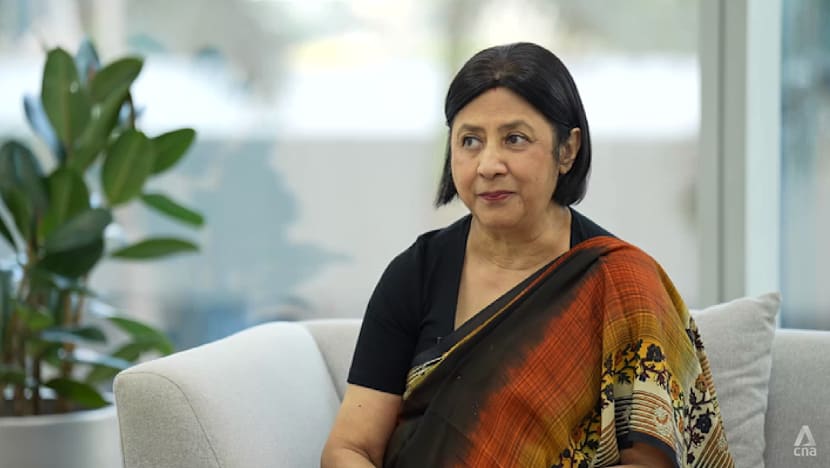
Speaking to CNA, Arundhati Bhattacharya stressed that AI adoption must be approached carefully, with proper guardrails to ensure it is used appropriately.

India is looking to harness AI to address some of its most pressing social challenges, even as concerns grow over the technology’s impact on jobs.

This audio is generated by an AI tool.


Artificial intelligence will reshape the nature of work in India while improving living standards, said Salesforce India CEO Arundhati Bhattacharya amid growing concerns over automation in the workforce.
Those fears echo anxieties seen during earlier industrial revolutions, when shifts in how people worked initially disrupted employment but led to the creation of new roles, she told CNA.
“I don't think our standard of living went back, it only went forward,” she added.
“I do not believe this time too, that it is going to slide back. It's going to become better.”





She expects workers to upskill and move into roles that require greater critical thinking, creativity and empathy, as technology takes over more routine tasks.
Her comments come as India looks to harness AI to address some of its most pressing social challenges, even as concerns grow over the technology’s impact on jobs.
AI’S DEMOGRAPHIC ADVANTAGE
India will host the AI Impact Summit next month, with the aim of shaping the technology for inclusive growth.
Bhattacharya said the potential benefits of AI far outweigh the risks, particularly for young and populous nations like India.
“That's exactly what I see with the advent of AI, especially given the fact that the world's demography is changing very rapidly,” said the former State Bank of India chairperson.
India and its neighbours are relatively young but face the challenge of delivering essential services at scale. Traditional approaches, she said, may no longer be sufficient.
“There is no brick-and-mortar way in which we can deliver the kind of services that we need to deliver to our people, and it's only technology that can enable it,” she added.
Bhattacharya also pointed to AI-powered technologies showcased at the recent CES in Las Vegas, where Salesforce – a cloud-based software platform – had a strong presence.
The annual tech event drew more than 4,500 exhibitors from around the world, including about 1,400 start-ups as well as major players such as Samsung, Meta and Nvidia, all presenting what they see as the future of technology.
These included humanoid robots and autonomous vehicles.
“That is something that is amazing – the pace of advancement, the way technology is evolving. It's never been more swift,” said Bhattacharya.
“Robotic agents are expected to be the next wave of this entire agent tech revolution that we are seeing. I do believe that this will help us … that we have (better) quality of living.”


AI FOR SOCIAL GOOD
She believes AI could play a significant role in addressing challenges India faces in areas such as healthcare, poverty and education.
Bhattacharya pointed to India’s more than 600,000 villages as an example, saying it may not be feasible to place medical experts in every community.
But this does not mean people in remote areas must go without quality healthcare, she added.
“This is the place where you can use the forthcoming AI wave to actually help out.”
She said emerging technologies like humanoids could be used to carry out basic medical tasks such as taking readings, with the data transmitted to central locations where professionals can assess and respond accordingly.
However, Bhattacharya stressed that the adoption of AI must be approached carefully.
She said it is essential for users to understand how the technology works and how it should be applied, adding that proper guardrails are needed to ensure it is used appropriately.
Rather than heavy-handed regulation, she called for oversight and clear governance structures to guide how AI is deployed, supported by policies and practical measures.
Bhattacharya also highlighted the need to invest in skills training and public awareness, saying more work must be done to prepare people to work alongside AI-enabled systems.
Despite the challenges, she said technology offers a necessary path forward. “This is the answer,” she said, adding that India must move ahead and embrace it.