







Kickboxing robots, self-driving cars: AI-powered tech dominates first major tech showcase of 2026
More than 4,500 exhibitors, including tech giants Samsung, Meta and Nvidia, have descended on Las Vegas to showcase what they believe is the future of technology.
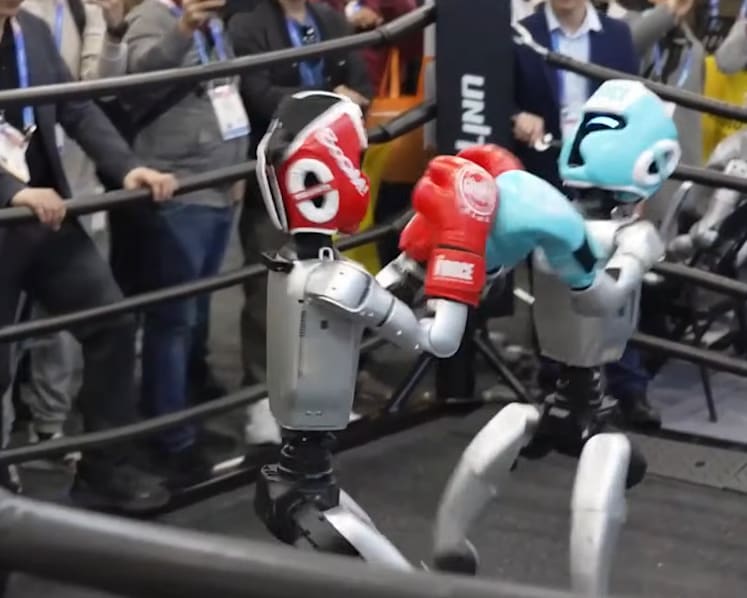
Humanoid robots developed by Unitree Robotics, staging kickboxing demonstrations at CES 2026 in Las Vegas.

This audio is generated by an AI tool.


LAS VEGAS: A robot sings “Made in Singapore” on a crowded show floor, drawing smiles – and video-taking – from attendees.
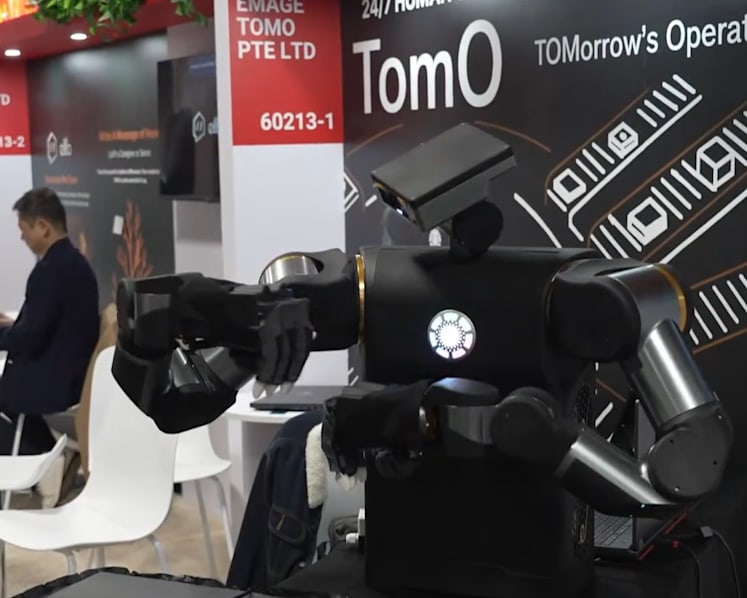
The performer, named Tomo, is a dexterous humanoid robot developed by Singapore-based firm Emage Group.
Designed for commercial use, the robot can handle delicate medical components, pack boxes and manipulate objects as small as a needle.
“It is designed to adapt to any solution. Our architecture allows us to do that because we have very easy programming,” Emage’s business development and project manager Phone Lwin Oo told CNA.
Tomo was one of thousands of artificial intelligence-powered technologies on display at this year’s CES, the world’s largest annual tech showcase that began last Sunday (Jan 4) and runs until Friday.
Formerly known as the Consumer Electronics Show, CES has become a proving ground for how far and fast AI is reshaping everyday life.
More than 4,500 exhibitors from around the world, including 1,400 start-ups and tech giants such as Samsung, Meta and Nvidia, have descended on Las Vegas to showcase what they believe is the future of technology.





AI, HUMANOID ROBOTS IN THE SPOTLIGHT
For the past few years, the world’s two biggest superpowers have been locked in a race to build the most advanced humanoids.
But this week, more than half of the humanoid robotics companies exhibiting at CES were from China.
Unitree Robotics was among these 21 firms, staging kickboxing demonstrations with its humanoids to highlight balance and mobility – capabilities seen as essential for robots to take on physically demanding jobs in the future.
“The end goal of developing robots is to have robots work for us, to do the dirty, boring jobs so that we don't have to do them … but for the robots to do that, they have to develop a lot of capabilities,” said Unitree’s marketing manager Gary Xi.
“For example, in the kickboxing competition, a lot of robots (can) do roundhouse kicks, but they don't tip over. They're going to be balancing on their own."
Other robots are already hard at work.
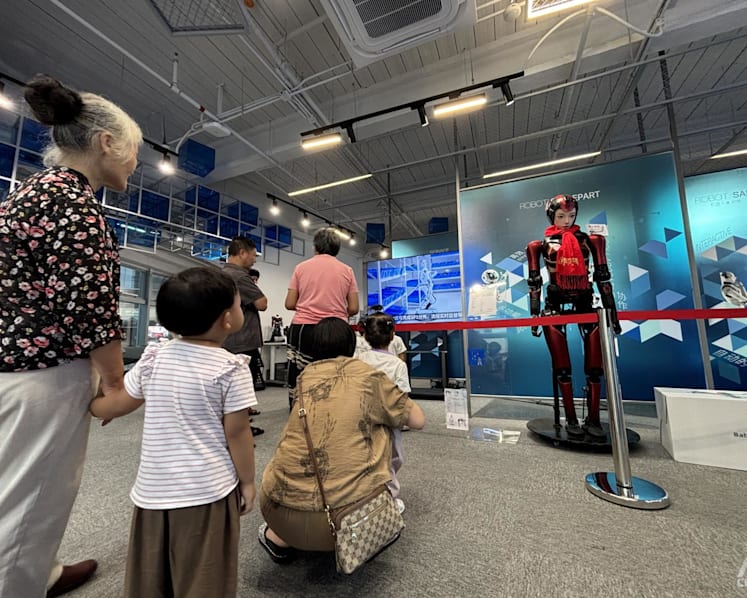
Galbot, a humanoid retail robot, is operating in 70 stores across 20 Chinese cities, dispensing snacks around the clock.
The company behind it also deploys robots on commercial factory floors for global manufacturers like Toyota, Hyundai and Bosch.
Galbot’s chief strategy officer Yuli Zhao said China has advantages in manufacturing industry experience and talent. The company is based in Beijing, close to top universities such as Tsinghua and Peking.
“The talent in Tsinghua and Peking University is the best in China,” she added.
Aside from such humanoids, AI was on display almost everywhere at CES.
From washing machines and vacuum cleaners to refrigerators and televisions, tech companies are racing to make AI a seamless part of daily life.
Samsung staged a special exhibition to showcase what it calls AI companions for the home, promising a future where devices communicate with each other to anticipate users’ needs.
“We will embed AI across every category and every product and every service to deliver one seamless unified AI experience,” said TM Roh, Samsung’s co-CEO and head of its device experience division.
CHIPMAKING IN FOCUS
But the rapid expansion of AI-powered devices has exposed a major vulnerability: Hardware in short supply.
Much of the innovation on display depends on advanced semiconductors, particularly memory chips, which are in short supply and getting more expensive.
“That's unfortunate because a lot of these devices need more memory to run these newer models than the old devices did,” noted Bob O’Donnell, founder and chief analyst at TECHnalysis Research.
“So, the challenge we're seeing right now is more on supply and demand of other components. How semiconductors are made, the issues with Taiwan – geopolitical issues, that's hanging over everyone.”
Taiwan is a global chip manufacturing powerhouse, with the Taiwan Semiconductor Manufacturing Company (TSMC) holding the title as the world's largest contract chipmaker.
Other chipmakers were also taking centre stage at CES.
Jensen Huang, CEO of chipmaking giant Nvidia – the world’s most valuable publicly traded company – delivered a nearly two-hour keynote, underscoring the company’s central role in the AI boom.
“We can now know that AI is going to proliferate everything,” Huang told a packed auditorium.
Nvidia’s industry rivals AMD, Intel and Qualcomm also gave keynote speeches at the show, seeking to reassure investors that the AI boom is durable.
AMD, in particular, introduced its next-generation AI chip and previewed a new data centre system called Helios.
SELF-DRIVING VEHICLES TAKE OVER
Meanwhile, autonomous driving technology also dominated the show floor at CES.
While it was once the premier venue for debuting electric vehicles, EVs have taken a back seat this year.
From planes and sports cars to 60,000-pound combine harvesters, self-driving systems were part of nearly every vehicle showcased.
Automation could significantly improve productivity, said American corporation John Deere, which manufactures agricultural machinery and heavy equipment.
“We have a customer here in the booth and he has told us that he can see 30 per cent productivity with the use of our automation packages,” said Dawn Willett, embedded software engineering manager at John Deere.
Entirely self-driving tractors may not be in use anytime soon, but robo-taxis are already on public roads.
American tech firm Zoox – a subsidiary of Amazon – said it has 50 autonomous vehicles operating across Las Vegas and San Francisco, with trials underway in several other US cities including Miami, Atlanta and Washington DC.
Alphabet-owned Waymo is expanding across four cities, while Uber unveiled a new robotaxi developed with Lucid Motors and Nuro, using Nvidia computing.
Nuro’s head of communications David Salguero said self-driving vehicles are an “amazing example” of how AI works.
“We use an AI autonomy foundation model that basically learns as it goes along, so that as we're driving (and) testing, both on road and in simulations, it gets better and better at driving,” he added.
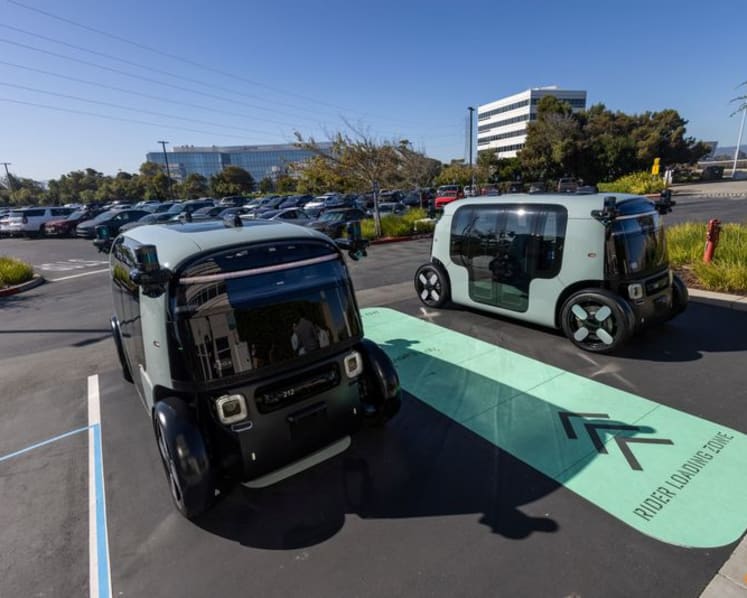
But privacy and national security concerns have emerged as this learning is fuelled by the collection of personal data.
Italy, for example, is backing its own autonomous vehicle project to retain control over the technology.
“It has cameras; it has some stuff which can be very powerful for other nations to have inside your streets, basically, and that's why Europe is now moving towards autonomous vehicle regulation,” said Alberto Giacalone, a software engineer at Politecnico di Milano.
“It's very important for each country to have its own technology.”
As CES draws to a close, the message from Las Vegas is clear: AI is no longer a niche technology.
From homes and factories to farms and city streets, it is rapidly becoming embedded in everyday life – even as questions over supply chains, regulation and trust continue to loom.




