Aid groups grapple with shrinking funds, infrastructure damage in flood-hit Asia
Experts are also urging governments to prioritise early warning systems, after flood survivors described terrifying waves of water that arrived without warning.
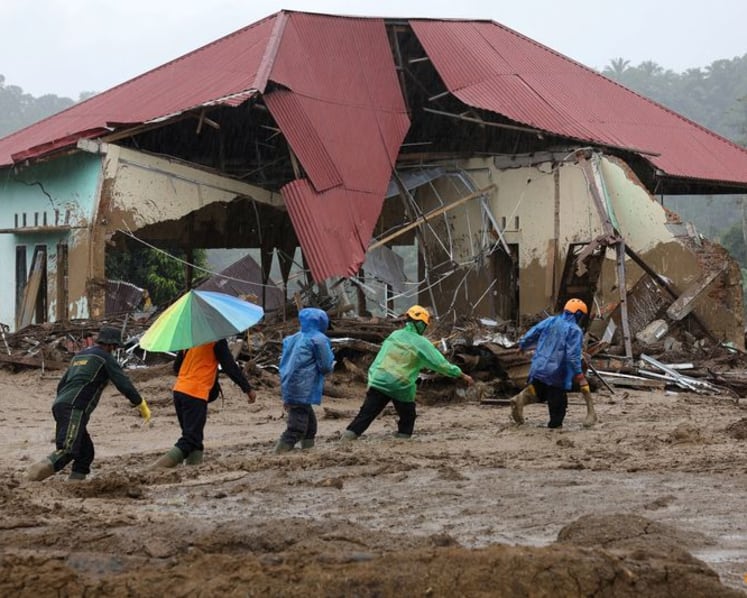
Rescuers walk through the mud as search and rescue operation continues at an area hit by deadly flash floods following heavy rains in Palembayan, Agam regency, West Sumatra province, Indonesia, Dec 2, 2025. (Photo: Reuters/Willy Kurniawan)

This audio is generated by an AI tool.


Damaged infrastructure and shrinking funding pools are slowing efforts to reach communities affected by catastrophic floods across South and Southeast Asia, according to humanitarian organisations.
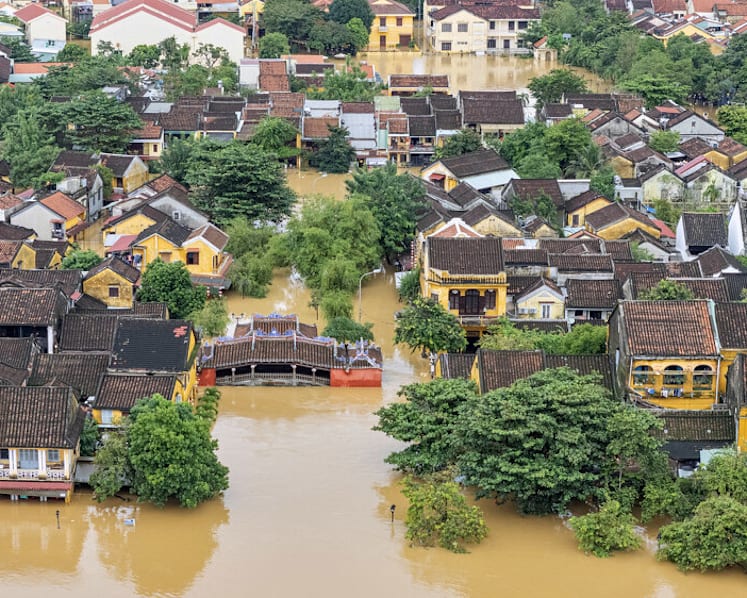
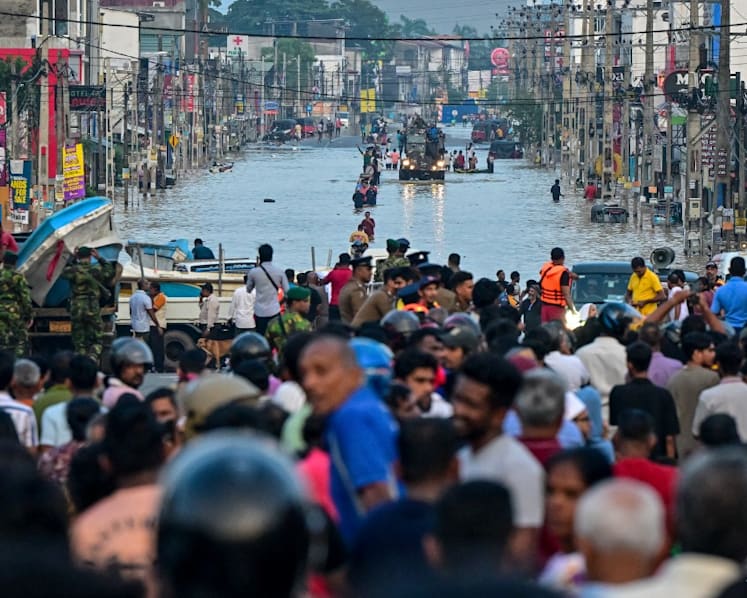
Heavy monsoon rains paired with two tropical cyclones battered Sri Lanka, Indonesia’s Sumatra region, southern Thailand and northern Malaysia last week, killing more than 1,300 people and forcing millions from their homes.
The International Federation of Red Cross and Red Crescent Societies (IFRC) said humanitarian needs are escalating faster than local responders can manage, urging swift international support.
“Roads have been destroyed and some infrastructures are disrupted. It’s quite difficult for us to reach the most isolated families,” said the organisation’s acting deputy Asia Pacific director Pui Wah Alice Ho.





She added that ground personnel are using boats and air transport to get aid to communities, but progress remains slow.
The challenges are compounded by a noticeable drop in financial support, Ho told CNA on Wednesday (Dec 3).
“Especially this year, we’ve seen a decline in funding from major donors for humanitarian aid. Even though we’ve launched appeals, we might not be able to receive sufficient funding to respond to this scale of emergencies,” she added.
SRI LANKA & INDONESIA HARDEST HIT
The IFRC – the world’s largest humanitarian network – is launching a 5 million Swiss francs (US$6.2 million) emergency appeal to support the Sri Lanka Red Cross. It has already deployed 1 million Swiss francs from its disaster relief emergency fund, said Ho.
Sri Lanka declared a state of emergency last weekend after Cyclone Ditwah triggered massive floods and landslides, killing at least 465 people in one of the country’s worst weather disasters in decades.
In Indonesia, the death toll has climbed to more than 800, with over 650 still missing. Aid agencies report that overcrowded shelters, poor sanitation and limited access to clean water are heightening the risk of disease.
Save the Children Indonesia noted that at least 1,000 schools have been damaged, closed or converted into evacuation centres in the worst-affected provinces of Aceh, North Sumatra and West Sumatra.
“As a result, tens of thousands of children are currently out of school – their learning has stopped indefinitely. Prolonged disruption (in education) increases risks of child labour, early marriage and long-term learning losses,” said the non-profit’s CEO Dessy Kurwiany Ukar.
“In the aftermath of an emergency of this scale, children face long term consequences on both their physical and emotional wellbeing.”
To mitigate this, Ukar said the charity has set up temporary education shelters and is providing psychological support for affected children.
CALLS FOR EARLY ACTION
Relief agencies say that beyond delivering search, rescue and emergency aid, efforts have long been underway to boost long-term resilience in vulnerable communities by strengthening homes, training local first responders and planting mangroves – which act as natural barriers against storm surges.
They urged governments to prioritise early warning systems, noting that many survivors described terrifying waves of water that arrived without warning in last week’s floods.
But many countries in the region still lack robust warning capabilities, said Stephen Turton, an adjunct professor at Central Queensland University’s environmental geography research division.
“Globally, where (early warning systems) are in place, (they’re) very effective – the death toll from natural disasters are falling,” he said.
“That should be a real focus for countries that don't have particularly effective early warning systems.”
CLIMATE CHANGE DRIVING EXTREME WEATHER
Experts say the crisis underscores how climate change is intensifying extreme weather across Asia.
Turton described the region as a global warming hotspot.
“The warming of oceans in the region is supercharging the global water cycle. The more heat we put into the atmosphere (allows it to) hold more moisture, and when conditions are right, it comes down as heavy rainfall,” he told CNA’s Asia Now programme.
“Clearly, there's evidence that the Asian monsoon region is already experiencing much greater intensity rainfall and flash flooding associated with monsoonal activities, typhoons and tropical cyclones. That’s a major climate risk.”
IFRC’s Ho echoed the warning, saying extreme weather events are becoming alarmingly frequent.
“With stronger cyclones, typhoons and widespread flooding hitting the same areas over and over, we cannot say that (these are) once in a lifetime events,” she said.
“Climate change is here (and) we really need to take action immediately.”