IN FOCUS: Nearly 40 years in Bangkok mall zoo - the fight for a gorilla with ‘loneliness in her eyes'
Bua Noi the gorilla has drawn global attention, raising questions about wildlife trafficking, conservation and animal welfare in Southeast Asia. And nearly 40 years after arriving at Pata Zoo, her future remains uncertain.
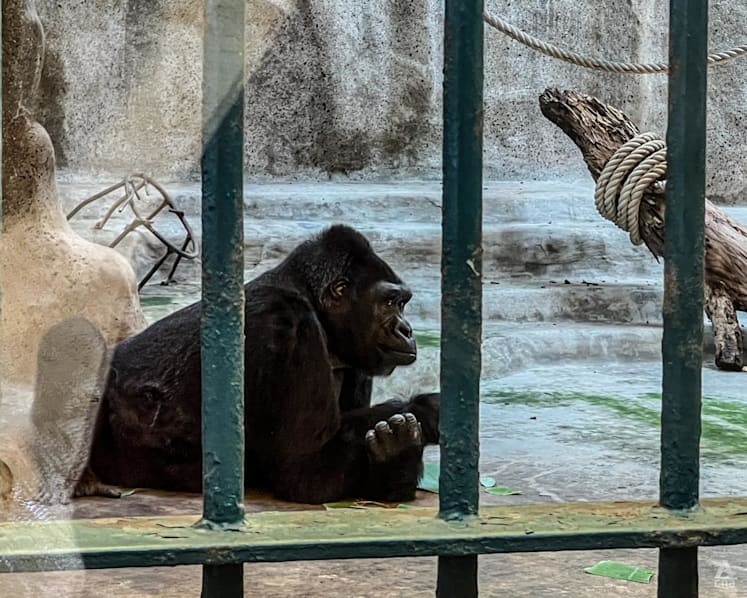
Bua Noi, a western lowland gorilla, seen in her enclosure at Pata Zoo in Bangkok. (Photo: CNA/Jack Board)

This audio is generated by an AI tool.


BANGKOK: In the final climax of old King Kong films, the giant gorilla climbs to the top of the Empire State building in New York City, then the highest point in the world.
He is this powerful beast, yet casts a lonely figure against the backdrop of a vast, unfriendly city.
Kong had been taken from his jungle home and put on display as an attraction. He is a wild creature suspended above a world that does not understand him.
Like New York, the capital of Thailand has an impressive skyline. And its own real-world tale of an ape high up in a man-made structure.





Her name is Bua Noi. In Thai, it means “little lotus”.
She lives on top of her own tall building, the seventh storey of a mall, where she was placed in 1987, when she was young, high above the manic traffic, colour and chaos of Bangkok.
Maybe once, she was Thailand’s most famous animal. Now, she is largely forgotten. And for a lot of these years, she has been alone.
For nearly 40 years, Bua Noi has been caught in a dispute between those who argue she is cared for and those who believe she should be released. It has drawn in activists, officials and even world-famous celebrities.
At the heart of the fight is a deeper question: how did a critically endangered gorilla end up alone in a shopping mall zoo, and why is she still there?
STEPPING INTO BUA NOI’S WORLD
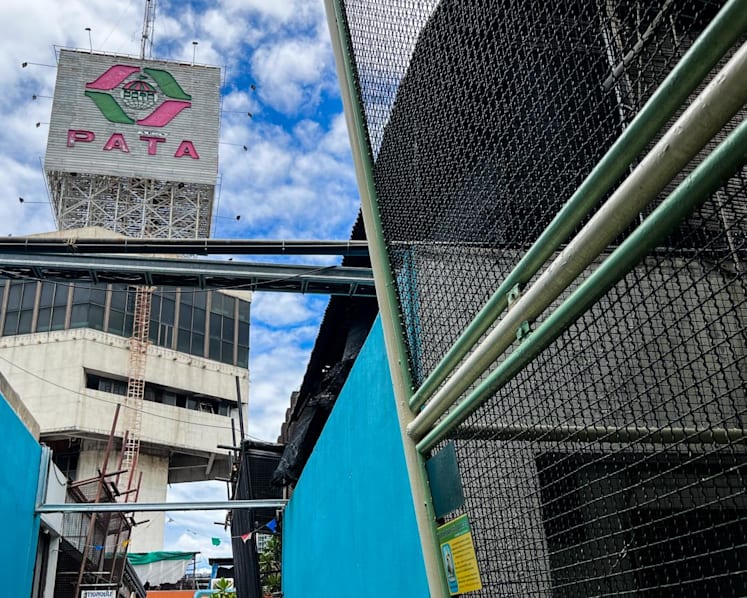
Walking into Pata Zoo on top of Pata Pinklao Department Store is a bit like stepping back in time. The decor and design are trapped in a 1990s-time warp, its heyday long past.
Through a glass elevator to the roof, patrons look out to a shopping mall that is now completely deserted. Everything is dark, boarded up. The zoo is the only business left standing on the sixth and seventh floors.
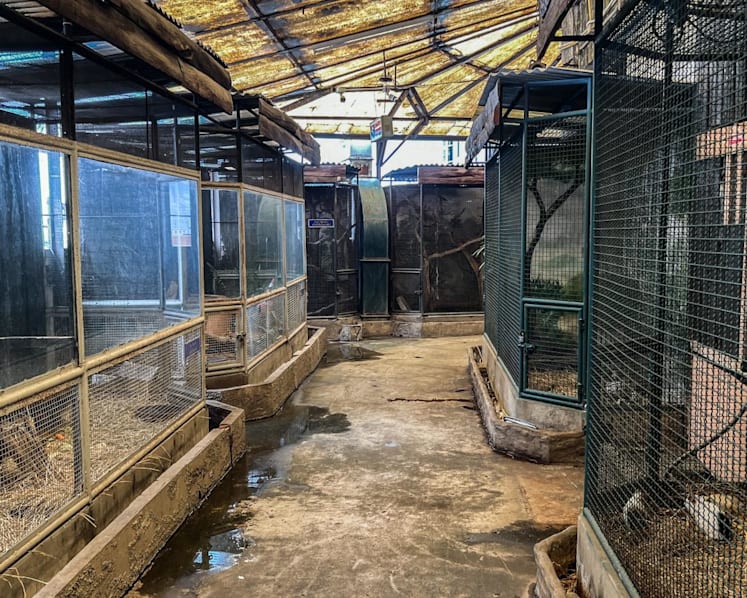
Inside, tropical birds near the entrance gnaw at their metal cages. Loud music plays overhead as children huddle to pet baby goats in a pen.
A fountain adorned with plastic plants sprays mist over the area. Despite that, it is hot up here on the top floor of the building, which is open to the sky. The plastic shades do little to block out Bangkok’s oppressive sun.
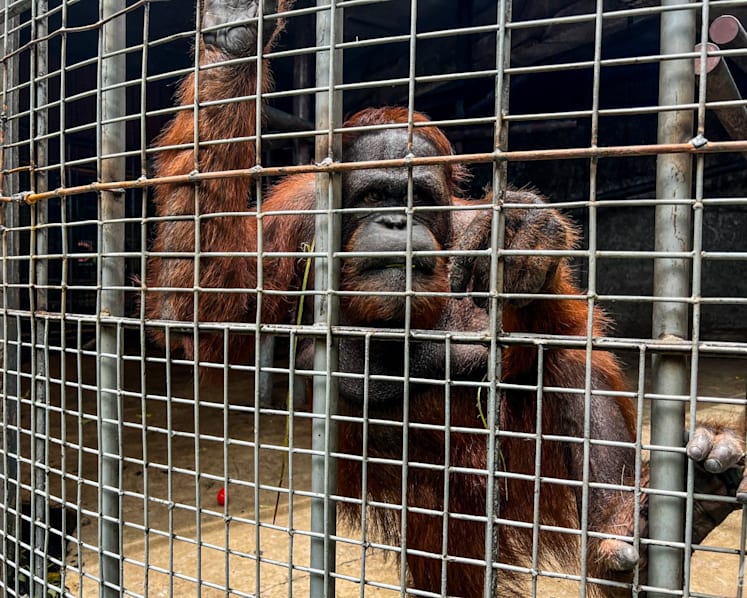
And it smells. Of the animals - macaques, lemurs, bears, orangutans, capybaras and turtles - which live in its cages.
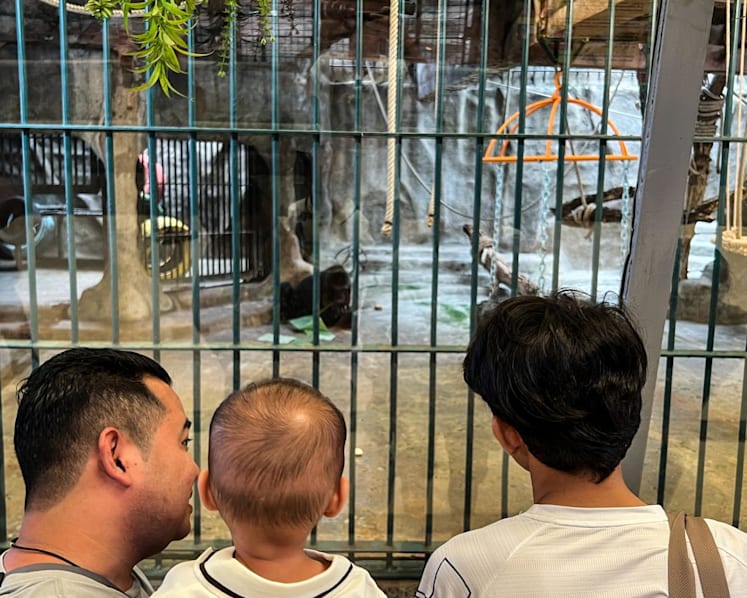
A group of visitors wait for the main attraction. She is hidden from view in a separate enclosure that the zoo calls VIP.
Eventually, through a small waiting room, the group steps into Bua Noi’s world.
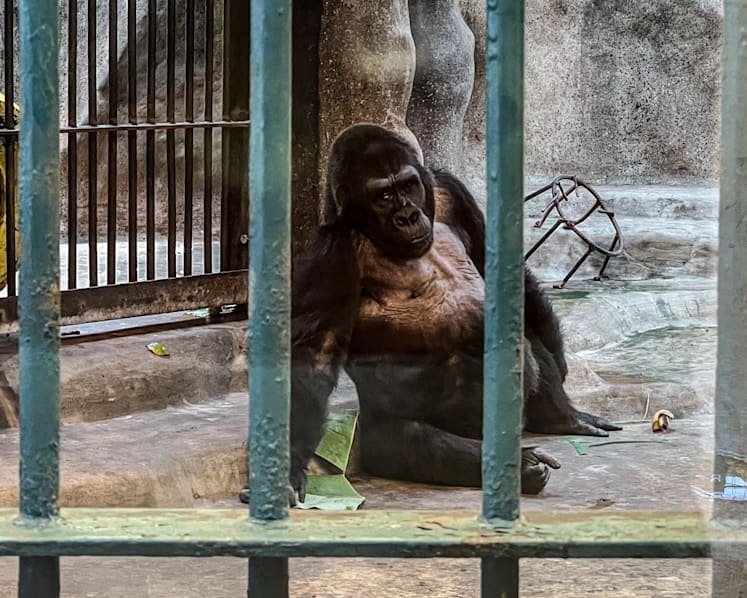
An elderly, solitary gorilla lives behind a large sheet of glass. Her area is about the size of a small basketball court, air-conditioned with some rope swing, tyres and bound by concrete and steel.
Bua Noi wanders out as the group of humans gather. She is an incredible creature. Expressive. Powerful. Deeply intelligent.
But at this moment, she seems to not want any attention. She turns away to face the wall and starts to urinate on the floor. It trickles away and she lies down and picks at a leaf, her eyes dim.
After a few minutes, the crowd loses interest and wanders off through a maze of other small cages, the secondary attractions.
And Bua Noi stays alone. At least until the next group arrives.
Colin Sytsma, an American filmmaker, made the same journey up to the zoo and into Bua Noi’s enclosure a few years ago when he travelled to Bangkok to document her solitary existence at Pata.
“There was mildew pretty much everywhere. It just felt very dirty to me in a lot of ways,” he said.
“The one thing that I always thought about is, Bua Noi hasn't touched grass in 35 years, and how sad that was for a social animal, not to have another gorilla, and then not to be able to be in the jungle, in the grass, have that foliage, which they're so used to,” he said.

BUA NOI’S CHAMPION
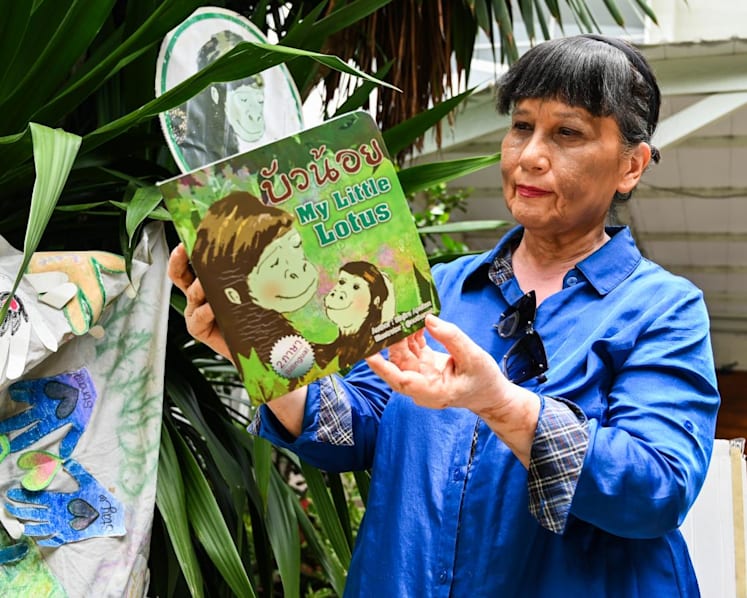
One of the heroes of Sytsma’s film and one of the main champions for Bua Noi’s freedom is a 70-year-old Thai woman named Sinjira Apaitan.
Her house in central Bangkok is easy to spot.
Outside in the small front garden is a life-size cardboard cut out of a gorilla. Around one of the trees, she has wrapped a tarpaulin sheet with hung paper cutouts of children’s hands.
Students have drawn pictures and written messages for Bua Noi, like “born to be wild” and “you have my hands”.
They are symbols of the long campaign she has run for decades, originally as a fundraiser for an animal organisation, and later, simply as “an ordinary lady with common sense and a spiritual heart”.
Her life has become quietly and stubbornly tied to this single gorilla.
She recalled a time where Bua Noi was a headline attraction for families in the growing metropolis. She would drive past what was a famous high-rise building at the time, and tell her children that there was a gorilla above the department store.
“In the past, she was very popular. Everybody knew about Bua Noi.”
“And I said to my children, ‘Look, how come there is a gorilla here? For what reason?’ It's like seeing a human being in jail. It’s not normal. And you have to do something,” she said.
“I'm turning 70 now, but for Bua Noi, I saw her when I was 30-something, and she is still there. The thing that hasn't changed is the loneliness in her eyes. Her eyes say a lot.”
There are very few people who know Bua Noi well.
Sinjira is no exception. While a long-time advocate for the gorilla, she has spent little time with Bua Noi, especially as relations with Pata’s owner have frayed over the years.
The current owner’s name is Kanit Sermsirimongkol, the brother of the original founder of the zoo, Vinai.
“We have never been enemies from how I feel. I just want to help him to be free from this situation,” Sinjira said.
“The best memory is when I asked permission from the owner to sing her a song. I asked to climb up the ladder, and my voice could go through (the cage). Bua Noi was kind of excited. ‘Who's there? Who's trying to help me?’.”
“Then she climbed down and sat and looked at me with her eyes. I think we have some connection. I'm lucky. I don't think he would allow me to do that again after the campaign.”
Pata Zoo denied a request from CNA for an interview or statement.
But Kanit has previously given interviews to the media, defending his zoo’s captivity and treatment of Bua Noi.
“There are no rules or regulations to say how much space each animal needs. It's not about space, it's about the way in which you treat the animals. The space that we provide to the animals is enough for them to freely move around, and to exercise,” he told the Guardian back in 2010.
Ten years later, he spoke to the Bangkok Post, again pushing back against growing efforts to free his solitary gorilla.
“Want to send her back to nature? We should think about the animals' quality of life in the jungle. They are under threat from diseases like AIDS and Ebola, as well as civil wars and poachers. We can learn something from the bushfires in Australia that have killed around 500 million animals,” he said.
“I won't send Bua Noi to another country. She's a treasure of Thais.”
Kanit maintains that she was brought here legally after being born in a German zoo.
But others believe Bua Noi’s journey stretches back through forests, across borders, and is embroiled in a murky global trade that back then, rarely left a reliable paper trail.
AN AFRICAN STORY
In the 1980s, Equatorial Guinea in Central Africa was a country emerging from one of the continent’s most brutal and repressive periods.
It was devastated by a regime that had killed or expelled one-third of the population. Infrastructure was failing. Borders were porous. Corruption was rife.
Capturing wildlife was a survival strategy, especially for rural communities. And in this part of the world, that wildlife included western lowland gorillas.
At this time, European animal dealers were already operating across Central Africa.
Daniel Stiles, an illegal wildlife trade expert based in Kenya, has scoured decades-old records of great ape trade and done extensive research on the origins of Bua Noi.
“It was a German father-son team of animal dealers who typically operated in illegal fashion. What they did in Central Africa was to put out their collection teams to capture baby gorillas and then export them with dodgy documents or no documents at all,” he said.
“They were doing this on a regular basis, supplying zoos and making quite good money from it.”
“There were a lot of these zoo safari park type places springing up in Thailand in the 80s and 90s. And they wanted great apes amongst other animals,” he said.
The western lowland gorilla is the most common of an endangered species. There are an estimated 316,000 individuals in the wild globally.
But their numbers are rapidly decreasing due to a mixture of disease, poaching and habitat loss.
There are international laws that regulate the movement and trade of endangered species. The main instrument is called CITES - the Convention on International Trade in Endangered Species of Wild Fauna and Flora.
Under CITES, gorillas are listed on Appendix I, meaning commercial international trade is prohibited. Thailand ratified CITES back in 1983, and any legal trade of a gorilla into the country would be tracked in its database.
There are no gorillas listed as legally transferred from Germany to Thailand between 1980 and 1995, or from any other country.
“There are records of very few chimpanzees and orangutans coming into Thailand, but they were getting hundreds of them. I mean, Pata Zoo is not the only place with chimps and orangutans. They were pouring in there all the time for these entertainment places and there was no record of a gorilla coming in,” Stiles said.
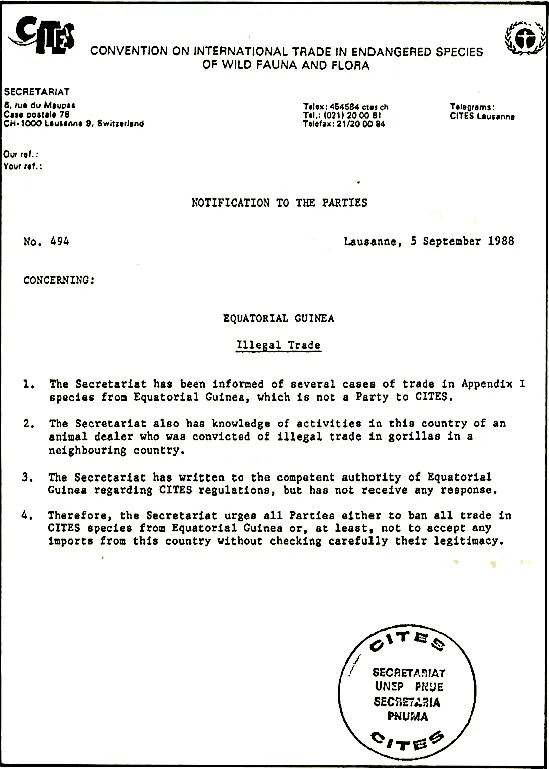
There were concerns at the time about animals being illegally trafficked out of Africa. In 1988, the CITES secretariat sent a letter to parties, warning them not to accept the import of animals from Equatorial Guinea.
Pata Zoo says that Bua Noi’s import was legal and occurred before Thailand’s wildlife laws were enacted.
When a country ratifies CITES, it is legally bound internationally. But it must pass national legislation to enforce it. Thailand had wildlife legislation in place at that time, but questions remain about how fully CITES provisions were being implemented and enforced under domestic law.
But Stiles and others say there is no credible evidence that Bua Noi was captive-bred.
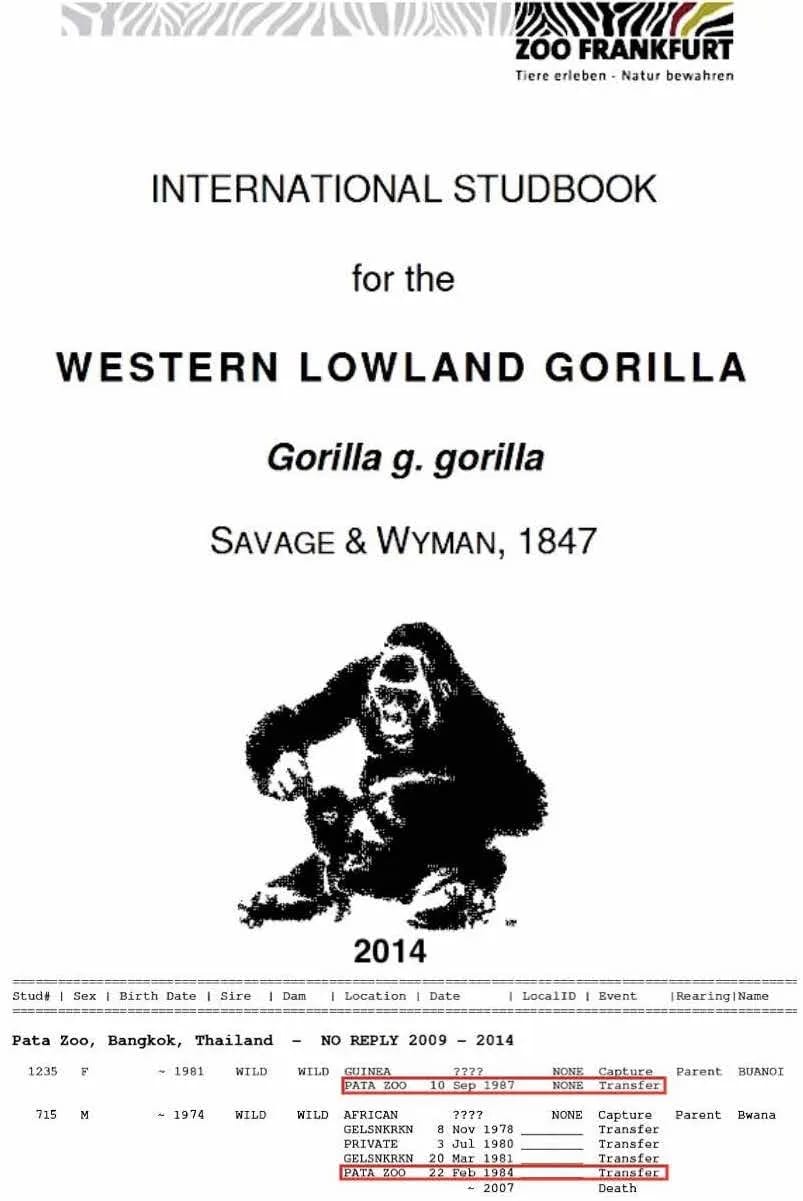
Gorillas in captivity are also tracked in international studbooks - a global registry recording every individual, their parents, and where they have lived. It is a family tree of sorts for the world’s zoo gorillas.
The European studbook covering Pata Zoo shows two gorillas. One is Bwana, Thailand’s first gorilla, which also resided at Pata briefly with Bua Noi, before it died in captivity.
The studbook shows Bwana was wild born in Africa, transferred into private hands, including a German zoo, a few times before reaching Thailand in 1984.
It then documents a second gorilla, Bua Noi, stating she was also wild born and transferred to Pata Zoo in September 1987.
Thai officials have said that there is no clear violation under current law that would justify confiscation of Bua Noi. The zoo holds a valid licence and there is no legal order to seize her.
Thailand’s Department of National Parks, Wildlife and Plant Conservation (DNP) formally turned down an interview request, only saying that Bua Noi is legally owned by Pata Zoo and that any comments about her may infringe upon the zoo’s rights.
TRAFFICKING TODAY
Wildlife trafficking remains big business today.
Interpol and other agencies estimate the illegal wildlife trade to be a multi-billion-dollar industry, making it one of the most profitable illicit trades, after drugs and human trafficking.
Southeast Asia is widely recognised as a core node in global wildlife trafficking networks - acting simultaneously as a source, transit point and demand market for illegal wildlife.
The region accounts for up to a quarter of global demand for illegal wildlife products, such as pangolins, turtles, elephant ivory and bear parts, according to the Organisation for Economic Co-operation and Development (OECD) - an international body that tracks economic and policy data.
One man investigating this opaque world is Ricardo Forrester, the deputy director of Freeland, a team of law enforcement and technical experts trying to locate and stop traffickers.
His work focuses on hotspot zones, including the borders between Thailand, Malaysia, Vietnam and Laos, and on law enforcement capacity building, open-source intelligence, mapping and data analytics.
“I would argue, if I were a career criminal, that I would be involved in wildlife trafficking, because I can pick and choose where to transport an animal to and from, because there's no homogenised legislation,” he said.
It is the imbalance between weak enforcement and high reward that has made parts of Southeast Asia so attractive to traffickers, Forrester said.
“In ASEAN, different countries take a different stance towards wildlife trafficking. Where in some instances you may get jail time, in others, you may only pay a fine that is not even commensurate to the proportional value of the product in the final market.
“Therefore there is no real deterrence to committing this type of crime. When you look at the risk and the reward ratio, the risk is minor, the reward is massive,” he said.
Stiles said in some parts of the world, wildlife trafficking is more lucrative than ever.
“It’s done in different ways, largely by different people, but they share certain characteristics. Transnational organised criminal groups networks have emerged. And these guys make big money,” he said.
'BIG MONEY'
Stiles said the general public’s awareness about the exploitation that occurs in establishments like zoos for entertainment and circuses is growing. But not everywhere.
“They're still going strong in the Middle East, South Asia, Southeast Asia and China. In fact, in the Middle East, they're expanding. More and more of these private zoos are coming up all the time, and they want great apes and big cats.”
Zoos are typically promoted as bastions of nature conservation, important breeding centres and educational tools. But not all zoos are the same.
Ian Redmond, chairman of Ape Alliance and a primatologist who has spent nearly 50 years working with wild gorillas, said modern zoos do contribute to habitat protection. Many, he noted, funnel a portion of their income into conservation projects.
But he believes the industry still carries a contradiction.
“They’ve got a foot in both camps,” he said, by talking about conservation and still using animals as attractions.
Redmond argued that the fascination with rare creatures has long blurred into commerce. Exotic animals become status symbols and spectacles that draw crowds willing to pay.
“If you've got really weird animals, people are fascinated. So you get this reflected glory. And it's this sort of status symbol of having a pet or an animal in your control,” he said.
However well-meaning their zookeepers, he said, the lives of those animals can be narrow and artificial.
“In China and Southeast Asia, you still see animals dressed up doing daft tricks to entertain family audiences, and the audiences love it, but the life of those animals is pretty miserable,” he said.
He added that great apes are social beings, embedded in complex family groups and ecosystems. But Bua Noi has no other gorilla to interact with, no forest and no social group.
“They have minds, they have emotions, they have aspirations, they have a social life, which, in the case of Bua Noi, is limited to her keepers,” Redmond said.
“I think it's probably the worst punishment we could confer. When people have done really bad things, they're put into solitary confinement. That's the worst thing we can think of doing to a human, and yet we do that to non-humans without a thought.”
MOUNTING PRESSURE
In November 2019, outside the Pata Pinklao Department Store in Bangkok, activists, including women covered in coloured paint, held signs calling for a boycott of the zoo on the top floors of the mall.
They denounced the ongoing confinement of animals, including Bua Noi, with signs that read “let animals show their true colours” and “cruelty is not entertainment”.
It was a flashpoint moment in a yearslong effort by groups like People for the Ethical Treatment of Animals (PETA) and others to pressure Kanit to release his gorilla.
Five years earlier, activists had submitted a major petition to Thai authorities calling for the closure of the zoo. It argued that a department store rooftop was not an appropriate place for wild animals, especially a gorilla, given welfare and safety concerns. It was unsuccessful.
But by 2020, momentum was growing.
After her high-profile rescue of the elephant Kaavan from Pakistan to Cambodia, pop icon Cher, the founder of animal charity Free the Wild, turned her attention to Bua Noi, using social media and a direct letter to Thai officials.
Other celebrities including actress Gillian Anderson also wrote in support of the move. Bua Noi finally had global media attention.
It was around this time that Sytsma released his short movie, screening it at festivals around the world.
But a globe-altering event was on the horizon, and it would spell an end, at least temporarily, to the movement.
“We were hearing that we were getting traction, and we were going to be getting meetings with the Thai government. And the Thai government, at that point, was starting to be more understanding of it. COVID just put everything on hold,” he said.
“We couldn't get any meetings. Nothing happened. And it just blew out the spark that we had.”
When the world started to return to normal a few years later, reports emerged that senior ministry officials had proposed raising some 30 million Thai baht (US$930,000) to buy Bua Noi and move her to a sanctuary in Germany.
Pata Zoo rejected the idea, saying she was a “cherished animal” and unsuitable to move at her age, likely around 35 years old at the time, and could die.
Wild gorillas typically have a lifespan of 35-40 years, while those in captivity can often live up to a decade longer.
“It would be pretty sad if that animal dies on the top of that shopping mall. It would be a really sad day for a lot of people,” Sytsma said.
“It would be a shame for Thailand to be known in that instead of the light that it could be, where they transport her to a new area that is more suitable.”
There have been multiple plans for Bua Noi over the years. An offer remains, for her to not only touch grass again but be transported back to her home continent in Africa.
Amos Courage is the overseas project director at the Aspen Foundation, a UK wildlife and conservation organisation with projects in Central Africa. Until recently, it had the only projects re-introducing gorillas back into the wild.
He admitted that even with good intentions, it is a mammoth task to release a captive gorilla. For Bua Noi, it remains a long shot.
The next best thing, he said, would be for her to live in a dedicated sanctuary, with her own kind, with her own type of freedom.
The plan, he explained, was to bring her to Gabon, in her natural habitat with the temperature, the foods and the smells that might have been familiar to her and provoke some sort of genetic memory.
“It's a hard and gruelling process. But once you take them out into the forest, and they get over that initial traumatic period, the spark comes back into their eyes, they start interacting with other gorillas and they start to thrive.
“Short-term stress is not a problem. It's long term stress that is damaging. In a sanctuary such as this, she'd be off show, she wouldn't be being watched and humiliated every day.
“And you never know. In time, she might be right for reintroduction. But even if she wasn't, she'd have a much better life in a much better habitat.”
DIE OR FLY
Pata has always pushed back, at least over the past decade, strongly against any sort of plan to move her.
The zoo has defended its stance by saying that Bua Noi has been raised on concrete and in sterilised conditions for decades. Exposing her suddenly to soil or natural ground could risk infection or stress.
In 2023, activists spray-painted “Free Bua Noi” on the exterior wall of the Pata Department Store building. It sparked an angry response.
The zoo offered a reward of 100,000 baht for information leading to the arrest of those responsible for the graffiti, describing the act as vandalism and announced legal action.
As visitors to Pata Zoo assemble in a small waiting room before they can visit Bua Noi, they are asked to sit and watch a welcome presentation.
On screen, a Thai-language video plays. A male voice adopts a jokey tone, layered with canned sound effects, the kind recognisable from light-hearted local comedies.
The video introduces Bua Noi, describing her as the beautiful star of the zoo, talks about her air conditioning, how gorillas are endangered and how Thailand has no further plans to bring in more of them.
It also directly takes aim at activists and animal experts, mocking them and denouncing their campaigns over the years.
Then the doors open, and the small crowds enter the room to see Bua Noi through the glass.
Despite the outstanding offer, right now there is no indication that Bua Noi will be released.
Just a few months ago, her enclosure was temporarily closed to the public. Pata Zoo said she had to take time to rest. It was unclear if she was unwell during this period, but she has since returned to the job.
In the meantime, Sinjira - the main champion for Bua Noi’s freedom - continues her mission.
She is still organising. Still raising awareness. Still hoping that one day, she will see her Little Lotus be free.
“Either she dies up there, or she flies to Africa. We wait for that day, but the consequences will be much different,” she said.
“It says a lot about our effort to try. Our effort to give her back her dignity, the beauty of the princess of the forest. You don't have to be an activist. You don't need to be an animal lover. Just be a human being with a heart of compassion.”
For nearly four decades, the world around Bua Noi has shifted constantly. But she has stayed in the same place.
Her future remains undecided. Bua Noi cannot tell the world what she wants. All she can do is live with the consequences of decisions made for her.
For Sinjira, the focus is not on winning recognition or assigning blame, but on imagining a better future for an animal that she has come to deeply care for.
“You don't have to say my name. I'm happy for my name to be forgotten,” she said. “But just give her what she deserves.”
Additional reporting by Jarupat Karunyaprasit.