analysis Asia
Pressure mounts on Indonesia to review, exit Board of Peace amid US-Israel conflict with Iran
Calls for Indonesia to leave the Board of Peace tasked to oversee Gaza reconstruction efforts are being made by the country’s religious groups, academics and former diplomats.
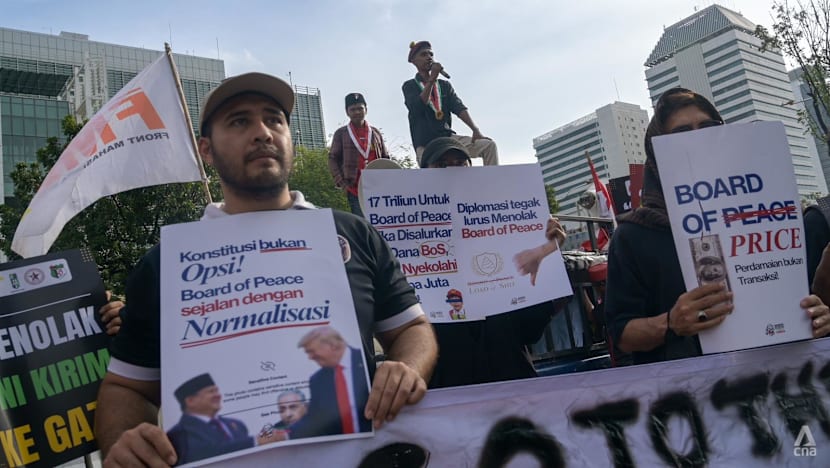
Dozens of people protest in front of the United States Embassy in Jakarta, Indonesia, on Mar 3, 2026, urging the Indonesian government to cancel its membership to the United States-led Board of Peace. (Photo: CNA/Ridhwan Siregar)

This audio is generated by an AI tool.


JAKARTA: Religious bodies, academics and civil society groups in Indonesia are urging the government to review - or even revoke - its membership to United States President Donald Trump’s Board of Peace (BoP) for Gaza reconstruction efforts, amid the US-Israeli war on Iran.
The Indonesian Ulema Council (MUI) is among those who made demands early on for Indonesia to leave the group amid the conflict.
"The MUI urges the Indonesian government to revoke its membership from the BoP, as it is deemed ineffective in achieving true independence in Palestine," it said on Sunday (Mar 1) in a press statement.
Citing the US-Israel strikes that began on Feb 28, MUI said Indonesia, the world’s largest Muslim-majority country, should not be linked to the US through its membership of the BoP, which it became a founding member of on Jan 22 in Davos.
The council also questioned whether the US established the BoP to create peace in Gaza.
“America, which is playing a central role in managing the Palestinian conflict through the BoP, faces a big question: Is this strategy truly aimed at achieving real peace or is it actually strengthening the unequal security architecture and burying Palestinian independence?," the press statement added.
Indonesia is a supporter of the Palestinian cause and has long pushed for a two-state solution. It has no diplomatic ties with Israel.
Dozens of public figures and civil society groups have also urged Jakarta to reconsider its position, arguing that continued participation risks undermining Indonesia’s long-standing independent foreign policy, known as the free and active policy.
There are also parties which said that Indonesia should postpone sending troops to Gaza amid the war in Iran, which has retaliated by hitting US bases across the Gulf.
However, some analysts CNA spoke to warned of consequences should Indonesia withdraw from the BoP.
“Indonesia must deal with the US which may not be pleased with the decision,” said Dinna Prapto Raharja, executive director of the think tank Synergy Policies.
Indonesia is not just a member of the board. At the first BoP meeting on Feb 19 in Washington, it was announced that the archipelago would assume a deputy commander role in the International Stabilization Force (ISF) after accepting an offer from the US for the position.
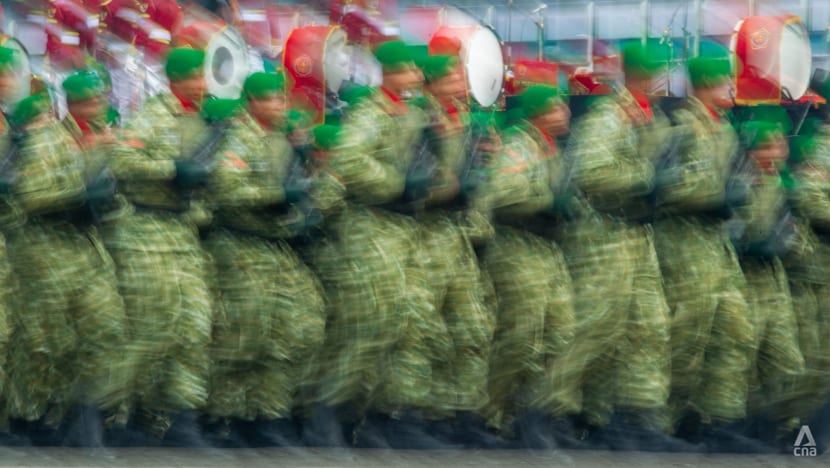
President Prabowo Subianto, who was in Washington for the meeting, said that he would deploy 8,000 military personnel to Gaza as part of the ISF within two months.
For now, talks on BoP are on hold as “all attention has shifted to the Iran situation”, said Minister of Foreign Affairs Sugiono, who goes by one name.
"We will also consult with our friends and colleagues in the Gulf because they are also under attack," Sugiono told reporters on Tuesday without giving details.
He was speaking to the media right after a meeting held by Prabowo with former presidents, former and current vice-presidents, current and former ministers, as well as political party leaders, to discuss various national and global issues.
IS THE BOARD OF PEACE MISSION GENUINE?
The MUI, academics and civil society CNA spoke to questioned whether the US-led Board of Peace would genuinely advance Palestinian independence.
Lawmaker Dave Laksono, a member of the parliament’s commission on defence, foreign policy, communication and intelligence, told CNA that although Prabowo had said that 8,000 troops would be deployed to Gaza, it has yet to be determined exactly when.
“The lack of an official schedule reflects a cautious approach. The safety of military personnel, the credibility of the mission, and public support are key considerations before any concrete steps are taken,” he said.
“The ministry of defence has emphasised that the plan remains within the constitutional framework, but implementation will depend on the president's directives and operational readiness on the ground.”
CNA has reached out to the ministry of defence and ministry of foreign affairs for comment.
In its press statement on Mar 1, MUI said it believed that there is a strategic motive behind the attack “suspected to be a systematic attempt to weaken Iran's strategic position in the region, while simultaneously limiting Iran's support for the struggle for Palestinian independence”.
The Retired Indonesian National Armed Forces Soldiers Forum (FPP-TNI) has also called for Indonesia to leave the board, and on Prabowo to withdraw the plan to deploy 8,000 Indonesian troops to the Palestinian enclave.
It said on Tuesday that the BoP has the potential to violate the constitution, the state defence principles and the principles of an independent and active foreign policy.
Retired General Fachrul Razi, quoted by local media platform Tempo, explained that Indonesia's involvement in international peacekeeping forces can only be carried out under a UN mandate and not any other organisation.
“Especially with the Board of Peace that is headed by an American general. This truly offends the feelings of our Palestinian friends," he said, after a forum meeting on Feb 26.
Meanwhile, on Mar 1, 65 public figures, including academics and environmentalists, as well as 79 civil society groups, including Human Rights Working Group and Indonesia Corruption Watch, issued a statement urging the government and the parliament to evaluate Indonesia's agreement in the BoP charter.
“The BOP established in Davos is not the BoP mandated by UNSC Resolution 2803,” the statement said.
They were referring to the United Nations (UN) Security Council Resolution 2803, which was passed on 17 Nov 2025 to give effect to the Gaza peace plan agreed by Israel and Hamas in October 2025.
The resolution was welcomed by Indonesia and the Palestinian Authority.
The public figures and civil society groups said that the Board of Peace does not have a road map on Palestinian independence, so the membership must be reviewed.
They also said that the US-Israel attacks in Iran violated international law and undermined world peace.
“Thus, the Board of Peace has become a Board of War because the BoP is chaired and dominated by Donald Trump, who launched a military attack on Iran,” the statement said.
“The BoP chairman, who is supposed to maintain peace as stipulated in the BoP charter, has instead engaged in actions that are inimical to that peace.”
They added that they also rejected the deployment of Indonesian military troops to Gaza without a UN Security Council mandate since a deployment under a BoP mandate is inconsistent with UN Security Council Resolution 2803.
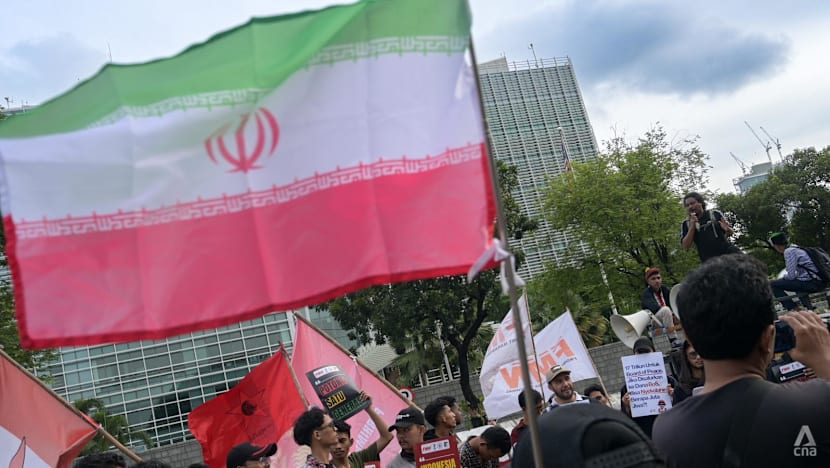
As of Wednesday, while Prabowo has held several meetings on global issues recently in which the BoP was discussed, with the latest on Tuesday night, he has not made any public comments regarding the calls to withdraw from it.
On Wednesday evening, Prabowo met Ahmad Muzani, speaker of the people’s consultative assembly, who is also a member of Prabowo’s Gerindra party.
Responding to journalists’ questions on Indonesia’s membership in BoP, Ahmad said Indonesia could leave it at any time.
“To Indonesia, joining and exiting (an organisation) is something normal. Unfortunately, it could happen,” Ahmad told reporters after meeting Prabowo at the presidential palace.
“As the president has stated several times, we could leave (the BoP) at any time, but again, there must be a mutual agreement.”
Former minister of foreign affairs Hassan Wirajuda was also at Tuesday’s meeting and told reporters that the BoP was among the topics discussed.
"We discussed it, but also in the context of current developments, whether the ongoing war in Iran will weaken the position and mandate of the BoP," said Hassan.
Former Indonesian deputy foreign minister and ambassador to the US, Dino Patti Djalal, urged Jakarta to take a clear stance rooted in international law, aligned with Indonesia’s principle of an independent and active foreign policy.
He urged Prabowo to tell Trump that Indonesia will suspend the deployment of peacekeeping troops to the ISF in Gaza, while reviewing the serious situation currently developing in the Middle East.
Dino said the Indonesian peacekeeping force will be practically under the command of the US and Trump as chairman of the Board of Peace.
“Under the unpredictable leadership of Donald Trump, who frequently violates international law and imposes his will on other countries, especially weaker ones, we must avoid the risk of Indonesian troops being caught up in complications that may arise from the ongoing triangular conflict between America, Israel, and Iran,” he said on Mar 1.
”We do not want Indonesia's peacekeeping mission to deviate from the ISF mandate, even if unintentionally. Consider things carefully and thoroughly,” he added.

CAN INDONESIA LEAVE THE BOP?
Given the current situation in the Middle East, analysts CNA interviewed said Indonesia should be able to withdraw from the Board of Peace.
Diah Kusumaningrum, an international relations expert from the University of Gadjah Mada, said a withdrawal should be treated primarily as a political decision rather than a technical matter.
She is unaware of what the exit mechanism is, but said that Indonesia has previously withdrawn from the UN so it should not be a problem this time.
Indonesia left the UN in January 1965 after Malaysia became a non-permanent member of the Security Council. At that time, President Sukarno viewed Malaysia as Britain’s puppet state, which could threaten peace in Indonesia.
However, Indonesia rejoined the UN in Sep 1966 when Sukarno’s power diminished.
“It should not hesitate to leave the Board of Peace when its objectives and actions clearly do not align with the constitution, the Bandung principles and humanitarian values,” said Diah.
The Bandung Principles are 10 guidelines for international relations formulated at the 1955 Asian-African Conference in Indonesia, promoting world peace, national sovereignty, anti-colonialism, and equality among all nations, particularly for developing countries, which at that time were navigating the Cold War.
Diah said that at the moment, it is more important to consider the consequences of Indonesia not leaving the BoP than the technicalities.
“If it does not leave the Board of Peace, Indonesia will be complicit in the crime of aggression and will increasingly lose credibility both at home and abroad,” she said.
The current conflict situation constitutes force majeure - an unforeseen uncontrollable event that makes performance of an obligation impossible - meaning Indonesia’s exit should be straightforward, said Suzie Sudarman, an international expert from the University of Indonesia.
“It can just write that it would leave the group. It shouldn’t be that complicated, as the situation in the Middle East is a force majeure,” she said.
If the government still insists on being part of the BoP, the very least it should do is ensure that any deployment of troops to Gaza is under the UN, she said, adding that otherwise, nobody would guarantee the safety of Indonesian soldiers.

WHAT’S NEXT FOR INDONESIA IF IT EXITS THE BOP?
Should Indonesia leave the BoP, it should prepare for how the US might respond, said analysts.
This includes possible consequences, such as impact on trade deals and the need to establish and deepen ties with other countries, said Dinna from Synergy Policies.
“Indonesia should be more communicative with other countries (on what to do), especially those which are not members of the BoP,” said Dinna.
Southeast Asia’s biggest economy should also be more proactive in opening more economic opportunities with other countries, said Suzie, especially since it is still stuck in the middle-income trap.
“It should not primarily rely on the US for its trade,” said Suzie.
The US is Indonesia’s second-largest export destination and trading partner after China.
Suzie added that, instead, the government should be more present in the region, focusing on issues in the Indo-Pacific and the Association of Southeast Asian Nations, which she believes have been deprioritised since Prabowo became president.
In line with this, Diah from the University of Gadjah Mada said it is now crucial that Indonesia focus on its foreign policy rather than on the aspirations of just one person, such as the president, who on Saturday said he was willing to go to Tehran to mediate the conflict.
“As long as it remains in the Board of Peace, offering mediation services, security forces among others, Indonesia will not be credible in the eyes of Palestinians and many other world citizens,” she said.