







Two-term limit for Malaysia PM among 2026 reform pledges by Anwar
Analysts say the prime minister was using his new year’s address to reassure his core supporter base before the next general election.

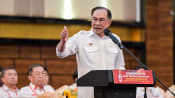
Malaysia's Prime Minister Anwar Ibrahim speaks as he attends a business and investment conference, during Pakistan Prime Minister Shehbaz Sharif's official visit in Kuala Lumpur, Malaysia on Oct 6, 2025. (File Photo: Reuters/Hasnoor Hussain)
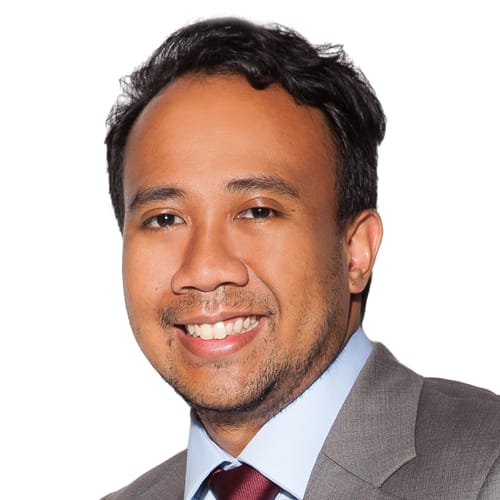

KUALA LUMPUR: Malaysia Prime Minister Anwar Ibrahim on Monday (Jan 5) pledged to introduce a two-term or 10-year limit for the country’s highest office, among a slew of various reforms aimed at boosting urban support for his administration.
The government will also table Bills in parliament this year to separate the powers of the attorney-general (AG) and public prosecutor, set up an ombudsman office and introduce a freedom of information law, he said.
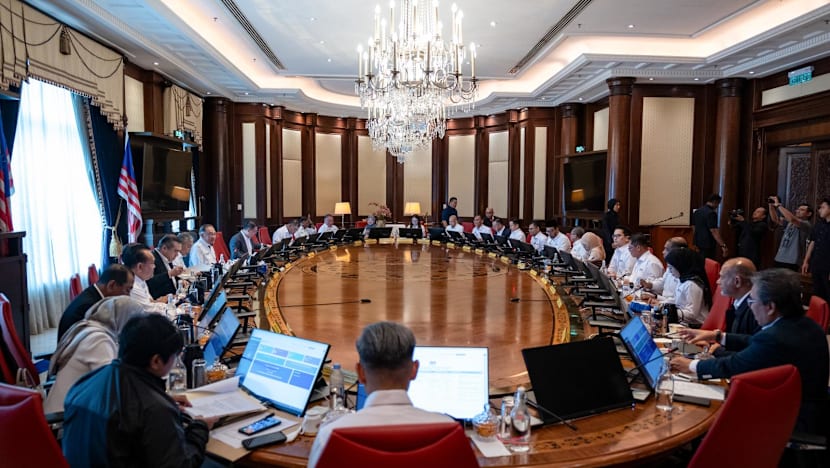
“Everybody has their limits. The government chief secretary cannot stay forever,” Anwar told an audience of civil servants in administrative capital Putrajaya after chairing a special Cabinet meeting earlier on Friday to determine the country’s direction for the new year.
“This applies to everyone, including the prime minister.”

The premier’s speech comes as his unity government faces increasing criticism for its slow pace of promised reforms amid shifting political winds from within and a poor performance at a recent state election.
The Democratic Action Party (DAP), a component party of Anwar’s Pakatan Harapan (PH) coalition, last December threatened to reconsider its position in the government if Anwar failed to deliver meaningful reforms within the next six months.
This came after the party suffered defeat in the Sabah state polls that were held on Nov 29, failing to win any of the eight seats it contested.
With 40 parliamentary seats in the 222-member lower house, DAP supplies the most seats to Anwar’s unity government made up of various coalitions besides PH.

The United Malays National Organisation (UMNO), the lynchpin party of the Barisan Nasional (BN) coalition - which is part of the unity government - has also faced internal calls to leave Anwar’s administration and team up with Parti Islam Se-Malaysia (PAS), which is poised to take control of the opposition Perikatan Nasional (PN) coalition.
This is because UMNO's current role in the government has forced it to compromise on "red lines" involving race, religion and royalty, the party’s youth chief Muhamad Akmal Saleh told members at a special convention in Kuala Lumpur on Jan 3.
In the Sabah state election last November, PH clinched only a single seat while DAP lost all of its six seats from the previous state polls in 2020, a performance analysts attributed to urban frustration with corruption and slow reforms. BN won only six seats compared to 14 in 2020.
But Anwar on Friday stressed the importance of remaining united, taking a swipe at the opposition for only talking about fighting for Malay rights once they had “lost power”.
“That is why we must not belittle or underestimate the need to be united, in consensus, strong, and stable - because we are capable of achieving remarkable things only by working as a solid and cohesive team,” he said.
Analysts told CNA the prime minister was using his new year’s address to reassure his core supporter base and appease the DAP.
“The government has about two years before the next general election; it’s a good time to introduce some reform measures,” said Adib Zalkapli of strategic consultancy Viewfinder Global Affairs.
He added that it was especially an opportunity for PH to present to its supporters that the coalition “has not abandoned its commitment to reforms”.
MEASURES TO EASE COST OF LIVING, BUSINESS COSTS
Anwar announced that the one-off RM100 cash handout for every Malaysian aged 18 and above, regardless of income, will continue this year and be credited on Feb 9.
“This is for Ramadan preparations and this year’s Chinese New Year,” he said.
The Bantuan Sumbangan Asas Rahmah (SARA) programme benefited 21.2 million Malaysians in 2025.
Meanwhile, the deadline for companies with total annual sales of RM1 million to RM5 million to implement e-invoicing will be extended to Dec 31 this year.
It was previously set to come into force on Jan 1.
“The government agreed to extend the transition period without any penalties for another year for e-invoicing, because many have said it involved a very high cost,” Anwar said.
The service tax on rentals will also be reduced from 8 per cent to 6 per cent to help lower business costs.
The tax, which applies to the rental of non-residential premises such as offices, warehouses and commercial assets, was implemented on Jul 1, 2025.
“The service tax on rentals has indeed been an issue because it rose from zero to 8 per cent,” Anwar said.
Micro, small, and medium enterprises (MSMEs) with annual sales of up to RM1.5 million will be exempted from the tax. Previously, the exemption applied to businesses with an annual turnover of RM500,000 to RM1 million.
PM TERM LIMIT
In its manifesto for the 2022 general election, PH had pledged a term limit for the prime minister, following up on a similar proposal in the run-up to the previous polls in 2018. Progress was stymied in early 2020 when the PH government collapsed, due to internal divisions within its coalition members, in a development known as the Sheraton Move.
Anwar previously stated that the reform required careful negotiations and would need to be passed by a two-thirds majority in parliament, arguing that lengthy tenures lasting 22 years had “damaged the country”.
His jibe was aimed at former premier Mahathir Mohamad, whose 22 years in office from 1981 to 2003 produced achievements but was also characterised by a concentration of power around the executive.
“If you are given a term limit, you should be able to implement (policies) in that term. After that, it is good for us to hand it over to the next generation,” Anwar said on Friday, flanked by members of his new Cabinet.
On separating the powers of the AG and public prosecutor, Anwar said the government will table a Bill in the upcoming session in January.
The move to reform the AG’s role gained steam in September 2023, when Law Minister Azalina Othman Said announced the government would form two special task forces to expedite the process as part of efforts to expedite institutional reforms.
The Malaysian Anti-Corruption Commission also announced last December that the government will table an Ombudsman Bill in parliament early this year.
The proposal will cover maladministration, misconduct, whistleblower protection, and freedom of information, aimed at safeguarding the public’s right to lodge complaints, improving service delivery, and upholding high standards of integrity in the public sector.
Anwar said on Friday an ombudsman institution will “give space for citizens to raise any problems”.
“Because everybody from the prime minister downwards needs to be responsible and be open to scrutiny,” he said.
Finally, Anwar said the freedom of information law will exclude matters of intelligence and national security.
The government previously said the initiative would enhance the disclosure of information in the public interest, giving every individual the opportunity to access information.
This includes submitting an application to any ministry, government department or agency, except for certain information such as personal data and matters that might threaten public order and national security.
“But all other issues - questions of contracts and tenders - (will be allowed) to prevent abuse of power,” Anwar said on Friday.
“The Freedom of Information Bill will be tabled in parliament for approval in the upcoming session or subsequent sessions this year.”
REFORMS ACHIEVABLE
Given that the areas of reform were “not really contentious”, Adib from Viewfinder Global Affairs said that no party in the unity government would object to Anwar’s announcement.
This includes the separation of the AG’s and public prosecutor’s powers, which some observers saw as the Anwar administration’s response to the intense criticism it faced after the High Court granted prosecutors’ request for Deputy Prime Minister Ahmad Zahid Hamidi to be given a discharge not amounting to an acquittal in a high-profile September 2023 case.
Ahmad Zahid, who is also UMNO president, had faced charges of money laundering, criminal breach of trust and corruption.
“I don’t expect UMNO Youth to protest against the restructuring of the AG Chambers. Given that the list of reform measures announced are not really contentious issues, it’s very likely that parliament will give its approval,” Adib said.

Political analyst Azmi Hassan of the Nusantara Academy for Strategic Research likewise said the reforms were “very realistic”, suggesting it was possible to obtain a simple parliamentary majority to push through three of the Bills.
“For the introduction of the two-term limit, you need (to make) some amendments to the Constitution, which need a two-thirds majority,” he said, although he believes that all Members of Parliament (MP) on either side of the aisle will support the policy.
Anwar’s coalition government currently holds 153 out of 222 seats in parliament, meaning it has slightly more than a two-thirds majority of 148 seats.
Political scientist Syaza Shukri of the International Islamic University Malaysia said the two-term limit was “most difficult” to achieve as it will “chip away” at the ability of a popular leader to remain in power and require political will on all sides.
“So, I think we need clear and strong leadership from (Anwar) and also engagement if possible with all sides in parliament,” she told CNA.
UNITY GOVERNMENT TO REMAIN INTACT?
Azmi said the DAP’s threat to reconsider its role in the unity government had played a “great role” in the timing of Anwar’s announcement, which the political scientist feels will keep both DAP and UMNO in the unity government.
But he pointed out that most Malaysians, including DAP supporters, wanted to see more cost of living support measures.
“There is some time to go before the next general election, so Datuk Seri Anwar has a lot of time to rectify this particular cost of living issue,” he added.
“But again it is good for the government (to show) that Datuk Seri Anwar promised reforms and will deliver them.”
Syaza said these reforms could help PH justify continuing working with UMNO to ensure the government has enough MPs to pass the Bills.
“But I think instability will continue especially between PH and UMNO. Because UMNO is not the one asking for these reforms,” she said.
Syaza believes Anwar’s announcements will partially help PH regain trust and eventually support from its core base of typically urban supporters, who want to see full implementation of the reforms before Anwar’s term ends.
“It appears (Anwar) is pushing them perhaps because his administration has now passed the halfway mark and there's no more delaying on what he or the coalition promised,” she added.
“It didn't help that the Sabah election shows that PH voters are not afraid to vote them out unless these promises are fulfilled.”





