Malaysia eyes bigger role in rare earths, but industry players warn ambitions may outpace reality
More than 16 million tonnes of rare earth deposits are believed to lie beneath forest reserves and mountain ranges across Peninsular Malaysia.
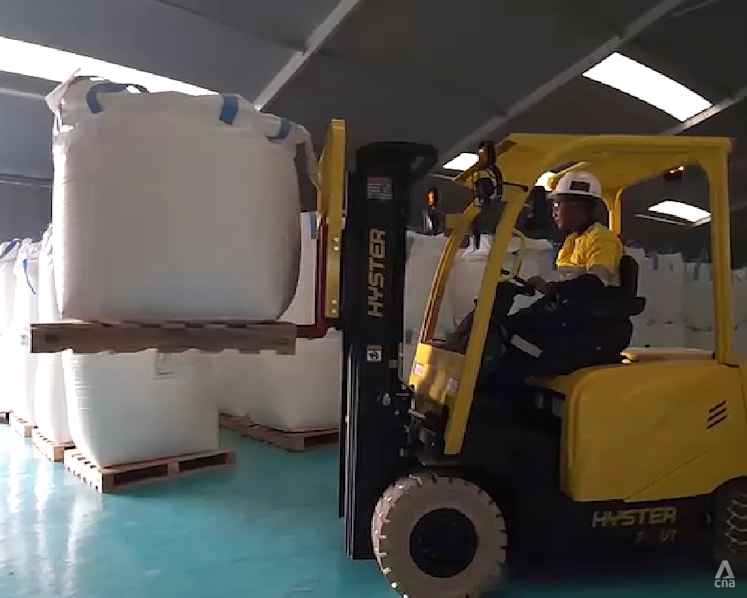
Malaysia is seeking a bigger role in the global rare earths market as demand for the critical minerals surges amid rising geopolitical tensions.

This audio is generated by an AI tool.




KUANTAN: Malaysia is seeking a bigger role in the global rare earths market as demand for the critical minerals surges amid rising geopolitical tensions.
However, industry players in the Southeast Asian nation have cautioned that its ambitions may be running ahead of practical constraints.
The Malaysian government hopes to reduce its reliance on China while navigating environmental concerns, regulatory hurdles and the need for sustained investment.
AMBITION MEETS CONSTRAINTS
More than 16 million tonnes of rare earth deposits are believed to lie beneath forest reserves and mountain ranges across Peninsular Malaysia.





The country is also home to one of the world’s largest rare earth refineries. Australia’s mining giant Lynas Rare Earths already produces more than 5 per cent of global rare earth output at its processing plant in Pahang.
Australian High Commissioner to Malaysia Danielle Heinecke said diversification of supply chains is increasingly important.
“One of the great things about having Lynas here for Malaysia is it's actually been able to develop a lot of the supply chains, including skills, as well as some of the equipment that is required to produce rare earths,” she noted.
She added that more than 90 per cent of the equipment and machineries used to produce heavy rare earths are manufactured locally.
While Lynas is seeking to extend its operating licence from three to 15 years, Malaysia has imposed a ban on unrefined rare earth exports as part of efforts to prioritise domestic processing and downstream activities.
The government is targeting rare earths output of up to 30,000 tonnes a year by 2030.
Industry experts, however, have described the target as overly ambitious.
“China took more than four decades to build up to where they are today, and also if you look at Lynas, they spent more than 10 years,” said Lim Wei Hung, group chief operating officer at Southern Alliance Mining.
“So naturally, this is not something that can happen overnight. You need to have a conducive ecosystem.”
CHINA STILL DOMINANT
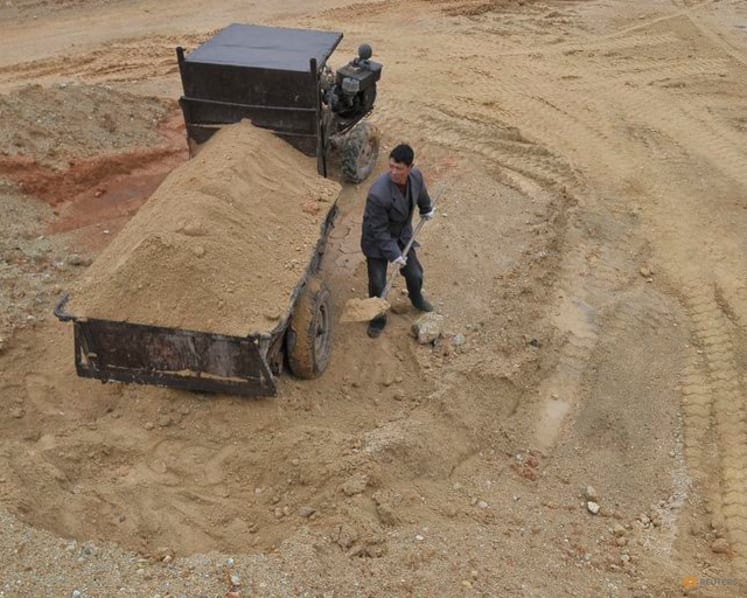
Malaysian mining firm MCRE, which has partnered China Rare Earth Corporation, extracts rare earth elements from ionic adsorption clay (IAC) in the central state of Perak using in-situ leaching, a method where chemical reagents are injected into the soil through tubes several metres deep.
The leached liquid is collected and processed into rare earth carbonate.
MCRE currently produces about 2,000 tonnes of rare earth oxide annually, all of which is exported to China.
Lim said Malaysia’s neutral geopolitical position could be an advantage, but warned that scaling up production exponentially would be tough.
“We must start from a very small scale, because to ramp up to 30,000 tonnes is going to be very challenging,” he added.
In order to achieve the target, Malaysia will need at least 10 more facilities like MCRE
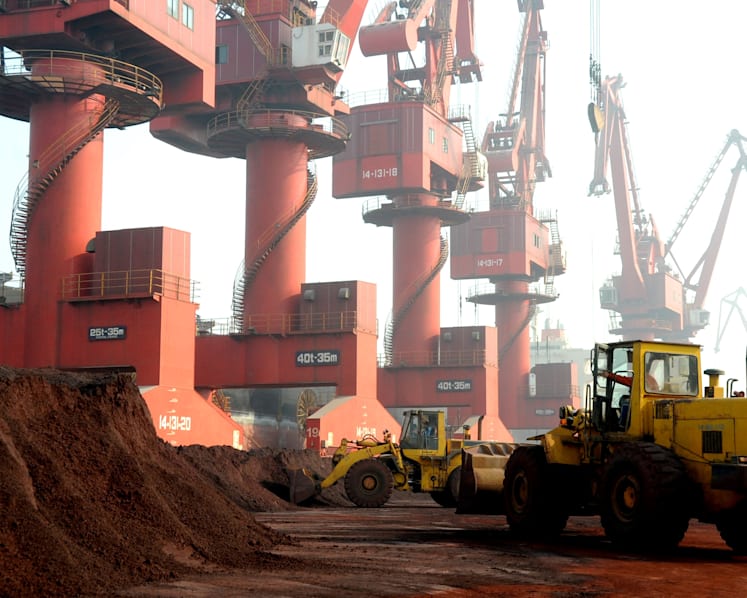
Although Malaysia has the technical capability to develop its own rare earth mining industry using in-situ leaching – considered less harmful to the environment – breaking into a supply chain long dominated by China remains difficult.
Supply chain control, including access to chemical reagents, is critical, said Lim.
“Unless you are able to manage your supply chain otherwise … it’s going to be very risky,” he added.
Industry expert Teoh Lay Hock has urged the government to reconsider its ban on raw rare earth exports to attract upstream investors.
Restricting exports made it difficult for miners to find buyers, discouraging upstream investment, said Teoh, who is technical adviser at the Malaysian Chamber of Mines.
Without a strong upstream sector, he added, Malaysia would struggle to convince midstream and downstream players that it could offer a secure domestic supply.
Teoh said a complete export ban has also contributed to an increase in illegal mining.
To address an industry that remains highly fragmented, he called for stronger coordination between state and federal authorities to harmonise rules and regulations.
Activists have raised concerns that many environmental safeguards and safety guidelines are not adopted by state governments that have the right to issue mining licenses.
Tan Bun Teet from environmental activist group Save Malaysia Stop Lynas is not convinced that the in-situ leaching method causes less damage to the environment.
"The very fact is that when strong chemicals are pumped into the ground, the deeper they go, the more likely they are going to contaminate the underground water," he said.
"And then to do it in an area where it is regarded as a forest reserve, which is meant to actually capture the source of water supply, and it will be foolhardy to actually explore it on a very large scale."
Meanwhile, a fisherman who wants to be known as Pak Man urged authorities to closely monitor water quality on a regular basis.
"Sometimes we see the fish behaving as if they are drunk," he said.
"They'll come to the surface, looking for air to breathe, maybe because the water is polluted. The next day, we see the fish have died. This must be due to what’s happening upstream.”