'Unreasonable': BN's inclusion in Sabah state government sparks uproar among GRS coalition
Sabah chief minister Hajiji Noor has appointed BN’s Jafry Ariffin, who is the Sabah UMNO Secretary, as the new state tourism, culture and environment minister.
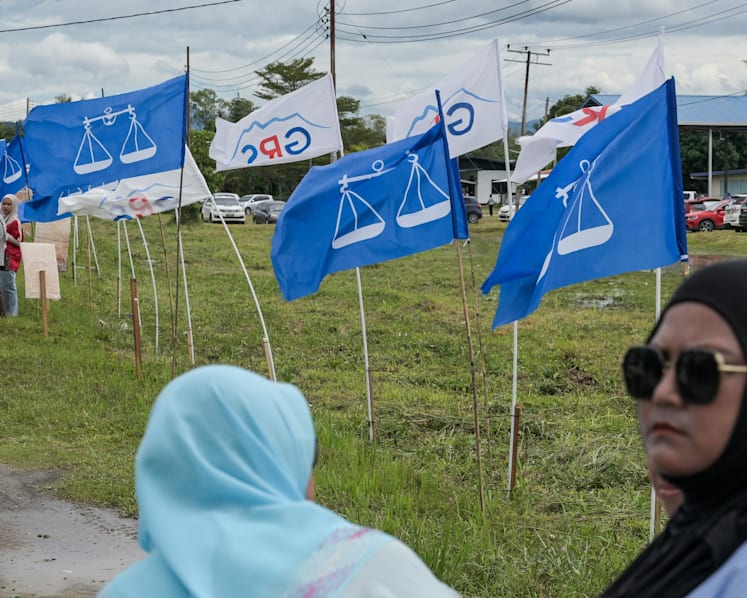
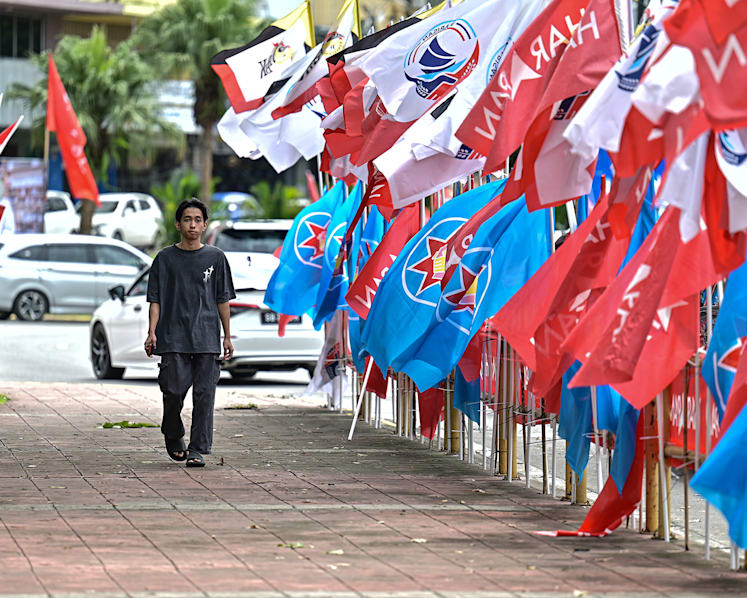
Barisan Nasional (BN) and Gabungan Rakyat Sabah (GRS) flags in Sulaman, Kota Kinabalu on Nov 27, 2025. (Photo: CNA/Fadza Ishak)

This audio is generated by an AI tool.


KOTA KINABALU: Sabah’s chief minister’s decision to include Barisan Nasional (BN) in the state government has triggered pushback, with several party wings saying that voters had given a mandate for local parties to lead in Saturday’s polling.
The peninsula-based coalition suffered major setbacks in the election, losing several of its long-held seats.
“The decision of voters must be respected. The people of Sabah have clearly signalled their rejection of BN’s inclusion in the state government and any attempt to override the people’s mandate would be inappropriate,” said the youth wing of Parti Gagasan Rakyat Sabah in a statement on Monday (Dec 1).
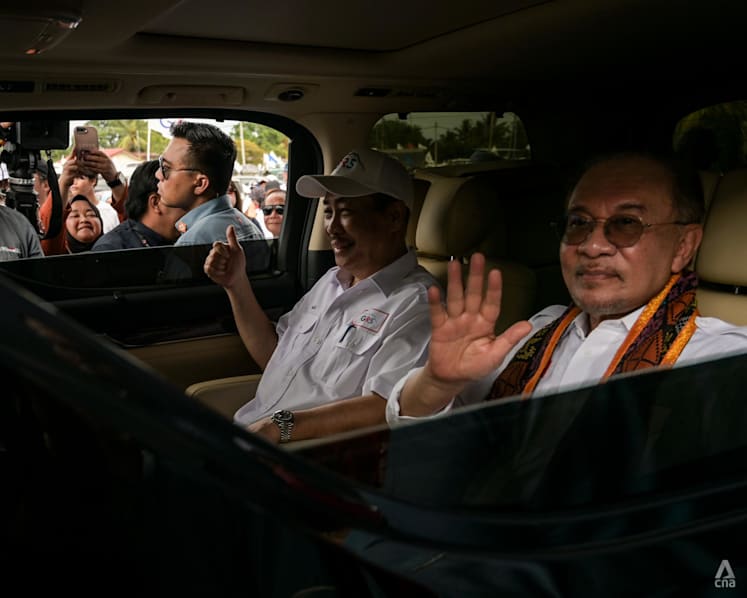
Parti Gagasan Rakyat Sabah is the lynchpin of the Gabungan Rakyat Sabah (GRS) coalition led by Hajiji Noor, who was sworn in as chief minister early on Sunday.





GRS, a pact of local-based parties, had teamed up with Prime Minister Anwar Ibrahim's Pakatan Harapan (PH) coalition in contesting the Nov 29 state election. BN was not part of the GRS-PH pact for the polls.
“Out of honour for my family and supporters, no Barisan (Nasional),” GRS assemblyman for Pantai Dalit, Jasnih Daya, posted on social media, as reported by The Star on Monday.
That day, Hajij appointed BN’s Jafry Ariffin, who is the Sabah UMNO Secretary, as the new state tourism, culture and environment minister. The United Malays National Organisation (UMNO) is a lynchpin component party of BN.
Analysts told CNA that Hajiji’s decision to bring BN into his government was “unusual” and a “betrayal” to those who had backed GRS, especially since Hajiji had campaigned on a "Sabah First" message. "Sabah First" is one of the four main pillars of GRS’s development agenda highlighted during its election campaign.
“BN’s inclusion is a big surprise … Hajiji has to explain this,” James Chin, Asian studies professor at the University of Tasmania told CNA.
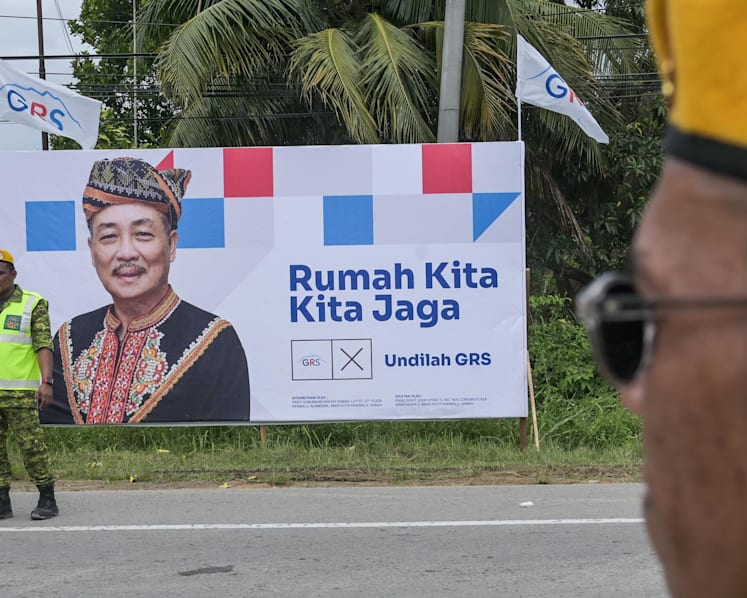
According to local news platform Malaysiakini on Tuesday, 12 GRS assemblymen have allegedly privately said that the government coalition is now “compromised” following UMNO’s inclusion and that the “Sabah First” message was diluted the moment national figures were placed in key portfolios.
Besides the 12, five independents - Maijol Mahap, Jordan Jude Ellron, Rina Jainal, Fairuz Renddan, and Awang Ahmad Sah Sahari, are also believed to be aligned with the disgruntled group. The five independents aligned themselves with the GRS pact following election night.
They were reportedly voicing discontent online, through vague Facebook captions, WhatsApp status updates and forwarded screenshots.
Without naming individuals, GRS deputy secretary-general Armizan Ali said that the coalition “will not be swayed by threats circulated through WhatsApp groups or indirect political messaging”, reported Malaysiakini.
He also warned that such online agitation risks “undermining public confidence and destabilising a government that has only just begun its work”, dismissing claims that the inclusion of national party leaders had compromised the "Sabah First" framework.
In total, the Cabinet includes seven ministers from winning coalition GRS, with its component party Parti Bersatu Sabah (PBS) contributing two, while the United Progressive Kinabalu Organisation (UPKO), BN and PH each hold one portfolio.
PH’s sole assemblyman Jamawi Jaafar, who won in the Melalap constituency, was sworn in as the state agriculture, fisheries and food industry minister while UPKO president Ewon Benedick was appointed the deputy chief minister III. Ewon will also helm the state Industry, Entrepreneurship and Transport Ministry.
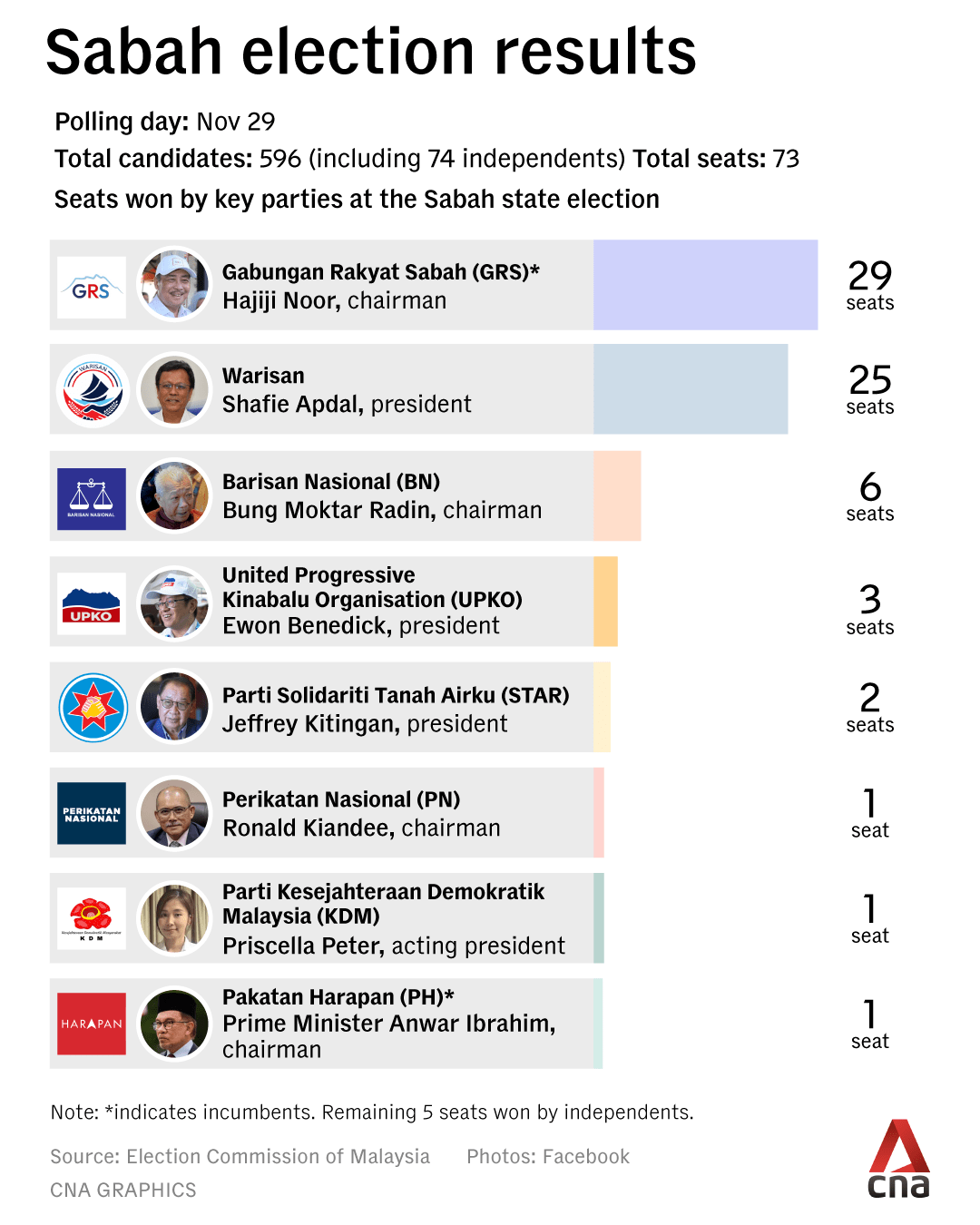
According to the official results, the incumbent GRS coalition won 29 seats on Saturday, while its ally PH secured one seat through Anwar’s own Parti Keadilan Rakyat (PKR).
Warisan, a bitter rival of the GRS-PH bloc, came in second with 25 seats while BN won six out of the 45 seats it contested.
The Gagasan youth wing on Monday said that the GRS Plus government had already secured a comfortable majority to form the state administration, with 29 seats from GRS, five independents, three from UPKO and one each from PH and KDM.
The legislative has 73 seats, making 37 a simple majority.
It also said that the current composition of elected representatives without BN was strong, stable and sufficient to continue the state’s development agenda without requiring additional support from parties that had been rejected by the people, local media Free Malaysia Today (FMT) reported.
“Past experience should serve as a lesson. The political disruptions in 2023 also instigated by BN, must not be repeated as they undermined both political stability and public confidence,” the youth wing said in a statement.
“It is therefore unreasonable for it to now demand to be included in the government.”
In 2023, BN left the coalition state government when some of its members failed to topple incumbent chief minister Hajiji’s leadership in a political crisis known as the Kinabalu Move.
In 2020, GRS won 38 seats and formed the state government. Back then, the coalition also comprised UMNO with 14 seats.
Meanwhile, Gagasan’s women’s wing also said that it “categorically rejects” BN’s entry into the state government, adding concerns over leadership stability, BN’s history of political inconsistency and the possibility of reviving old conflicts that could derail Sabah’s development agenda.
The wing added that Sabahans wanted a government that is “clean, efficient and people-focused”, not one distracted by political baggage or renewed instability, Malay Mail reported.
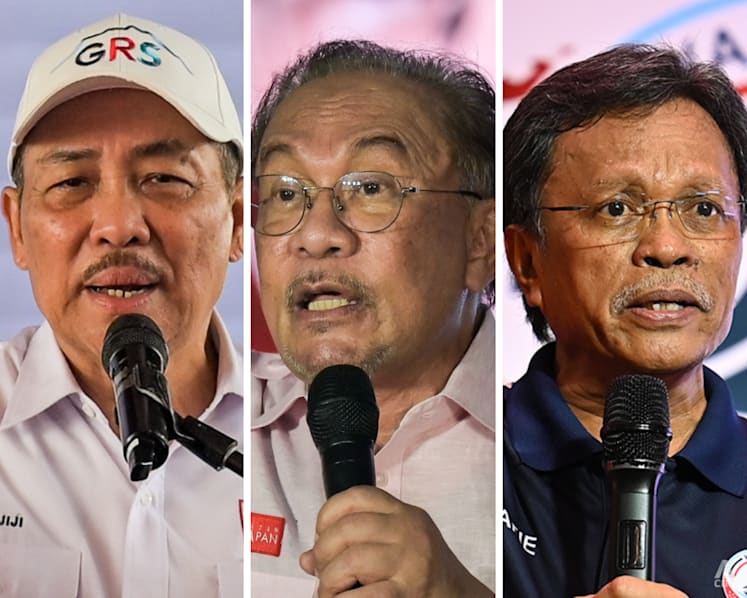
On Sunday, UMNO secretary-general Asyraf Wajdi Dusuki in a Facebook post confirmed that BN had given its support to form the Sabah government with Hajiji as chief minister.
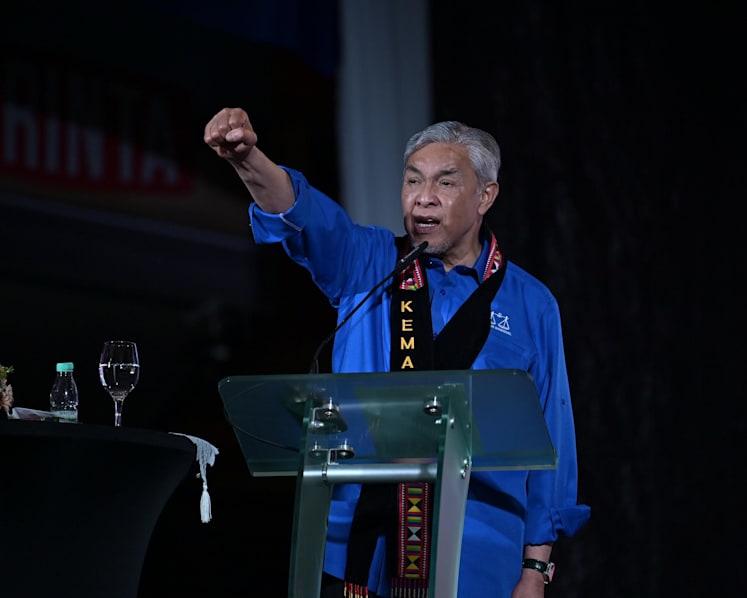
In response to a question by CNA on Friday before the election on whether BN would align with Warisan or GRS if it could not secure a simple majority, BN chairman Ahmad Zahid Hamidi had said: “We will work with any party to form the government.”
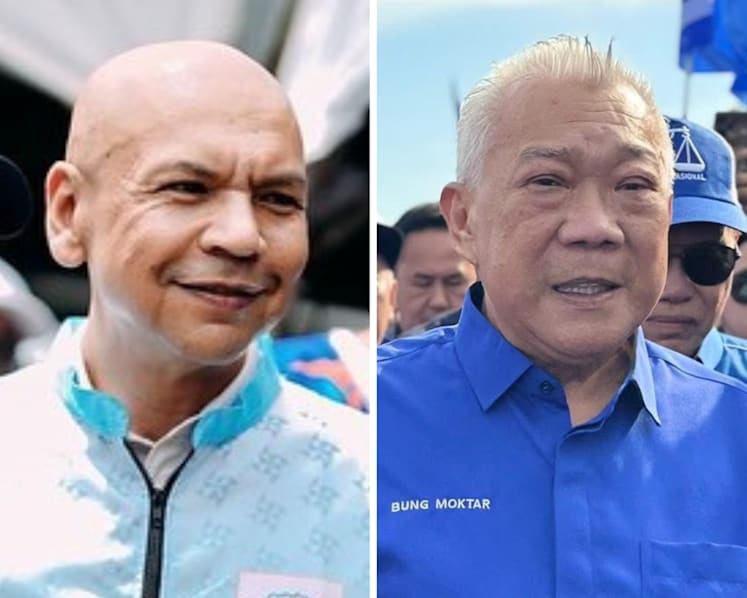
During the election campaign, Sabah BN Chairman Bung Moktar had described the GRS as a government that had failed in managing the state’s people, economy and unity
Sources told FMT that BN was brought into the GRS Plus government to safeguard Hajiji’s administration from collapse.
A GRS insider had claimed that bitter-rival Warisan had attempted to destabilise the fledgling state government by offering full ministerial positions to BN representatives and five independent assemblymen.
“We had no choice but to accept BN. Otherwise, the Sabah administration would have collapsed,” the source told FMT.
At a press conference on Sunday, Warisan president Shafie Apdal denied holding any meetings with leaders of other parties, including BN, to discuss forming a new government.
When asked whether it would remain in the opposition, Shafie said: “We will see.”
In a statement on Tuesday, Shafie once again rejected claims that his party had attempted to buy over assemblymen, FMT reported.
“Warisan respects the mandate of the people and the democratic process that guides our state,” he was quoted as saying by FMT.
Amid the growing uneasiness among GRS members after BN was included in the state government, one of them has told The Star that they are still firmly behind Chief Minister Hajiji Noor.
“We firmly back the Chief Minister … There were just discussions about BN being part of the state government but it’s a small matter that can be resolved,” GRS’s assemblyman for Klias, Isnin Aliasnih, told The Star.
“The situation is under control.”
BN’S INCLUSION A "BOOST" FOR UMNO
Chin of the University of Tasmania said that BN Jafry’s inclusion into the Cabinet would give UMNO a much-needed “boost”, given BN’s poor performance in the recent elections, winning only six seats as compared to 14 in 2020.
“Once you have someone in the government, it’s easier for you to do things,” Chin added.
Arvin Tajari, a senior lecturer from Universiti Teknologi MARA (UiTM) Sabah said Hajiji’s decision was driven by the need to quickly form a stable and united government, taking into consideration Sabah’s political history.
“With BN in the newly formed government, GRS is perhaps hoping that the coalition will be able to establish good relations with the federal government, which BN is part of,” Arvin told CNA.
Arvin posited that it is also important for BN in Sabah to actively push the federal government to agree on the state’s full and rightful claims under the Malaysia Agreement 1963 (MA63).
MA63, the legal instrument signed in 1963 as the basis of the formation of the Federation of Malaysia, recognises Sabah and Sarawak not as mere states but as equal partners with West Malaysia.