Philippine Nobel laureate Maria Ressa acquitted of tax evasion

Maria Ressa delivers a speech in Paris on Feb 22, 2023. (File photo: AP/Aurelien Morissard)
Ressa smiled as the judge delivered the verdict in the years-long case, an AFP journalist inside the Manila courtroom said.
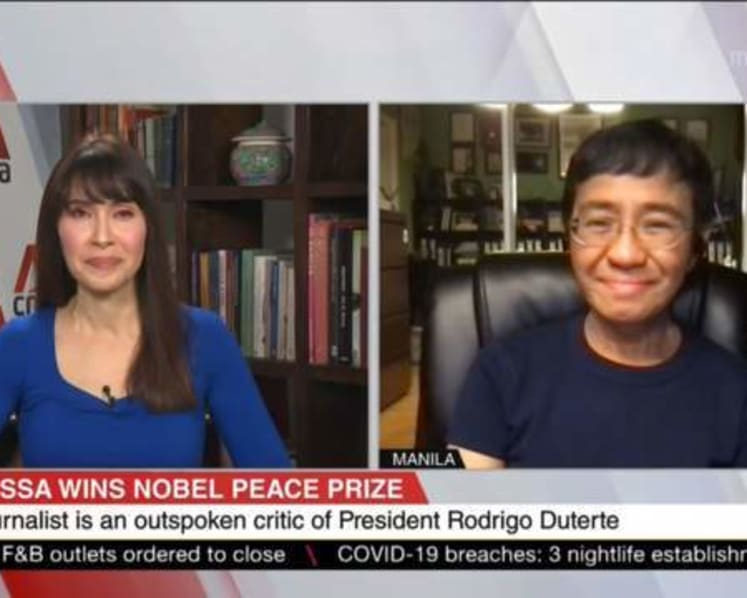
The 59-year-old, who shared the Nobel Peace Prize with Russian journalist Dmitry Muratov in 2021, has been fighting multiple charges filed during the administration of former president Rodrigo Duterte.
Ressa, a vocal critic of Duterte and his deadly drug war, has long maintained that the cases against her and the news website Rappler, which she co-founded in 2012, were politically motivated.
"You gotta have faith," a visibly relieved Ressa told reporters outside the court after the acquittal, adding that she felt "good" about the court's decision.





Ressa's acquittal was expected after she was cleared of similar tax charges nine months ago.
Ressa and Rappler had faced five government charges of tax evasion stemming from the 2015 sale of Philippine depositary receipts, which is a way for companies to raise money from foreign investors.
A court acquitted them on four of the charges in January. The fifth charge was heard by a different court, which cleared her of wrongdoing on Tuesday.
Despite the acquittals, Ressa and Rappler face an uncertain future as they battle another two court cases.
Ressa is currently on bail and was convicted in 2020 for cyber libel, which carries a nearly seven-year jail sentence, in one of several cases against the website filed by government agencies.
She is appealing against the conviction.
Rappler is still operating unhindered while challenging a Philippine Securities and Exchange Commission order to close for allegedly violating a ban on foreign ownership in media.
Under the constitution, investment in the media is reserved for Philippine citizens or entities controlled by citizens.
The case springs from a 2015 investment by the United States-based Omidyar Network, established by eBay founder Pierre Omidyar.
Omidyar Network later transferred its Rappler investment to the site's local managers to stave off efforts by Duterte to shut it down.
Despite the remaining hurdles, Ressa was characteristically defiant and optimistic on Tuesday, telling reporters that the latest acquittal "strengthens our resolve to continue with the justice system".
"It shows that the court system works and we hope to see the remaining charges dismissed," she said.
LEGAL TROUBLES
Ressa and Rappler's legal troubles began in 2016 with the election of Duterte, who frequently launched foul-mouthed attacks against his critics.
They have faced what press freedom advocates describe as a grinding series of criminal charges, arrests and online abuse.
Duterte's government claimed it had nothing to do with any of the cases against Ressa.
Another high-profile Duterte critic, human rights campaigner Leila de Lima, has spent more than six years in jail on drug trafficking charges she said were fabricated to silence her.
Throughout the campaign against her, Ressa, who is also a US citizen, has remained based in the Philippines.
Under her bail conditions, Ressa has to apply for court approval when she wants to travel abroad. That included her trip to Norway in December 2021 to collect her Nobel Peace Prize.
Ressa and Muratov were jointly awarded the Nobel for their efforts to "safeguard freedom of expression".
Philippine President Ferdinand Marcos, who succeeded Duterte in June 2022, previously said that he would not interfere in Ressa's cases, citing the separation of powers between the executive and judicial branches of government.
The Philippines is ranked 132 out of 180 countries in the World Press Freedom Index, with Reporters Without Borders describing its media as "extremely vibrant despite the government's targeted attacks and constant harassment" against journalists that are "too critical".