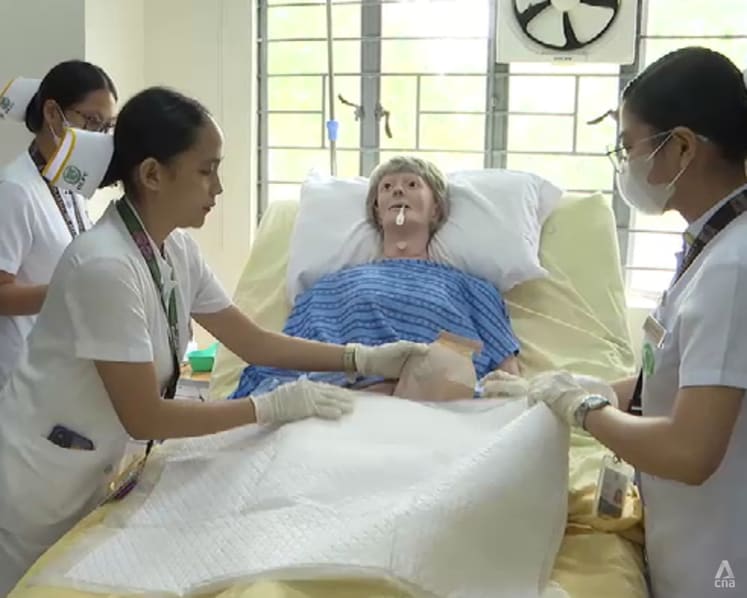
Nurses beyond borders: India's nursing talent heads abroad amid low pay, high global demand
India trains nearly 400,000 nurses annually, more than any other country. In the second of a four-part series on the global nursing shortage, CNA looks at why Indian nurses are seeking work elsewhere.

This audio is generated by an AI tool.




KERALA: Providing care is a calling, not just a profession – this is the belief that final-year nursing student Karolin Thomas said she inherited from her mother, who is also a nurse.
But as she prepares to graduate this year, her ambitions lie far from her home state of Kerala in southern India.
Her dream to work in the United States is not driven by a lack of opportunities, but by the prospect of higher wages and building a more comfortable life.
“That kind of pay, for my profession, is only provided in countries overseas. So, it’s better to have experience here, two or three years, and then I think I should move abroad,” Thomas told CNA.





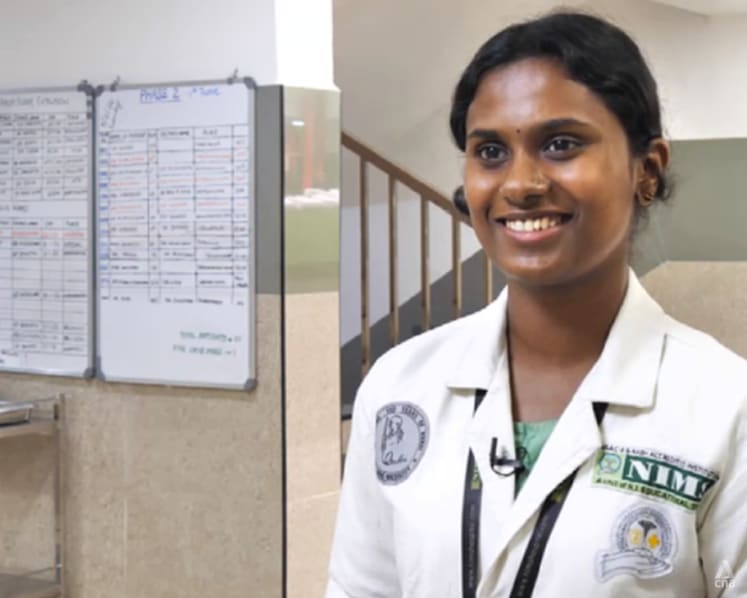
Her concerns reflect a broader reality in India, where nurses in private hospitals typically earn between US$200 and US$600 a month.
In Gulf nations, salaries can be three to five times higher, while nurses in North America and Europe may earn up to 10 times more.
Government nursing jobs in India pay significantly better than private sector roles, but vacancies are limited and highly competitive.
“If we get into the rank list, we have to wait for years to get a placement,” Thomas added.
For others, such as first-year nursing student Able Prince, the motivation to move abroad goes beyond financial considerations.
“In India, especially in Kerala, (nursing) is considered a lower job to doctors. The conversation and attitude of patients or clients are not appreciative,” he pointed out, adding that nurses tend to receive greater recognition overseas.
Low pay and demanding working conditions have created a perfect storm, pushing many Indian nurses to look aborad.
India trains nearly 400,000 nurses annually – more than any other country in the world.
Yet, a significant portion of them move abroad. About 640,000 Indian nurses are currently employed in foreign countries, ranking India second only to the Philippines in nurse migration.
Global nursing shortage
A global health challenge is intensifying.
Demand for nurses – the backbone of healthcare systems – is growing. While headline figures show supply is also expanding, a deeper look reveals widening gaps, uneven distribution and mounting pressure on poorer regions.
Nurses make up roughly more than 40 per cent of the global health workforce, according to numbers from the World Health Organization (WHO).
Any shortage doesn’t just affect hospitals – it weakens entire healthcare systems, from primary care clinics to emergency response networks.
The numbers: growth on paper
According to the State of the World’s Nursing 2025 report by the WHO and International Council of Nurses (ICN):
- In 2023, there were about 29.8 million nurses worldwide.
- By 2030, that number is projected to rise to 35.9 million.
At first glance, this appears to signal progress.
But by 2030, those nurses will need to serve a projected global population of 8.5 billion people, stretching systems that are already under pressure.
Not all regions are affected equally.
The African and Eastern Mediterranean regions are expected to face the most severe shortages in the coming years. These are also regions with some of the greatest healthcare needs.
On the move
Migration is now central to global healthcare staffing. According to the WHO and ICN report, about one in seven nurses works outside the country of their birth.
This reflects how heavily many healthcare systems depend on migrant labour. But the challenge is not simply about overall supply – it is about distribution.
About 78 per cent of the world’s nurses are concentrated in countries that account for less than half of the global population.
Across much of Asia, the outflow of nurses to wealthier economies is straining local healthcare systems.
SHAPING A GLOBAL WORKFORCE
The COVID-19 pandemic accelerated global demand for healthcare workers, with the WHO projecting a shortage of about 4 million nurses worldwide by 2030.
India, with its vast healthcare talent pool, is well positioned to help fill that gap.
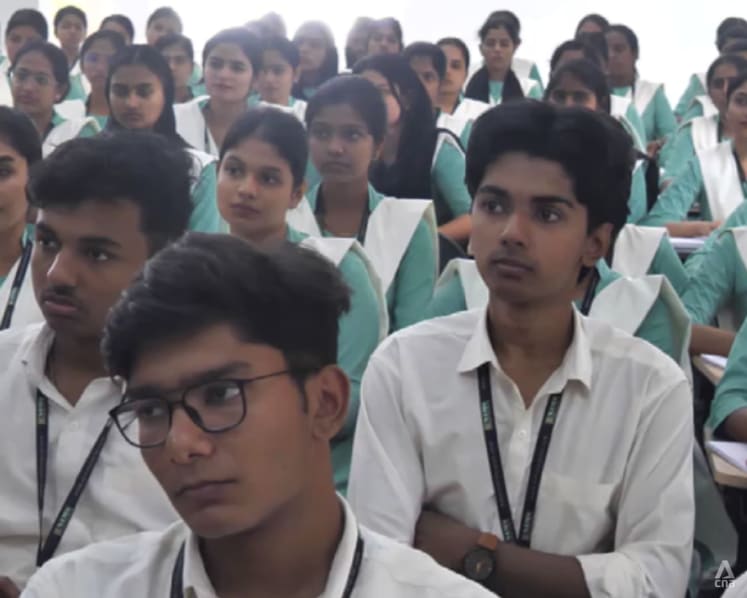
At institutions such as NIMS College of Nursing in Kerala’s capital city of Thiruvananthapuram, the next generation of caregivers is being trained. The state alone has about 150 such nursing institutions.
“Various consultancies are coming forward and offering training programmes to our students, so once they complete their course, they can have ample opportunities abroad also,” said the college’s principal S Josephine Vinita.
Kerala has long been at the centre of this migration trend that goes back decades.
Roughly half a million nurses from the state already work overseas. The phenomenon dates back to the post-World War II era, when Christian missionary networks helped recruit professionals to countries such as Germany and the United Kingdom.
In later decades, the Middle East became a key destination.
Now, as Europe grapples with an acute shortage of healthcare workers, migration channels are expanding again.
THE “TRIPLE WIN” STRATEGY
In December 2021, Kerala’s main agency responsible for migration affairs signed an agreement with the German government to supply nurses to Germany’s healthcare system.
The programme – known as “Triple Win” – reflects the state government’s approach to nurse migration.
Officials said the hiring country wins by procuring talent, while nurses win by earning more, and the home state wins through remittances from abroad.
German language fluency has become a prized skill, with hundreds of aspiring nurses attending daily lessons at the Department of Non-Resident Keralites Affairs’ (NORKA) language training institute.

But critics have accused Kerala state officials of institutionalising brain drain at a time when India’s nurse-to-patient ratio stands at 2.23 per 1,000 people – below WHO’s benchmark of 3 per 1,000.
Ajith Kolassery, CEO of NORKA Roots, which liaises between non-resident Keralites, disputed the claim that migration is worsening shortages in Kerala.
“There’s no dearth of nurses because every year, 20,000 to 25,000 nurses are coming out of these institutions,” he told CNA.
“So, currently, they are facing underemployment because nurses are working at inferior, very low salaries.”
NATIONAL HEALTHCARE GAP
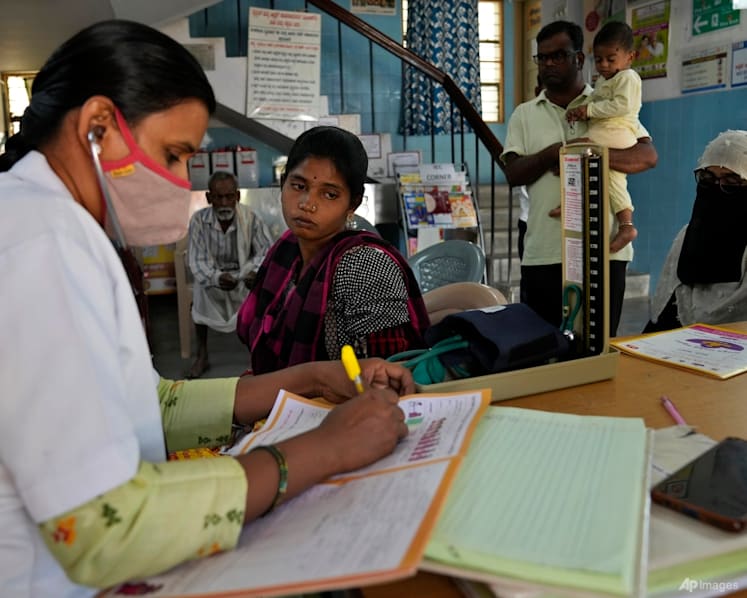
But across the world’s most populous country, access to healthcare remains uneven.
Reports indicate that nine out of 10 people in rural India must travel more than 10km to reach healthcare services.
The Indian government says it has invested billions of dollars to expand capacity, increasing the number of medical colleges by 82 per cent between 2014 and 2023, as well as adding 157 new nursing colleges in the same period.
But experts said that public health spending – currently about 2 per cent of the country’s gross domestic product – must rise to between 5 and 10 per cent to adequately serve India’s 1.4 billion people.
They also argue that the government should provide more funds to improve healthcare staff pay, which could potentially reverse the migration of healthcare workers.
“Think about the issue for maybe the next 50 years … we need more money there. That’s the bottom line,” warned Sulphi Noohu, national convener of the Indian Medical Association’s National Action Committee.
“Precise training for a particular subject – we have a deficit there, for example, in an intensive care unit or a cardiothoracic unit or maybe a coronary care unit.”
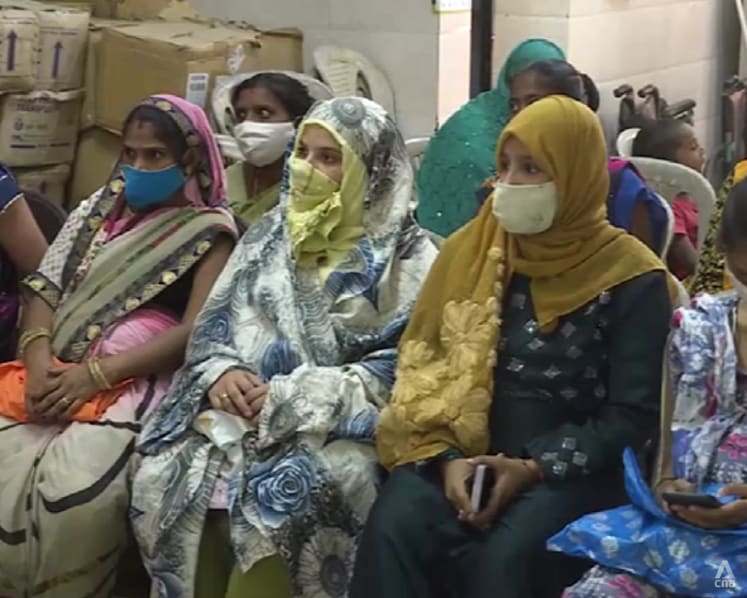
Officials have floated the idea of promoting reverse migration through exchange programmes, allowing nurses trained abroad to return with specialised skills.
“The nurse can come back to the state and support our Indian health system because they are exposed to global conditions,” said NORA Roots’ Kolassery.
Nevertheless, not all nursing students are looking to leave.
“Why should I give my hard work and my talent and my skills to foreign nationals? I was born and brought up here. I should serve my country,” said Nithin Krishnan, a final-year nursing student at NIMS College of Nursing.
Whether at home or abroad, Indian nurses continue to form the backbone of both domestic and global healthcare systems – answering a calling that millions depend on for survival and care.