Seek consent from Pahang Sultan before military training in state, crown prince tells Malaysian Armed Forces
Malaysia’s armed forces said it recognises the importance of “strategic cooperation with the state government, enforcement agencies, relevant experts and local communities”.
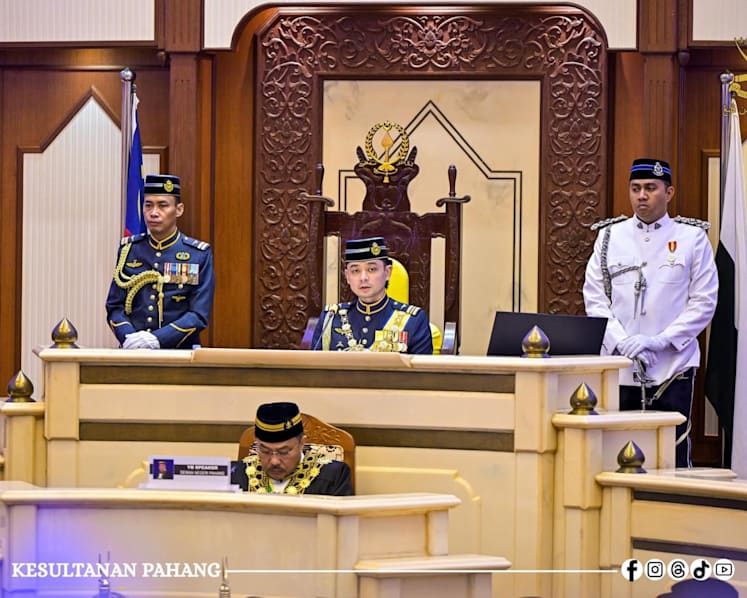
Pahang's crown prince Hassanal Ibrahim Alam Shah officiates the opening ceremony of the fifth session of the 15th Pahng state legislative assembly in Kuantan on May 8, 2026. (Photo: Facebook/Kesultanan Pahang)
KUALA LUMPUR: The crown prince of Pahang has ordered the national armed forces to seek consent from Pahang’s Sultan before conducting any military training and drills in the state.
In a royal statement on Sunday (May 24), Hassanal Ibrahim Alam Shah raised concerns over planned military training near Pahang’s islands, which he said could affect their environmental ecosystem and plants and animals.
The statement did not say which Pahang islands or which military drills were involved. Pahang’s islands include Tioman, Tulai, Seri Buat, Renggis and several smaller islands known for their clear waters and coral reefs.
Hassanal said he does not object to military training to improve soldiers’ skills but said it must be done in a “controlled and responsible manner” that is in “harmony with the environment and all parties”.
“His Royal Highness commands that the armed forces and all parties must comply with and uphold this royal advice,” the statement said.
“He will not hesitate to request the state government to take appropriate action should any breach of procedure occur,” it added.
Pahang’s sultan is Al-Sultan Abdullah Ri'ayatuddin Al-Mustafa Billah Shah, who served as Malaysia’s king from 2019 to 2024.






In response, Malaysia's armed forces said on Sunday it will strengthen coordination and stakeholder engagement in implementing military training, including the assessment of environmental harm.
"The armed forces fully complies with established guidelines, operational procedures, as well as environmental impact assessments set by the relevant authorities,” it said in a statement, as reported by news outlet New Straits Times (NST).
The armed forces said it recognises the importance of “strategic cooperation with the state government, enforcement agencies, relevant experts and local communities”.
"Mitigation measures, monitoring and continuous assessments are implemented to minimise impacts on the natural ecosystem,” it added.
The armed forces added that military training is a critical element in ensuring its operational readiness, capability and the optimal level of competency in safeguarding the nation’s sovereignty and security, reported NST.