Did deforestation worsen Sumatra disaster? Indonesia to trace timber, summon companies to explain
Images of logs swept out into flood-hit areas have circulated online, and experts have said deforestation and environmental degradation contributed to the floods and landslides, which have killed over 600 people in the country.
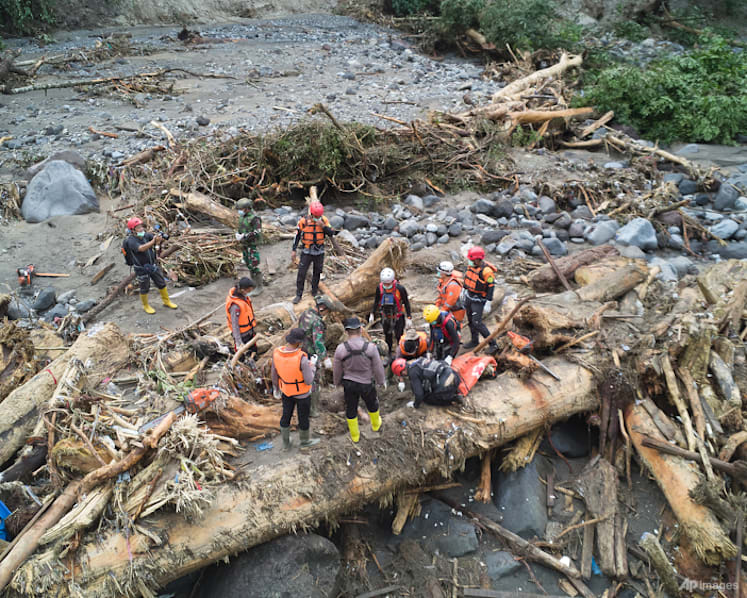
Rescuers search for flood victims in Tanah Datar, West Sumatra, Indonesia, on Sunday, Nov 30, 2025. (Photo: AP/Nazar Chaniago)
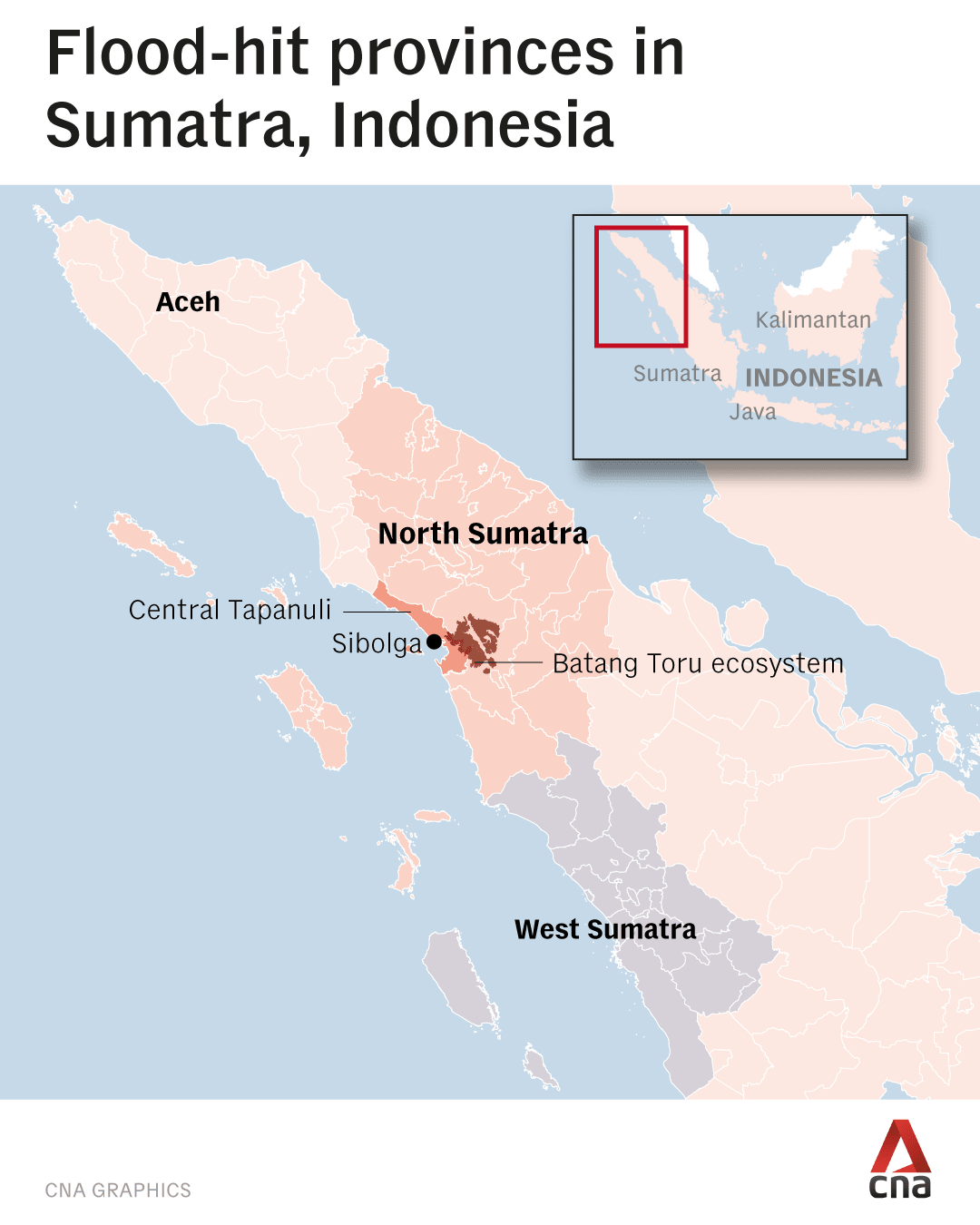
JAKARTA: Indonesia will summon eight companies suspected of contributing to deadly flooding in North Sumatra’s Batang Toru watershed as part of efforts to trace the large number of logs swept away by recent floods in Sumatra.
Images of the logs have circulated online, and experts have said deforestation and environmental degradation added to the scale of the disaster.
Environment Minister Hanif Faisol Nurofiq said on Monday (Dec 1) his ministry would summon eight entities operating in the Batang Toru river basin to explain their activities in the area and trace the logs swept away by the floods.
“There are eight entities that, based on our satellite imagery analysis, contributed to worsening the impact of this rainfall. So we are investigating further, and I have asked the Law Enforcement Deputy to take swift and measurable actions,” Hanif Faisol said, as quoted by news outlet Bisnis. The entities were not identified.
“We can see everything from satellite images, allowing us to logically project what happened in those conditions during heavy rainfall,” Hanif Faisol added.
The ministry will also review the environmental approval documents of companies operating in the three affected provinces.
“We will use the conditions of this tropical cyclone as the baseline for rainfall levels,” Hanif Faisol said. “This means all environmental assessments must have capacities that exceed that baseline.”
His team will take the necessary steps to prevent a recurrence of flooding and landslides, reported news agency Antara.
“Whether it’s a suspension of activities or something like that, because this is indeed a disaster. Someone must be held accountable for the incident,” Hanif Faisol said.
Some have urged the ministry to go further. Lawmaker Ratna Juwita Sari called for the permits of all companies that damaged the environment in the Batang Toru watershed to be revoked.
Summoning the companies was no longer an adequate step, said Ratna, a member of Commission VII of Indonesia’s House of Representatives, which oversees energy, mineral resources, research and technology and environmental issues.
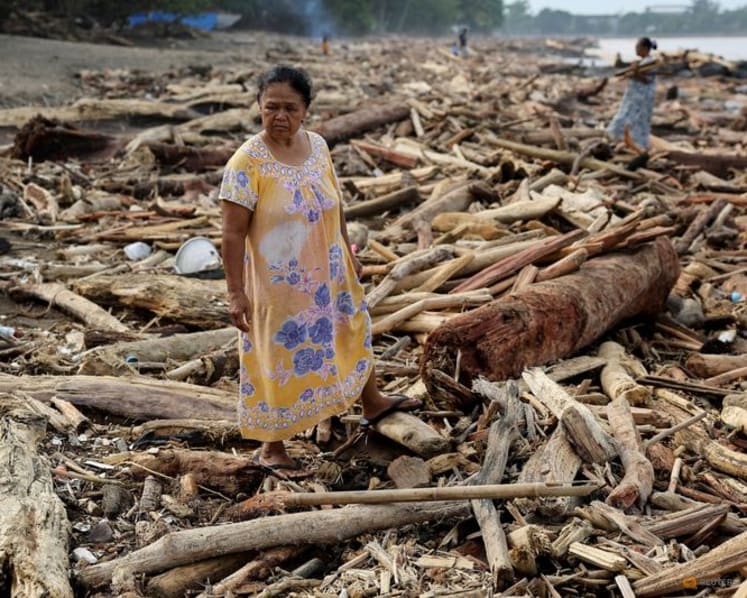
The floods have killed over 600 people in Sumatra since last week and hundreds are still missing after rare tropical cyclone Senyar battered Aceh, North Sumatra and West Sumatra provinces.
In the wake of the disaster, non-governmental group Indonesian Forum for the Environment (Walhi) claimed seven companies had played a significant role in contributing to the floods and landslides.
Satellite images showed many of the affected areas had been deforested, it said, as reported by news outlet Tempo last Friday.
The disaster is not solely the result of extreme rainfall from Cyclone Senyar, said Rianda Purba, executive director of Walhi North Sumatra. “This is evidence of human intervention through policies that allowed forest clearance, leading to these disasters.”
Three of the companies identified by Walhi have rejected its accusation or stated that activities complied with permits and regulations.
One of them, PT Agincourt Resources (PTAR), which operates the Martabe gold mine in the Batang Toru ecosystem, rejected claims linking its operations to the disaster and said it supports the government’s study of factors contributing to the disaster, Antara reported.
“The flash flood in Garoga village is located in the Garoga/Aek Ngadil watershed, which is separate from and not connected to the Aek Pahu watershed, where PTAR operates,” said its senior corporate communications manager Katarina Siburian Hardono.
“Our monitoring also found no wood materials in the Aek Pahu watershed that could be linked to the findings in the flooded area,” she added.
The Batang Toru ecosystem in Sumatra is home to critically endangered animals including the Tapanuli orangutan and Sumatran tiger.
INVESTIGATION INTO ORIGIN OF TIMBER
On Monday, Hanif Faisol said the disaster can serve as a lesson to ensure environmental resilience.
A day earlier, his ministry’s director-general of law enforcement Dwi Januanto Nugroho said the ministry was investigating whether the timber found in the floods originated from illegal logging and permit fraud schemes, Antara reported.
The wood may have come from multiple sources including decayed trees, river materials, legal logging areas, misuse of land-rights permits as well as illegal logging, he said.
Dwi Januanto said enforcement teams have uncovered several cases of timber laundering in the flood-affected regions this year.
“Forest crimes are no longer simple,” he said. “Timber from protected areas can be laundered into legal schemes using falsified or borrowed (land-rights permit) documents.
“That is why we are not only targeting illegal logging in the field, but also tracing documents, supply chains and financial flows behind it.”
CALLS TO DECLARE A NATIONAL EMERGENCY
There have been increasing calls – including from lawmakers, West Sumatra governor Mahyeldi Ansharullah and civil society groups – to declare the floods a national emergency in order to mobilise more resources and improve coordination between the central and regional governments.
Aceh, North Sumatra and West Sumatra all declared two-week provincial-level emergencies last week.
But President Prabowo Subianto, who visited flood-hit areas on Monday, has said he would “monitor and assess conditions”.
Indonesia categorises emergencies by scope – from the city or regency level, to the provincial, then national – and considers factors such as death toll, financial losses, infrastructural damage and socio-economic impact, Jakarta Globe reported. Only the 2004 Aceh tsunami and COVID-19 pandemic have been declared a national emergency.
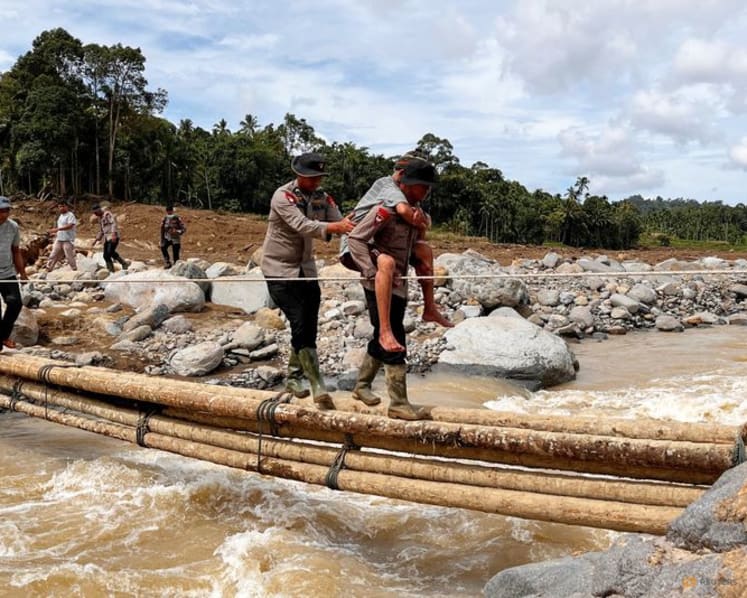
The central government has sent warships and aircraft to deliver aid to Sumatra survivors as road access to some areas remain cut.
National Disaster Mitigation Agency chief Suharyanto who, like many Indonesians goes by one name, said on Monday that Sibolga city and Central Tapanuli remain priority areas as road access to both places is still cut off and they are only accessible by air and sea.
Public Works Minister Dody Hanggodo said on Tuesday that Prabowo has ordered intensified efforts to ensure public safety and swift response measures in the field.
He said his ministry has reassigned heavy machinery from infrastructure projects to help restore road access in affected areas.
Reopening access remains a top priority and underpins subsequent recovery efforts, including reconstruction of damaged infrastructure, he added, as reported by Antara.