Thailand Election 2026: Foreign policy in spotlight as leaders look outward amid shifting world
Some experts believe Thailand is still paying the price of past military coups and grappling with a legitimacy deficit on the world stage.
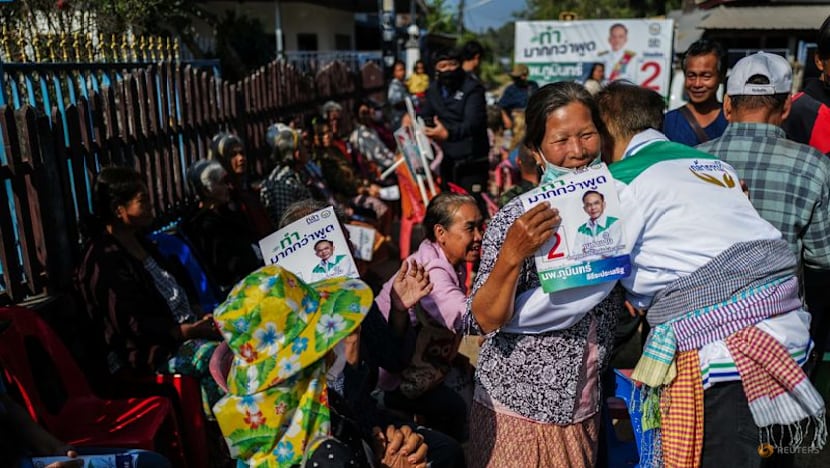
A supporter hugs Phumin Leethiraprasert, 62, a parliamentary candidate for the Kla Tham Party in Si Sa Ket province and former member of parliament who switched from the Pheu Thai Party, during his election campaign ahead of Thailand's general election, in Khuean Chang village in Kantharalak district, an area affected by clashes between Thailand and Cambodia, Si Sa Ket province, Thailand, Jan 23, 2026. (Photo: Reuters/Athit Perawongmetha)

This audio is generated by an AI tool.




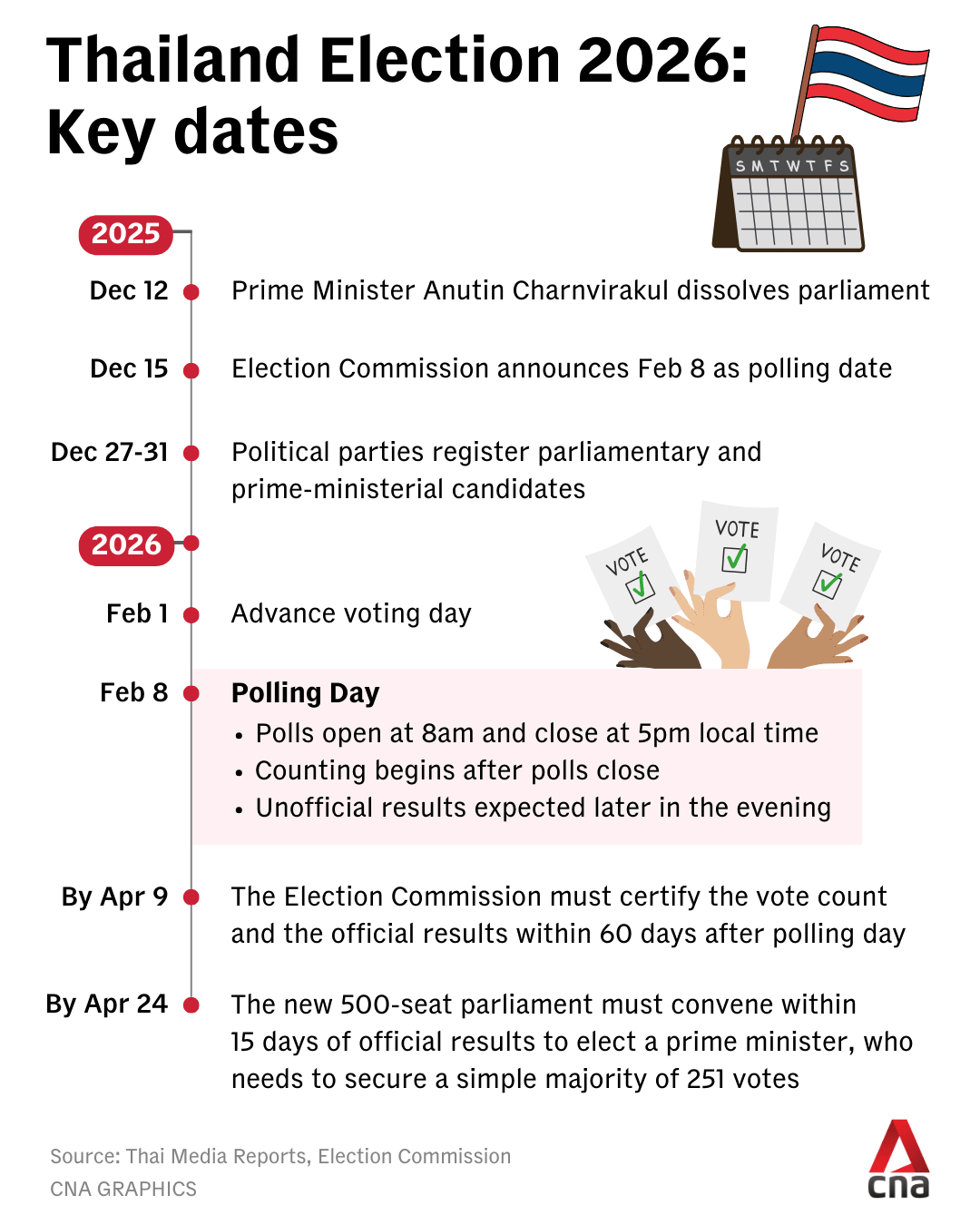
BANGKOK: Thailand heads into a general election this Sunday (Feb 8) that could produce its fourth prime minister in less than three years.
Yet, amid the political churn, a notable shift is emerging: Foreign policy is moving to the centre of the national debate.
Against a backdrop of political deadlock, a slowing economy and mounting external pressures – from border tensions with Cambodia to transnational cybercrime – the election is increasingly seen as a test not just of the country’s domestic direction, but of how it navigates a changing global landscape.
EXTERNAL PRESSURES MOUNT
For years, critics have argued that successive governments were too inward-looking, even as global challenges intensified.
But these problems outside Thailand are now impossible to ignore, said analysts.
Issues such as cross-border scam syndicates – operating from neighbouring Myanmar and Cambodia but using Thailand as a staging ground to lure and traffic victims – have underscored the need for sustained international cooperation.
Tens of thousands of victims have already been repatriated via Thailand, mostly to China. But experts warn that the billion-dollar industry will persist without sustained international action.
At the same time, diplomatic strains with Cambodia continue following last year’s border clashes that killed dozens and displaced hundreds of thousands of civilians.
Despite international mediation efforts and a United States-backed peace agreement, tensions along the disputed frontier remain high.
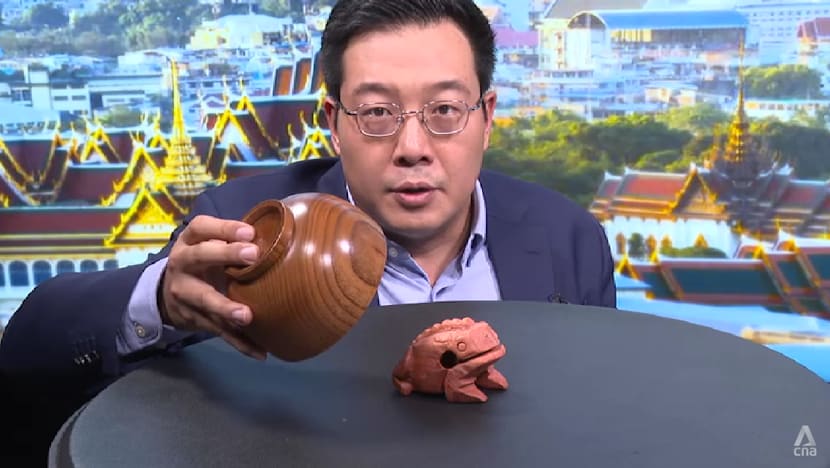
Political scientist Fuadi Pitsuwan, a former foreign policy adviser to the now-defunct Move Forward Party – which won the most seats in the 2023 general election – believes Thailand is still paying the price of past military coups and grappling with a legitimacy deficit on the world stage.
“We have not been growing, we have not been catching up. We were one of the Asian Tigers in the 1990s, but we fail at that now,” said Fuadi, a lecturer at Thammasat University's political science faculty.
“We need to come back to the table and then couple that with what the US is doing now, the collapse of the international liberal order, I think Thailand has to wake up.”
FOREIGN POLICY RETHOUGHT
That sentiment is increasingly shared among the major parties.
Thai Foreign Minister Sihasak Phuangketkeow, in a CNA interview last November, lamented that foreign policy has long been treated as a niche issue in Thai politics.
“We have to realise that more and more, our peace, stability and prosperity are very much intertwined with what's happening outside the country, in our external environment,” said the veteran diplomat.
“So I hope that the public would realise that foreign policy is very important to their lives, and foreign policy must be at the core of overall government policy.”
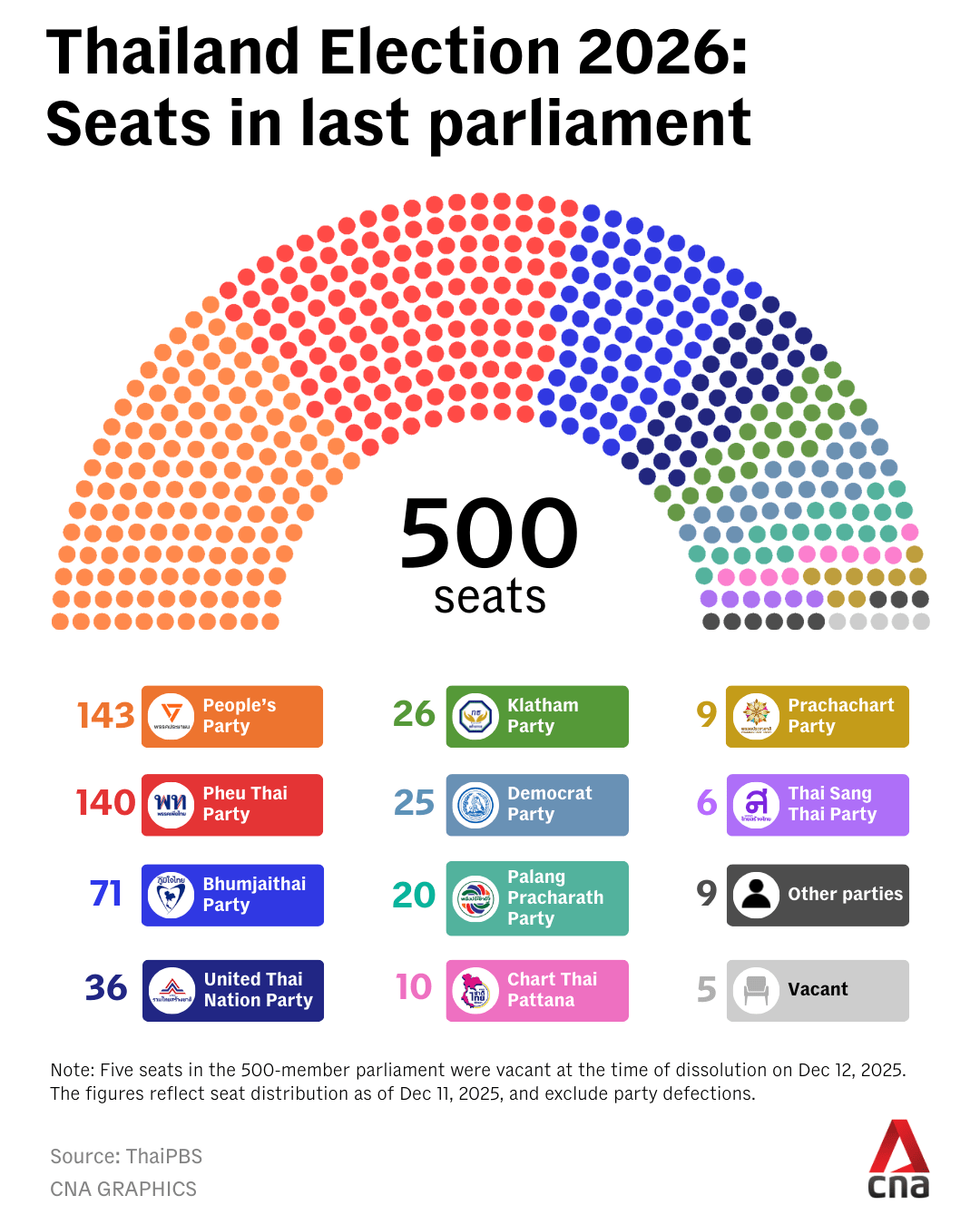
Sihasak has been named the ruling Bhumjaithai Party’s second prime ministerial candidate for the upcoming election, listed behind party leader and incumbent Prime Minister Anutin Charnvirakul.
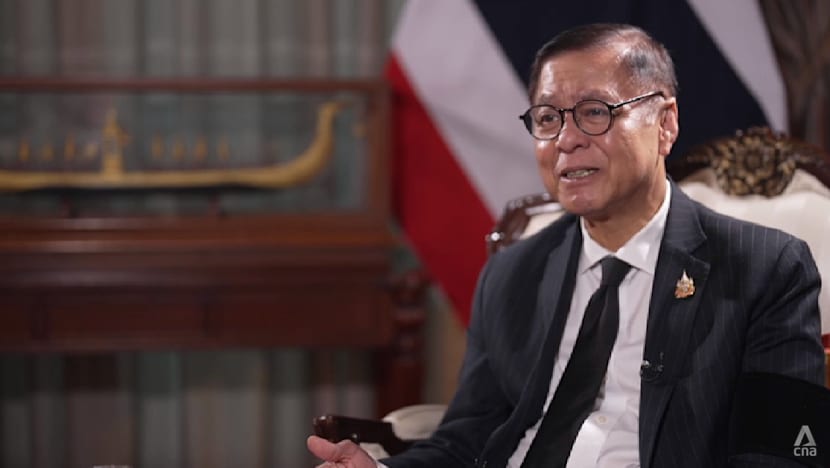
According to media reports, he said his decision to join the party was largely driven by Anutin’s assurance that he would have the freedom to carry out his work.
Bhumjaithai’s main rival, the opposition People’s Party, has also turned to a career diplomat, recruiting Pisan Manawapat, a former ambassador to the US and Thailand’s chief free trade negotiator with Japan.
The party has said it plans to appoint him foreign minister if it forms the next government.
Together, these moves point to a growing recognition that global affairs can no longer be sidelined in this campaign – even as parties continue to rely heavily on technocrats, given the limited foreign policy experience among many career politicians.
But regardless of who is appointed foreign minister, observers stress that the role ultimately comes with democratic accountability.
“So in terms of the minister, it doesn't have to be professionals, as long as you are someone capable enough to learn, capable enough to take the mandate from the people,” said Thammasat University's Fuadi, who is the son of the late former Association of Southeast Asian Nations (ASEAN) secretary-general Surin Pitsuwan.
“The diplomats are the ones who give you options or give you feedback, that whatever the idea that you take from the people could be good for our national interest (or) bad for our interests. And then the minister decides – but the minister is accountable to the people.”